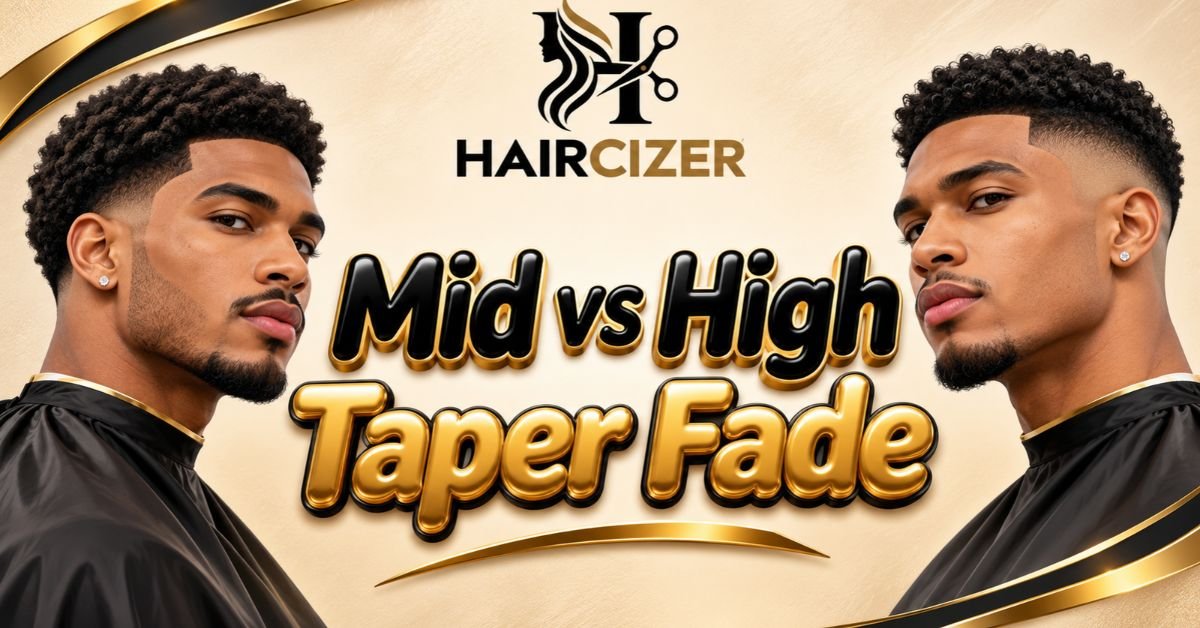
You walk into the barbershop, the barber asks “how high do you want the taper?”, and suddenly a simple haircut feels like a big decision. Mid or high? Subtle or sharp? Safe or bold? It is a fair question, because the height of a taper changes the whole personality of your cut.
Both styles keep the sides and back short and neat while leaving more length on top. The real difference is where the shortening begins. A mid taper fade starts around the middle of the head. A high taper fade starts much closer to the crown and shows far more skin.
This guide compares the two side by side. You will learn how each one looks, which hair types, face shapes, and beards suit them, how much upkeep they need, and exactly what to say to your barber. By the end, you will know which one fits you.
Mid taper fade vs high taper fade: what’s the difference?
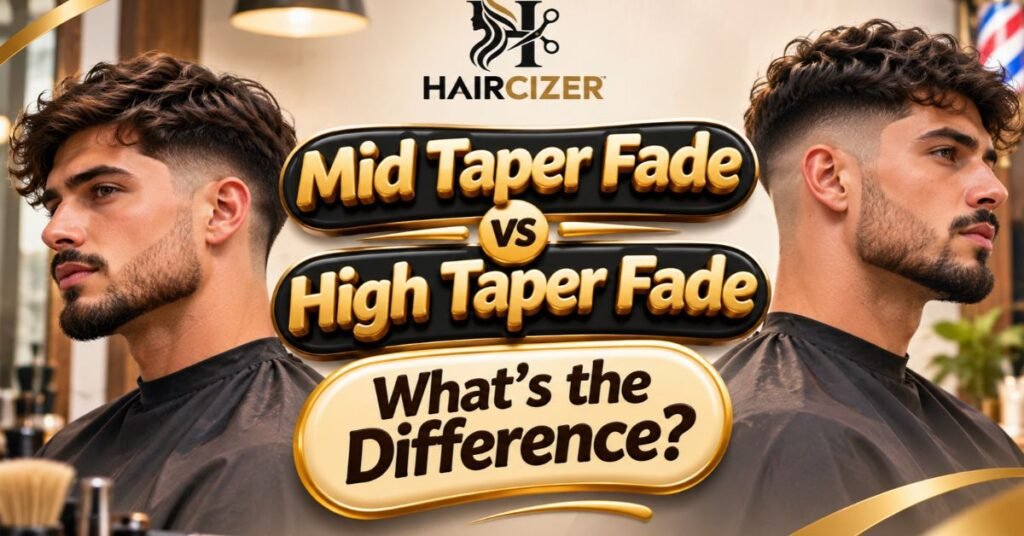
The difference comes down to starting height and contrast. A mid taper fade begins the blend around the temple and the top of the ear. A high taper fade begins higher, near the upper sides of the head, so more of the sides and back look short.
Think of it as a dimmer switch. The low taper is the gentlest setting, the mid taper is the balanced setting, and the high taper is the brightest.
| Feature | Mid taper fade | High taper fade |
| Where the fade starts | Around the temple and top of the ear | Near the upper sides, closer to the crown |
| Contrast level | Medium | High |
| Skin visible | Moderate | A lot |
| Overall mood | Balanced, polished | Sharp, bold, modern |
| Best setting | Office, school, everyday | Social, creative, statement looks |
| Regrowth shows | After 2 to 3 weeks | After 1 to 2 weeks |
If you remember one rule, make it this one: the higher the taper, the louder the haircut.
What is a mid taper fade?
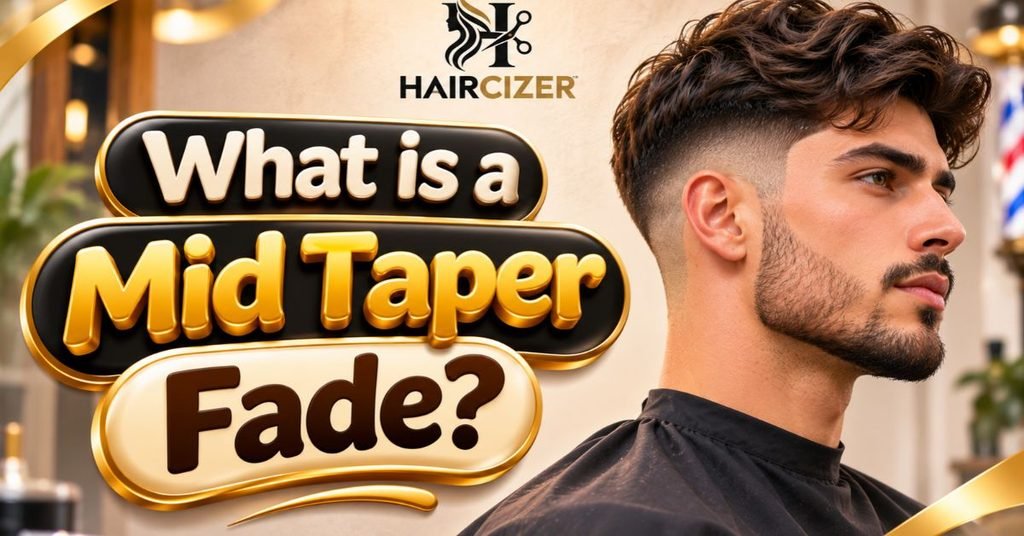
A mid taper fade is a haircut where the sides and back gradually shorten, starting roughly at the middle of the head, often level with the temple. The hair blends down to a very short length or skin near the neckline and sideburns.
It sits right between the low and high versions. You get a clearly visible fade, but it does not dominate the whole head. That is why many barbers call it the most versatile pick.
Key traits of a mid taper fade:
- The blend begins at about temple height.
- The top keeps a natural, medium-to-long length.
- The contrast is noticeable but never harsh.
- The sideburns and neckline are tapered and tidy.
It works with nearly any top style, from a textured crop to a side part, and it looks professional without being boring.
What is a high taper fade?
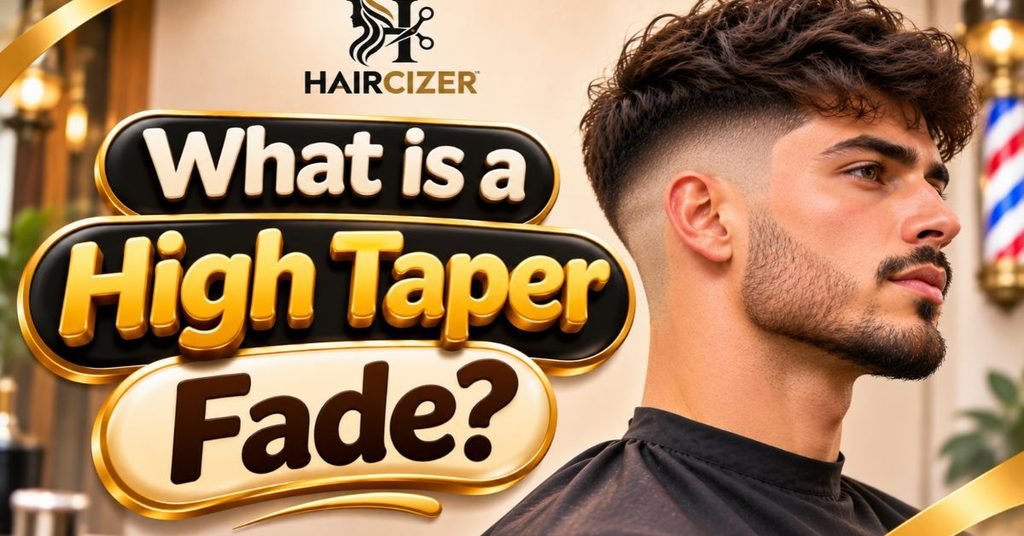
A high taper fade starts the shortening much higher, close to the upper sides of the head. The hair around the ears, sideburns, and back is cut very short, and the blend climbs toward the crown.
The result is a strong, clean silhouette. The top stands out because the sides are so tight. It is a favorite for men who want a sharp, deliberate look that draws attention to their hairstyle.
Key traits of a high taper fade:
- The blend starts near the upper sides of the head.
- A large area of the sides and back is short or skin-close.
- The contrast with the top is strong.
- The haircut looks modern, athletic, and crisp.
The trade-off is upkeep. Because so much of the head is cut short, regrowth is obvious sooner, and the cut asks for more frequent visits.
Is a taper fade the same as a full fade?

No. A taper fade and a full fade are cousins, not twins. A classic taper shortens the hair gently toward the neckline and sideburns, usually leaving some length even at the shortest point. A full fade blends the hair down to the skin, creating a much starker transition.
A taper fade combines the two ideas. It keeps the soft, natural feel of a taper but adds a fade at the edges for extra cleanliness.
| Style | How short it gets | Overall look |
| Classic taper | Short but not skin | Soft, traditional |
| Taper fade | Very short, may touch skin at the edges | Clean, balanced |
| Full or skin fade | Down to bare skin | Stark, high contrast |
So when you ask for a mid or high taper fade, you are asking for a controlled blend, not a bald-looking side. If you want a bare skin finish, tell your barber clearly so there is no confusion.
Which should you choose: a mid or high taper fade?
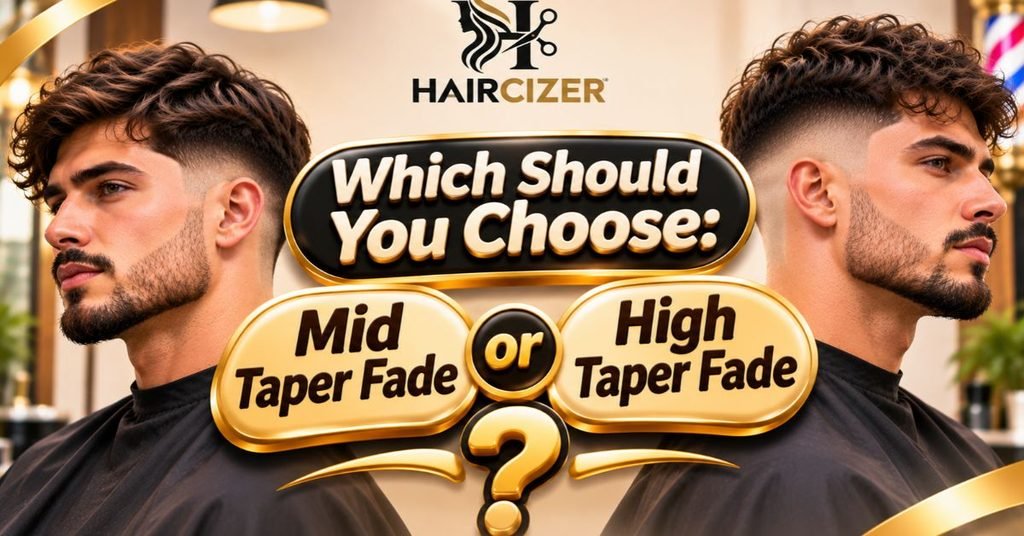
Choose a mid taper fade if you want a clean, flexible haircut that fits almost every setting. Choose a high taper fade if you want a bold, high-contrast look and you do not mind frequent trims.
Here is a quick decision guide:
- Do you work in a conservative setting? Pick the mid taper.
- Do you want maximum style impact? Pick the high taper.
- Do you hate frequent barber visits? Pick the mid taper.
- Do you love sharp, defined edges? Pick the high taper.
- Are you trying a fade for the first time? Start with the mid taper.
If your answers are mixed, go mid. It is easier to move higher next time than to wait for a high taper to grow out.
Which taper works better for your hair type and density?

Your hair texture and thickness change how a taper looks and how long it stays neat. The same cut can look completely different on two heads.
Straight and wavy hair
Straight hair shows the blend very clearly, so any unevenness is easy to spot. Both tapers look crisp on straight hair, but the high version looks especially sharp and structured.
Wavy hair has natural movement on top, and a mid taper keeps the sides from puffing out while letting the waves flow. A high taper creates a stronger contrast that makes waves look intentional and styled.
Curly and coily hair
Curly and coily hair loves a taper. Short sides keep the shape tidy, and the curls on top become the focus. A mid taper gives a balanced look that frames the curls without exposing too much scalp. A high taper makes curls pop even more, which suits twists, coils, and high-top styles.
For coily hair, ask a barber who knows your texture. A clean blend on tightly coiled hair takes skill and the right clippers.
Fine or sparse sides
If the sides of your head have fine or thin hair, a high taper can expose patchy areas because so much skin shows. A mid taper hides thinness better since more length remains around the ears and nape.
Dense or bulky sides
Thick hair on the sides can look wide and heavy. A high taper trims that bulk away and gives a slimmer profile. A mid taper still helps, but dense hair may need more frequent trims to avoid a boxy shape.
| Hair situation | Better option | Why |
| Straight, fine | Mid taper | Softer blend, less scalp showing |
| Straight, thick | High taper | Removes bulk, sharp lines |
| Wavy | Either | Mid for balance, high for contrast |
| Curly and coily | Either | Mid for subtle, high for bold |
| Sparse sides | Mid taper | Hides thin patches |
| Dense sides | High taper | Slims the profile |
Which taper better suits your face and head shape?
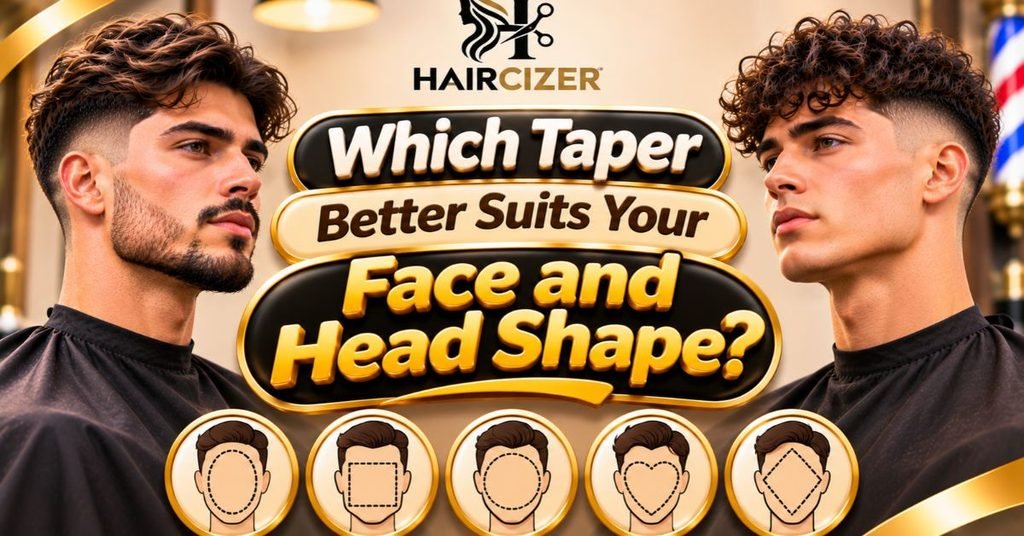
A good haircut works with your bone structure. The fade height can make your face look longer, wider, softer, or sharper.
Longer or narrower faces
A long or narrow face already has height. A high taper can stretch it further, because the exposed sides draw the eye upward. A mid taper adds balance and keeps the face looking proportioned. Add some volume on top and keep the sides slightly fuller.
Rounder or wider faces
Round faces benefit from height and angles. A high taper slims the sides and, paired with a tall top, makes the face look longer. A mid taper also works well if you prefer something calmer. The key is to avoid too much volume on the sides.
Angular features and strong jawlines
If you have a square jaw or sharp cheekbones, either taper looks great. A mid taper keeps things refined, while a high taper intensifies your angles. A softer top, like a fringe, can balance a very sharp look.
Head shape and scalp visibility
A high taper reveals the shape of your skull. If you have bumps, scars, or a flatter back of the head, the exposed skin will show them. A mid taper is more forgiving. If you are unsure, ask your barber to feel your head shape before choosing a height.
| Face or head shape | Safer pick | Bolder pick |
| Long or narrow | Mid taper | High taper with a fuller top |
| Round or wide | Mid taper | High taper with height on top |
| Square or angular | Either | High taper |
| Irregular head shape | Mid taper | High taper only after a barber check |
Which works better with your top hairstyle and beard?
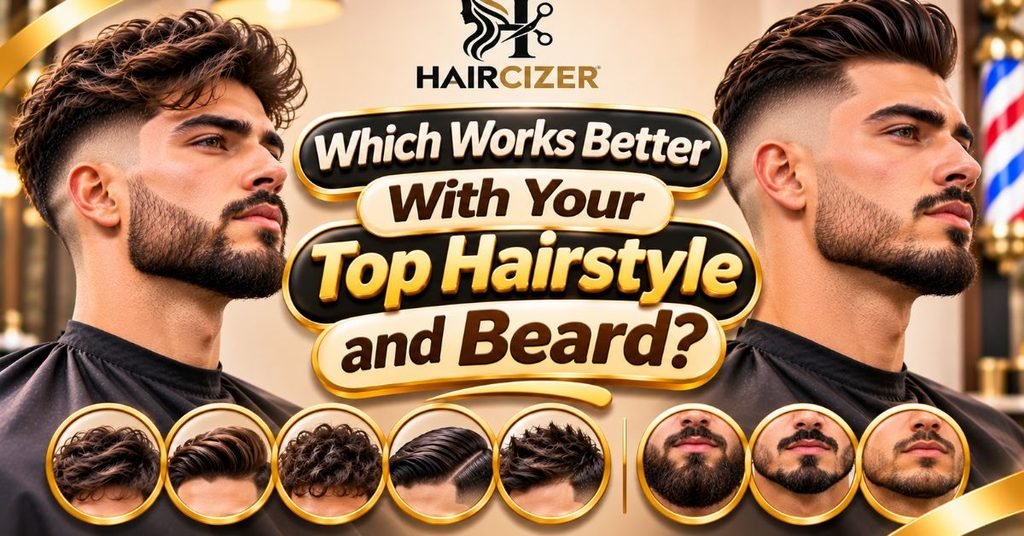
The fade is only half the haircut. Your top style and facial hair complete the look.
Top styles that pair well with a mid taper:
- Side part and comb over for a professional finish.
- Textured crop for an easy everyday style.
- Quiff or pompadour for a classic look.
- Soft fringe for a relaxed vibe.
Top styles that pair well with a high taper:
- Curly top, twists, or a high-top for strong contrast.
- Slick back for a clean, sharp finish.
- Spiky or messy texture for an edgy style.
- Longer top styles for a dramatic shape.
Beards and facial hair
A beard needs a smooth connection to the fade. With a mid taper, the beard usually blends into the sideburns around ear level, creating a natural, balanced line. With a high taper, the beard starts to feel more like a statement, and the contrast between bare sides and full facial hair can look striking.
If you have a long beard, a high taper can make the beard look even fuller. If you keep light stubble, a mid taper often looks more natural.
Which fits your preferred contrast and everyday style?
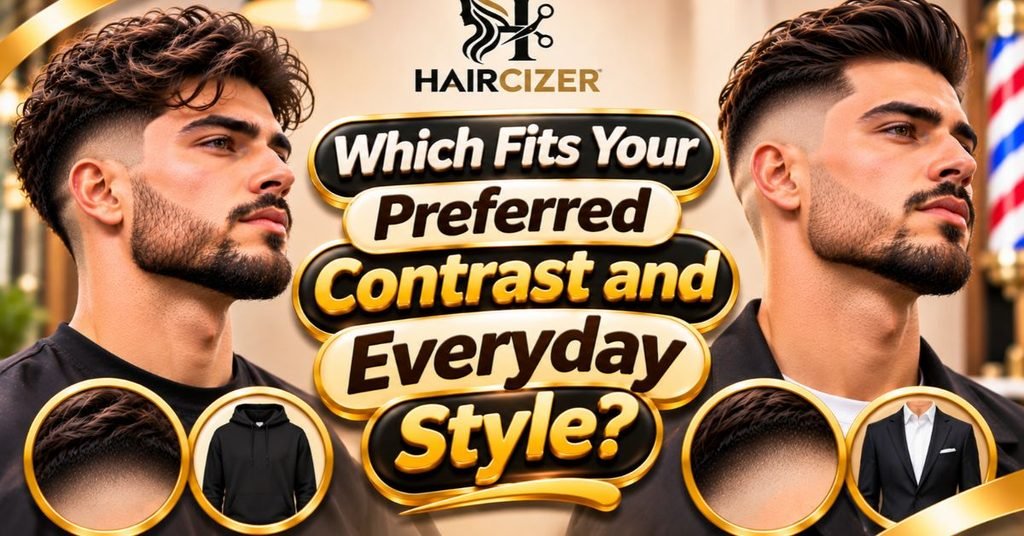
Contrast is the gap between the length on top and the length on the sides. The bigger the gap, the stronger the look.
- Low contrast lovers: You like a neat, understated appearance. Go with a mid taper.
- High contrast lovers: You want your haircut to stand out. Go with a high taper.
Think about your daily life too. If you wear suits, collared shirts, or work with clients, a mid taper looks safe and sharp. If your wardrobe leans toward streetwear, sportswear, or creative styles, a high taper often feels more at home.
Your hair also needs to match your habits. A high taper needs a regular schedule, while a mid taper forgives a busy month.
| Lifestyle | Best fit |
| Office or corporate | Mid taper |
| Student or casual | Either |
| Creative or social | High taper |
| Athletic | High taper |
| Low maintenance | Mid taper |
Which is easier to maintain and grow out: mid or high taper?
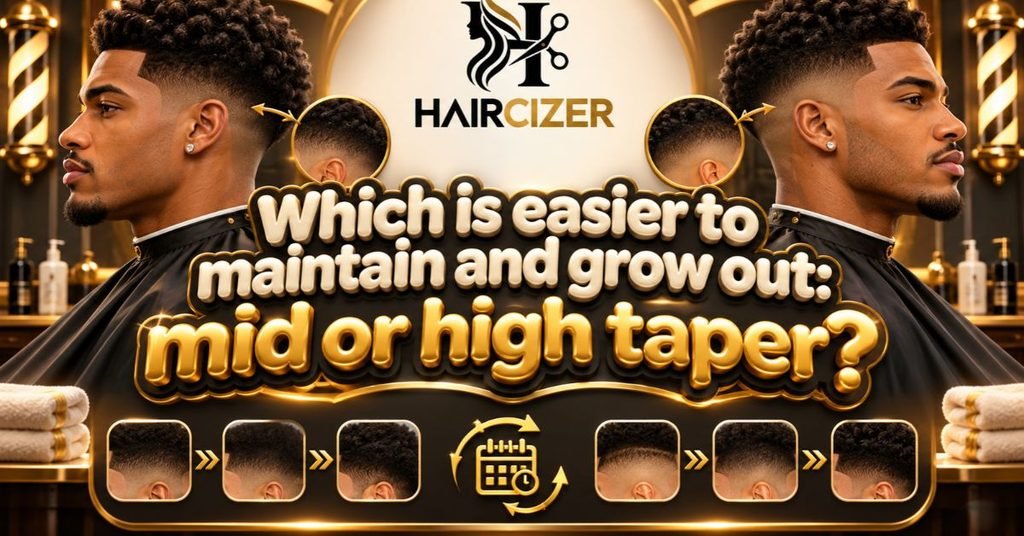
The mid taper is easier on both counts. Because the fade starts lower, there is less short hair to grow back, and the growth looks more even.
A high taper shows regrowth quickly, especially around the sideburns and neckline. The clean edges soften, and the contrast shrinks within a couple of weeks.
| Factor | Mid taper | High taper |
| Trim schedule | Every 2 to 3 weeks | Every 1 to 2 weeks |
| Grow-out look | Natural and even | Noticeable, can look uneven |
| Time to grow out | Moderate | Longer and slightly awkward |
| Home cleanup needed | Light | Frequent |
Tips to keep either style fresh
Also Read:Types of Fade Haircuts: Fresh Styles Made Simple
- Book your next appointment before you leave the chair.
- Clean up the neckline with a trimmer between visits, but leave the blend to your barber.
- Use a moisturizer on exposed skin to avoid dryness.
- Apply sunscreen, because more skin means more sun exposure.
- Use styling products sparingly so the top stays light.
If you plan to grow your hair out, a mid taper makes the process far less awkward. A high taper grows out in stages, so ask your barber to keep the shape tidy while it does.
How do you ask your barber for a mid or high taper fade?
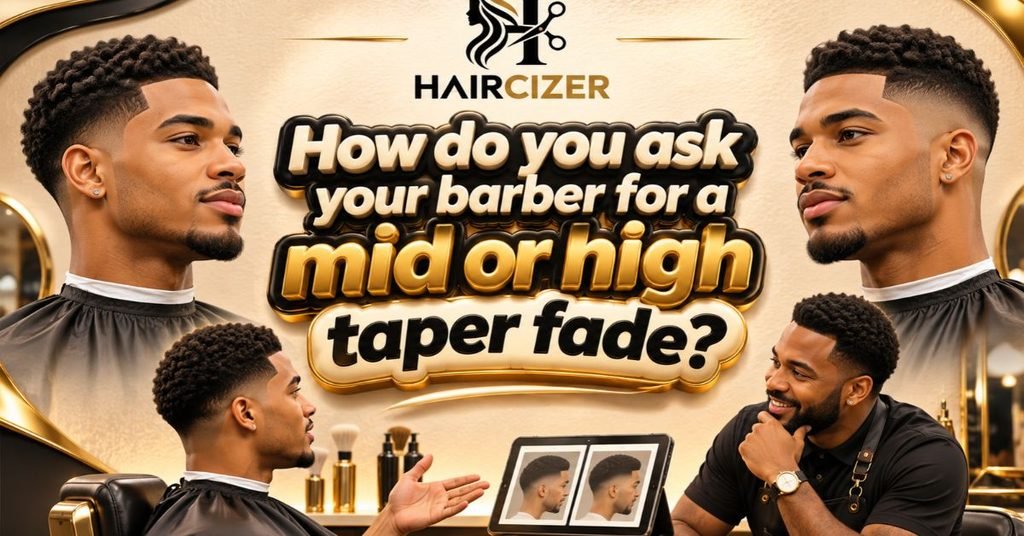
A clear request saves you from disappointment. Barbers understand specific words much better than vague ones.
What to say
- Name the style. Say “mid taper fade” or “high taper fade.”
- Mention where it starts. For example, “start the fade at the temple” for a mid, or “start it high on the sides” for a high.
- Choose the bottom length. Say whether you want a #1, a #2, or skin at the very bottom.
- Describe the top. Give the length, such as “about 3 inches on top with texture.”
- Say how you want the neckline. Choose rounded, squared, or tapered.
- Mention your beard. Tell the barber if the fade should blend into facial hair.
- Show a photo. It is the fastest way to remove guesswork.
Handy phrases
- “Keep the blend smooth with no harsh lines.”
- “I want it clean but not too bald-looking.”
- “Leave a little more length around the ears.”
- “How will this look after two weeks?”
If you are nervous, start one step lower than you want. Barbers can always cut shorter, but they cannot add hair back.
What mistakes and edge cases should you avoid?

Even a great haircut can go wrong if you skip a few basics.
- Choosing a high taper without checking your head shape. Exposed bumps or scars are hard to hide.
- Going too high on thin hair. Sparse sides can look patchy under a high taper.
- Ignoring your workplace. A bold fade may clash with a strict dress code.
- Skipping regular trims. A faded cut loses its sharpness fast.
- Asking for “short on the sides” only. That phrase can mean anything.
- Copying a photo without matching your hair type. A style on straight hair may not behave the same on curls.
- Forgetting about a receding hairline. A high taper can make a receding hairline stand out more, so discuss it with your barber.
- Cutting the blend at home. One wrong pass leaves a visible gap.
Edge cases worth knowing
- Cowlicks: Strong cowlicks at the crown can disturb a high taper. A mid taper gives more room to work around them.
- Very thick hair: Thick hair may need layers on top to avoid a mushroom shape.
- Sensitive skin: Frequent close clipping can cause irritation, so tell your barber if your skin reacts easily.
What are the closest alternatives to a mid or high taper?
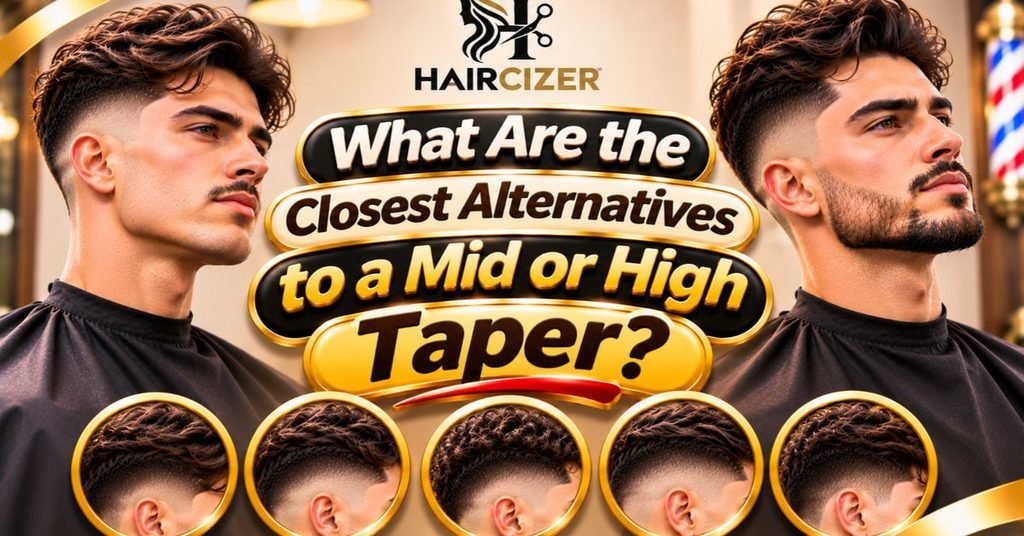
If neither option feels perfect, a few close cousins might be a better match.
| Alternative | How it differs | Good for |
| Low taper fade | Starts near the ear and nape, very subtle | Conservative settings, first-timers |
| Mid fade | Goes shorter, often to skin, at mid height | A cleaner, bolder middle ground |
| High fade | Skin-close sides at a high point | Maximum contrast |
| Drop fade | Curves down behind the ear | A stylish, rounded finish |
| Burst fade | Fades around the ear in a curve | Mohawks and mullets |
| Classic scissor taper | Shortens gently with no fade | A soft, traditional look |
If you want a calm look, try the low taper. If you want skin-close sides, look at mid or high fades. If you want something curved and creative, explore the drop or burst versions.
Frequently asked questions
What is the main difference between a mid and high taper fade?
The fade starts at the temple for a mid and much higher for a high.
Which looks more professional?
The mid taper looks more professional in most workplaces.
Which needs more maintenance?
The high taper needs trims more often.
Is a taper fade the same as a skin fade?
No, a skin fade goes to bare skin while a taper stays softer.
Can I get a mid taper with curly hair?
Yes, it keeps the sides tidy and the curls full.
Does a high taper suit a round face?
Yes, especially with extra height on top.
How often should I trim a mid taper?
Every two to three weeks keeps it sharp.
Is a high taper good for thinning hair?
It can expose thin sides, so a mid taper is usually safer.
Can I wear a beard with a taper fade?
Yes, the fade can blend smoothly into your beard.
Which grows out better?
The mid taper grows out more evenly.
Conclusion
Choosing between a mid taper fade and a high taper comes down to how bold you want to look. The mid taper is balanced, flexible, and easy to live with. The high taper is sharp, striking, and ready to make a statement, though it asks for more upkeep.
Think about your hair type, face shape, work setting, and how often you can visit the barber. If you are still unsure, start with the mid taper and move higher later. Bring a photo, use clear words, and you will walk out with a haircut you love.
Leave a Reply