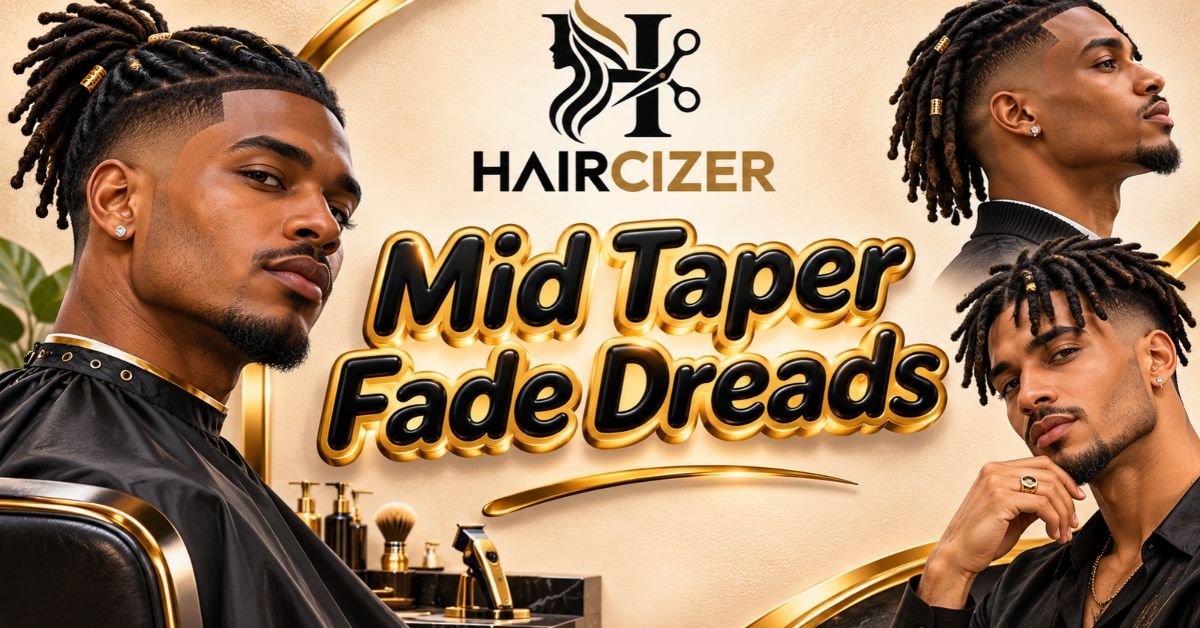
Want locs that look fresh, sharp and fully in control? Mid taper fade dreads might be exactly what you need. The sides and back blend smoothly into the skin, while your locs stay full and proud on top. It is a clean look that works at the office, the gym and everywhere in between.
But a great cut is not only about looks. Your hairline carries the weight of your locs every single day, and tight retwists, heavy locs or a careless barber can thin it for good. That is why the right style and the right care matter just as much.
In this guide, you will learn what a mid taper with locs really is, who it suits, and which styles look best on short, medium and long dreads. You will also get a simple barber checklist, a maintenance routine, and clear answers on protecting your edges, so you can walk out of the chair confident.
Quick answer: what is a mid taper fade with dreads?
A mid taper fade with dreads is a haircut where the sides and back gradually shorten, starting around the temple, while the locs on top stay full. It looks neat, grows out smoothly, and suits most loc lengths. Keep it safe by choosing a gentle barber, avoiding tight retwists, and protecting your hairline.
What a mid taper fade with dreads is
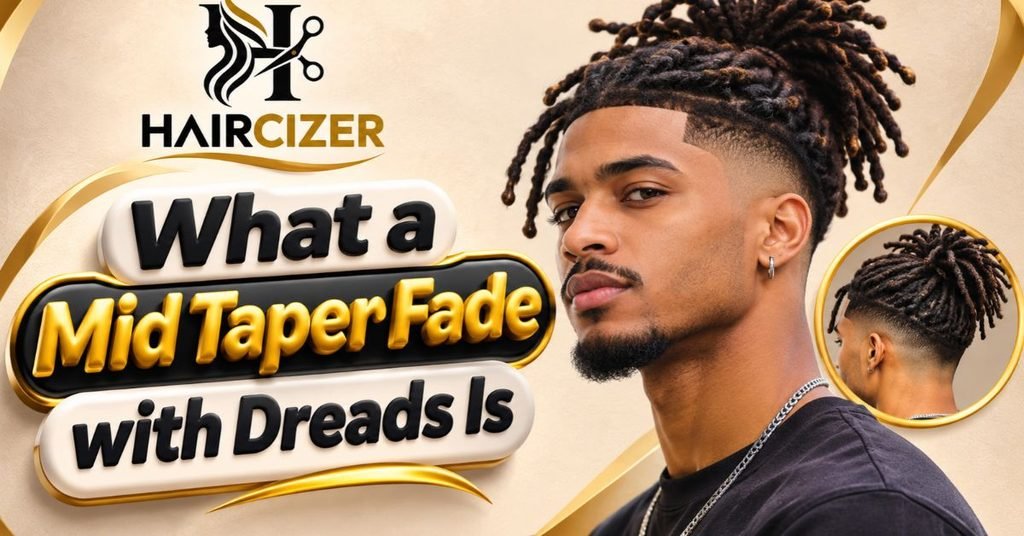
A mid taper fade shortens the hair on the sides and back in a smooth gradient. The blend begins at a middle point on the head and gets tighter toward the neckline and around the ears. The locs on top are left alone.
Think of it as a frame. The taper cleans up the edges, and the locs become the focus. Because the blend is gradual, the cut looks natural and grows out softly instead of leaving a harsh line.
Barbers like it for locs because it does not force a dramatic contrast. You get shape and neatness without a bald side, which suits people who want a polished look at work and a relaxed one on weekends.
Where the “mid” taper starts
The word “mid” tells you where the blend starts. On a mid taper, the gradient begins roughly at the level of the temple or a little above the ear, then steps down toward the skin.
Here is how the three common heights compare.
| Taper height | Where the blend starts | Overall feel |
| Low taper | Just above the ear and neckline | Subtle, soft, easy to grow out |
| Mid taper | Around the temple, mid-side of the head | Balanced, clean, versatile |
| High taper | Up near the crown or upper temple | Bold, high contrast, sharp |
With dreads, the starting height matters more than it does on loose hair. A higher blend removes more hair near the base of your locs, and that changes how the locs sit and how the perimeter looks.
Is a mid taper the same as a mid fade?
Not exactly, although people mix the two up all the time. A taper is a gradual shortening that usually leaves some length, even at the bottom. A fade goes down much shorter, often to bare skin.
A mid taper keeps a little hair at the neckline and sideburns. A mid fade drops lower and shows more skin. For locs, the taper is usually the friendlier choice because it is gentler, lasts longer between visits, and is easier to blend into loc roots.
Many barbers use both words loosely. That is why you should show a photo and say how short you want the bottom. We will cover that checklist later.
Is a mid taper fade right for your locs?
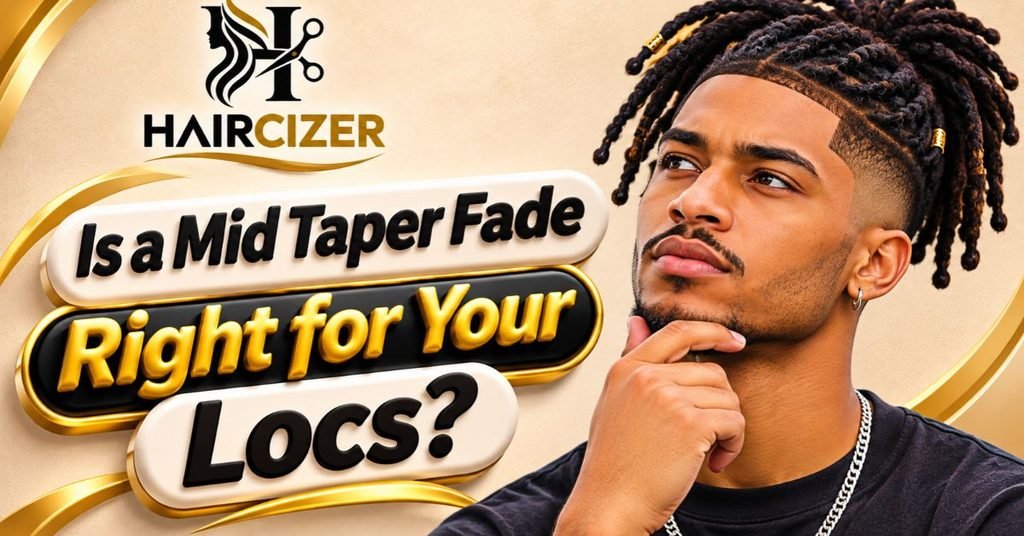
Short answer: yes for most people, as long as your locs are settled and your hairline is healthy. A few things decide how well it works for you.
What loc lengths and types work best
A mid taper suits almost every length, but it shows differently on each one.
- Starter and short locs: The taper makes a young loc journey look intentional. It keeps the sides tidy while the locs mature.
- Medium locs: This is the sweet spot. The locs have enough length to show shape, and the taper adds clean contrast.
- Long locs: The cut looks great when the locs are tied back, because the taper becomes visible instead of hidden.
- Thick versus thin locs: Thicker locs carry the look better. Very thin locs on top can look disconnected from a tight side, so a lower or softer taper may suit them.
- Mature versus new locs: Mature locs are stronger at the root. Brand-new locs are fragile, so go easy on the clippers.
Face shape plays a part too. A mid taper adds a little height on top and works on round, oval and square faces alike.
When to choose a lower taper or a natural hairline
A mid taper is not always the right call. Consider going lower, or skipping the taper, in these cases.
- Your locs are very new and still loose at the root.
- Your hairline is already thinning or sore.
- You want something very low maintenance.
- Your locs are thin and sparse near the temples.
- You work somewhere with a conservative dress code and want the softest edge possible.
A low taper removes less hair and puts less stress on the area around the ears. A natural hairline, with only a light clean-up, leaves the most protection of all. There is no prize for the highest blend.
Can a mid taper fade damage your hairline or loc roots?
The haircut itself does not damage your follicles. Clippers cut hair above the skin. The damage comes from tension, weight and rough handling around the same area. So the real question is what the cut sits next to, and how the locs around it are treated.
What actually raises the risk of traction alopecia
Traction alopecia is hair loss caused by steady pulling on the follicle. Dermatology sources describe it as most common at the front hairline, the temples and around the ears. It can start as small bumps, redness, tenderness or broken hairs. If the pull continues, the loss can become permanent.
Locs are listed among the styles that can cause it, mainly when they are heavy, tight or retwisted too hard. Here are the factors that matter most.
| Risk factor | Why it hurts the hairline |
| Very tight retwists or interlocks | Pulls the root and the follicle on every visit |
| Heavy, long locs hanging at the front | Weight drags on the edge hairs all day |
| Tight ties, bands or headwraps | Constant tension at the temples |
| Retwisting too often | Never gives the follicle time to rest |
| Adding extensions or thick wicks near the edge | Extra weight on weak hairs |
| Chemical treatments on top of locs | Weakens hair near the root |
The reassuring part is that early traction alopecia can often improve if the pulling stops. Once scarring sets in, regrowth is much less likely. If you notice soreness, bumps or thinning at your edges, loosen the style and see a dermatologist who knows textured hair.
Weight deserves a special mention. Every extra inch of loc length adds a little pull on the root. If your locs are long and your edges already look thin, tying them back gently or trimming some length can take real pressure off the front.
Barber mistakes that thin the loc perimeter
Most thinning near a taper comes from small technical errors. Watch for these.
- Cutting into the base of locs. Clippers set too short can nick the loc roots and leave stubby, weak locs along the perimeter.
- Fading too high. A blend that climbs past your natural line removes the anchor locs that hold the shape.
- Skipping the guard step. Going straight to the shortest guard creates patchy lines and uneven density.
- Pulling locs tight while cutting. Yanking locs aside with a comb or fingers stresses the root for no reason.
- Over-lining the edges. A razor line-up drawn too far back can move your hairline permanently backward.
- Cutting wet, freshly retwisted locs. Tight, wet roots are more likely to snag.
A good barber moves slowly around the loc base, supports the locs with a light hand, and blends outward from there.
Mid taper fade dreads styles to consider

Here are the looks that work best, grouped by loc length and finish. Mix and match them with your own hair type.
Short and medium locs with a mid taper
Shorter locs give you the cleanest, easiest version of this cut.
Short locs with a clean mid taper
This is the classic. Short locs sit neatly on top, and the taper blends smoothly down the sides. It looks tidy from every angle and needs very little styling.
It also works well on starter locs, because the taper keeps the sides sharp while the top is still growing in. Pair it with a light moisturizer so the locs stay soft and avoid frizz.
Best for: new loc wearers, busy people, anyone who wants a neat everyday look.
Medium locs with a mid taper and natural front
Here the taper stops at the sides and back, but the front hairline stays natural. Nothing is cut or lined up at the forehead.
This is the gentlest option for your edges. The locs frame the face softly, and you avoid the razor lines that can push a hairline back over time. It is a smart choice if you are protecting a delicate front area.
Best for: people guarding their hairline, relaxed workplaces, a softer look.
Medium locs with a line-up
Add a light line-up around the temples and forehead, and the whole cut sharpens. The crisp edge against the soft locs gives a strong contrast.
The catch is that a line-up needs more frequent upkeep and can nibble at the hairline if overdone. Ask for a natural, slightly soft line instead of a laser-straight one, and keep it close to where your hair already grows.
Best for: formal events, photos, people who like a very polished finish.
Long and tied-back locs with a mid taper
Longer locs bring weight, and weight means you should think harder about your hairline.
Shoulder-length locs with a mid taper
At shoulder length, the locs hang freely over the taper. When they are down, the cut is half hidden. When they are pushed back, it shows clearly.
The balance is nice. You get the length and flow of longer locs, and the tidy sides when you want them. Keep an eye on the front, though, because heavier locs pull more at the temples.
Best for: people who like to switch between loose and tied-back looks.
Tied-back locs with a visible temple taper
Pull the locs back into a ponytail, bun or half-up style, and the mid taper becomes the star. The blend around the temples and ears is on full display.
This is a very popular modern look. Just keep the tie loose. A band that is too tight, worn every day, is one of the quickest ways to stress the hairline. Use a soft scrunchie or a wide fabric tie, and rotate your style so the same follicles are not strained daily.
Best for: gym, work and nights out. It also shows off a barber’s blending skills.
Semi-freeform and styled locs with a mid taper
If your locs are less uniform, or you like to style them, these options keep the look relaxed but neat.
Semi-freeform locs with a mid taper
Semi-freeform locs have a natural, slightly varied shape. A mid taper gives them a clean border so the whole style looks deliberate rather than messy.
This pairing is perfect if you want a laid-back loc look without being told it is “unkempt.” The tidy sides tell the story that the locs are cared for. You also retwist less often, which is kinder to your roots.
Best for: people who prefer low-manipulation locs and an organic texture.
Barrel-twist style over mature locs
A barrel twist rolls sections of locs into thick, rope-like coils. Over mature locs, it creates a bold sculpted top above the taper.
Keep the twists loose near the front. Tight barrel twists put real tension on the edges, so ask your loctician to leave a little slack and avoid pulling from the very root.
Best for: special occasions and people with strong, mature locs.
Two-strand styled locs with a mid taper
Two-strand twisting wraps pairs of locs around each other for a textured, rope-like finish. With a mid taper, the effect is neat and modern.
It also works as a short-term style that you can undo after a week or two. As with every styled look, avoid pulling the roots tightly, and let your scalp rest between sets.
Best for: a quick style change without altering your actual cut.
What to ask your barber for

Walking in with vague words like “a taper” is a gamble. A clear request protects your locs and gets you the look you want.
The six details to specify before the clippers start
Tell your barber these six things, and bring a reference photo of locs like yours.
- Taper height. Say “mid” and point to where on your head the blend should begin.
- Bottom length. Do you want a skin-short finish, or a taper that leaves a little hair at the bottom?
- Guard sizes. Ask what guards will be used and request a gradual step-down, not a jump.
- Front hairline. Natural, or lined up? If lined up, how far back?
- Neckline. Rounded, squared or natural, and how clean should it be?
- Loc handling. Ask that the locs not be pulled tight, and that the clippers stay away from the loc base.
If you are unsure, say, “I want a soft mid taper and I want to protect my hairline.” A good barber will adjust the height to fit your hair density.
Barber or loctician first?
Do the loctician work first when you can. Retwisting and styling set the shape of your locs. Once they are in place, the barber can see exactly where the perimeter sits and cut around it.
Here is a simple order.
- Wash and retwist with your loctician.
- Style your locs how you plan to wear them.
- Visit the barber for the taper and edges.
Doing it the other way round can leave you with a taper that no longer lines up once the locs shift. If your barber and loctician are the same person, even better, because they can plan the whole shape together.
How to maintain a mid taper fade with locs
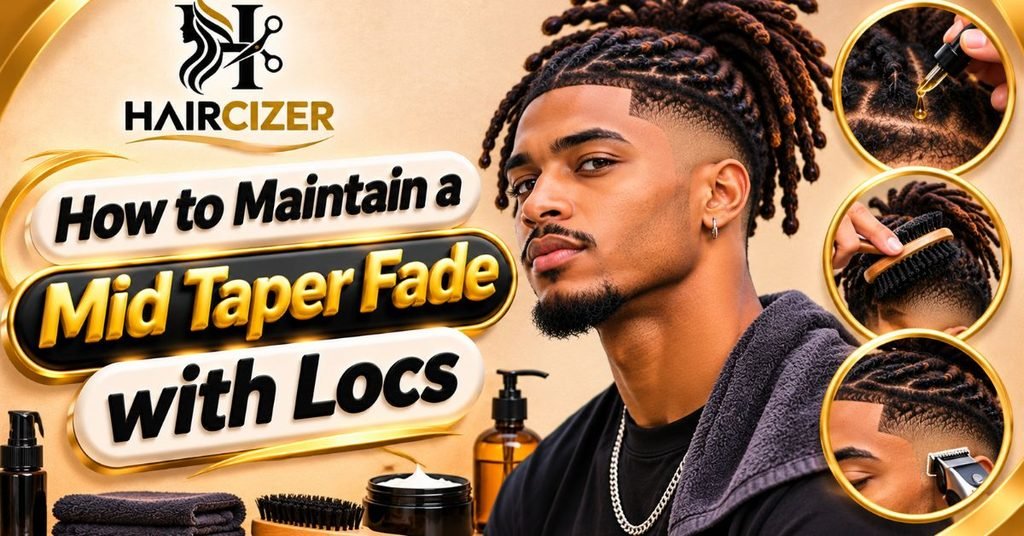
The taper is easy to keep once you build a rhythm. The locs and scalp need steady care too.
How often to refresh the taper
Also Read:Mid vs High Taper Fade: Which Haircut Suits You Best?
Most people book a touch-up every two to four weeks. Here is a rough guide.
| Your goal | Suggested refresh |
| Very sharp, with a line-up | Every 2 weeks |
| Clean and tidy | Every 3 to 4 weeks |
| Relaxed, grown-in look | Every 4 to 6 weeks |
Hair grows at its own pace, so adjust to your own growth. If the blend looks fuzzy or the neckline feels untidy, it is time. If your edges feel tender, wait a bit longer and skip the line-up that round.
Do not over-trim. Constant clipping and edge-ups add up, especially around the temples.
Caring for your locs and scalp between cuts
A sharp taper looks best on healthy locs. Use this routine.
- Wash regularly. Use a residue-free shampoo every one to two weeks. A clean scalp prevents buildup and itching.
- Moisturize lightly. Use a light oil or a water-based spray on your locs and scalp. Heavy waxes can clog locs and attract lint.
- Be gentle at the edges. Do not scrub the hairline hard when you wash. Use your fingertips, not your nails.
- Protect at night. A satin bonnet or durag keeps frizz down and protects the edges. Make sure the band is loose.
- Retwist wisely. Space retwists out and ask for a gentle hand. Tight retwists are one of the most common traction triggers.
- Rotate your style. Switch parts of your pull-back or ponytail so the same follicles are not stressed all the time.
- Watch for warning signs. Bumps, soreness, redness or thinning at the temples mean it is time to ease off. See a dermatologist if they last.
- Stay healthy. Good sleep, a balanced diet and enough water all support hair growth.
Mid taper fade dreads vs other cuts
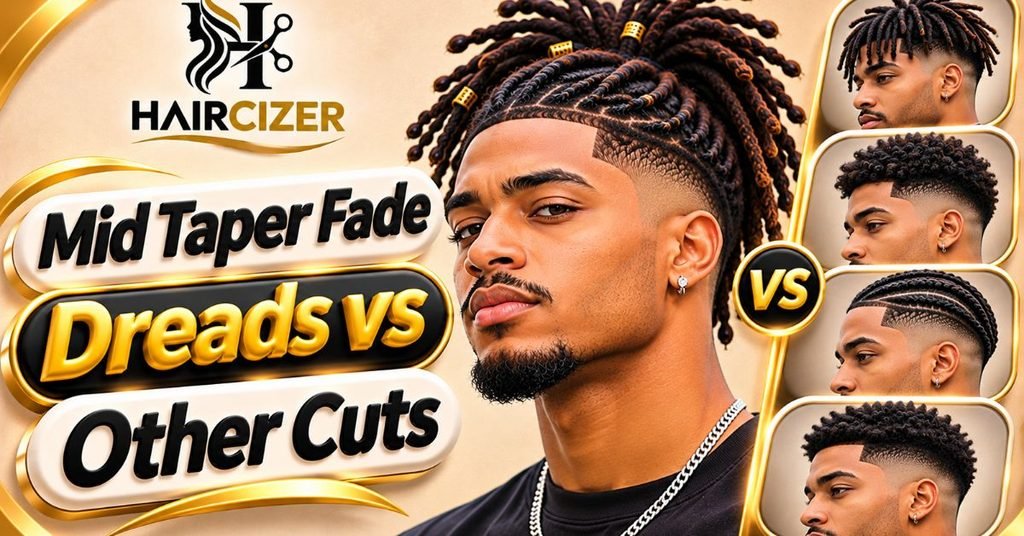
Not sure a mid taper is your best bet? Compare it with the usual alternatives.
Low vs mid vs high taper with locs
| Feature | Low taper | Mid taper | High taper |
| Contrast | Soft | Balanced | Strong |
| Hair removed | Least | Moderate | Most |
| Upkeep | Easy | Moderate | Frequent |
| Hairline safety | Gentlest | Good with care | Needs the most care |
| Best for | Beginners, conservative looks | Most people | Bold, modern looks |
A high taper looks dramatic, but it leaves the locs concentrated at the crown and removes more hair near the roots. A low taper is the safest. The mid taper sits comfortably in between, which is why it is such a common pick.
Mid taper vs natural hairline vs full fade
| Feature | Mid taper | Natural hairline | Full fade |
| Look | Neat with a gentle gradient | Soft and organic | Sharp, skin-short sides |
| Upkeep | Every 2 to 4 weeks | Minimal | Every 1 to 2 weeks |
| Hairline impact | Low if done gently | Lowest | Highest |
| Grow-out | Smooth | Easiest | Visible and abrupt |
If your edges are healthy and you like a tidy finish, a mid taper is a smart middle path. If your hairline is fragile, stick with the natural option until it recovers. A full fade is dramatic, but it asks the most from your barber and your edges.
A simple pre-appointment checklist

A little prep makes the visit smoother. Run through this list before you book.
- Save two or three photos of locs that match your length and thickness.
- Check that your scalp is calm, with no bumps, scabs or tender spots.
- Retwist at least a few days before the cut, not the same morning.
- Wash your hair so the barber can see the true shape of the perimeter.
- Decide how much of your hairline you are happy to change.
- Book a barber who has worked on locs before, and ask to see examples.
Arriving prepared also helps your barber. They can plan the blend, pick guards with confidence, and avoid surprises. If something feels uncomfortable during the cut, speak up straight away. A good barber will stop, adjust and carry on.
Common mistakes to avoid after the cut

The first week matters. A fresh taper sits close to the skin, so the scalp can feel a little sensitive.
- Wearing tight caps or headbands. They press on freshly cut edges and trap sweat.
- Retwisting too soon. Give the area a few days to settle before any tight maintenance.
- Layering heavy products. Thick butters and waxes can clog the short hairs and irritate the skin.
- Skipping the bonnet. Friction from cotton pillowcases roughens the blend and dries the locs.
- Picking at the line-up. Leave small stray hairs alone, or ask your barber to tidy them at the next visit.
These small habits protect both the taper and the loc roots. They cost nothing, and they pay off in a cleaner, longer-lasting cut.
FAQs about mid taper fade dreads
Is a mid taper fade good for dreads?
Yes, it suits most loc lengths when your hairline is healthy.
How often should I get a mid taper with locs?
Every two to four weeks keeps it clean.
Can a mid taper fade cause hair loss?
The cut itself does not, but tight styles and rough handling can.
What is the difference between a mid taper and a mid fade?
A taper keeps some length at the bottom, while a fade goes shorter.
Should I see my barber or loctician first?
Visit your loctician first so the barber can cut around finished locs.
Can I get a mid taper with short locs?
Yes, it works well and keeps the sides neat while locs grow.
Does a line-up damage my hairline?
Only if it is drawn too far back or done too often.
What guard should I ask for?
Ask your barber to step down gradually instead of jumping to the shortest guard.
How can I protect my edges with locs?
Keep ties loose, retwist gently and avoid heavy weight at the front.
What are early signs of traction alopecia?
Look for bumps, tenderness, broken hairs or a receding temple line.
Is a natural hairline safer than a taper?
Usually yes, since less hair is cut or lined up.
Can I tie my locs back with a mid taper?
Yes, just use a loose, soft tie.
Conclusion
A mid taper fade gives your dreads a clean frame without making them lose their natural character. It works on short, medium and long locs, and it adapts to tied-back, freeform and styled looks. Pick the version that fits your hair, your job and your lifestyle.
Good results come down to protecting your edges. Tell your barber exactly what you want, keep ties and retwists gentle, and refresh the taper on a steady schedule. If you ever notice soreness or thinning, ease off and see a dermatologist who understands textured hair.
Leave a Reply