
The high taper fade textured fringe is one of those haircuts that looks expensive without looking fussy. The sides are short and clean. The top is longer, broken up, and pushed forward onto the forehead. Put together, it gives you contrast, shape, and a style that works in an office, at a wedding, or on a Saturday night.
But the cut is easy to get wrong. A vague request at the barber shop can leave you with sides that are too bald, a fringe that sits flat, or a top that looks like a helmet. Most bad results come from a missing detail, not a bad barber.
This guide covers everything in plain steps: what the cut actually is, who it suits, how it differs from similar fades, what to say in the chair, how to style it every morning, and how to keep it sharp between visits. By the end, you will know if it is right for you and exactly how to ask for it.
Quick answer: A high taper fade textured fringe is a haircut with a tapered, high-starting short side and back, and a longer, choppy fringe on top that falls forward. You ask for the taper to start well above the ear, the length on top to stay around two to four inches, and the fringe to be point cut for texture.
What Is a High Taper Fade Textured Fringe?

Think of the haircut as two separate parts joined together. The bottom half is a taper. The top half is a fringe. Each part has its own rules, and the magic happens at the point where they meet.
What makes the taper “high”?
A taper is a gradual shortening of hair. Instead of dropping straight to skin, the sides and back get shorter in small steps, so the change looks soft and natural. A taper usually keeps a little length at the sideburns and neckline.
The word “high” tells the barber where the shortening begins. On a high taper, the transition starts well above the ears, close to the temple and the parietal ridge, which is the rounded part where the top of your head curves into the side. That placement gives you more short hair on the sides and a stronger contrast with the top.
A few things to know about the high placement:
- It makes the top look fuller because less hair surrounds it.
- It draws attention up and slightly lengthens the face.
- It shows more scalp near the ears, so a clean neckline matters more.
- It grows out faster in the eye than a low taper does.
What makes the fringe “textured”?
A fringe is the front section of hair that falls toward the forehead. A plain fringe can be blunt and heavy. A textured fringe is cut so that the ends are uneven, light, and separated.
Barbers create that effect with a few common tools and methods:
- Point cutting, where scissors snip into the ends at an angle
- Texturizing shears, which remove weight in tiny bites
- Razor work, which softens and feathers the tips
- Clipper-over-comb on the top, with a long guard
The result is a fringe that moves. Instead of one solid curtain, you get pieces that sit on top of one another. That is why the style looks lived-in even when it is freshly cut.
What should the finished haircut look like?
When the cut is done right, you should see a few clear features from the front, side, and back:
- Short sides that begin to taper well above the ear
- A smooth, even blend with no visible lines or steps
- A top length of roughly two to four inches, depending on hair type
- A fringe that reaches somewhere between the middle of the forehead and the eyebrows
- Light, separated ends instead of a solid edge
- A clean neckline, either rounded, squared, or tapered
If you can see a harsh line where the sides meet the top, the blend was not finished. If the fringe looks like one heavy flap, it needs more texturizing.
Who Does a High Taper Fade Textured Fringe Suit?

Almost anyone can wear a version of this haircut, but the details change depending on your hair and head. Here is how to match the cut to your own features.
Which hair types work best?
Different hair types behave differently under a textured fringe. This table gives a simple starting point.
| Hair type | How it works | Tip |
| Straight, thick | Holds the shape well and shows texture clearly | Ask for more thinning so the top does not puff out |
| Straight, fine | Can look flat or thin on top | Keep the top a bit longer and add volume with powder |
| Wavy | The best match, since natural movement adds texture | Let the barber cut with the wave, not against it |
| Curly | Gives a bold, rounded fringe | Cut it dry and avoid over-thinning, which causes frizz |
| Coily | Works as a short, defined top with a clean high taper | Keep the fringe shorter and shape it with moisture |
| Asian, thick and straight | Strong texture holds up well | Use point cutting to stop the top from sticking out |
Wavy hair has the easiest time here because the fringe already has built-in shape. Fine straight hair needs a little more help, since it can fall flat by lunchtime.
How do hair density and growth patterns affect the cut?
Density is how many hairs sit on each square inch of your scalp. Growth pattern is the direction your hair wants to lie. Both matter more than most people think.
High density. Thick hair can look bulky on top, especially next to a tight high taper. Your barber may need to remove weight inside the fringe so it sits neatly.
Low density. Thin hair looks fuller when the sides are short, so a high taper can actually help. Just avoid cutting the fringe too short, because there is less hair to hide the scalp.
Cowlicks. A cowlick at the front hairline pushes the fringe in one direction no matter what you do. Fighting it is a losing game. A good barber leaves extra length near the cowlick and lets the fringe follow its natural fall.
Double crowns. If you have two swirls at the back, the top can split in odd ways. Longer hair over the crown tends to cover it better than a very short top.
Receding temples. A high taper puts the focus on the temple area. If your hairline is moving back, a slightly lower start and a forward fringe can soften it.
Before the cut, run your fingers through dry hair and show your barber where it wants to go. Two minutes of that saves two months of annoyance.
How should face shape and forehead size influence the choice?
Face shape does not decide whether you can wear the haircut. It decides how to adjust it.
- Oval: Most versions work. Try any fringe length.
- Square: A textured, slightly angled fringe softens a strong jaw.
- Round: The high taper adds height and makes the face look longer. Keep some volume on top.
- Oblong or long: Keep the fringe lower on the forehead and avoid too much height.
- Heart-shaped: A side-swept fringe balances a wider forehead and narrower chin.
- Diamond: A fuller fringe brings balance to wide cheekbones.
Forehead size matters too. A tall forehead looks shorter with a fringe that reaches the brows. A small forehead can disappear under a long fringe, so keep it a little higher and lighter.
Who should think twice about this cut?
This haircut is not for everyone, and it is better to know that before you sit down. Think twice if:
- You have very thin hair on top and need extra coverage.
- Your hairline is receding fast and you want length at the sides.
- You hate visiting the barber, since the taper needs regular upkeep.
- Your workplace has strict grooming rules about short sides.
- You do not want to spend even a few minutes on styling.
- Your hair is extremely coarse and stiff and refuses to lie down.
None of these is a hard no. They are reasons to ask your barber for a softer version, such as a mid taper or a slightly longer fringe.
High Taper vs Mid or Low Taper vs High Fade: What’s the Difference?

Hair terms get mixed up constantly, even among people who cut hair. Sorting them out makes it easier to ask for what you want.
High vs mid vs low taper with a textured fringe
The only real difference is where the shortening starts.
| Taper height | Where it starts | Look | Best for |
| Low taper | Just around the ear and neckline | Soft, subtle, conservative | Office settings, first-timers |
| Mid taper | At the temple, about halfway up | Balanced, versatile | Most people |
| High taper | Well above the ear, near the parietal ridge | Strong contrast, sharper | Bolder style, fuller-looking top |
A low taper keeps the most length and grows out gently. A mid taper sits in the middle. A high taper gives the loudest contrast, so the fringe looks heavier and more dramatic. If you are not sure, start with a mid taper and move higher next time.
High taper fade vs high fade vs skin fade
This is where most of the confusion lives.
| Cut | What happens to the sides | Level of contrast |
| High taper | Hair gets shorter gradually but keeps some length, mostly cleaning up sideburns and neckline | Medium to strong |
| High fade | Sides go very short, often down to the skin, starting high on the head | Very strong |
| Skin or bald fade | Hair fades all the way to bare skin | Sharpest, most dramatic |
A taper leaves some hair at the bottom. A fade usually takes the sides all the way down, often to skin. Under a textured fringe, the taper is the softer, more polished choice, and the fade is the sharper one.
Some barbers use “high taper fade” as one phrase. That is fine, but it can mean different things to different people. That is why the next section matters so much.
How Do You Ask Your Barber for a High Taper Fade Textured Fringe?

The haircut is only as good as the instructions behind it. A short, specific brief beats a long, vague one every time.
What details should you specify before the cut starts?
Walk in knowing the answers to these questions:
- Taper height. Where should the shortening begin? Say “well above the ear” or “at the temple.”
- Finish on the sides. Do you want to keep some length (a true taper) or go to skin (a fade)?
- Top length. Give a number if you can, such as “about three inches.”
- Fringe length. Say “to the eyebrows” or “to mid-forehead.”
- Texture method. Ask for point cutting or texturizing, depending on hair thickness.
- Neckline. Choose rounded, squared, or tapered.
- Parting. Say if you want a side part, a center fall, or no part at all.
- Product plan. Tell the barber what you will use at home so they can cut accordingly.
What reference photos should you bring?
Photos remove guesswork, but only the right photos help. Bring:
- One photo from the front, showing the fringe
- One from the side, showing where the taper starts
- One from the back, showing the neckline
- A photo of someone with your hair type, not just any model
A straight-haired model’s photo will not help if your hair is curly. Match the hair texture first, then the cut. If the photo has a different hairline or density from yours, tell the barber what you like about it, such as “I want this fringe shape” or “I want this blend height.”
It also helps to bring a photo of a haircut you do not want. A single “not this” picture can prevent a lot of trouble.
What should the barber brief sound like?
Keep it plain and specific. Here is a sample you can adapt:
“I’d like a high taper, starting well above the ear, blended into about three inches on top. I want a textured fringe to my eyebrows, point cut so it’s light and separated. Keep a bit of length at the sideburns and a natural neckline. I style it with clay, so don’t thin it too much.”
Notice what this does. It names the height, the length, the texture, the sides, and the neckline. It also tells the barber how you style, which affects how much weight to remove.
A few extra habits help:
- Ask the barber to check the cut in the mirror from the side before finishing.
- Say “a little longer, please” if you are nervous. Hair can be cut shorter later, but not the other way around.
- Speak up early. Fixing the taper in the first five minutes is much easier than fixing it at the end.
How Do You Style a High Taper Fade Textured Fringe?
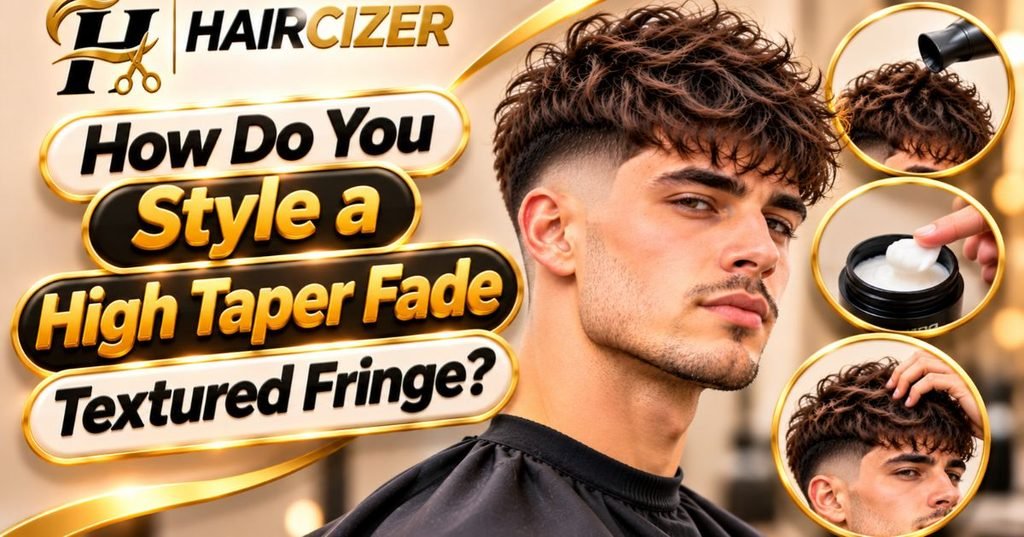
The cut does most of the work. Styling just wakes it up. A good routine takes about five minutes.
What is the fastest daily styling routine?
Here is a simple method that works for most hair types:
- Start with damp hair. Towel dry until it is no longer dripping.
- Apply a pre-styler. A little sea salt spray or light cream adds grip.
- Blow dry the fringe forward. Use medium heat and move your fingers through it.
- Lift the roots. Point the dryer at the base of the top section, then lift with a comb or fingers.
- Warm the product. Rub a pea-sized amount between your palms.
- Work it through. Start at the back of the top and move forward. Keep the fringe for last.
- Pinch and separate. Twist the ends with your fingertips to create pieces.
- Finish with a light mist. Use a flexible hairspray if you need all-day hold.
If you are short on time, skip the dryer, scrunch in a little cream, and shape with your hands. It will not be perfect, but it will be good.
Which product type works for each hair type?
The wrong product makes a good cut look bad. This table matches product to hair.
| Hair type | Best product | Finish |
| Fine, straight | Texture powder or sea salt spray | Matte, airy volume |
| Thick, straight | Matte clay or paste | Strong hold, defined pieces |
| Wavy | Cream or light paste | Natural, soft movement |
| Curly | Curl cream, then a light gel | Defined curls, low frizz |
| Coily | Moisturizing cream or leave-in conditioner | Soft definition, shine |
| Very dry hair | Light cream or oil-free balm | Flexible, no crunch |
Matte products suit this cut best because they emphasize texture. Shiny, heavy pomades tend to stick the pieces together and make the fringe look wet.
What styling mistakes make the fringe flat or clumpy?
Also Read:French Crop Low Taper Fade: Best Styles & Expert Tips
Most problems come from a small list of habits.
- Too much product. More is not better. Start with a pea-sized amount and add only if needed.
- Applying product to wet, dripping hair. It dilutes the product and weakens hold.
- Skipping the roots. Without lift, the fringe falls flat.
- Combing too much. Brushing smooths out all the texture you paid for.
- Using heavy waxes on fine hair. They weigh it down within an hour.
- Starting at the front. Product piles up on the fringe and makes it greasy.
- Using the wrong tool. A fine-tooth comb flattens texture, so use your fingers.
- Forgetting the sides. Dry, fuzzy sides ruin the contrast, so a little balm helps.
If the fringe looks clumpy, wash it, dry it, and start again with half the product. If it looks flat, add powder at the roots and blow dry with your head tipped forward.
How do you dry it without damaging your hair?
Heat is useful but easy to overdo. Follow a few safe habits:
- Use medium heat, not high, and keep the dryer moving.
- Hold it about six inches from your head.
- Apply a heat protectant if you blow dry daily.
- Dry until about 80 percent dry, then finish with cool air to set the shape.
- Let thick curls air dry or use a diffuser to avoid frizz.
The cool air step matters more than people expect. It locks the shape in place, so your style lasts longer without extra spray.
How Do You Maintain the Cut Between Barber Visits?
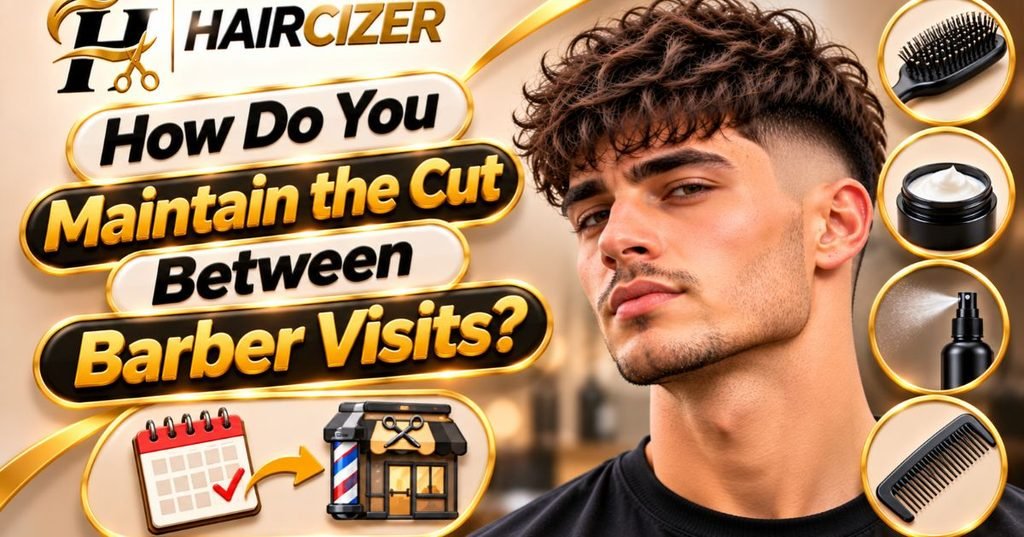
A high taper has a short grace period. The contrast fades as soon as the sides begin to grow.
How often should the taper and fringe be refreshed?
Plan your visits around how fast your hair grows and how sharp you like it.
| Goal | Visit every |
| Razor sharp, always fresh | 2 to 3 weeks |
| Clean and polished | 3 to 4 weeks |
| Relaxed, natural grow-out | 5 to 6 weeks |
Hair grows around half an inch a month on average, so by week four, the high taper will have softened and the fringe will be longer. If your fringe reaches your eyes, it is time.
One trick is to book a quick sides-and-neckline clean-up between full cuts. Many barbers charge less for this, and it keeps the look fresh without touching the top.
What can you do between appointments?
You can keep the cut looking good with a few small habits:
- Trim the neckline carefully. Only clean stray hairs below the natural line, since cutting into it ruins the shape.
- Wash with a gentle shampoo. Harsh formulas dry the hair and make texture look rough.
- Use conditioner on the fringe. It keeps the ends from looking frayed.
- Do not cut the fringe yourself. If it is too long, tuck it back instead of cutting.
- Wash your tools. Clean combs and brushes keep product from building up.
- Sleep smart. A silk or satin pillowcase reduces frizz and flattening.
If a few strands grow out of place, a dab of paste pushed into the weak spot can fix it for the day.
Which High Taper Textured Fringe Variations Are Worth Considering?

The same base cut can look quite different once you change one element. Here are the options worth knowing.
Which variations change the fringe shape?
- Brushed forward fringe: Hair combed straight toward the forehead for a modern, slightly casual look.
- Side-swept fringe: Angled across the forehead, good for balancing wider foreheads.
- Choppy fringe: Heavily point cut for a messy, energetic effect.
- Long, heavy fringe: Reaches the eyebrows or lower and works well on thick hair.
- Short, cropped fringe: Sits high on the forehead and suits a French crop approach.
- Curly fringe: Lets curls fall naturally with minimal cutting.
- Spiky fringe: Product-heavy, pushes the fringe up and out for an edgier look.
Which variations change the taper finish?
- Skin taper: The lowest area goes to bare skin for stronger contrast.
- Temple taper: Focuses the fade around the temples and sideburns.
- Burst taper: A rounded fade that curves around the ear, often leaving length at the nape.
- Blowout taper: A soft taper paired with a top styled up and out.
- Beard blend: The taper flows into a trimmed beard for one smooth line.
- Hard part or line-up: A shaved part adds a sharp detail on one side.
If you are trying a variation for the first time, change just one thing. Keep the taper the same and tweak the fringe, or the other way around. That way you know what you liked.
Should You Get a High Taper Fade Textured Fringe?
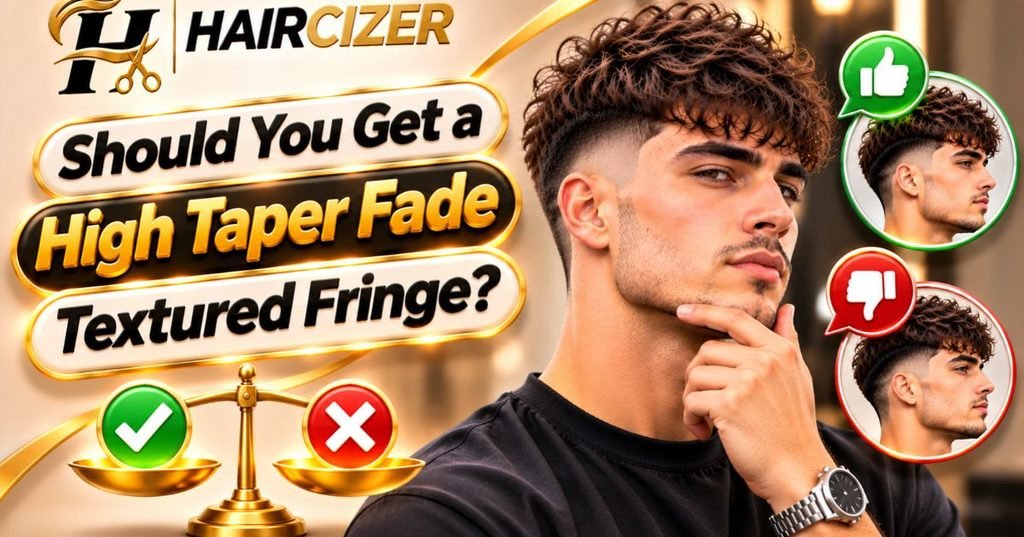
Here is a fair look at both sides before you book.
What are the biggest advantages?
- It looks sharp and modern with little daily effort.
- It adds visual height and makes thin or flat hair look fuller.
- It works across many hair types with small changes.
- It fits both casual and formal settings.
- The sides stay cool and tidy in warm weather.
- It gives you room to experiment with the top over time.
What are the trade-offs?
- It needs frequent barber visits to stay crisp.
- The contrast is strong, which may feel too bold for conservative workplaces.
- A poor blend is easy to spot.
- It can emphasize a receding hairline.
- Styling products are part of the routine.
- Growing it out takes patience because the sides look uneven in the middle stage.
What are the best alternatives if it is not right for you?
If the trade-offs sound heavy, a close cousin may be a better fit.
| Alternative | Why choose it |
| Mid taper textured fringe | Softer contrast and easier grow-out |
| Low taper textured fringe | Most conservative and least maintenance |
| French crop with taper | Shorter fringe, neat and low effort |
| Textured quiff | More height and volume, less fringe |
| Longer layered cut with scissor-cut sides | No visible fade, easiest to grow out |
| Classic side part with a taper | Formal and clean |
FAQs About the High Taper Fade Textured Fringe
What is a high taper fade textured fringe?
A short, high-starting taper on the sides with a longer, choppy fringe on top.
How long should the hair be on top?
About two to four inches, depending on hair type and style.
Is a high taper the same as a high fade?
No, a taper keeps some length while a fade usually goes down to the skin.
Does it suit curly hair?
Yes, curls give the fringe natural shape and need very little texturizing.
Which product is best for styling?
A matte clay or paste suits most hair types.
How often should I get it cut?
Every three to four weeks keeps the taper clean.
Can I wear it with a receding hairline?
Yes, but ask for a slightly lower taper and a forward fringe.
Is it professional enough for the office?
Yes, a softer version with a neat neckline works well in most workplaces.
Conclusion
A high taper fade textured fringe gives you a clean, modern look built on one simple idea: short and neat on the sides, loose and full on top. When you pick the right taper height and fringe length for your hair and face, the cut almost styles itself.
Go in with clear details, bring reference photos that match your hair type, and use a light matte product at home. Keep up with regular trims and avoid common styling mistakes, and the haircut will stay sharp for weeks. If it feels too bold, a mid or low taper is an easy way to start.
Leave a Reply