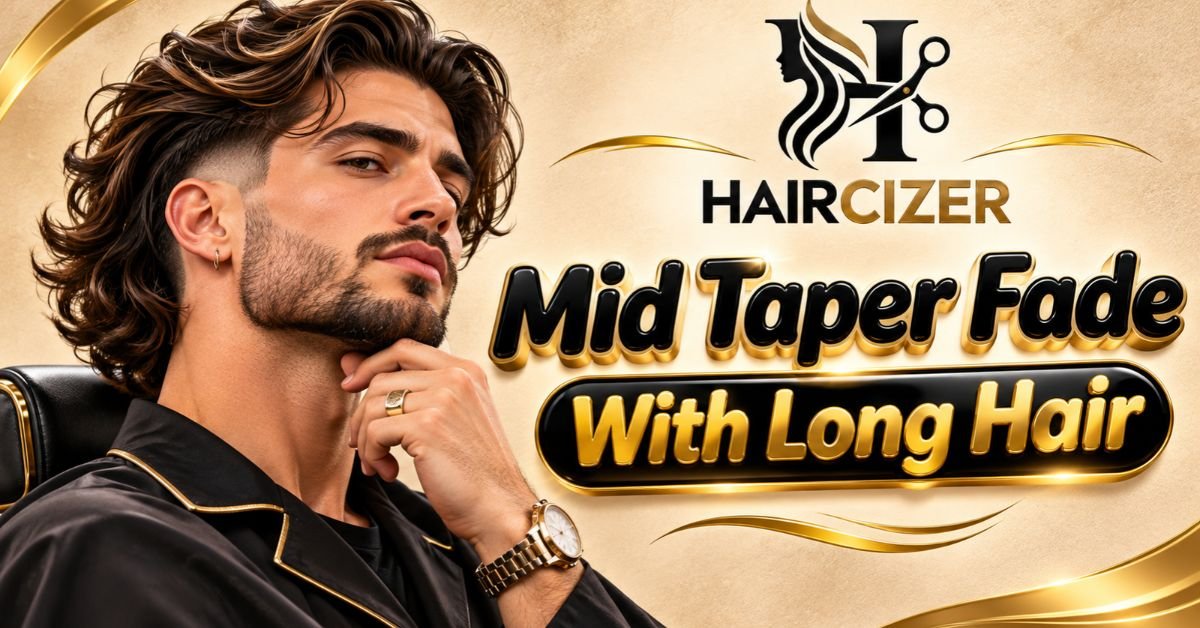
Long hair and a clean haircut can sit in the same chair. A mid taper fade with long hair keeps your length on top, then blends the sides and back down into a neat, tight finish. You get the flow and the freedom of long hair, with an edge that looks tidy and deliberate.
The trouble is that many people are scared to try it. They worry the barber will chop off inches they spent years growing, or that the sides will look harsh next to the length. Both fears are fair, and both are easy to solve when you know what to ask for.
This guide explains what the cut really is, who it suits, and which styles work on straight, wavy, curly and coily hair. You will also get a barber script, a styling routine and an honest look at the downsides, so you can book your next appointment with confidence.
Quick answer: what is a mid taper fade with long hair?
A mid taper fade with long hair is a cut where the sides and back gradually shorten, starting around the temple or mid-side of the head, while the top stays long. The taper cleans up the edges without touching your length. It works best when you tell your barber exactly how much length to keep.
What is a mid taper fade with long hair?
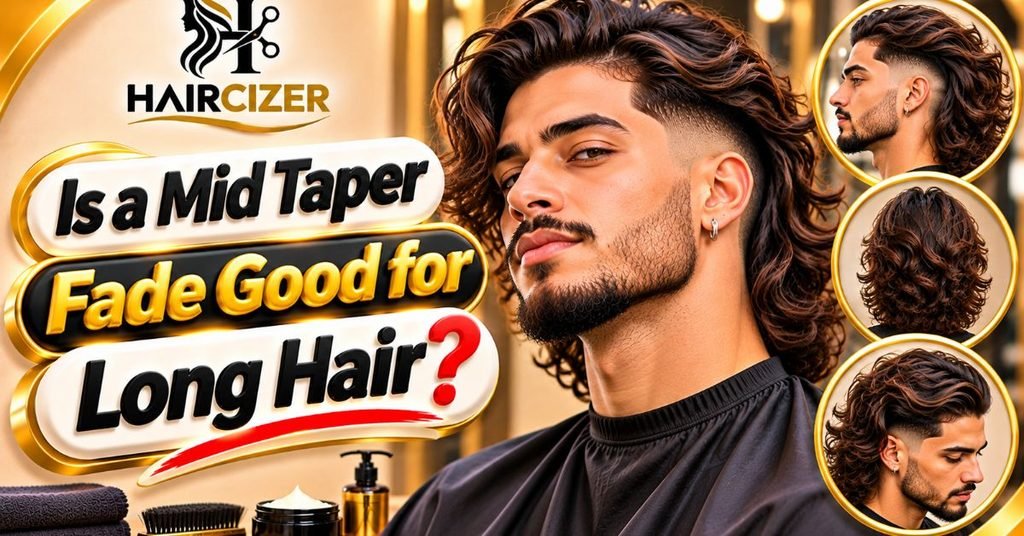
A mid taper fade shortens the hair around your ears and neckline in a smooth gradient. The blend begins around the middle of the sides of your head, usually near the temple, and gets shorter as it goes down. Everything above that point stays long.
On long hair, this creates a clear contrast. The top can fall past your ears, to your jaw, or all the way to your shoulders. The sides stay neat and light. It looks a bit like a frame around the face, with your length as the main feature.
Barbers like this cut for a few reasons.
- It tidies the perimeter, so long hair looks groomed instead of messy.
- It removes bulk around the ears, which helps hair sit flatter.
- It makes tied-back styles look sharper, because the taper becomes visible.
- It grows out softly, with no harsh line.
Remember that “long hair” is relative. For one person it means chin length, for another it means mid-back. The taper works across that whole range, but the styling and the barber instructions change a little at each length.
Mid taper fade vs. full mid fade: what’s the difference?
People often mix up the two terms, and it can lead to a haircut you did not want. The main difference is how short the hair gets at the bottom.
| Feature | Mid taper fade | Full mid fade |
| Bottom length | Leaves some hair, even at the neckline | Goes down to the skin |
| Contrast with long top | Soft and natural | Strong and bold |
| Grow-out | Smooth and forgiving | Shows quickly |
| Upkeep | Every 3 to 5 weeks | Every 2 to 3 weeks |
| Best for | A relaxed, professional look | A sharp, high-contrast look |
A taper is gentler. A fade is more dramatic. With long hair, a taper often looks more balanced because the transition does not fight the length on top. A skin fade can look striking, but it needs more frequent visits to stay crisp.
If you are not sure, start with the taper. You can always go shorter next time, but you cannot add hair back.
Is a mid taper fade good for long hair?
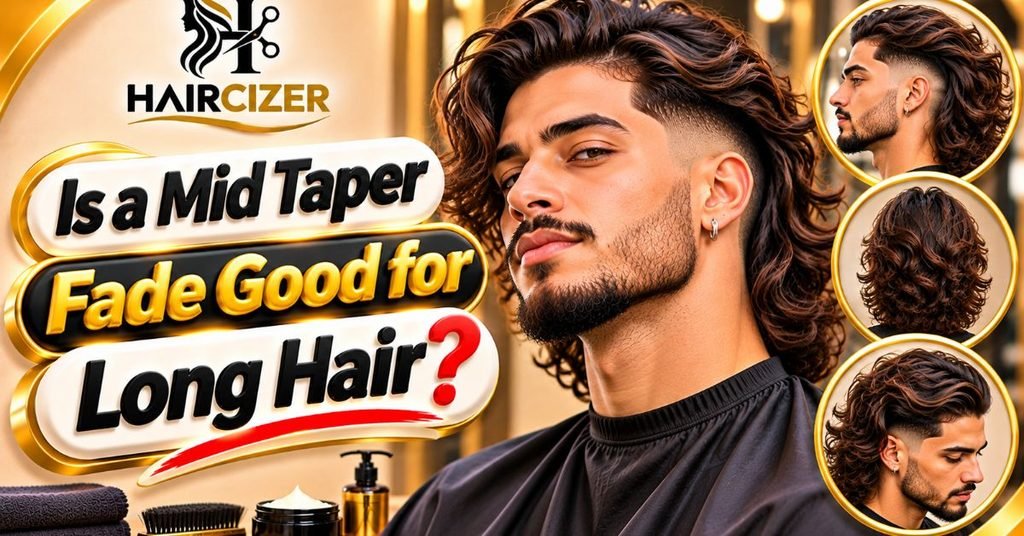
For most people, yes. It is one of the more flexible ways to keep length and still look clean. That said, it is not right for every head of hair, so it helps to check the signs.
Probably a good choice if
A mid taper is likely to suit you when:
- You want to keep your length but look more polished.
- Your hair is thick or bulky around the ears and neck.
- You like to tie your hair back, and want the sides to look tidy.
- You are comfortable visiting a barber every month or so.
- You have a healthy scalp with no major irritation or bumps.
- You like the idea of contrast between long and short.
Consider a lower or scissor taper instead if
You may be happier with something softer if:
- Your hair is fine and thin, and a higher taper would make the sides look sparse.
- You are growing your hair out and dislike any short stage.
- You want the lowest-maintenance option possible.
- Your barber is not confident with clippers on long hair.
- You prefer a natural look, with no visible blend.
A low taper starts closer to the ears and neck, and removes less hair overall. A scissor taper uses shears and combs instead of clippers, so the blend is softer and more gradual. Both are good fits for people who want a subtle cleanup rather than a visible change.
Who does it suit best?
Here is a quick guide to the types of people and hair who tend to get the best results.
| Hair or lifestyle | How the mid taper works |
| Thick, straight hair | Removes bulk and stops hair from puffing out at the sides |
| Wavy hair | Keeps the waves visible and reduces side volume |
| Curly or coily hair | Gives shape and a clean perimeter |
| Office or formal settings | Looks neat when tied back or slicked |
| Active lifestyle | Easier to tie back and keeps heat off the neck |
| Long face shape | Adds balance when the top keeps some volume |
| Round face shape | The taper adds definition near the jaw |
Face shape is not a strict rule. Hairstyle, hair texture and personal taste matter more. Still, a mid taper suits a wide range of faces, which is part of why it is so popular.
Which mid taper fade styles work best with long hair?
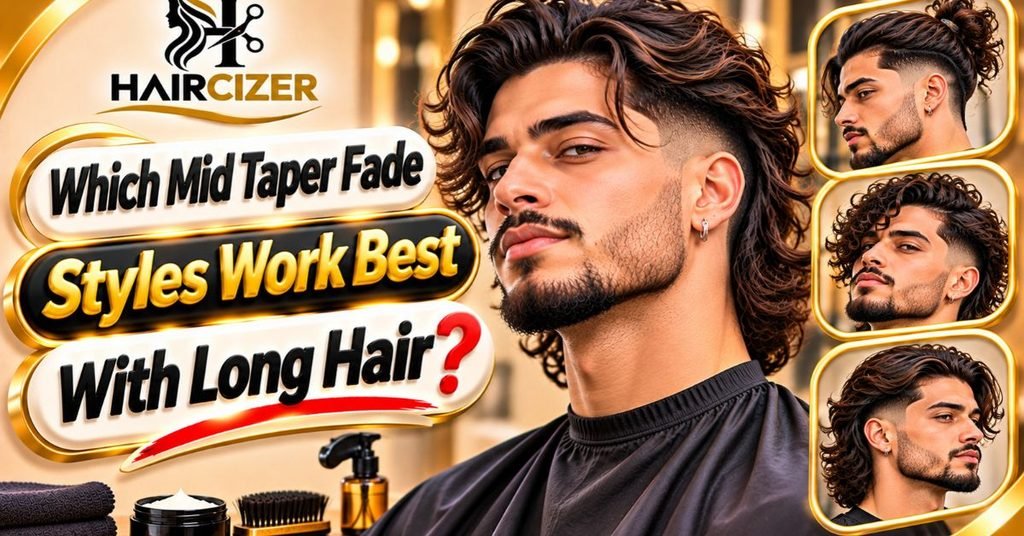
The taper stays the same, but the top changes everything. Here are the main ways to wear it, grouped by hair texture and styling.
Mid taper fade with straight or wavy long hair
Straight and wavy hair show the contrast between long and short most clearly. The tapered sides look crisp against smooth lengths.
Brushed-back or slick long hair
Comb or brush the hair straight back from the forehead. The taper then shows clearly around the temples and ears, and the whole shape looks strong and clean.
Use a light cream or a flexible-hold product. Heavy gel can look stiff on long hair, and it makes the ends dry. A wide-tooth comb gives the smoothest lines.
Best for: straight hair, formal events, anyone who likes a confident look.
Long side-swept layers
Here the top is cut in soft layers and swept to one side. The taper keeps the opposite side clean, and the longer layers drape across.
Layers add movement and stop the hair from looking heavy. This style is also friendly to wavy hair, because layers help waves sit nicely instead of bulking out.
Best for: wavy hair, relaxed settings, people who like a softer outline.
Mid taper fade with curly or coily long hair
Curls and coils love a tidy edge. A taper gives shape without cutting into the curl pattern on top.
Long natural curls with a clean perimeter
Let the curls grow long and loose, and keep the sides and back neatly tapered. The contrast between full curls and clean edges looks bold and modern.
Moisture is the priority here. Curly hair dries out faster, so keep leave-in conditioner and a curl cream close. Your barber should cut dry or lightly damp, so they can see the true curl shape.
Best for: loose and tight curls, anyone who wants volume without fuzz around the ears.
Long coils with controlled temple and nape taper
For long coils, ask for a taper that is clean around the temples and nape, but not so high that the top looks disconnected.
This keeps the coils as the centerpiece, while the edges stay sharp. It also pairs well with twists, braids and styled looks. Handle the temples gently, because the edge hairs are fragile on coily textures.
Best for: coily hair, twist-outs, braided styles.
Long hair with a middle part, curtains, or flow
If you like hair that moves, these styles show it off.
Curtain-style middle part
Part the hair in the middle and let it fall to each side, like curtains. The taper tightens the sides below the ears, so the hair does not flare out.
It is a classic, easy shape that suits straight and wavy hair. It frames the face and works with minimal styling. A light texturizing spray adds shape and fights flatness.
Best for: everyday wear, soft angular faces, low-effort routines.
Layered flow / ear-tuck style
This look uses layers and a natural flow. You can tuck the sides behind your ears, and the taper shows cleanly underneath.
The ear-tuck is the signature move. It highlights the blend, and it looks relaxed and effortless. Make sure your barber blends the area right behind the ear carefully, because that spot is on show.
Best for: medium-to-long hair, creative or casual looks.
Tied-back styles: man bun, ponytail, braids, or twists
Tying long hair back is where the taper really pays off. Nothing hides the blend, so the quality of the cut is on full display.
Man bun or half-up style
A man bun or a half-up knot pulls everything away from the sides, so the taper is fully visible. It is neat, practical and very popular.
Watch your tension. A bun tied too tightly, day after day, can stress the hairline. Use a soft tie, and change the position of the bun now and then.
Best for: gym days, hot weather, work settings that ask for tidy hair.
Braids/twists with a tapered perimeter
Braids and twists on top, with a tapered perimeter, create a structured, high-detail look. The clean sides make the pattern stand out.
This pairing is a favorite on coily and curly hair. Ask your braider to keep the style loose near the edges, and give your scalp a break between sets.
Best for: textured hair, people who like a styled, intentional look.
Mid vs. low vs. high taper: which height works best with long hair?
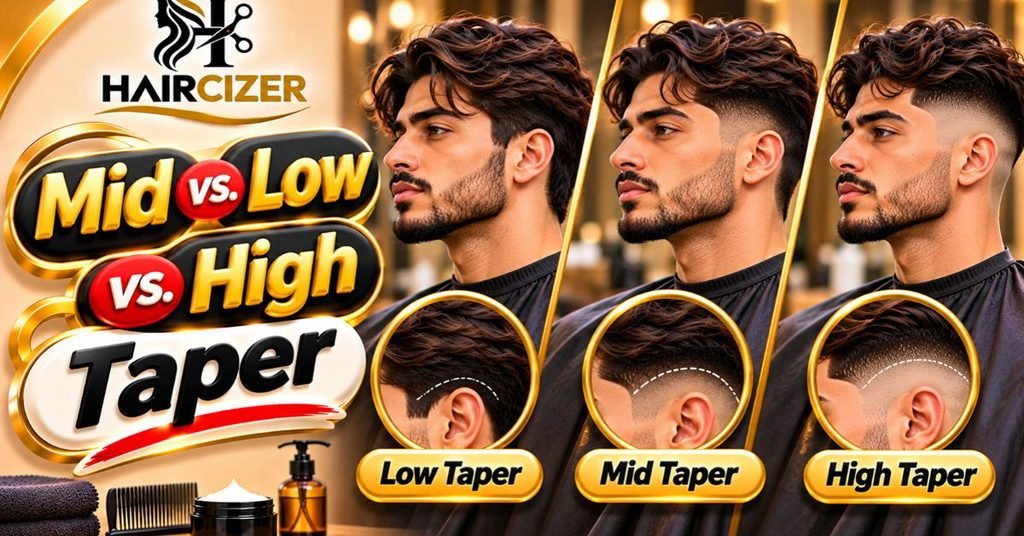
The height of the taper changes the contrast and the maintenance. Here is how the three compare when you have length on top.
| Feature | Low taper | Mid taper | High taper |
| Starting point | Just above ears and neckline | Around the temple and mid-side | High on the head, near the crown |
| Contrast | Subtle | Balanced | Strong |
| Hair removed | Least | Moderate | Most |
| Effect on long top | Keeps the most bulk | Good balance | Can look disconnected |
| Tied-back look | Soft | Clearly visible | Very dramatic |
| Maintenance | Every 4 to 6 weeks | Every 3 to 5 weeks | Every 2 to 4 weeks |
The mid taper tends to be the sweet spot for long hair. It is noticeable without being extreme. A high taper can make long hair look top-heavy, because so little remains on the sides. A low taper is the safest and subtlest, but it can feel too modest if you want a visible change.
A simple rule of thumb: the longer and thicker your hair, the more a mid taper helps. Thinner, finer hair often looks better with a slightly lower taper, so the sides keep enough density.
How do you ask a barber for a mid taper fade without losing your length?
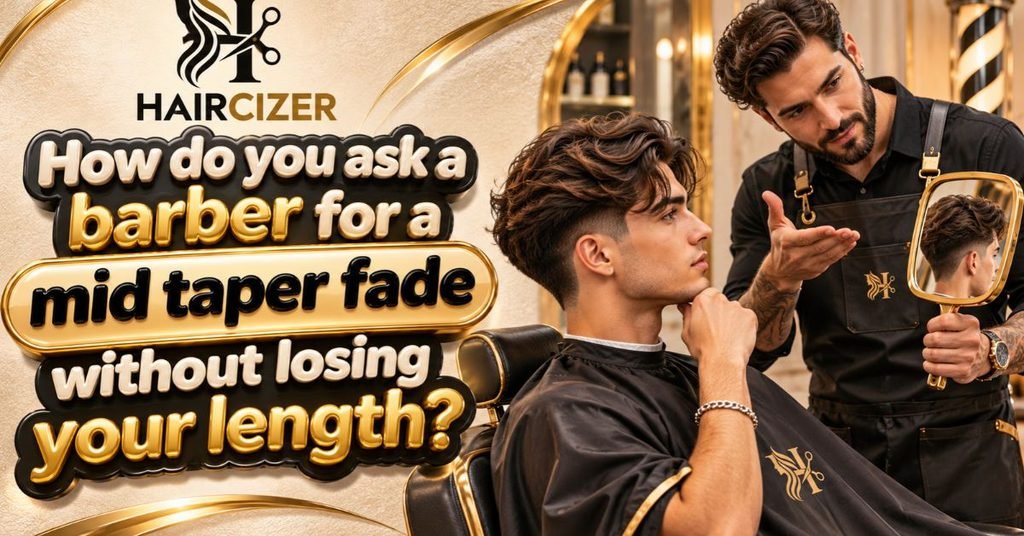
This is the question that matters most. The cut is simple, but long hair is easy to shorten by accident. A few clear words protect your length.
Start with the top. Say, “I want to keep all of my length on top, and only taper the sides and back.” Then show how far up the taper should go.
What to show and specify at the consultation
Bring a photo, and cover these points before the clippers come out.
- Top length. Say how much you want to keep, or ask for “no length taken from the top.”
- Taper height. Point to the spot, around the temple or just above the ear.
- Bottom finish. Ask for a taper that leaves a little hair, or a fade to skin.
- Guard sizes. Ask your barber to step down gradually, not jump straight to the shortest guard.
- Neckline. Choose natural, rounded or squared.
- Connection. Say whether you want the top to blend into the sides or stay separate.
- How you wear it. Tell your barber if you usually tie your hair back, so they can plan the shape.
A few extra tips help.
- Clip your hair up and show where the taper should start.
- Ask whether the barber plans to use scissors, clippers or both.
- If you are nervous, ask for the taper to start a bit higher up and go lower next time.
- Be clear that a “trim” means ends only, not length.
A good barber will repeat your request back to you. If they do not, repeat it again. It takes ten seconds and saves months of regrowth.
How do you style and maintain a mid taper fade with long hair?
Styling long hair with a taper is fairly relaxed. The taper does half the work, since the sides are already neat. Your job is to keep the top healthy and manageable.
Here is a simple daily routine.
- Wash with a gentle shampoo, two to three times a week for most hair types.
- Condition the lengths well, focusing on the ends.
- Detangle with a wide-tooth comb, starting from the bottom.
- Apply a leave-in product or light cream while the hair is damp.
- Air-dry when possible, or use low heat.
- Style with a small amount of product, then set the shape.
- Sleep on a silk or satin pillowcase to cut friction.
Keep products light. Heavy waxes can weigh long hair down and attract dirt, and they make the sides look greasy.
How should daily styling change by hair texture?
Different textures need slightly different handling.
| Hair texture | Best daily approach |
| Straight | Use a light cream or texturizing spray; brush smooth and avoid heavy gel |
| Wavy | Scrunch in a mousse or sea salt spray, then air-dry to keep the pattern |
| Curly | Apply curl cream on damp hair, then diffuse or air-dry; avoid brushing when dry |
| Coily | Moisturize in sections, then use a gel or butter to define; protect at night |
| Fine or thin | Choose light products and avoid heavy oils that flatten volume |
| Thick | Use a smoothing cream and trim ends often to prevent bulk |
If you tie your hair back often, mix up your style. Swap between a bun, a ponytail and wearing it down. This reduces tension in one spot and keeps the hairline happy.
How often should you refresh the taper?
Also Read:Mid vs High Taper Fade: Which Haircut Suits You Best?
Most people need a touch-up every three to five weeks. The sides grow out faster than the top, so the blend loses its crispness before the length changes.
Use this guide.
| Goal | Suggested refresh |
| Very sharp, with a clean neckline | Every 3 weeks |
| Neat and tidy | Every 4 to 5 weeks |
| Relaxed, grown-in look | Every 6 weeks |
Every second visit, ask for the ends to be dusted. A tiny trim of split ends keeps long hair healthy without costing you visible length. Tell your barber it is for health, not shape.
What are the downsides and hair-care risks?
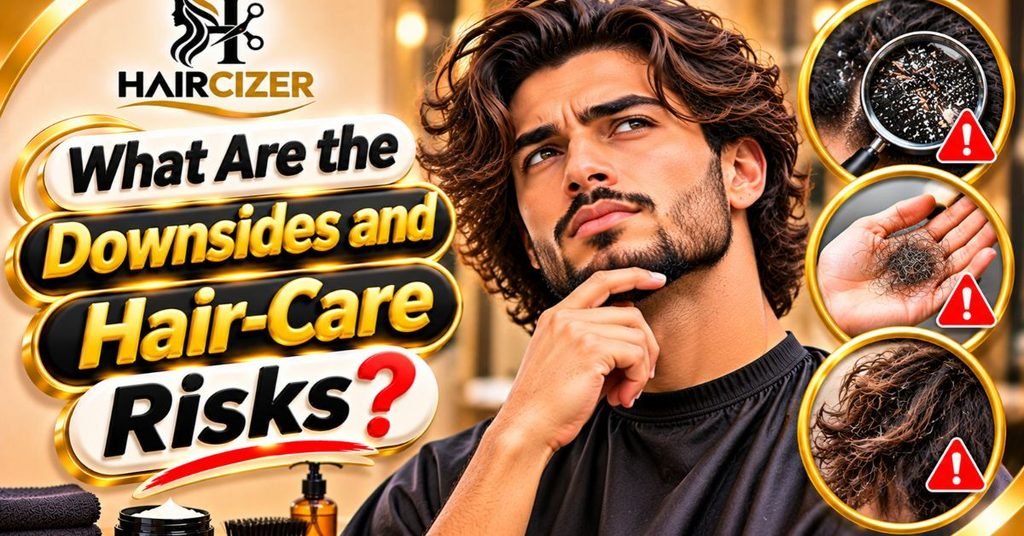
A mid taper is a good cut, but it has trade-offs. Knowing them in advance helps you decide.
- Regular upkeep. The taper needs frequent visits, which costs time and money.
- A short phase. Sides can look fuzzy during the grow-out stage.
- Risk of losing length. A careless barber can take more off the top than you wanted.
- Itchy stubble. Short hairs on the neck can feel prickly, especially in hot weather.
- Tension on the hairline. Tight buns, ponytails and braids can stress the edges over time.
- Dry ends. Long hair dries out more easily, particularly if you style with heat.
- Thin sides. If your hair is fine, a taper that starts too high can look patchy.
- Ingrown hairs. Closely clipped areas can sometimes cause bumps, especially on curly textures.
Most of these are easy to manage. Pick a barber who has experience with long hair, keep ties loose, moisturize regularly and keep up with trims. If you notice soreness, bumps or thinning near the temples, loosen your style and speak to a dermatologist or a qualified hair professional.
Here is a quick checklist for safe, healthy results.
- Choose a barber who has done tapers on long hair before.
- Ask them to leave a little length at the neckline.
- Use soft hair ties, not tight elastics.
- Give your hairline a break from tension.
- Trim ends regularly to keep them healthy.
- Condition after every wash.
Common barber mistakes with long hair (and how to avoid them)
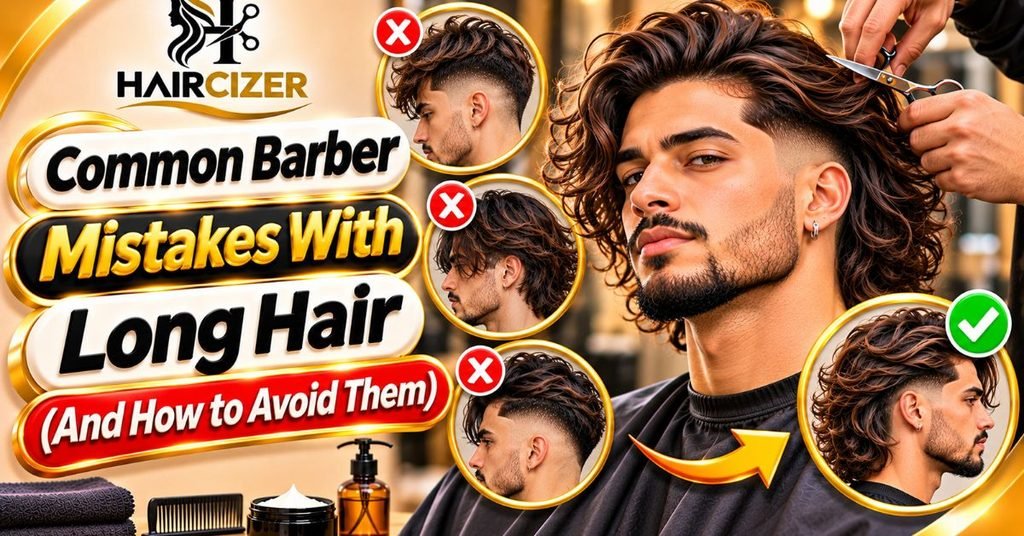
Most bad results come from a few predictable errors. Knowing them helps you spot trouble early.
- Cutting the top “just to even it out.” Long hair is easy to shorten without noticing. Ask the barber to leave the top alone unless you approve a trim.
- Starting the taper too high. A blend that climbs past the temple can leave the top looking heavy and disconnected from the sides.
- Skipping a gradual guard step. Jumping from a long guard to a very short one creates a visible line instead of a smooth blend.
- Cutting long hair wet and stretched. Wet hair stretches, and it can spring up shorter once it dries. Curly and coily hair is especially prone to this.
- Forgetting how you wear it. A taper that looks good loose may look odd when tied back. Always mention your usual style.
- Overlooking the neckline. A neckline that is too square or too low can look harsh against long hair at the back.
If you notice any of these during the cut, speak up politely and early. A good barber would much rather adjust mid-cut than fix a problem afterwards.
Easy ways to grow out a mid taper gracefully
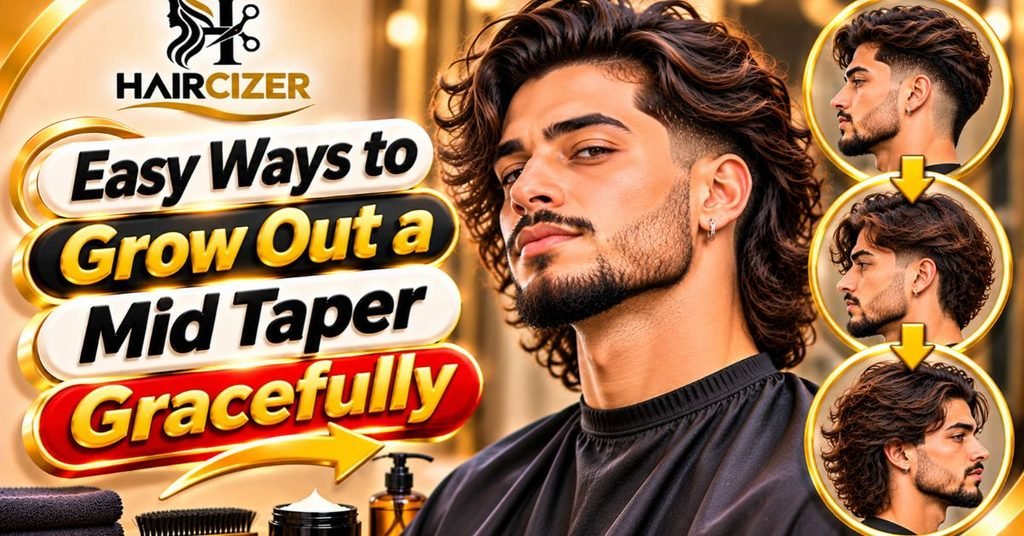
Sooner or later, you may want to let the sides catch up with the length. This stage can feel awkward, but a few tricks help.
- Switch to a lower taper first. Dropping the height for one or two visits softens the contrast.
- Ask for a scissor blend. Shears leave a softer edge than clippers, so the grow-out looks less abrupt.
- Keep the neckline clean. Even a rough middle stage looks tidy when the nape is neat.
- Use a little product. A light cream or pomade helps the shorter hairs lie flat and blend into the length.
- Tie it back when needed. A low ponytail or half-up style hides the in-between lengths.
- Be patient. Hair grows about half an inch a month on average, so full grow-out takes several months.
With a plan, the awkward phase is shorter and far less annoying than most people expect.
Frequently asked questions
Is a mid taper fade good for long hair?
Yes, it keeps your length while tidying the sides and back.
Will I lose my length with a mid taper?
No, as long as you tell the barber to leave the top untouched.
What is the difference between a mid taper and a mid fade?
A taper leaves some hair at the bottom, while a fade goes to skin.
How often should I refresh a mid taper?
Every three to five weeks keeps the blend neat.
Can I get a mid taper with curly hair?
Yes, it gives curls a clean perimeter and a sharp shape.
Is a scissor taper better for long hair?
It is softer and more gradual, so it suits a subtle look.
Does a mid taper work with a man bun?
Yes, tying the hair back shows the taper clearly.
What should I tell my barber?
Say how much length to keep and where the taper should start.
Which taper height is best for long hair?
A mid taper usually balances contrast and length best.
Can a tight bun harm my hairline?
Yes, constant tension can stress the edges over time.
How do I grow out a taper?
Book softer touch-ups and let the sides blend into the length.
Should I bring a photo to the barber?
Yes, a photo removes guesswork and protects your length.
Conclusion
A mid taper fade lets you keep long hair and still look neat, sharp and put together. It suits straight, wavy, curly and coily textures, and it works with loose, tied-back and braided styles. The key is choosing a taper height that fits your hair and your daily routine.
Great results start in the consultation. Tell your barber how much length to keep, where the blend should start, and how you usually wear your hair. Add regular trims, gentle ties and steady moisture, and your cut will stay fresh for weeks.
Leave a Reply