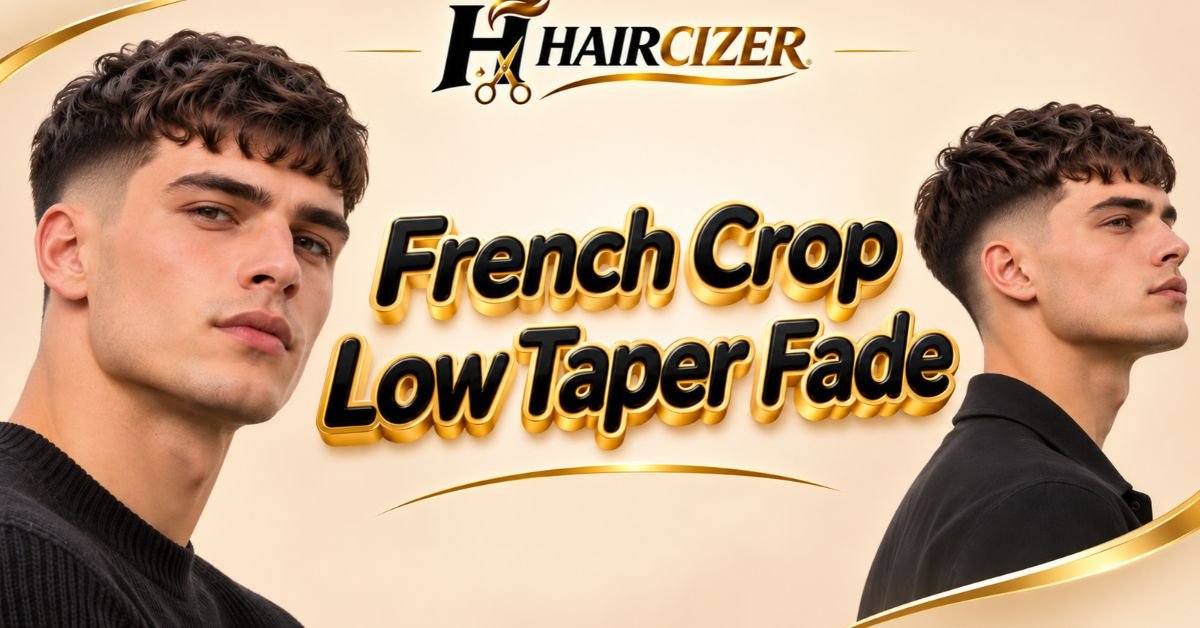
The French crop low taper fade is one of those haircuts that looks sharp without trying too hard. You get a short, textured top with a fringe that sits across the forehead, and sides that shrink gently around the ears and neckline. It looks tidy in a meeting, relaxed on a weekend, and it takes about five minutes to style once you know the routine.
The trouble is that “French crop” and “low taper” are two separate instructions, and many people only realise it once they are already in the chair. A vague request can leave you with a fade that sits too high, a fringe that is too short, or a top that will not lie flat.
This guide clears that up. You will learn what the cut involves, which hair types and face shapes it suits, the best variations, and how to explain it to your barber. You will also get a simple styling routine and a maintenance plan.
A quick note for hair professionals and keen home groomers: the top of this cut depends on clean, controlled scissor work, mainly point cutting and fringe shaping, so sharp, well-balanced shears matter as much as the clippers.
What is a French crop low taper fade?

A French crop low taper fade is a short men’s haircut with two parts working together. The top is a cropped, textured length with a straight or slightly choppy fringe. The sides and back are tapered, meaning they get shorter gradually, but only low down around the ears and nape.
Think of it as a classic crop with a softer, cleaner finish. The top carries the personality. The taper keeps the outline neat as the hair grows.
Quick definition: A French crop low taper fade is a short, textured crop with a forward fringe on top and sides that taper gently around the ears and neckline, leaving most of the side length intact.
The French-crop top and fringe
The French crop is built on the top of the head. Hair is cut short, usually around one to two inches, though some barbers leave it longer for thick or curly hair. The hair is brushed forward and cut into a fringe that sits above the eyebrows.
Barbers usually cut the fringe in one of three ways:
- Blunt: a clean, straight line across the forehead. This is the most classic version.
- Choppy: point-cut or razor-cut so the edge looks broken and lived-in.
- Textured: the whole top is layered so the fringe separates naturally.
Because the length is short, the shape comes from the cut itself rather than from heavy styling. That is a big reason the haircut has stayed popular. A good cut does most of the work before you touch a product.
What makes the taper “low”?
A taper is a gradual reduction in length. In a low taper, that reduction only happens at the lowest part of the head: around the sideburns, the edge of the ear, and the nape of the neck. Above that point, the sides keep more length and blend into the top.
A low taper usually:
- Starts just above the ear and curves down behind it.
- Leaves visible hair length on the sides, not bare skin.
- Finishes with a clean, narrow outline at the neck.
That is the key difference from a typical fade. A fade can travel much higher and often goes down to the skin. A low taper stays conservative. If you want a subtle, office-friendly cut, this is why the low taper is the safest choice.
Will a French crop low taper fade suit you?
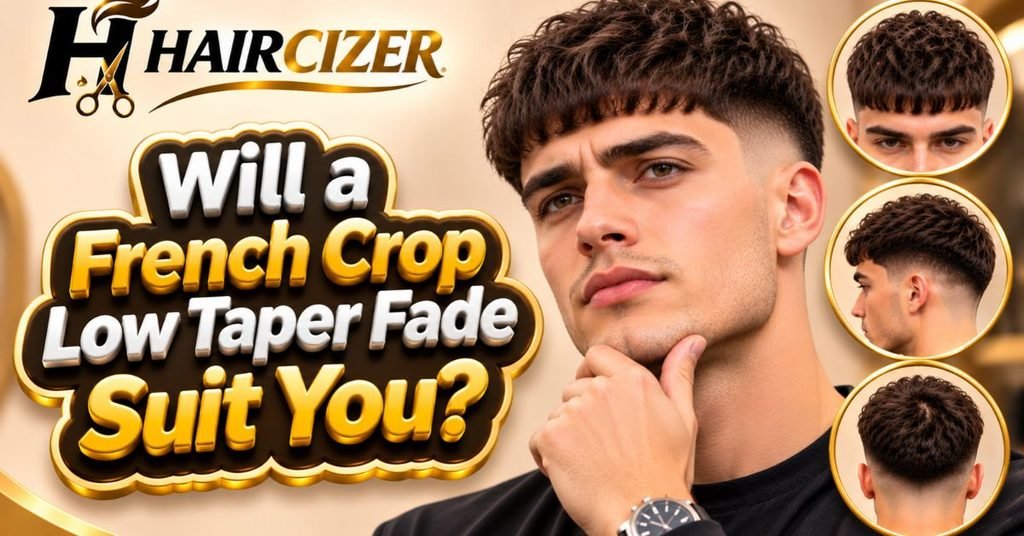
Most men can wear this cut, but the result depends on hair texture, density, face shape, and how your hair grows. Check these before you book.
Suitability by hair type and density
| Hair type | How well it works | What to expect |
| Straight, fine | Very good | Sits flat and clean, but may need light volume help |
| Straight, thick | Excellent | Holds a blunt fringe well; needs thinning at times |
| Wavy | Excellent | Natural texture gives the top movement |
| Curly | Good with adjustments | Needs slightly more length and a curl-friendly cut |
| Coily | Good with adjustments | Works best with a shaped, softly squared top |
Straight or fine hair
Straight hair is the most natural fit. The blunt fringe lies flat, and the taper looks crisp. The risk with fine hair is that the top can look thin or flat, especially if it is cut too short.
Ask your barber to leave a little extra length on top, around an inch and a half to two inches. A bit of point cutting adds the look of density. Use a lightweight product such as a texture powder or sea salt spray, not a heavy pomade, which will weigh fine hair down.
Wavy or thick hair
Wavy and thick hair gives you the best of the haircut. The natural bend creates a lived-in, textured top with very little effort. The main problem is bulk. Thick hair can puff out at the sides if the taper is too conservative.
If that happens to you, ask for a slightly tighter taper and a bit of weight removal on top. You still keep the low taper look, but the shape stays controlled instead of expanding sideways.
Curly or coily hair
Curly and coily hair can wear this cut well, but it needs a different approach. A strictly blunt, straight fringe does not exist on curly hair, because curls spring up when cut dry or short. The French crop becomes a textured crop with a curly or coily fringe, and the taper does the heavy lifting by keeping the outline sharp.
Ask for:
- A little more length on top, often two to three inches, so the curls can form.
- A rounded or softly squared fringe instead of a ruler-straight one.
- A clean line-up at the temples and forehead if you like a crisp frame.
Moisturise the hair well. Dry curls look frizzy instead of defined, and the crop depends on healthy texture.
Face shape, forehead and hairline considerations
The fringe decides how this haircut balances your face. Here is a simple guide:
- Oval: Almost everything works. Pick the fringe you like.
- Round: Keep the sides tighter and add a little height on top. A choppy, slightly angled fringe is better than a heavy blunt one.
- Square: A textured fringe softens a strong jaw. A blunt fringe adds more edge.
- Long or oblong: Go for a shorter, straighter fringe. It shortens the look of a long forehead.
- Heart-shaped: A soft, textured fringe balances a wider forehead.
For a high forehead, a fringe that sits low is a major advantage. For a receding hairline or temples that sit far back, a choppy, forward-brushed fringe hides the area better than a straight blunt line. A low hairline can look crowded with a heavy fringe, so keep it lighter.
Cowlicks, crown thinning and sensitive skin
Three things can change the result, and they are worth mentioning before the barber picks up the clippers.
- Cowlicks. A cowlick at the front hairline can push the fringe up or sideways. Your barber should cut with the growth direction, not against it, and may leave the front a touch longer so the hair lies down.
- Crown thinning. The French crop is friendly to thinning hair because the short, forward-brushed length hides sparse areas. Avoid very short top lengths, which can expose the scalp.
- Sensitive skin. A low taper uses short guards instead of bare skin, so it is gentler on the neck and ears than a skin fade. If you get ingrown hairs or razor bumps, keep the taper at a short guard length and avoid foil shaving.
French crop low taper fade variations
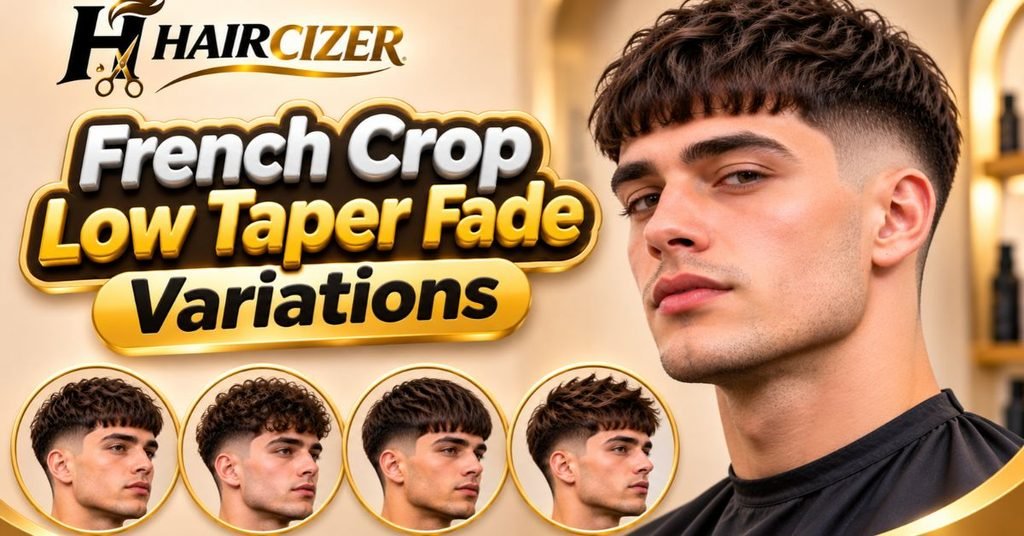
You can adjust the haircut in three ways: the top, the hair type, and the taper finish.
Fringe and top variations
- Classic blunt crop: A straight-edged fringe with a neat, flat top. Clean and formal.
- Textured crop: Point-cut layers for a messy, modern feel.
- Long French crop: Extra length on top, often with a softer fringe. Good for waves and for men who like to push the hair around.
- Side-swept fringe: The fringe falls toward one side and gives the style a slight angle.
- Spiky or forward-swept top: More product, more attitude, and a shorter fringe.
- With a line-up: A sharp edge at the forehead and temples for a more defined frame.
If you are new to the cut, begin with a textured crop. It is forgiving and looks good even on a messy day.
Variations for straight, wavy and curly hair
| Hair type | Best top style | Styling goal |
| Straight | Blunt or lightly textured fringe | Sharp, clean line with some lift |
| Wavy | Textured crop or long French crop | Natural movement with light hold |
| Curly | Curly fringe with a rounded crop | Defined curls, tidy outline |
| Coily | Shaped, squared crop | Even density with a crisp edge |
Natural, shadow and skin-close taper finishes
The “low taper” label covers a few different finishes. It helps to know which one you want.
- Natural taper: The hair shortens gradually but never reaches the skin. This is the softest, most office-friendly option and the easiest to grow out.
- Shadow taper: The lowest part of the taper gets very short, so you see a light shadow of hair against the skin. It looks sharper but still avoids a bald effect.
- Skin-close taper: The edges fade to or near the skin at the neckline and around the ears. It is the cleanest, but it needs the most frequent upkeep.
Ask for the finish by name. If your barber hears “low taper” and you wanted a natural finish, a shadow or skin-close version can leave you with sharper sides than you expected.
French crop low taper fade comparisons
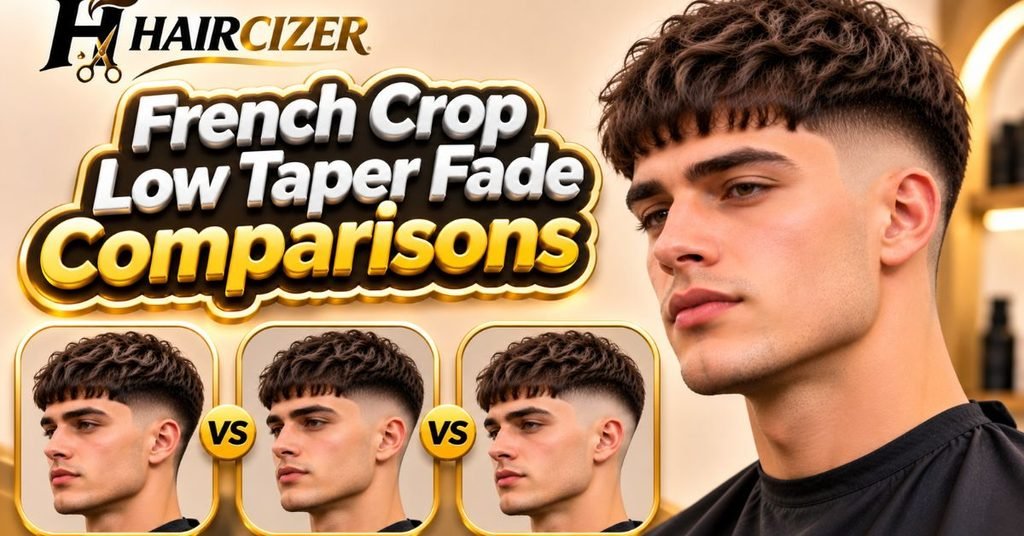
Many haircut names overlap, which is why people leave the shop with something different from what they wanted. These comparisons clear that up.
Low taper vs low fade, mid fade and high fade
| Cut | Where it starts | How short it gets | Overall look |
| Low taper | Just above the ear and nape | Short but usually not bare skin | Soft, subtle, classic |
| Low fade | Low on the head, near the ear | Often to skin | Sharper than a taper |
| Mid fade | Around the temple height | Often to skin | Bold, high contrast |
| High fade | Near the top of the head | Often to skin | Strong, dramatic |
A taper shortens hair only at the edges and leaves length on the sides. A fade takes the hair much shorter, often to the skin, and covers more of the head. If you want the least change from a classic cut, choose the low taper. If you want clear contrast, move up to a low or mid fade.
French crop vs textured crop, Caesar cut and crew cut
| Cut | Top length | Fringe | Best for |
| French crop | Short to medium | Straight or choppy, forward | Clean, structured look |
| Textured crop | Short to medium | Layered, varied | Messy, relaxed look |
| Caesar cut | Short, even | Short, straight, forward | Very low maintenance |
| Crew cut | Short on top, tighter sides | Usually brushed up | Classic, sporty, military feel |
The textured crop is closely related to the French crop, and many barbers use the terms almost interchangeably. The main difference is that the French crop usually has a more defined fringe. The Caesar cut is shorter and more uniform, with a straight fringe. The crew cut keeps hair a bit longer at the front, but it is usually brushed up rather than forward.
What should you ask your barber for?

A clear request is the best insurance against a bad haircut. Barbers can do wonderful work, but they can only act on what they understand.
The barber consultation checklist
Before the clippers start, confirm these points:
- Top length. How many inches or centimetres do you want left?
- Fringe style. Blunt, choppy, or textured?
- Fringe length. Should it sit at the eyebrow or higher?
- Taper height. Low, meaning just above the ear and nape.
- Taper finish. Natural, shadow, or skin-close?
- Side length. Which guard or length do you want near the top of the taper?
- Neckline. Rounded, squared, or natural?
- Line-up. Sharp, soft, or none?
- Styling. Ask what product and technique they use on your hair.
If your barber asks about your hair growth, cowlicks, or your daily routine, that is a good sign. It means they are fitting the cut to your hair.
A copyable barber script
Also Read:Blowout Taper Fade: Best Low, Mid & High Styles for Men
You can read this out or save it to your phone:
“I’d like a French crop on top, around [1.5–2 inches], with a textured, slightly choppy fringe that sits just above my eyebrows. On the sides and back, I’d like a low taper that starts just above the ear and follows the natural neckline. Keep a natural finish, not skin. Please leave the sides a bit longer than a fade so the shape grows out well. Can you also show me how you would style it?”
Swap the details to match your hair. If you want a sharper finish, replace “natural” with “shadow” or “skin-close”.
How to use reference photos without getting the wrong cut
Photos are useful, but they can mislead. Follow these simple rules:
- Bring two or three photos, not ten. Mixed examples create confusion.
- Choose models with your hair type. A straight-haired model on a curly head will not give the same result.
- Point to what you like. Say “I like the fringe length” or “I want this taper height.” Do not hand over the picture and say “this.”
- Mention what you do not like. If one photo shows a fade that is too high, say so.
- Remember lighting and editing. Photos can be filtered, and styled with a lot of product.
Photos start the conversation. They should not replace it.
How to style a French crop low taper fade
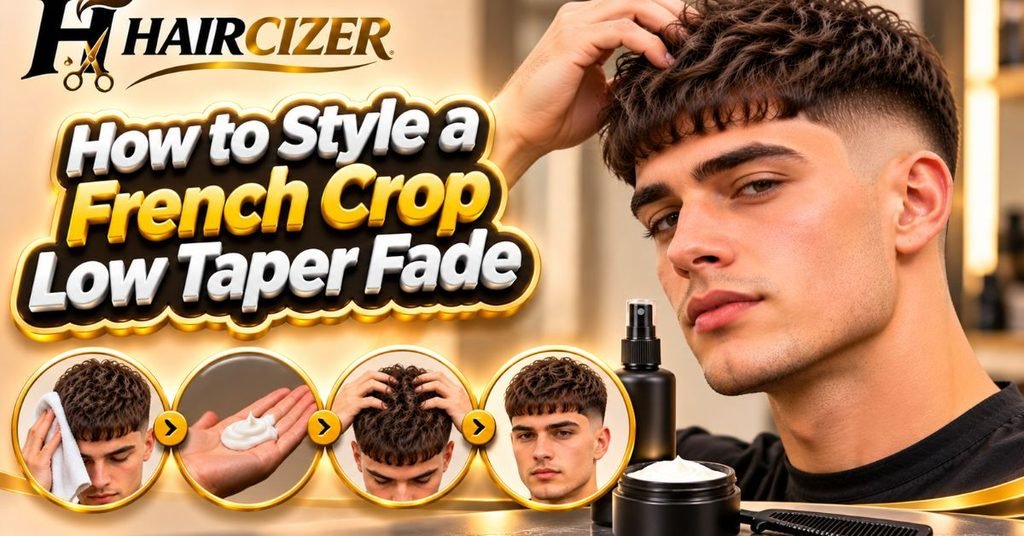
One of the best things about this cut is how little work it needs. You do not need a long routine, only the right order.
A five-minute everyday styling routine
- Start with damp hair. Towel-dry until the hair is damp, not dripping.
- Apply a prep product (optional). A little sea salt spray or mousse adds grip, especially for fine hair.
- Blow-dry forward. Use a hairdryer on medium heat and direct the hair toward the forehead. Use your fingers to lift the roots as you go.
- Add product. Warm a pea-sized amount between your palms and work it through from the back to the front.
- Shape the fringe. Push the fringe forward and slightly down, then use your fingertips to separate it into pieces.
- Finish. Check the sides and the neckline. A light mist of hairspray can hold a stubborn fringe.
That is it. Most mornings should take five minutes or less.
Which product type should you use?
| Product | Hold | Finish | Best for |
| Matte clay | Medium to strong | Matte | Thick or wavy hair, textured look |
| Paste | Medium | Natural matte | Everyday textured crop |
| Texture powder | Light | Matte, airy | Fine or flat hair |
| Sea salt spray | Light | Gritty, natural | Waves and beachy texture |
| Light pomade | Medium | Soft shine | Neat, controlled fringe |
| Curl cream | Light to medium | Defined, soft | Curly and coily hair |
Pick one main product and use it consistently. Using several products at once often makes hair heavy and greasy.
Styling mistakes and weather adjustments
Common mistakes:
- Using too much product. The French crop is short, so a little goes a long way.
- Styling dry, flat hair. Dampen it first or use a root-lift product.
- Brushing the fringe straight back. It is meant to move forward.
- Ignoring the sides. A taper that has grown out looks messy even if the top is perfect.
- Heavy pomade on fine hair. It weighs down the hair and exposes the scalp.
Weather adjustments:
- Humid weather: Use a stronger matte clay or a light hairspray to control frizz and keep the fringe in place.
- Cold, dry weather: Use a little less product, and add a light moisturising cream to reduce static.
- Rain or wind: A firm-hold paste or clay keeps the shape. Avoid shiny pomades that attract moisture.
- Hot weather: Keep the top lightweight, since sweat breaks down heavy products fast.
Maintenance, grow-out and scalp care
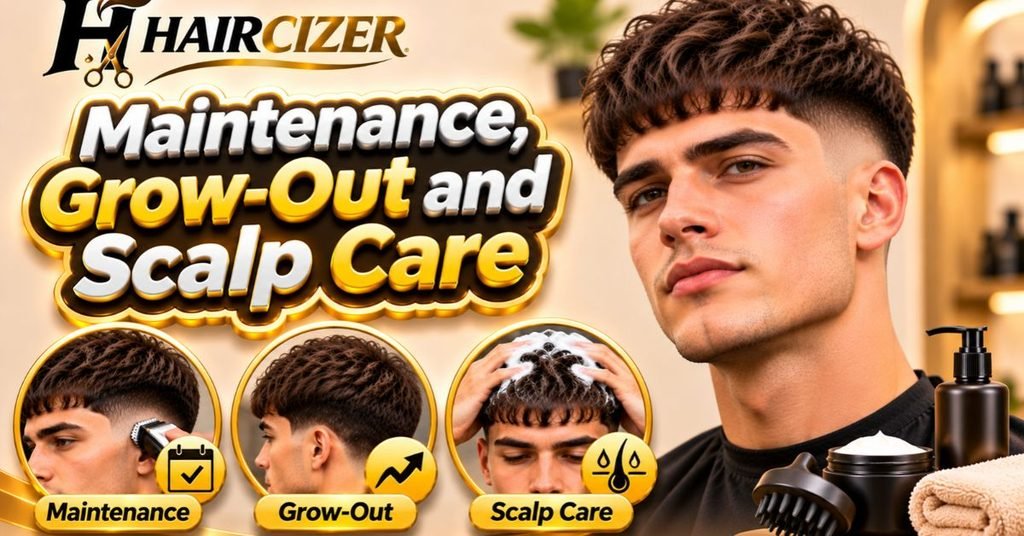
A good haircut can fall apart if it is neglected. The good news is that this one ages gracefully, especially in the low taper version.
How often should it be trimmed?
The ideal gap depends on your finish and how fast your hair grows.
| Taper finish | Suggested trim schedule |
| Natural taper | Every 4 to 6 weeks |
| Shadow taper | Every 3 to 4 weeks |
| Skin-close taper | Every 2 to 3 weeks |
The fringe grows over your eyebrows quickly, so you may want a fringe-only trim between full haircuts. Many barbers will do this for a small fee or even free of charge.
Keeping the cut presentable between visits
You can extend the life of your haircut with a few small habits:
- Wash regularly, but not excessively. Two to four times a week suits most people.
- Use a good shampoo and condition if your hair is dry or curly.
- Tidy the neckline only if you are comfortable. Do not over-trim and create an uneven edge.
- Trim the fringe with a comb and sharp scissors only if you have experience. Otherwise, wait for the barber.
- Use a small amount of product to cover the growth.
- Avoid sleeping on wet hair, which can create strange cowlicks.
If you decide to grow the cut out, the low taper is a great starting point. The sides keep more length, so the transition into a longer crop, quiff, or textured fringe looks natural. Ask your barber to blend the sides every few weeks while the top grows.
Close-cut irritation and when to reconsider a skin finish
A shorter finish means more skin exposure. If you notice itching, redness, small bumps, or ingrown hairs around the neckline, your skin may not like a very close cut.
Try these steps:
- Choose a natural or shadow finish instead of skin-close.
- Avoid shaving against the grain.
- Keep the area clean, and use a gentle, fragrance-free moisturiser.
- Use a clean razor or clippers.
- Give irritated skin time to recover before the next close cut.
If the irritation does not settle, or if you see persistent redness, pus, or pain, speak to a doctor or dermatologist. A haircut should never cause lasting discomfort.
Should you get this haircut?

Choose the French crop low taper fade if you want a haircut that is neat, modern, and easy to manage. It suits men who like a short style but do not want a harsh, high-contrast fade. It works at the office, at university, at weddings, and on a regular Tuesday.
It may not be the right choice if you want a long, flowing top, or if you want a very dramatic fade with bare skin. It also needs regular trims to keep the fringe and neckline clean.
Here is a quick checklist:
- You like short, structured hair.
- You want a subtle taper, not a bold fade.
- You are happy to style for five minutes a day.
- You can visit the barber every three to six weeks.
- Your hair has enough density to hold a crop.
If you tick most of these boxes, book it. Bring a photo, use the script above, and ask your barber how to style it.
Frequently asked questions
What is a French crop low taper fade?
It is a short, textured crop with a forward fringe and sides that taper gently low around the ears and neckline.
Is a low taper the same as a low fade?
No, a taper keeps more length and is subtler, while a fade usually goes much shorter, often to the skin.
How long should my hair be on top?
Most French crops keep the top around one to two inches, with a little extra for curly or thick hair.
Does this haircut work on thin hair?
Yes, the short, forward-brushed fringe helps disguise thinning, as long as the top is not cut too short.
Can curly hair have a French crop?
Yes, but it becomes a curly crop with a rounded fringe and slightly more length on top.
What product is best for a French crop?
A matte clay or paste works for most hair, while fine hair does better with texture powder.
How often should I trim it?
Every three to six weeks, depending on how close the taper is cut.
Is it a good haircut for a receding hairline?
Yes, a choppy, forward-swept fringe can soften the hairline.
What face shape suits a French crop low taper fade?
It suits most face shapes, especially oval and square, with fringe tweaks for round or long faces.
Is it hard to style?
No, most people can style it in about five minutes with a blow dryer and a little product.
Conclusion
The French crop low taper fade works because it looks clean without feeling harsh. The short, textured top adds character, while the low taper keeps the edges neat and easy to grow out. With small tweaks to fringe length and taper finish, this French crop low taper fade suits straight, wavy and curly hair.
Tell your barber exactly what you want and bring a couple of reference photos. At home, damp hair, a quick blow-dry and a little product are all you need. Book a trim every three to six weeks and the cut will stay fresh.
Leave a Reply