
A fade is a haircut where the hair gets gradually shorter as it moves down the sides and back of your head, with no hard line where one length stops and the next begins. That is the entire idea. The confusing part is the vocabulary. Low, mid, high, skin, drop, burst, taper, temple: clients and barbers use these words in slightly different ways, and the gap between what you ask for and what you get is where most bad haircuts begin.
This guide sorts the types of fade haircuts into a system you can actually use. You will learn how fades differ, which one fits your hair, face shape, and hairline, how each one grows out, what the upkeep really costs over a year, and the exact words to say when you sit down in the chair.
Quick answer: The main types of fade haircuts are the low fade, mid fade, high fade, skin (bald) fade, shadow fade, taper fade, drop fade, burst fade, temple fade, razor fade, and hi-top fade. Height decides where the fade starts, bottom length decides how close it goes to the skin, and shape decides how it curves around your ear.
Fade vs taper, the distinction behind most bad haircuts
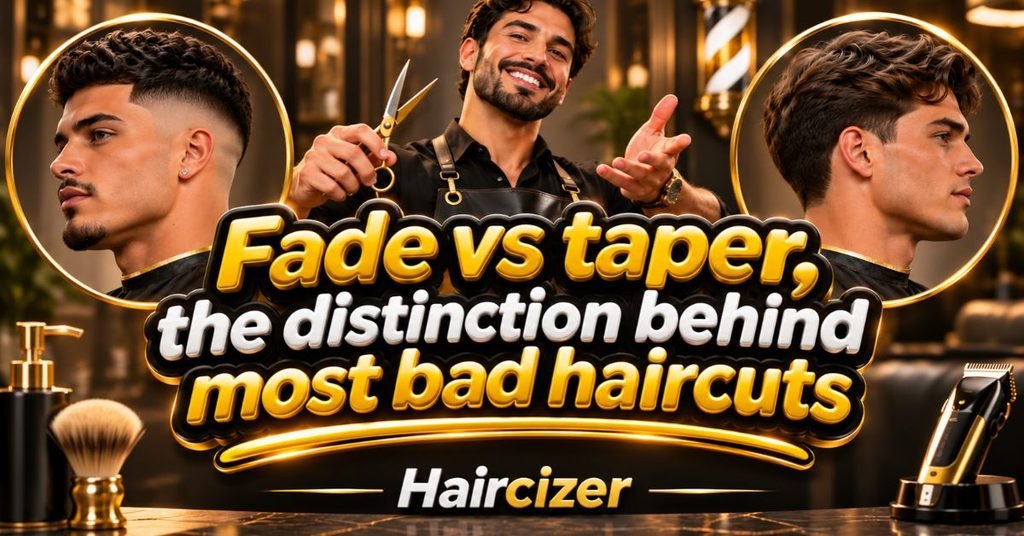
Walk into any barbershop and you will hear “fade” and “taper” used as if they mean the same thing. They do not, and mixing them up is the most common reason people leave unhappy.
A taper shortens the hair gently, usually only around the sideburns and the nape of the neck. The sides stay fairly full, and the shortest length is rarely bare skin. It is the classic, understated finish you see on office haircuts.
A fade is more dramatic. It covers a larger part of the sides and back, and the hair usually gets very short, often down to skin or close to it. The contrast between the faded area and the longer hair on top is much stronger.
| Taper | Fade | |
| Area covered | Sideburns and nape | Most of the sides and back |
| Shortest length | Short, but usually not skin | Very short or bare skin |
| Contrast | Soft | Strong |
| Typical vibe | Classic, conservative | Modern, sharp |
Then there is the phrase “taper fade,” which shows up in almost every barber conversation. It started as a blend of the two words, and most barbers will quietly interpret it as a taper. If you want the skin-close version, say so. If you only want a clean neckline, say taper and skip the word fade entirely.
Every fade name is built from five variables
Here is the secret that makes the whole topic easier: almost every fade name is just a combination of five choices. Once you know them, you can decode any haircut name you see online.
- Height. Where the fade starts on the side of your head: low, mid, or high.
- Bottom length. How short the hair gets at its shortest point: bare skin, a faint shadow, or a short guard length.
- Shape. How the fade line travels around your head: straight across, dropped behind the ear, or burst around it.
- Top. The length and style of the hair on top, from a buzz to a pompadour to curls.
- Finish. The extras, such as a line-up, a beard blend, a hard part, or a design.
Take the name “mid skin drop fade with a textured crop and a line-up.” That is mid height, skin bottom, drop shape, textured crop on top, and a sharp outline. Nothing mysterious.
A quick note on clipper numbers, because barbers use them constantly. A guard number refers to the length left behind: a #1 leaves about 1/8 inch, a #2 about 1/4 inch, a #3 about 3/8 inch, and a #4 about 1/2 inch. No guard (often called a zero) takes the hair very close to the skin.
Low fade
A low fade starts just above the ear and follows your natural hairline around the back of the head. Most of the sides stay intact, so the change is subtle.
This is the easiest fade to wear. It looks tidy without shouting, and it survives dress codes, interviews, and family photos. If you have never had a fade before, it is a safe place to start.
- Best for: First-timers, office environments, round or oval faces
- Skip it if: You want strong contrast or a bold look
- Pairs well with: Crew cuts, side parts, textured crops, short curls
Because the fade sits low, regrowth blends into the existing length instead of jumping out. A low fade stays presentable longer than a high one.
Mid fade
A mid fade begins around the temple line, roughly halfway up the side of the head. It sits between the subtle low fade and the bold high fade, which is why many barbers treat it as the default.
If you are unsure which height to choose, the mid fade is the forgiving option. It adds visible shape without removing most of your side hair.
- Best for: Almost everyone, especially when you want a balanced look
- Skip it if: You want the cleanest possible neckline with very little change
- Pairs well with: Pompadours, quiffs, slick backs, curls, longer tops
Expect to return every two to three weeks if you like it crisp.
High fade
A high fade starts at or above the temples, close to where the head curves toward the top. The sides become very short very quickly, so the contrast with the top is strong.
This is the haircut you see on military styles, flat tops, and the “high and tight.” It makes the top of the head look taller and the sides look clean and narrow.
- Best for: Round faces, short hair on top, a sharp or athletic look
- Skip it if: You have a long face or you dislike frequent barber visits
- Pairs well with: Flat tops, buzz cuts, short textured tops, high and tight styles
High fades show growth fast. Plan for visits every two weeks if you want the edge to stay clean.
Skin fade, bald fade, and shadow
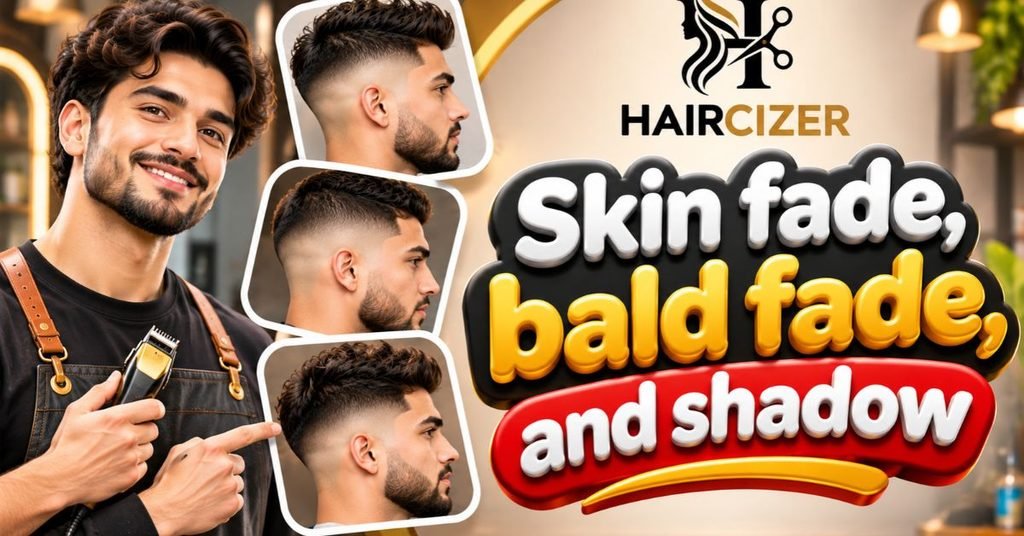
These three names cause more confusion than any others, so let us separate them.
Skin fade (bald fade)
A skin fade goes all the way down to bare skin at the bottom. It describes the bottom length, not the height, so you can have a low skin fade, a mid skin fade, or a high skin fade. Many barbers use “bald fade” to mean the same thing, though some use it for a fade that runs very high. Always confirm the height.
It gives the sharpest contrast of any fade and also the shortest shelf life. Your scalp is exposed, so check that you are comfortable with its shape and any marks, and use sunscreen in summer.
Shadow fade
A shadow fade stops just short of skin. The shortest area looks like a faint shadow of stubble, not a bare patch. Think of it as the softer cousin of the skin fade.
It hides regrowth better, blends smoothly into a beard, and is often kinder to sensitive skin. If you like the clean look but dread bumps, ask for a shadow.
Which one should you pick?
Pick skin if you want maximum contrast and are happy to book every two weeks. Pick shadow if you want a clean look that tolerates a few extra days.
Taper fade

A taper fade, in the way most barbers deliver it, is a low-key finish around the sideburns and neckline. The hair on the sides stays longer than it would with a true fade, and the shortening happens in a small zone.
The low taper fade has become popular because it works on nearly every texture, including straight, wavy, curly, and coily hair. It cleans up the edges without changing the overall silhouette.
- Best for: Professional settings, curly tops, kids, anyone who wants a light touch
- Skip it if: You want visible contrast between the sides and the top
- Pairs well with: Side parts, longer curls, comb overs, natural textures
It also grows out gracefully. A low taper often looks decent for five to six weeks, which makes it one of the cheapest styles to maintain.
Drop fade
In a drop fade, the fade line does not run straight across. It arcs down behind the ear and sweeps toward the nape, following the curve of your skull. From the side, you see a clear curved line. From the back, the outline looks like a gentle “U.”
This shape adds dimension and keeps the look from feeling flat. Like other fades, it can be low, mid, or high.
- Best for: People who want a distinctive shape without a loud haircut
- Skip it if: You prefer a perfectly horizontal line around the back
- Pairs well with: Curls, waves, textured crops, longer tops, pompadours
If you want to explain it to a barber, say the fade should “drop behind the ear” and follow your head shape.
Burst fade
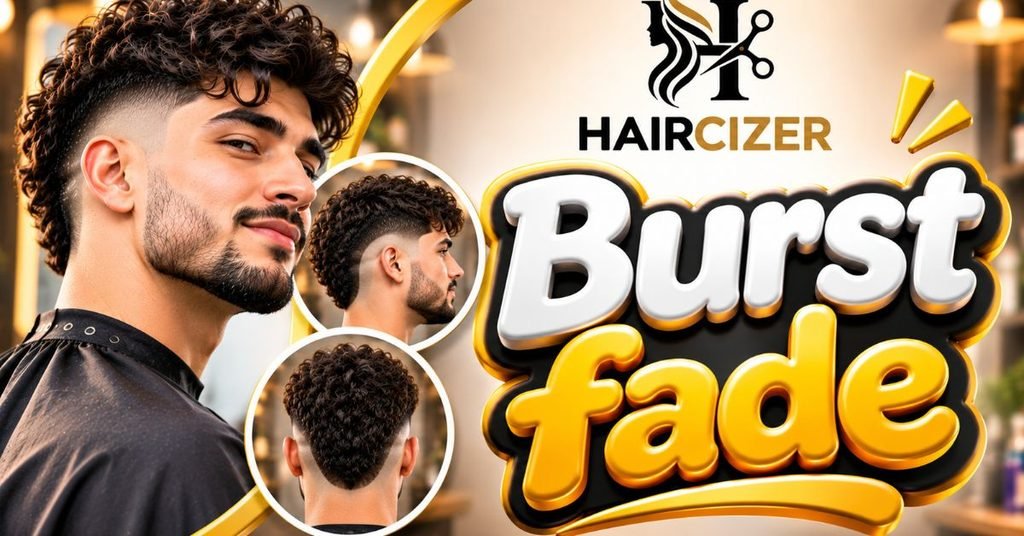
A burst fade curves in a half circle around the ear and fades out toward the neckline. The hair at the back is usually left longer, which makes this the go-to fade for mullets, mohawks, faux hawks, and natural curls.
Here is the easiest way to tell it apart from the drop fade: look behind the ear. A drop fade sweeps down toward the neck, while a burst fade rounds the ear and leaves volume at the back.
- Best for: Mohawks, mullets, locs, curls, and anyone who wants length at the back
- Skip it if: You want a clean, uniform back and sides
- Pairs well with: A beard, a bold top, or a messy texture
You can order it low, mid, or high, though most people go low or mid. A very high burst fade can feel extreme.
Temple fade, Brooklyn fade, and blowout
These three get mixed up because they often appear in the same photos. They are different things.
Temple fade (temp fade or Brooklyn fade)
A temple fade is a small, tight fade concentrated at the temples and sideburns. The rest of the sides and back stay longer or get a simple taper. Many barbers use “temple fade” and “Brooklyn fade” for the same cut, though some shops give the Brooklyn name to a slightly different variation, so describe what you want.
It is a popular way to get a crisp edge on natural hair without committing to a full fade.
Blowout
A blowout is a hairstyle, not a fade. The sides and back are faded, and the top is left long enough to lift and puff upward, usually with a blow dryer and a light styling product. You can pair a blowout with a low, mid, or high fade.
How they fit together
A temple fade is a feature of the cut. A blowout is a style on top. You can absolutely wear a temple fade with a blowout. Tell your barber both pieces so nothing gets lost.
Razor fade and hi-top fade
Razor fade
A razor fade is a fade finished with a straight razor or foil shaver at the shortest end. The result is a smoother, crisper blend with a polished surface.
It is a finishing technique, not a different height. You can have a razor fade on a low, mid, or high cut. Because the blade works so close, it needs a skilled barber and clean tools, and it carries a higher risk of irritation for sensitive skin.
Hi-top fade
A hi-top fade pairs short faded sides with a tall, flat or rounded top. It became a signature look in the late 1980s and early 1990s and is now back in rotation.
It works especially well on tightly coiled hair, where length on top holds its shape. You need several inches of hair up top, and conditioning matters because the hair stands tall and dries out easily.
Fade comparison table
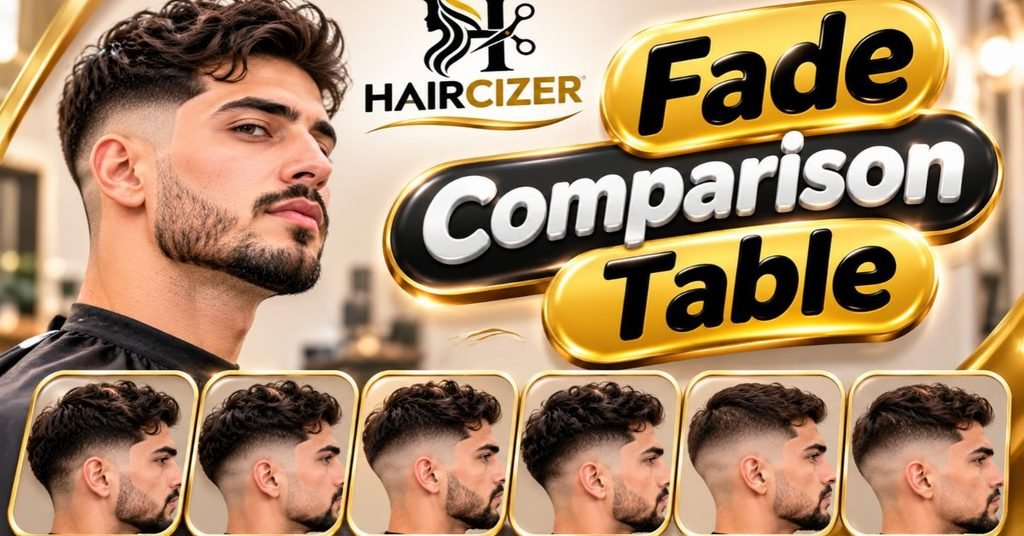
Use this table as a quick reference before you book.
| Fade | Starts | Bottom length | Contrast | Upkeep | Best for |
| Low fade | Just above the ear | Skin to short guard | Low | 3–4 weeks | First-timers, office looks |
| Mid fade | Around the temple | Skin to short guard | Medium | 2–3 weeks | Most people, versatile tops |
| High fade | At or above the temple | Usually skin | High | 1–2 weeks | Bold, athletic, flat tops |
| Skin (bald) fade | Any height | Bare skin | High | 1–2 weeks | Sharp contrast |
| Shadow fade | Any height | Faint stubble | Medium–high | 2–3 weeks | Beards, sensitive skin |
| Taper fade | Sideburns and nape | Short guard | Low | 4–6 weeks | Classic, professional |
| Drop fade | Arcs behind the ear | Any | Medium | 2–3 weeks | Curved profile |
| Burst fade | Circles the ear | Any | Medium | 2–3 weeks | Mullets, mohawks, curls |
| Temple fade | Temples and sideburns | Skin to short guard | Low–medium | 2–3 weeks | Natural hair, clean edge |
| Razor fade | Any height | Smooth, near skin | High | 1–2 weeks | Crisp finish |
| Hi-top fade | Mid to high | Skin to short guard | High | 2–3 weeks | Tight curls, tall tops |
Which fade suits your hair, face, and hairline
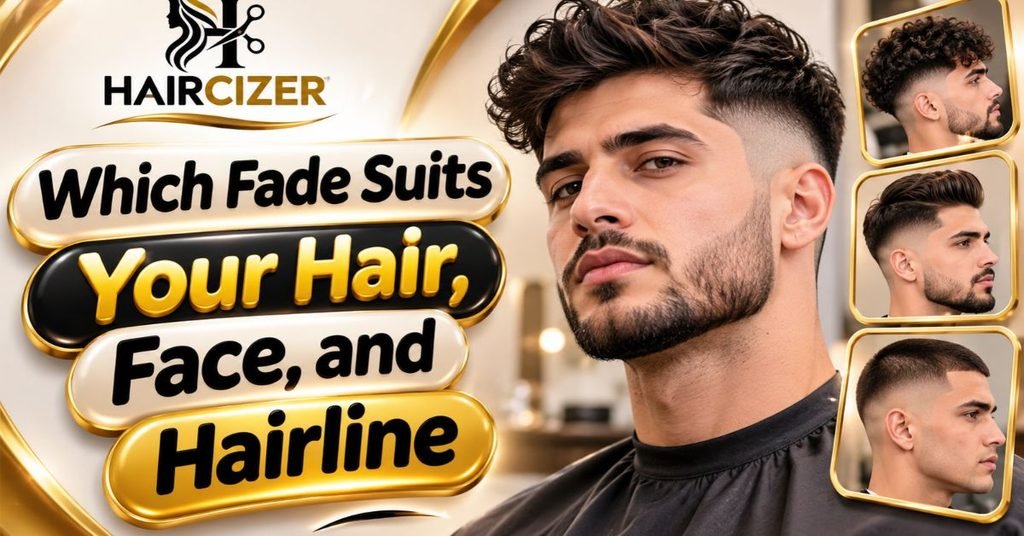
There is no single best fade. The right choice comes from three things: the shape of your face, the texture of your hair, and how much time you want to spend at the barber.
By face shape
- Round face: A mid or high fade adds vertical lines and makes the face look longer.
- Oval face: Almost anything works. This is the easy category.
- Square face: A low or mid fade softens the angles. A very high fade can emphasize them.
- Long or oblong face: Stay lower. A low fade with a shorter top keeps the face from stretching further.
- Heart-shaped face: A low or mid fade with some volume on top balances a narrower chin.
By hair texture
- Straight hair: Shows the blend clearly, so a clean mid or low fade looks great. Cowlicks need extra attention.
- Wavy hair: Pairs well with a drop fade and a textured top.
- Curly hair: A burst, drop, or taper fade frames curls without flattening them.
- Coily hair: Handles sharp lines beautifully. Temple fades, hi-tops, and skin fades all hold their shape.
- Fine or thin hair: A fade makes the top look fuller by contrast, though a very high skin fade can look severe.
By lifestyle
- Strict dress code: Low taper or low fade.
- Active or sports schedule: Mid fade with a short top that styles itself.
- Creative field: Burst, drop, or hi-top.
- Minimal time: Taper or low fade, because they forgive late appointments.
Receding temples and a thinning crown are not the same problem
Most advice lumps these together, but they need different solutions. Spotting which one you have makes the difference.
Receding temples
If your hairline is moving back at the corners, a mid or high fade with a skin or shadow bottom helps. The extremely short sides reduce the contrast between your temples and the rest of the head, so the recession stands out less.
Pair it with a textured top that moves forward, such as a French crop or a Caesar cut. Ask your barber to keep the hairline soft and natural. A sharp, boxed-in line-up at the temples can make the recession look deeper, not shallower.
Thinning crown
If the thinning is at the back of the top of the head, aim for a short, even length across the top. Long hair combed over the crown tends to part and show scalp. A buzz or a short textured top, with the sides faded, looks intentional and clean.
Ask your barber to check the crown with a hand mirror, because most people never see that area. A fade does not hide thinning on its own, but short sides make the top look denser by comparison.
A note on when to see a professional
If you notice sudden shedding, patchy loss, or a rapid change over a few weeks, talk to a doctor or dermatologist. A haircut can help how it looks, but it cannot tell you why it is happening.
Razor bumps, ingrown hairs, and cowlicks

Even a perfect fade can cause skin trouble or fight your hair growth. Here is how to handle both.
Razor bumps and ingrown hairs
Razor bumps, known medically as pseudofolliculitis barbae, are inflamed ingrown hairs. They appear when a freshly cut hair curls back and pierces the skin. They are especially common with curly or coily hair, and they show up most often on the neckline, nape, and jaw.
To reduce the risk:
- Ask for a shadow fade or a short guard instead of a bare-blade skin finish.
- Request clippers instead of a close razor on irritated areas.
- Make sure your barber uses clean, sharp tools and a warm towel or softening step.
- Cut with the direction of hair growth where possible.
- Do not pick or squeeze bumps, because that raises the risk of infection and dark marks.
If bumps appear, cool compresses and an alcohol-free soothing balm help. A mild exfoliant with salicylic acid can loosen trapped hairs once the skin has calmed. If bumps spread, hurt, or keep returning, see a dermatologist.
Cowlicks
Also Read:High Burst Fade Haircut: Fresh Styles & Expert Tips
A cowlick is a patch where hair grows in a different direction, usually at the crown or the front hairline. A fade does not fix it, and sometimes it exposes it.
The practical answer is to leave enough length on top to weigh the hair down, and ask your barber to cut the cowlick area in the direction it grows. If your cowlick sits at the front, a longer fringe or a forward style hides it better than a short, upright top.
What you say vs what your barber hears
The same words can mean different things to different people. This table translates common phrases.
| What you say | What your barber may hear | Say this instead |
| “A fade” | Any height, any bottom | “Mid skin fade” or “low shadow fade” |
| “A taper fade” | A simple taper | “Taper” or “skin fade,” whichever you want |
| “Short on the sides” | A buzz all the way around | “Blend to a #1 at the bottom, leave it longer above” |
| “Clean it up” | Neckline only, or a full cut | “Same cut, shape the edges and neckline” |
| “Same as last time” | They may not remember | Show a photo or describe each of the five variables |
| “A little off the top” | A trim of unspecified length | “Take about half an inch off the top” |
| “High and tight” | Very short on top and sides | “High skin fade with a #3 on top” |
The pattern is simple. Vague words let the barber fill the gaps with their own habits. Specific words leave less room for surprise.
How each fade grows out, week by week

Hair grows roughly half an inch a month on average, though coarse or fast-growing hair shows it sooner. This is what to expect from each type.
| Fade | Week 1 | Week 2 | Week 3 | Week 4 | Week 6 |
| Skin or razor fade | Sharpest | Fuzz appears | Blur is visible | Looks grown out | Faded line is gone |
| High fade | Crisp | Starting to soften | Visible regrowth | Time for a cut | Overdue |
| Mid fade | Clean | Clean | Slight softening | Soft but wearable | Overgrown |
| Low fade | Clean | Clean | Clean | Slightly soft | Needs a cut |
| Shadow fade | Smooth | Smooth | Soft | Soft | Grown out |
| Taper | Neat | Neat | Neat | Neat | Starting to fuzz |
| Drop or burst | Defined | Defined | Slightly soft | Soft | Overgrown |
| Temple fade | Crisp edge | Edge softens | Edge blurs | Clean-up needed | Overdue |
The rule: the shorter the bottom and the higher the fade, the faster it loses its shape. Hair that starts at bare skin has nowhere to go but visibly longer.
What the interval costs you over a year
A fade is not only a style choice. It is a recurring bill, and the interval you pick matters more than the haircut price.
Assume $35 per visit, which includes a tip. Swap in your own number to see your cost.
| Interval | Visits per year | Yearly cost | Time at the shop* |
| Every 2 weeks | 26 | about $910 | about 28 hours |
| Every 3 weeks | 17 | about $595 | about 18 hours |
| Every 4 weeks | 13 | about $455 | about 14 hours |
| Every 6 weeks | 9 | about $315 | about 10 hours |
*Based on 65 minutes per visit, including travel and waiting.
Moving a skin fade from two weeks to three saves roughly $315 and about ten hours a year. Moving from a skin fade to a low taper saves even more.
If your budget or schedule is tight, choose a style that looks good while it grows out. A shadow fade, a low fade, or a taper keeps you looking tidy for longer. If you love the crisp look of a skin fade, treat the cost as part of the deal.
The exact sentence to say in the chair
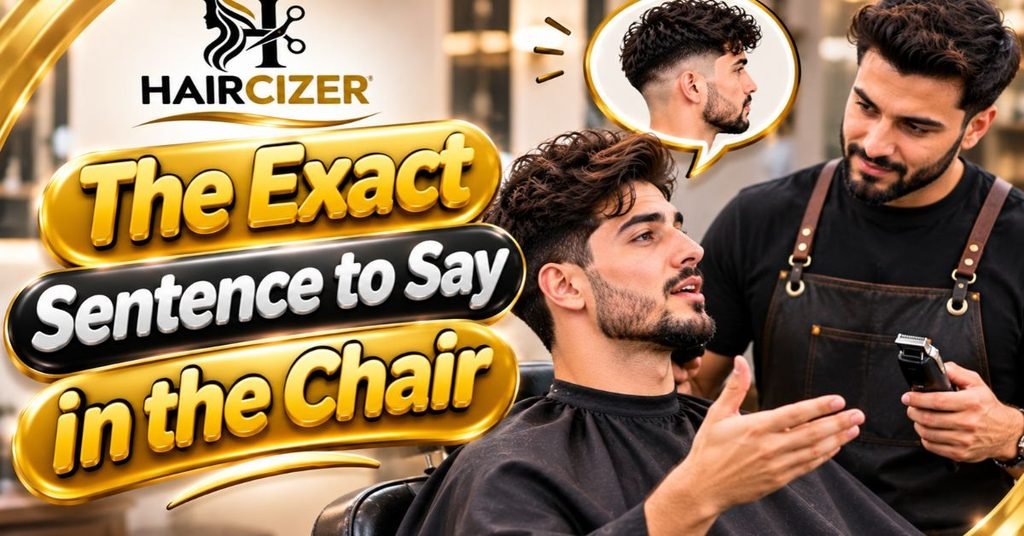
Here is a formula that works every time:
“[Height] [bottom length] [shape] fade, [top length and style], [finish].”
Use it as a fill-in-the-blank. A few examples:
- “Mid skin drop fade, two to three inches on top with texture, natural hairline.”
- “Low shadow fade, short crop on top, clean up the neckline, no line-up.”
- “High skin fade with a flat top, square it off, sharp line-up.”
- “Low taper fade with curls left long on top, keep the edges soft.”
- “Low burst fade, leave the back long, short messy top, beard blended.”
Three habits make the sentence work even better:
- Bring a photo. Show it, then describe the key variables out loud.
- Say what you don’t want. “No bare skin” or “don’t square the hairline” saves trouble.
- Mention how often you visit. A barber will adjust the blend if you plan to wait four weeks.
Finally, ask one question before the clippers start: “Does this suit my hairline and head shape?” A good barber will answer honestly and may suggest a tweak you had not thought of.
Frequently asked questions
What is the difference between a fade and a taper?
A taper shortens hair gently at the sideburns and neckline, while a fade covers more of the head and usually goes much shorter.
Which fade is best for beginners?
A low fade or low taper is the safest start, because it is subtle and grows out gracefully.
How often should I get a fade?
Most fades look best with a visit every two to three weeks, while low tapers can stretch to five or six.
Which fade lasts the longest?
A low taper or low shadow fade stays presentable longest because regrowth blends into the remaining length.
Does a fade work on curly or coily hair?
Yes, burst, drop, taper, temple, and hi-top fades all work well on curls and coils.
Will a fade make thinning hair look worse?
Usually it makes the top look fuller by comparison, though a very high skin fade can look harsh if the hair is quite thin.
Can women get fades?
Yes, fades work on any gender and any hair length, from subtle undercuts to bold skin fades.
What fade is best for razor bumps?
A shadow fade or a short guard length is gentler on the skin than a bare-blade skin fade.
Conclusion
The types of fade haircuts look like a long list, but they come down to five choices: height, bottom length, shape, top, and finish. Once you understand those, names like “mid skin drop fade” stop being a puzzle and start being a clear instruction. The difference between a fade and a taper, and the difference between a skin fade and a shadow, matter more than any trending name.
Pick a style that fits your hairline, your skin, and your schedule, not only the photo on your phone. Then use the exact sentence from this guide, and let your barber do what they do best. The right fade should look good on day one and still look decent on day twenty.
Leave a Reply