
A low taper fade is one of those cuts that looks sharp even on a lazy morning. The sides stay short and tidy, the top stays flexible, and the whole thing grows out without drama. But a good cut is only half the story. How you style the top decides whether it looks polished or flat.
This guide covers low taper fade styling for straight, wavy, curly, and coily hair. You will learn which products to buy, how to style step by step, how to refresh the look between washes, and what to tell your barber. Everything here is practical, so you can use it tomorrow.
What is a low taper fade, and what do you actually style?
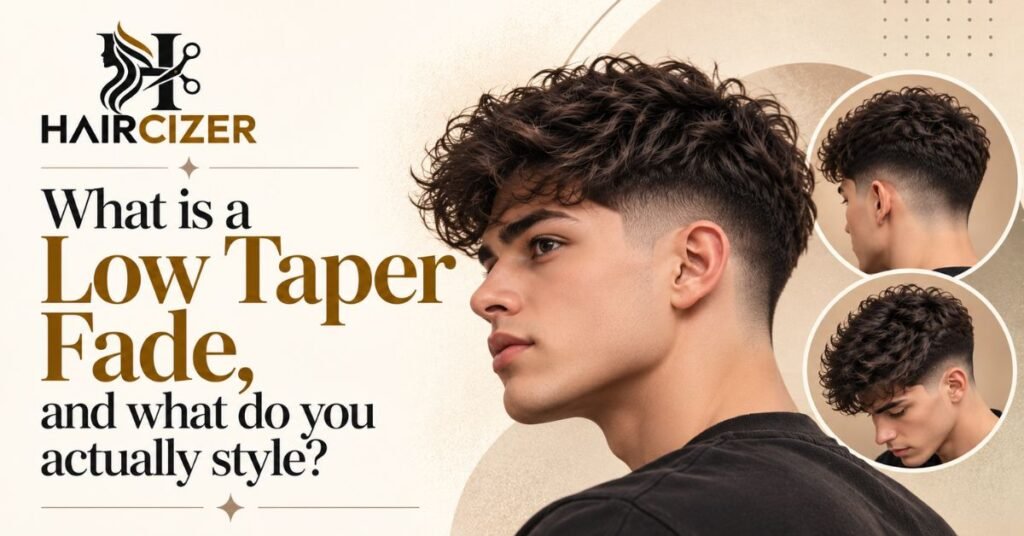
A low taper fade is a short haircut where the hair gets gradually shorter around the sideburns, behind the ears, and along the nape. The change in length starts low on the head, usually just above the ear, and stays subtle. The hair on the sides and back never goes bald unless you ask for it.
That is why it is called a “low” taper. The fade sits close to the hairline, so the cut reads as neat rather than dramatic.
Here is the part many guys miss: you do not style the taper itself. The barber creates it. What you style is the top, plus the way the top meets the sides. Think of the taper as a clean frame and the top as the picture.
Quick answer for featured snippets: A low taper fade is a haircut with hair that gradually shortens near the ears and neckline, leaving more length on top. You style the top section with product, a comb, a brush, or your fingers, and keep the edges clean.
Low taper vs low fade vs skin fade: what’s the difference?
People mix these names up all the time. The main differences are how short the hair gets and how fast it changes.
| Feature | Low taper | Low fade | Skin fade |
| Where it starts | Low, near the ears and nape | Low, just above the ears | Can be low, mid, or high |
| How short it gets | Short but not bald, often a few millimeters | Very short, can go to a shadow | Down to bare skin |
| Contrast | Soft and gentle | Medium | High and bold |
| Grow-out | Slow and forgiving | Moderate | Fast, looks messy sooner |
| Best for | Office, school, everyday wear | Guys who want a cleaner edge | Guys who want a sharp, bold finish |
If you want the quietest, most professional option, the taper wins. If you want strong contrast, a fade or skin fade gets you there faster. Many barbers also blend the two, so show a photo.
Before styling, read your hair, top length, and desired finish
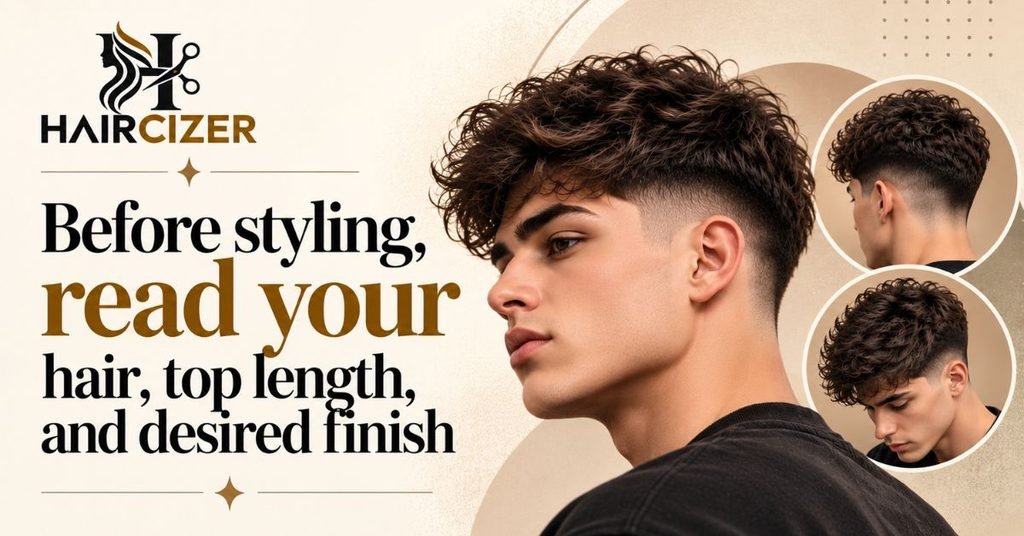
Great styling starts before you open a jar of product. Spend one minute looking at three things.
Your hair type. Straight hair slides and loses volume. Wavy hair gets frizzy when it dries wrong. Curly and coily hair needs moisture first, because dry hair looks dull and breaks.
Your top length. A top under 2 centimeters works with texture and light product. Medium lengths, roughly 4 to 8 centimeters, give you the most options. Longer tops can handle slick backs, curls, twists, or locs.
Your hair density. Thin hair shows scalp when it is flat. Thick hair can look bulky if the product is too heavy. Knowing this helps you choose between a light cream and a firm clay.
Your face shape. Face shape changes how the top should sit. A round face looks better with some height on top, so lift the front a little. A square or long face suits a softer, side-swept shape. An oval face can carry almost anything. You do not have to follow this rule strictly, but it helps when you are stuck between two styles.
Your climate. Humidity makes straight hair limp and wavy hair frizzy, while dry winter air makes curls and scalp feel parched. In humid weather, use lighter creams and a little hairspray. In cold, dry weather, add extra leave-in conditioner and keep your scalp moisturized.
Which finish are you going for?
Decide the final look first, because it controls everything else.
- Matte and natural: Choose clay or paste. Hair looks dry, textured, and lived in.
- Shiny and polished: Choose pomade or gel. Hair looks wet and sleek.
- Soft and defined (curls): Choose curl cream or leave-in conditioner. Curls look bouncy, not crunchy.
- Big and airy: Use sea salt spray plus a blow dryer. Hair looks full and loose.
Pick one. Mixing a high-shine pomade with a matte clay usually ends up looking patchy.
What tools and products do you need?
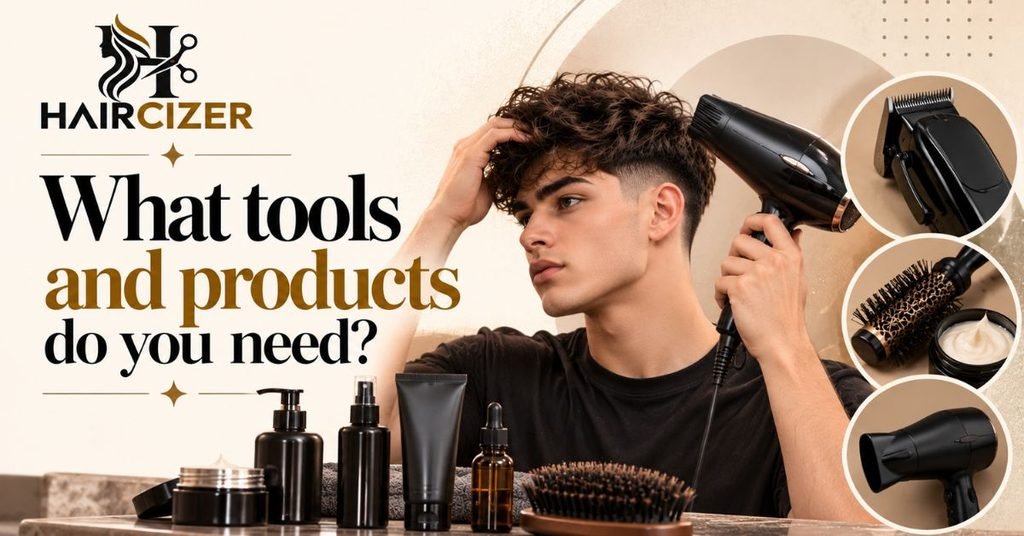
You do not need a bathroom shelf full of bottles. A few good basics cover almost every low taper fade.
Match the product to your hair and finish
| Hair type | Best product | Finish |
| Straight or fine | Sea salt spray, light texture powder, matte paste | Natural, airy |
| Thick or wavy | Clay, cream, light pomade | Matte to medium shine |
| Curly | Curl cream, leave-in conditioner, light gel | Defined, soft |
| Coily or Afro-textured | Moisturizing butter, leave-in, curl custard, oil to seal | Moisturized, shaped |
| Short top, any type | Matte clay or paste | Textured |
A few rules of thumb:
- Water-based products wash out easily and suit most people.
- Oil-based pomades give a stronger hold and shine but can feel greasy on fine hair.
- Heavy gels can flake if you use too much. Start small.
Pick the right styling tool
- Wide-tooth comb: Detangles curls and waves without pulling.
- Fine-tooth comb: Gives straight hair a clean part.
- Vent brush or paddle brush: Helps with blow-drying and direction.
- Soft boar bristle brush: Smooths straight and wavy hair and adds shine.
- Afro pick: Lifts coily hair and adds shape.
- Blow dryer with a diffuser: Dries curls without blowing them out of shape.
- Small mirror: Lets you check the back and the edges.
One caution about heat: a blow dryer is helpful, but high heat dries the hair and can damage it over time. Use medium or low heat, keep the dryer moving, and hold it a few inches away. If you have curly or coily hair, a heat protectant spray is worth the small extra step.
How to style a low taper fade, step by step

This routine works for most hair types. Adjust the products and tools using the sections below.
Step 1: Start with slightly damp, detangled hair
Do not style soaking wet hair, because product slides off and nothing holds. Do not style bone-dry hair either, because it fights you. Towel dry until the hair feels damp but not dripping.
Detangle gently. Use your fingers first, then a comb. Start at the ends and work upward. For curly and coily hair, do this while the hair still has some conditioner or water in it.
Step 2: Build direction and volume before heavy product
Direction is what makes a style look intentional. If you want the top pushed forward, comb it forward. If you want it up, blow-dry it up.
For straight or fine hair, blow-dry with the dryer pointing against the direction you want, then switch to the final direction. This gives lift at the roots. Medium heat is enough.
Step 3: Apply product in small, even layers
Most people use too much. Start with a pea-sized amount for short hair and a coin-sized amount for longer hair. Rub it between your palms until it is warm and almost invisible.
Run your hands through the hair from the back to the front. Then go through the sides of the top. You can always add more, but you cannot take it out without rinsing.
Step 4: Shape the top with fingers, a comb, or a brush
Choose the tool based on the look.
- Fingers: For texture, messy tops, and natural curls.
- Comb: For side parts, slick backs, and neat fringes.
- Brush: For smooth, shiny, tidy styles.
Pay attention to where the top meets the taper. That edge should look soft, not like a hat sitting on a shaved head. If it looks stiff, flatten the sides of the top a little with your palms.
Step 5: Set the style and check the fade line
Finish with a light hairspray or sea salt spray if you want hold. Use the mirror to check the sides and the back. Look for stray hairs, product build-up, and any area that looks flat.
Finally, check the edges around the ears and the nape. If they look uneven, wait for your barber visit instead of trimming them yourself.
How to style it for your hair type

The same cut can look very different depending on texture. Here is how to get the best result for each type.
Straight or fine hair
Straight hair shows every flaw, but it also gives you the cleanest lines.
- Use a light product. Heavy wax makes fine hair look thin and oily.
- Add volume with a blow dryer and a texture powder at the roots.
- For a side part, use a comb and a small amount of pomade.
- For a textured crop, push the top forward and use matte paste.
- Avoid washing every day. Fine hair gets flat and oily quickly, but over-washing makes the scalp produce more oil.
Thick or wavy hair
Thick hair gives you volume without trying. Your job is to control it.
- Use a cream or light clay so the waves stay soft.
- Blow-dry in sections to keep frizz down.
- Add a small amount of product to the ends, not the roots.
- If the top gets bulky, ask your barber to thin it slightly.
Wavy hair loves air drying with a little cream. Scrunch lightly and leave it alone. Touching it while it dries is what causes frizz.
Curly hair
A low taper fade is great for curls because the short sides make the curls on top look bigger and cleaner.
- Start with a leave-in conditioner on damp hair.
- Apply curl cream with your hands, scrunching upward.
- Let it air dry or use a diffuser on low heat.
- Do not brush dry curls. It breaks the curl pattern.
- Once dry, gently fluff the top with your fingers.
Curls need moisture more than hold. If they feel crunchy, scrunch them softly with your hands to break the cast.
Coily or Afro-textured hair
Coily hair has a lot of natural character and is also the driest type, so moisture comes first.
- Start with water or a leave-in conditioner on damp hair.
- Add a butter or custard, then seal with a light oil.
- Use an Afro pick to lift the top and shape it from the roots.
- For twists, locs, or twist-outs, retwist or reshape on slightly damp hair.
- Sleep with a satin bonnet or durag to protect the shape and cut down on frizz.
Coily hair shrinks as it dries, so judge your length when it is dry. A low taper fade looks especially clean here because the soft change in length makes the natural top stand out.
How to refresh the style without washing again

You do not need to wash and restyle every day. Try these quick fixes.
- Mist with water. A light spray revives curls and waves.
- Add a tiny amount of product. Rub it on your palms and tap it onto the top.
- Use a dry shampoo or texture powder. It removes shine on straight hair and adds grip.
- Reshape with a comb or pick. This resets the direction.
- Wipe the sides. A damp cloth takes care of loose hairs and product marks.
If the hair feels heavy or sticky, it is time to wash. Layering too much product on yesterday’s product is a common reason styles look dull.
Which low taper fade style works with your top length?
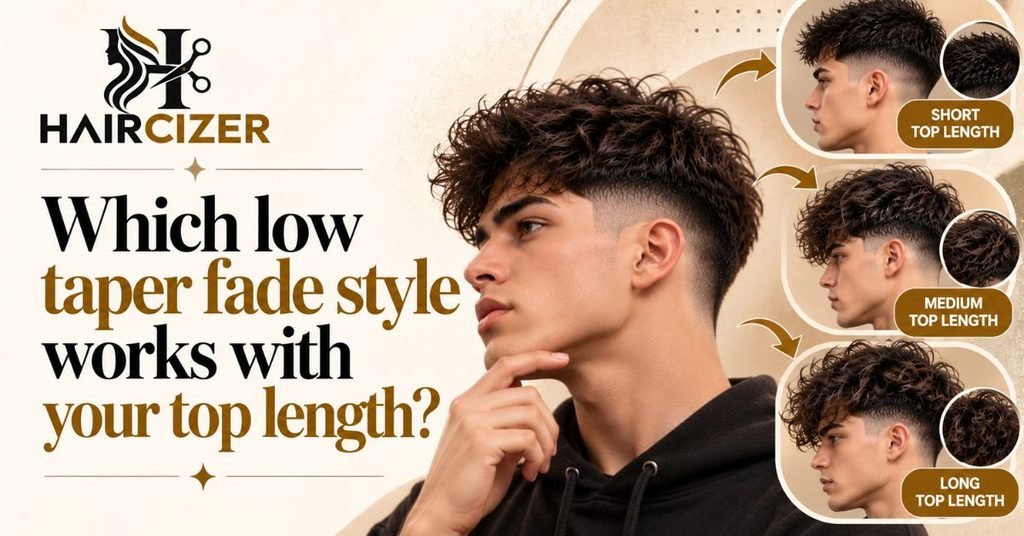
Your top length decides your options. Here are the best matches.
Short top: buzz cut, crew cut, or textured crop
- Buzz cut: Minimal styling. Keep the scalp moisturized and the edges sharp.
- Crew cut: Use a little matte paste and comb the front up.
- Textured crop: Push the top forward and add clay for a messy, casual finish.
Medium top: fringe, side part, quiff, or blowout
- Fringe: Comb the hair forward and trim it straight across. Matte clay works best.
- Side part: Use a comb and a light pomade for a classic look.
- Quiff: Blow-dry the front up and back, then set with a firm cream or paste.
- Blowout: Blow-dry with a brush for a full, airy top with a clean taper below.
Longer or textured top: slick back, curls, Afro, twists, or locs
- Slick back: Use pomade on damp hair and comb straight back.
- Curls: Use curl cream and let the curls dry naturally.
- Afro: Lift with a pick, shape the outline, and keep it moisturized.
- Twists or locs: Keep them neat and clean at the root. The taper keeps the sides and back looking fresh between retwists.
Pro tips that make styling easier

These are small habits that people with well-styled tapers tend to share.
- Style in front of good light. Bathroom lighting hides flat spots. Natural light shows them.
- Work from the back to the front. The back is harder to see, so get it right first and finish with the front.
- Use your palms for the sides. A light press along the edges blends the top into the taper.
- Test a new product on a small section first. Some gels and pomades feel different once they dry.
- Take a photo of your best hair day. It gives you a reference for the product amount and the direction you used.
- Be patient with a new cut. The first few days after a fresh taper often look sharper than the sides will a week later, so judge your style after the hair settles.
- Keep your tools clean. Combs and brushes collect old product, which can dull your style and irritate the scalp.
If a style does not work in the first two tries, change one thing at a time: the product, the amount, or the direction. Changing everything at once makes it hard to find the problem.
Common styling mistakes and how to fix them
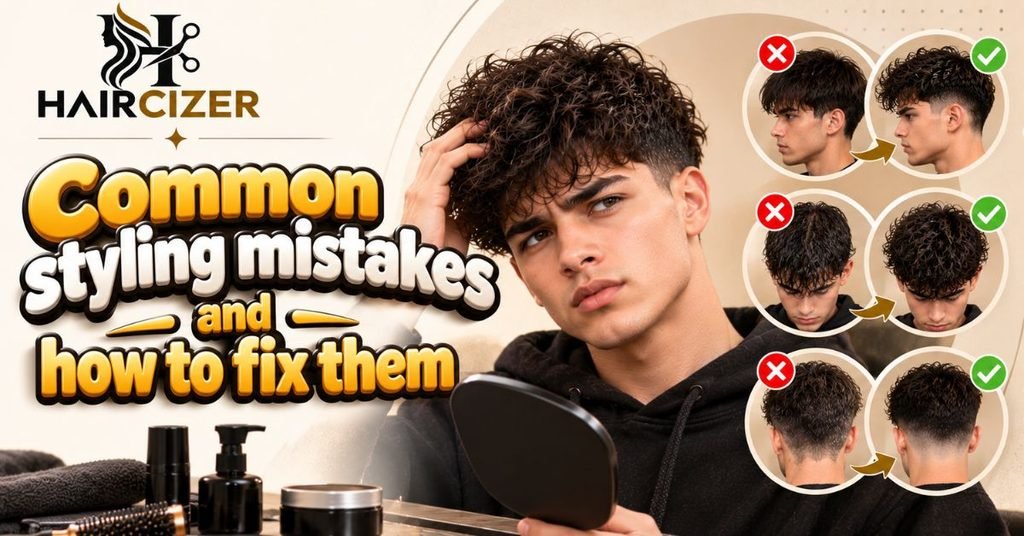
| Mistake | Why it hurts | Quick fix |
| Using too much product | Looks greasy, heavy, or flaky | Start with a pea-sized amount and build up |
| Styling soaking wet hair | Product slides off and the hold fails | Towel dry first |
| Brushing dry curls | Causes frizz and breakage | Use fingers or a wide-tooth comb on damp hair |
| Ignoring the sides | The top looks disconnected from the taper | Press the edges lightly with your palms |
| Washing too often | Dries out the scalp and the hair | Wash a few times per week, depending on your hair |
| Using the wrong product | Wrong finish and wrong hold | Match the product to the finish you want |
| Trimming the taper at home | Can make uneven lines | Leave the edges to your barber |
| Skipping moisturizer | Dry, dull, ashy hair and scalp | Use a leave-in and a scalp moisturizer |
Most of these problems come from rushing. Slow down for a minute and the result improves a lot.
How to maintain a low taper fade
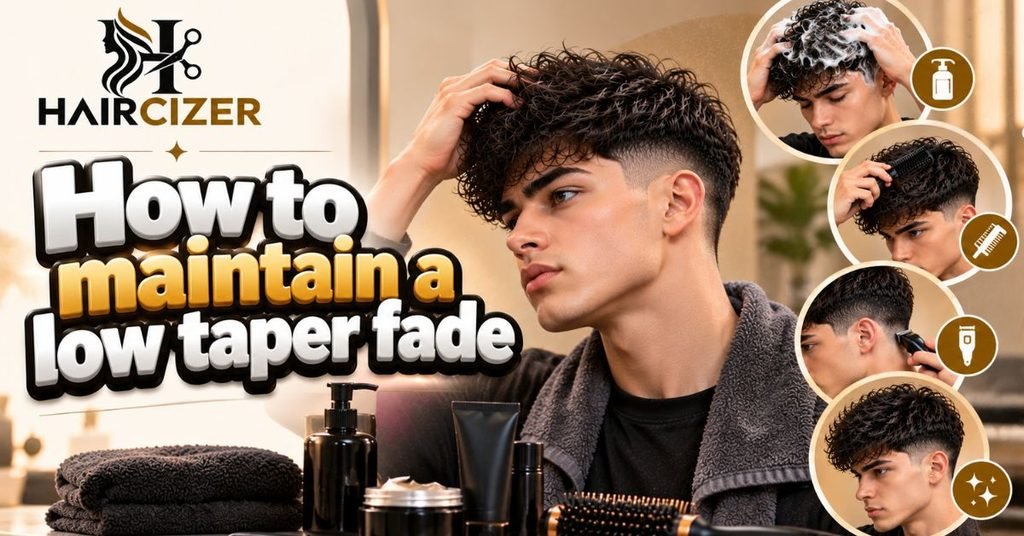
A low taper fade is easy to live with, but it still needs routine care.
Daily and weekly hair and scalp care
Daily:
- Moisturize the scalp if it feels dry.
- Use a gentle brush or comb to keep the top neat.
- Protect your hair at night with a satin pillowcase or bonnet.
Weekly:
- Wash with a mild shampoo suited to your hair type.
- Condition the lengths, especially if your hair is curly or coily.
- Do a deep conditioning treatment once a week if your hair is dry.
- Clarify once in a while to remove product build-up.
Keep an eye on the scalp. A healthy scalp helps hair look better, and the short sides show flakes and irritation more than longer hair would.
When to ask your barber to refresh the taper
A low taper grows out gently, which is one of its biggest perks. Most people book a refresh every 2 to 4 weeks. Here is how to know when it is time.
- The edges around the ears look fuzzy.
- The neckline has grown out and looks untidy.
- The top no longer sits right with the sides.
- Your styling takes much longer than it used to.
If you want the cleanest look, go closer to 2 weeks. If you are happy with a softer grow-out, 4 weeks is fine.
A note on advice: the tips above are general grooming guidance. If you have a scalp condition, heavy dandruff, hair loss, or a reaction to a product, speak to a dermatologist or a trained barber before changing your routine.
What to tell your barber

Clear communication saves you from a haircut you did not want. Bring these details.
- Photos. Show a front, side, and back view if you can.
- The fade level. Say “low taper” and point to where it should start.
- The shortest length. Ask for a number guard or say “short but not skin.”
- Top length. Tell your barber how much to leave on top.
- Neckline. Say whether you prefer a natural, rounded, or squared nape.
- Lineup. Say yes or no to a sharp hairline.
- Your routine. Mention how much time you spend styling.
Ask the barber what product they used and how they would style it. Good barbers are happy to share, and it is the fastest way to learn.
Low taper fade or an alternative: which should you choose?

A low taper fade is not for everyone. Here is a simple guide.
| Choose this | If you want | Watch out for |
| Low taper fade | A clean, subtle, professional look | Needs regular edge cleanup |
| Low fade | A slightly sharper look with more contrast | Grows out faster |
| Mid fade | A stronger, more modern shape | Can look dramatic at work |
| Skin fade | The boldest contrast and cleanest lines | Needs frequent visits |
| Classic scissor cut | A softer, natural shape | Less sharp around the ears |
| Longer taper with a beard | A balanced, mature look | Needs beard care too |
Think about your job, your hair type, and how often you want to visit the barber. If you are unsure, start with a low taper. It is the safest option, and you can always go shorter next time.
Frequently Asked Questions
How often should I get a low taper fade refreshed?
Every 2 to 4 weeks keeps the edges clean.
Can I get a low taper fade with curly hair?
Yes, it makes curls on top look neater and fuller.
What is the best product for a low taper fade?
Matte clay or paste suits most hair types.
Is a low taper fade good for thin hair?
Yes, just use light products to avoid a flat look.
Can I style a low taper fade without a blow dryer?
Yes, air drying with cream works well for waves and curls.
How short should the top be for a low taper fade?
Anywhere from a buzz to several inches works fine.
Does a low taper fade work for a professional office?
Yes, it is one of the most office-friendly cuts.
Should I wash my hair daily with a low taper fade?
No, a few washes a week protects scalp oils.
Can I do a low taper fade at home?
It is risky, so leave the edges to a barber.
What should I tell my barber to get a low taper fade?
Say “low taper, short but not skin” and bring photos.
Conclusion
A low taper fade gives you a clean frame, and your styling decides the final look. Match your products to your hair type, start with damp hair, and use small amounts. Keep the top shaped and the edges tidy.
Moisture, patience, and the right tools matter more than any trendy product. Book a refresh every few weeks and give your barber clear instructions. With a little practice, your cut will look sharp every single day.
Leave a Reply