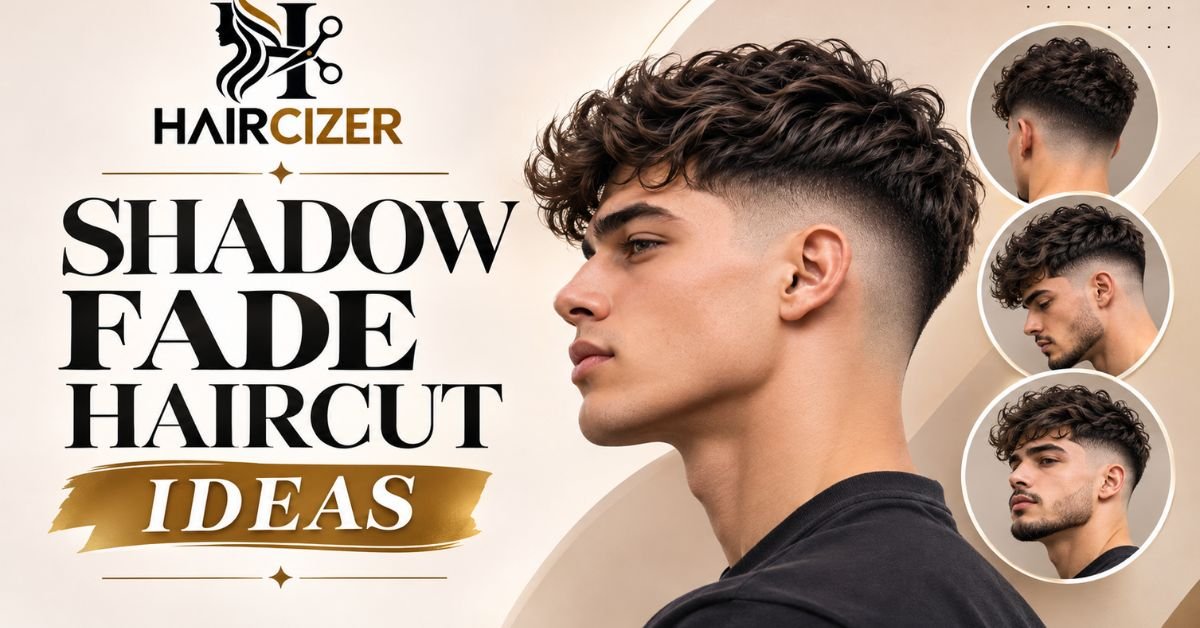
A shadow fade haircut is the cut for people who want a clean, sharp side profile without going all the way down to bare skin. The sides fade into a soft, hazy edge, and the top stays as long or as short as you like.
That softness is why it works in an office, at a wedding and on a Saturday night. It looks tidy, it grows out gracefully, and it flatters almost every hair type.
This guide covers what a shadow fade is, how it differs from a skin fade and a taper fade, and how to choose between a low, mid or high placement. You will also get the exact words to use with your barber, plus a simple upkeep plan so the cut stays fresh
What is a shadow fade haircut

A shadow fade is a fade haircut where the hair on the sides and back gets shorter in smooth steps and finishes at a very short stubble, not at bare skin. The leftover stubble looks like a faint shadow, which is where the name comes from.
Most of the work happens in the first inch or two above the ears and neckline. Above that zone, the hair blends into the longer length on top. The result is a gradient that looks soft rather than stark.
Quick answer: A shadow fade is a gradual fade that ends in a light layer of stubble instead of skin, giving a clean but softer finish than a skin fade.
Why is it called a shadow fade?
The name describes how the shortest section looks. When hair is clipped to a tiny length, you can still see a darker tint on the scalp, much like a five o’clock shadow on a face.
Barbers also call this a “shadow” because the edge between skin and hair is not harsh. Your eye reads it as a gentle shading, not a hard line.
Where does the shortest hair stop?
On a classic shadow fade, the shortest hair stops at the lowest part of the fade. That is usually around the sideburns, the area behind the ear and the lower neckline.
The exact stopping point depends on the placement you choose:
- Low shadow fade: the shortest hair stops just above the ear and wraps around the nape.
- Mid shadow fade: the shortest hair stops higher, roughly at the temple level.
- High shadow fade: the shortest hair sits well up the sides, near the upper temple.
The key point is that the shortest section is never shaved. There is always a trace of hair left.
What clipper guard makes a shadow fade?
Barbers usually build a shadow fade with a guard in the #0.5 to #1 range at the shortest point, then work upward with longer guards or by flicking the clippers out with a lever.
A common guard ladder looks like this:
| Fade zone | Typical guard or length | What it creates |
| Bottom (shadow zone) | #0.5 or #1 | The faint stubble shadow |
| Lower middle | #1.5 to #2 | A smooth first step up |
| Upper middle | #3 to #4 | The main blending area |
| Top of the fade | #5 to #6 or lever work | Link into the longer top |
Barbers adjust these numbers to your head shape and hair density. Treat the table as a starting point, not a rulebook.
Does a shadow fade require a #0.5 or #1 guard?
Not strictly, but those two are the most common. A #0.5 gives a slightly closer shadow. A #1 leaves a touch more hair, so the shadow looks a bit heavier.
Some barbers start with a #0 guard, which is almost skin-close, and some use a #2 for a very soft finish. If you are unsure, ask for a “shadow at a #1” and let your barber adjust from there. That is the safest middle ground, especially if it is your first fade.
Shadow fade vs skin fade vs taper fade: what’s different?
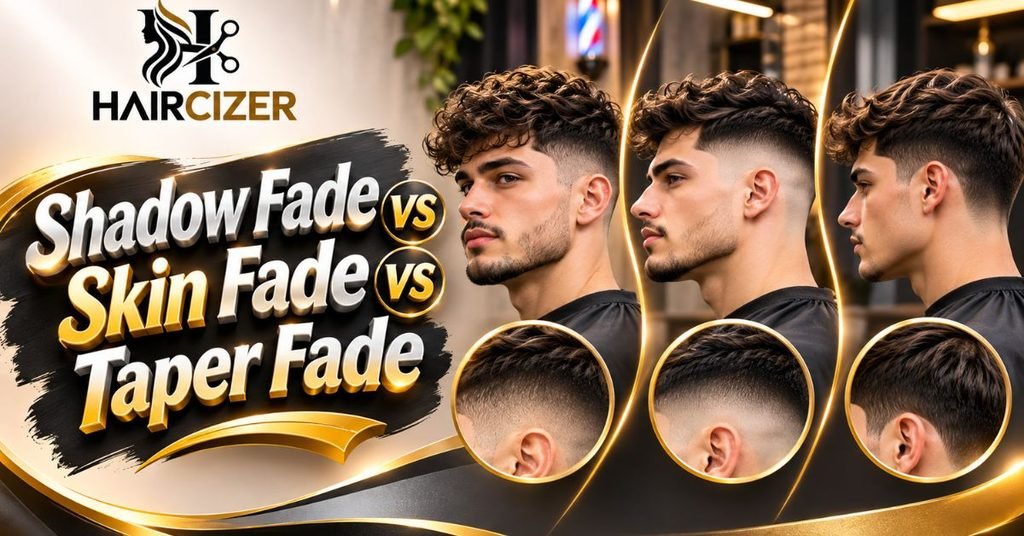
These three cuts get mixed up all the time. The main difference is how short the hair gets at the bottom and how far up the fade travels.
| Feature | Shadow fade | Skin fade | Taper fade |
| Shortest point | Light stubble (#0.5 to #1) | Bare skin, shaved with a foil shaver | Short but visible hair, often #1 to #2 |
| Contrast | Medium | High | Low |
| Where it runs | Low, mid or high | Low, mid or high | Mostly sideburns and neckline |
| Look | Soft and smoky | Crisp and bold | Classic and subtle |
| Upkeep | Every 2 to 4 weeks | Every 1 to 3 weeks | Every 3 to 5 weeks |
| Best for | People who want clean without extreme contrast | People who want maximum sharpness | People who want a conservative finish |
The simplest way to remember it: a skin fade disappears into skin, a shadow fade disappears into stubble, and a taper fade barely disappears at all.
Is a shadow fade the same as a taper fade?
No. A taper fade shortens the hair gradually, but it usually does so only around the sideburns and the back of the neck. The rest of the sides stay relatively long.
A shadow fade removes more length across the whole side of the head and blends it into a clear gradient. You can have a taper that ends in a shadow, but a shadow fade is a wider, more noticeable blend.
Who should choose a shadow fade, and who should skip it?
A shadow fade suits most people, but it is not for everyone.
A shadow fade is a good choice if you:
- Want a clean cut that still looks professional
- Like the look of a skin fade but find it too stark
- Need a style that grows out without an obvious gap
- Have hair that ranges from straight to tightly coiled
- Prefer visits every few weeks, not every week
You may want to skip it if you:
- Have a very sensitive scalp that reacts to close clipping
- Want a completely bald-looking side, which only a skin fade gives
- Prefer to leave the sides long and barely trimmed
- Have scars or patches you would rather keep covered, since closer lengths show more of the scalp
When is another fade a better choice?
Sometimes another cut fits your goal better.
- Pick a skin fade when you want sharp contrast and a bold look, such as with a pompadour or a textured crop.
- Pick a taper fade when you want the safest, most conservative finish for a strict dress code.
- Pick a burst fade when you want a curved fade around the ear, which works well with mohawks and longer styles.
- Pick a drop fade when you want the line to curve down behind the ear for a more shaped outline.
If you can’t decide, a shadow fade is a solid default because it sits between the two extremes.
Low vs mid vs high shadow fades: which placement should you choose?
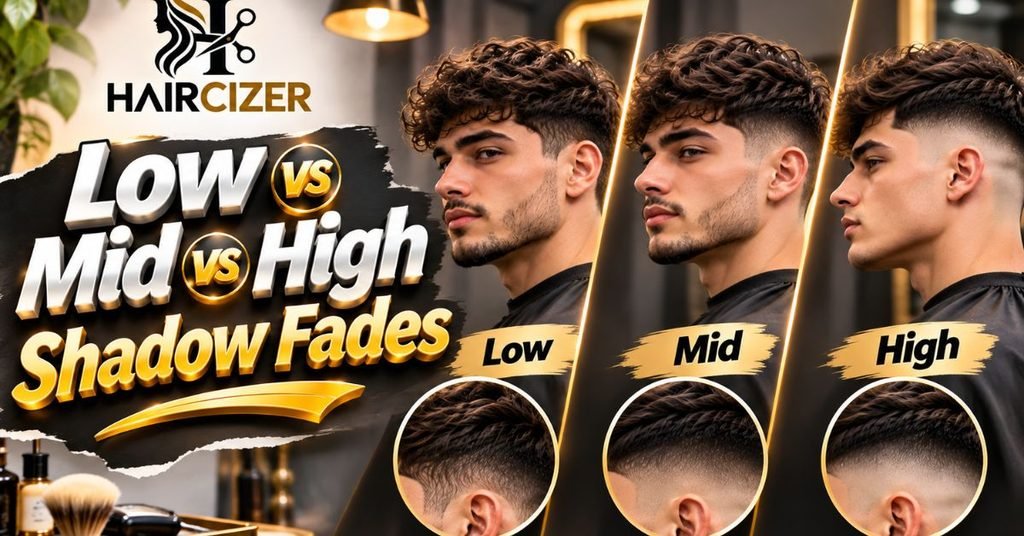
Placement is the biggest style decision after the guard. It controls how much of your head looks “faded” and how dramatic the cut feels.
| Placement | Where it starts | Contrast | Best for |
| Low | Just above the ear | Subtle | Office settings, longer tops |
| Mid | Around the temple | Balanced | Most hair types, everyday wear |
| High | Near the upper temple | Bold | Short tops, strong styles |
A useful rule: the higher the fade starts, the more the cut shouts. The lower it starts, the more it whispers.
Low shadow fade
A low shadow fade begins just above the ear and curves down toward the nape. It keeps most of the side hair intact, so the change from top to sides is mild.
This is the safest option if you have never had a fade. It also grows out nicely, so you can stretch visits a little longer. It pairs well with side parts, slick backs and longer textured tops.
Mid shadow fade
A mid shadow fade starts around the temple level, about halfway up the sides. It is the most popular placement because it balances neatness with subtlety.
If you are not sure what to pick, the mid option is the one most barbers will suggest. It works with crew cuts, quiffs, curls, waves and French crops. It also shows off the shadow gradient clearly without looking extreme.
High shadow fade
A high shadow fade starts near the upper temple, so most of the side of the head is short. It creates a strong contrast with a longer top and makes the top look taller and fuller.
This one makes a statement. It works best with shorter hair on top, defined textures or a bold shape like a mohawk. Because so much of the side is exposed, it needs the most frequent upkeep.
Can the placement follow a curve instead of a straight line?
Yes. A fade does not need to run in a flat, horizontal line. Your barber can curve it around the ear, drop it behind the ear or arc it toward the back of the head.
Curved placements are popular because they follow the natural shape of the skull. Two common versions are:
- Drop shadow fade: the line drops behind the ear and sweeps toward the neckline, which adds shape and softens a round head.
- Burst shadow fade: the fade radiates in a semicircle around the ear, leaving more length at the back. It works especially well with mullets, mohawks and curls.
If you like the idea of a curve, show your barber a photo. The word “curved” can mean different things to different people.
Which hairstyles and hair textures suit a shadow fade?
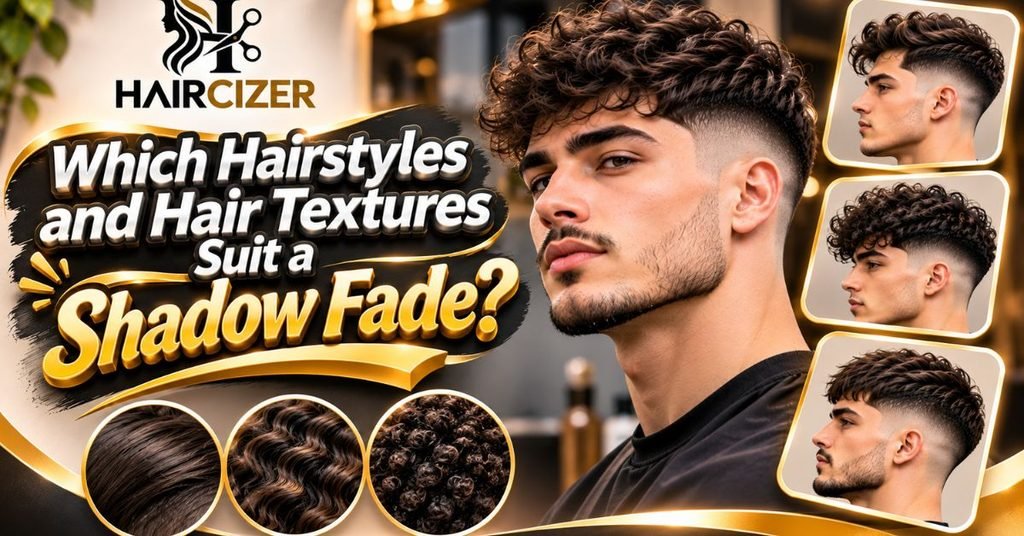
Almost every top works, because the fade only controls the sides and back. What changes is how the top and sides interact. Match the placement to your texture and the style comes together.
Shadow fade with straight or wavy hair
Straight and wavy hair show fades very clearly because there is no curl to hide the blend. That makes barber skill especially visible, so choose someone with a steady hand.
Good matches include:
- Classic side part: pair it with a low or mid shadow fade for a tidy, professional finish.
- Textured quiff: a mid shadow fade lifts the front without making the sides look severe.
- French crop: a high or mid fade with a short, forward fringe is neat and low effort.
- Slick back: a low shadow fade keeps the look clean without drawing attention away from the top.
Fine, straight hair can look thin on top if the contrast is too harsh. A low or mid placement keeps the hair looking fuller.
Shadow fade with curly or coily hair
Curly and coily hair are some of the best canvases for a shadow fade. The tight pattern on top contrasts nicely with the smooth gradient on the sides, and the shape stays defined as it grows.
Good options include:
- Curly top with a mid shadow fade: a popular combination that keeps volume on top and clean sides.
- Twist sponge or coils with a high shadow fade: a sharp, modern look that exposes the texture.
- Waves with a low shadow fade: works well with brushed or 360 waves because the fade sets off the wave pattern.
- Afro with a low or mid fade: keeps the shape round and balanced.
One tip: curly hair shrinks when it dries. Ask your barber to cut the top and fade on dry or lightly damp hair so you can both see the real length.
Shadow fade with a mullet, mohawk or other bold top
Bold tops look even bolder next to a clean fade. The shadow keeps the sides neat so the top is the only thing that stands out.
- Mullet: a low shadow fade or burst fade keeps the shape tidy while the back stays long.
- Mohawk: a high shadow fade creates a dramatic contrast with a tall center strip.
- Faux hawk: a mid shadow fade gives a softer, more wearable version.
- Long top with a man bun: a low or mid fade keeps the sides sharp while the top stays long.
For these styles, mention how long you want the top and back to be. The fade is only half the cut.
How should you ask your barber for a shadow fade?
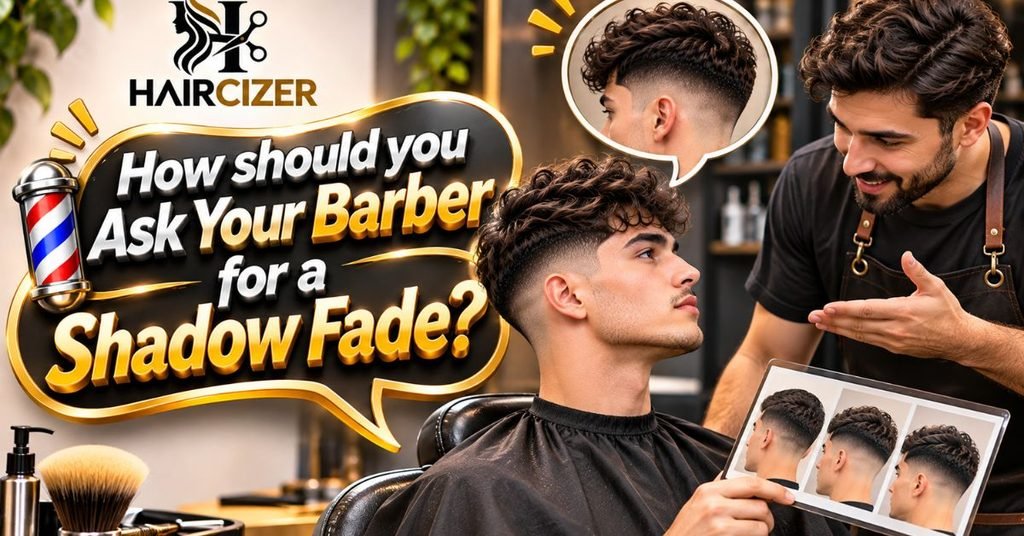
Clear communication is the difference between the cut you imagine and the cut you get. “Just a fade” is not enough, because it can mean five different things.
What five details must you specify?
Give your barber these five details and you will rarely be disappointed.
- Fade type: say “shadow fade” so they know you do not want skin.
- Placement: low, mid or high, and whether it should be straight or curved.
- Shortest length: a guard number such as #0.5 or #1, or “just a light shadow.”
- Top length and style: how long you want the top, and whether it is textured, slicked or natural.
- Neckline and edges: blocked, rounded or tapered, and whether you want a sharp lineup or a soft hairline.
What should you say and show your barber?
Keep it simple and specific. Here is a sample script:
“I’d like a mid shadow fade with a #1 at the shortest point. Keep the top about three inches, textured, and taper the neckline so it grows out softly.”
Then add a photo or two. Pictures help because words like “short” and “clean” mean different things to different people.
A few extra tips:
- Show photos of hair that matches your texture, not just the fade.
- Mention what you disliked about your last cut, if anything.
- Ask your barber for their opinion on placement. They know your head shape.
- Say how often you plan to return, since it affects how they shape the blend.
How does a barber create a clean shadow fade?
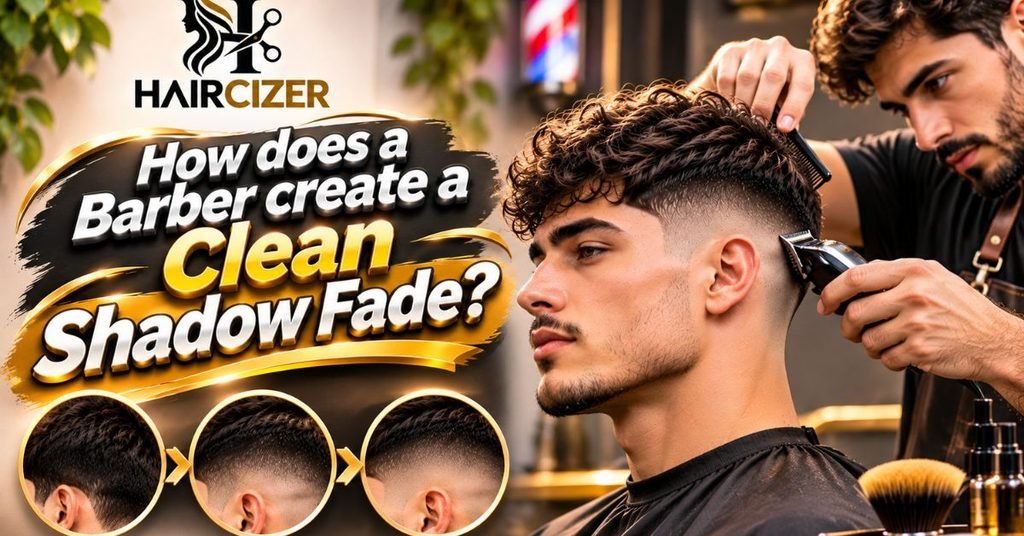
A good shadow fade is built in stages. Each guard removes a little more length, and the barber blends the edges between each step so there are no lines.
Here is the usual process:
- Set the guide line. The barber decides where the fade will start and marks it with the clippers.
- Start at the bottom. A #0.5 or #1 guard goes in first, and the barber works up to the guide line.
- Move up with longer guards. Each new guard overlaps the previous one so the gradient stays smooth.
- Use the lever or flick technique. The barber opens and closes the clipper blade while sweeping upward to feather the transition.
- Blend with a scissor or comb. Small lines or bumps are cleaned up with scissors over comb or a detail clipper.
- Check the cut from every angle. The barber looks at the sides, back and front, and fixes any patchy areas.
- Finish the edges. A trimmer or razor outlines the hairline, sideburns and neckline.
A thorough barber takes time to check the fade from different angles. If the whole thing takes less than twenty minutes, the blend may be rushed.
What does good shadow-fade blending look like?
Good blending looks like a smooth gradient with no obvious bands, stripes or sudden changes in length. Here are a few signs of a clean cut:
- The shift from short to long happens gradually, with no visible steps.
- Both sides match in height and shape.
- The stubble at the bottom looks even, not patchy.
- The line around the ear is tidy and symmetrical.
- The neckline is clean and matches the shape of your head.
Signs of a rushed job include dark patches, gaps or lines where one guard stopped and another started. If you see these, politely ask your barber to touch them up before you leave.
Also Read:Low Taper Fade Styling Secrets for Every Hair Type
How long does a shadow fade last, and how do you maintain it?

A shadow fade usually looks its best for two to three weeks. After that, the short sections start to fill in and the gradient loses its crisp shape.
The exact timing depends on how fast your hair grows and the placement you chose:
| Placement | Looks best for | Time to refresh |
| Low shadow fade | 3 to 4 weeks | Every 3 to 5 weeks |
| Mid shadow fade | 2 to 3 weeks | Every 2 to 4 weeks |
| High shadow fade | 1 to 2 weeks | Every 2 to 3 weeks |
Dark, fast-growing hair shows regrowth sooner than light or slow-growing hair.
When should you book a shadow-fade touch-up?
Book your next visit when the shadow starts to look fuzzy or the line around your ears loosens up. That is usually a good sign it is time.
A few clues that you are due:
- The neckline looks shaggy.
- The area around your ears has grown out.
- The top looks heavier than the sides.
- You can no longer see the gradient clearly.
You can often book a quick “fade only” or “sides and neckline” visit between full cuts, and it usually costs less. Ask your barber if they offer one.
How should you maintain the cut between visits?
A little care at home goes a long way.
- Wash regularly. Use a gentle shampoo so the scalp stays clean and the skin does not flake.
- Moisturize the scalp. A light, non-greasy lotion helps with dryness, especially on the closely clipped areas.
- Use a good styling product. Pick a matte clay, cream or pomade that matches your top and texture.
- Brush or comb daily. This keeps the top neat and shows off the fade.
- Protect it at night. A silk or satin pillowcase or durag helps curly and wavy hair keep its shape.
- Wear sunscreen. Closer cuts expose more scalp, which can burn easily.
- Avoid DIY fixes. Trimming the neckline at home often leaves it uneven. If you must, only clean up the neck hair and leave the fade to your barber.
What mistakes should you avoid with a shadow fade?

Most bad fades come from a few common slip-ups. Avoid these and you will get better results.
- Asking for a “fade” without details. This can lead to a skin fade, a taper or something in between.
- Choosing the wrong placement. A high fade on a long, narrow head can feel too severe, and a low fade on a very round head may not give enough shape.
- Skipping reference photos. Words alone leave too much room for guesswork.
- Going to the cheapest barber. Fades require patience and skill, so look at a barber’s past work before you book.
- Letting it grow too long. A faded cut that has grown out looks messy fast. Rebook before it gets there.
- Ignoring your hair texture. Curly, coily and fine hair each need slightly different techniques.
- Over-washing or drying the scalp. Dry, flaky skin shows up clearly on closely clipped sides.
- Forgetting sun protection. Newly cut sides can burn easily in summer.
- Trying to fix it at home. A small mistake with clippers can turn into a bigger one.
- Not speaking up. If something looks off during the cut, say so before the barber finishes.
Shadow fade FAQs
Is a shadow fade the same as a skin fade?
No, a shadow fade leaves light stubble while a skin fade goes to bare skin.
What guard is best for a shadow fade?
A #0.5 or #1 guard is the most common choice.
Which placement is best for beginners?
A low or mid shadow fade is the easiest to start with.
Does a shadow fade work on curly hair?
Yes, it works very well on curly and coily hair.
How often should I get a shadow fade touched up?
Every two to four weeks, depending on placement and hair growth.
Can I wear a shadow fade to the office?
Yes, a low or mid shadow fade looks neat and professional.
Will a shadow fade hide a receding hairline?
It can help, since the fade draws attention to the overall shape rather than the hairline.
Is a shadow fade good for thin hair?
Yes, a low or mid placement keeps thin hair looking fuller.
Conclusion
A shadow fade gives you the sharpness of a modern fade with a softer, more natural edge. Whether you choose a low, mid or high placement, the key is picking the one that suits your head shape, hair texture and daily routine. Start with the details we covered, and bring a photo to your appointment.
Once you have the cut, a little upkeep keeps it looking sharp. Book a touch-up every few weeks, moisturize your scalp and style the top to match your look. With the right barber and clear communication, a shadow fade is one of the easiest ways to look clean without much effort.
Leave a Reply