

A blowout taper fade pairs a full, lifted top with sides that shrink neatly toward the neckline. It looks bold from the front and clean from the back. That balance is why barbers hear this request so often, and why so many men bring a photo and still walk out unsure what they asked for.
This guide explains the cut in plain terms. You will learn what makes the blowout shape, where the taper sits, and how low, mid and high versions differ. You will also find hair-type advice, barber wording you can copy, home styling steps, a maintenance schedule and the mistakes that ruin the look. Read it once before your next appointment, and you will sit in the chair with a plan.
What Is a Blowout Taper Fade?

A blowout taper fade is a men’s haircut with voluminous, brushed-up hair on top and tapered sides and back. The sides get shorter gradually, ending near the hairline. The top stays long enough to stand up, sweep forward or hold curls.
Think of it as two ideas sold together. The blowout is the shape of the top. The taper fade is the way the sides are blended. Either can exist alone, but the pairing creates strong contrast without looking harsh.
What Creates the Blowout Shape?
The shape comes from length, direction and drying. Hair on top is cut longer, usually with some layering, so it can stand away from the scalp. Then it is dried upward and back, or forward for a fringe, using a blow dryer and a brush or comb.
Cut and styling share the work. A good layered cut gives hair a reason to lift. Blow drying trains it to hold that lift for the day. Skip either step and the result looks flat, no matter how sharp the sides are.
Products add the final layer. A light paste or cream adds grip, while a setting spray locks the volume in place. Together, the cut, the dryer and the product turn loose length into a deliberate shape.
Where Does the Taper Fade Actually Sit?
The taper fade starts shorter at the bottom of the head and grows longer as it moves up. Where the blend begins decides the height:
- Low: begins just above the ear and curves around the neckline.
- Mid: begins around the temple, roughly an inch or so above the ear.
- High: begins higher on the sides, near the top of the head.
A taper usually leaves some hair at the shortest point, while a fade can go down to bare skin. That difference matters, and the next section shows why.
Barbers also talk about the “blend zone,” the band where length changes from short to long. A smooth blend zone is the mark of a skilled cut. Harsh steps or visible lines usually mean the barber rushed the transition or used the wrong guard sequence.
How Is a Blowout Taper Different From a Regular Fade?

A regular fade focuses on the sides alone. It can be sharp, skin-short and high-contrast, and the top can be almost anything. A blowout taper treats the top as the star. The sides are cut to frame the volume rather than compete with it.
Because the sides are softer, the haircut also reads as more natural. You get lift and shape without the stark contrast of a skin fade. It also forgives small styling mistakes, since the top does most of the visual talking.
Blowout Taper vs. Full Skin Fade
A skin fade drops to bare skin and needs a barber visit every two to three weeks to stay crisp. A taper keeps a little length at the bottom, so it grows out more gently and hides regrowth for longer.
| Feature | Blowout Taper | Full Skin Fade |
| Shortest length | Short stubble or a small guard | Bare skin |
| Contrast | Soft to medium | High |
| Regrowth look | Gentle | Fuzzy within days |
| Typical visit gap | 3 to 4 weeks | 2 to 3 weeks |
| Best for | Everyday, office-friendly | Bold, sharp style |
Blowout Taper vs. Burst Fade or Drop Fade
A burst fade curves around the ear in a semicircle, leaving length at the back, which often suits mohawk-like shapes. A drop fade follows the ear and dips lower behind it. Both create a curved line that a standard taper does not.
You can combine them with a blowout. A drop taper under a blowout gives the sides a gentle arc. A burst taper does the same around the ear. Choose these when you want a more designed outline, and keep the standard taper when you want something that goes with everything.
Which Blowout Taper Height Should You Choose?

Height changes the mood of the cut more than any other detail. A lower blend looks softer and safer. A higher blend looks sharper and more modern. Use your face shape, job and styling patience as guides.
| Height | Vibe | Best for | Upkeep |
| Low | Subtle, versatile | Offices, first-timers, round faces | Lower |
| Mid | Balanced, stylish | Most hair types and face shapes | Medium |
| High | Bold, dramatic | Strong jawlines, confident looks | Higher |
Low Blowout Taper Fade
The low version starts just above the ear and rounds the nape. It keeps more hair on the sides, so the head looks fuller and the cut feels safe. It works for straight or slightly wavy hair, and for men who want volume without sharp contrast.
Choose it if your workplace is traditional or you dislike frequent trims. Regrowth shows slowly here, which is a practical bonus. It also pairs well with a beard, because the low blend meets facial hair without a visible gap.
Mid Blowout Taper Fade
The mid version is the sweet spot for most men. It gives more shape than a low taper but exposes less scalp than a high one. It suits nearly every hair type and works at the office or on a night out.
If you cannot decide between the other two, start here. Barbers often use it as the default because it flatters different face shapes and grows out well. You can always go higher at the next visit once you know how much contrast you enjoy.
High Blowout Taper Fade
The high version begins near the top of the head. It exposes more of the sides and makes the top look even taller. The look is bold, high-contrast and modern.
Strong jawlines and defined cheekbones carry it best. Expect more frequent visits, because the sharp line softens quickly once hair grows. Men with narrow faces should be careful, since a very high blend can make the head look longer.
How Long Should Your Hair Be for a Blowout Taper?

Aim for about three to five inches on top. That length lets hair stand up, bend into a fringe or hold curls. Shorter hair can still look good, but it will feel like a textured crop rather than a true blowout.
Curly and coily hair is measured stretched or unstretched, so tell your barber which you mean. Curls shrink, and four inches stretched may look like two when dry.
What If Your Hair Is Short or Growing Out?
If your hair is short, ask for the sides to be tapered now and let the top grow. Many barbers will keep the length and tidy the edges. In about two to three months, you will have enough for a real blowout.
During the awkward phase, use a light texturizing product and a brush to lift what you have. Avoid cutting the top just to look neat. That resets your progress and keeps you stuck at the same stage.
Does a Blowout Taper Fade Work With Your Hair Type?
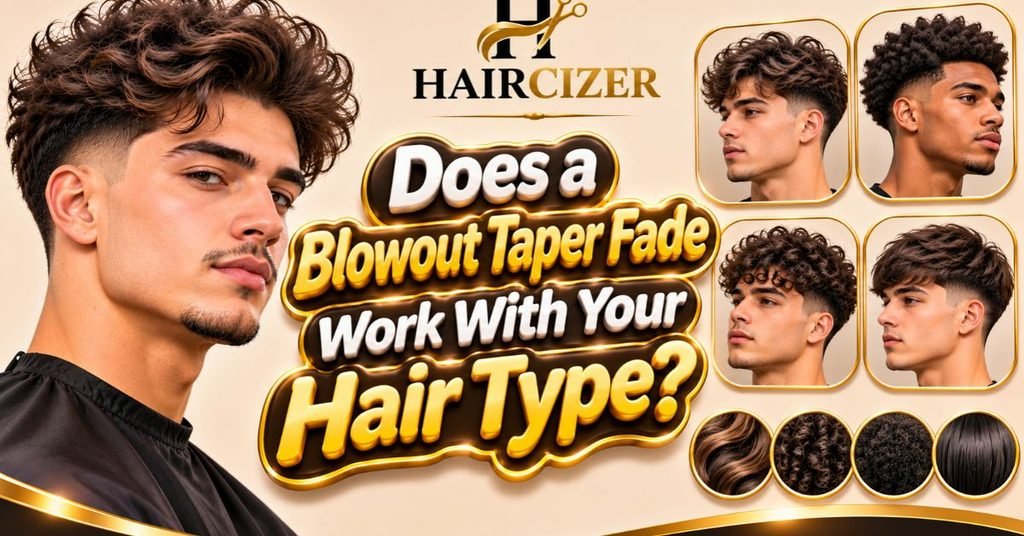
Yes, it works across textures, but the technique changes. The cut shapes the base, and your hair type decides how much work the finish needs. Match the plan to your texture and the result will look natural rather than forced.
Straight Hair: Building Lift
Straight hair tends to fall flat, so lift is the goal. Ask for layers on top and use a blow dryer with a round brush to direct hair up and back. A light dusting of texture powder or sea salt spray gives grip.
Straight hair holds shape best when it is cut with texture. Ask your barber to point-cut the top so it separates instead of lying in one heavy sheet.
Wavy Hair: Preserving Natural Movement
Wavy hair is the easiest match. It already has body, so the blowout simply organizes it. Avoid over-brushing, which turns waves into frizz.
Work in a light cream while hair is damp, rough dry with your fingers, and finish with a diffuser if you want more definition. Let the natural pattern lead.
Curly and Coily Hair: Keeping the Shape Full
Curly and coily hair gives the fullest result. The goal is to keep the shape even and round, not to flatten it. An afro-style blowout with a clean taper looks striking and holds volume well.
Moisture matters more than hold. Dry curls look dull and lose shape, so use a leave-in conditioner and a pick or wide-tooth comb to lift from the roots.
Fine or Thinning Hair: Managing Expectations
Fine hair can still work, but the volume will be modest. A low or mid taper helps, because tight sides make the top look denser by comparison. Keep the top slightly shorter so it does not look sparse.
If you are thinning at the temples or crown, tell your barber early. A well-placed taper can disguise a receding line, while a high taper can highlight it. Be realistic and ask for honest advice.
Which Blowout Taper Fade Styles Are Worth Showing Your Barber?
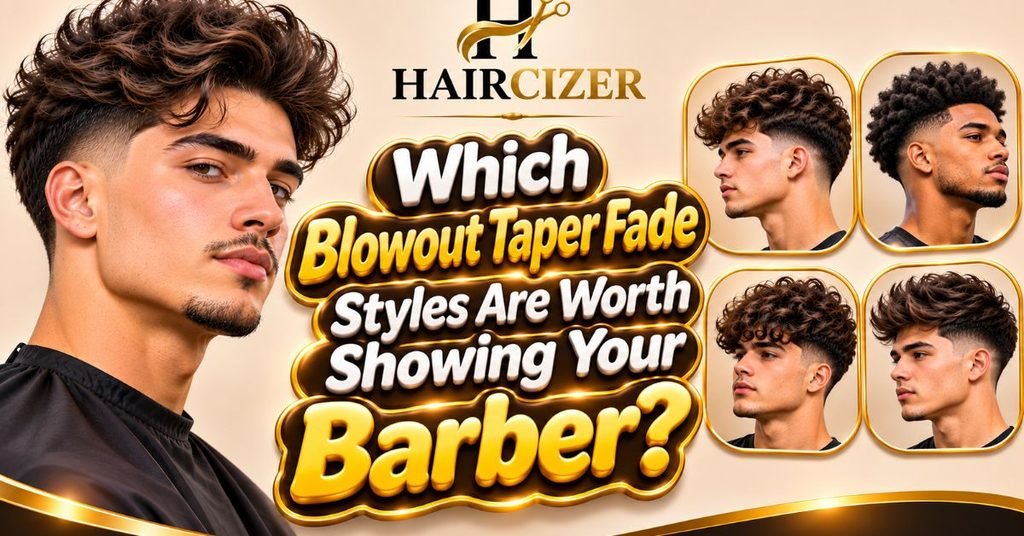
Four styles cover most of what men ask for. Each uses the same taper idea but changes the top. Pick one that matches your hair and your routine.
Classic Fluffy Blowout Taper
This is the original: hair brushed up and slightly back, with a low or mid taper on the sides. It looks full, polished and a little retro. It suits straight to wavy hair and takes about ten minutes to style.
Blowout Taper With Textured Fringe
Here the top sweeps forward into a loose, choppy fringe. The texture makes the cut look relaxed rather than formal. It works well with a mid or high taper and flatters straight hair that needs movement.
Curly or Afro Blowout Taper
This version keeps natural curls full and rounded, with a clean taper underneath. A low or mid taper keeps the shape balanced. A high taper adds drama. It is one of the most striking pairings in men’s hair, and it needs good moisture to stay soft.
Blowout Taper With a Longer Back
If you like a little length behind, ask for a taper only around the sides and ear. Keep the nape longer, with a drop or burst finish. It reads as a modern mullet-adjacent cut, but it stays neat enough for daily wear.
What Should You Tell Your Barber for a Blowout Taper Fade?

Barbers cannot read your mind, and the word “blowout” means different things to different people. Clear details prevent a haircut you did not want. A few sentences, said calmly, do more than any photo.
The Five Details Your Barber Needs
- Taper height: say low, mid or high, and point to where it should begin.
- Shortest length: ask for a guard number or whether you want skin at the neckline.
- Top length: give an inch measurement, such as “about four inches.”
- Top shape: say fluffy, textured, fringe or curly.
- Neckline: choose rounded, squared or natural.
Add one line about styling time. If you will only spend five minutes each morning, say so. A good barber will adjust the layers to suit.
A simple script works well: “I would like a mid taper that starts at the temple, a number one guard at the neckline, and about four inches on top, cut with layers so I can blow dry it upward.” It is short, specific and easy to follow.
How to Use Reference Photos Without Confusing the Cut
Photos help, but only if you explain them. Hair texture, density and head shape differ from person to person, so the same cut may look different on you. A photo shows an outcome, not the steps that created it, so the conversation matters more than the picture.
- Bring two or three photos from different angles, not one.
- Choose models whose hair type looks similar to yours.
- Point to what you like: the sides, the top or the outline.
- Ask whether the cut will work on your hair, and listen to the answer.
How Do You Style a Blowout Taper Fade at Home?

The haircut sets the shape, but styling keeps it alive. The routine differs by texture, so follow the version that fits your hair. Plan on about ten to fifteen minutes once you practise.
Styling Straight or Wavy Hair
Prepare and Lift
Start with clean, towel-dried hair. Apply a lightweight pre-styler or sea salt spray from roots to mid-length. Rough dry the top with a blow dryer on medium heat, lifting the roots with your fingers or a vent brush.
Direct the airflow upward and back. Keep the nozzle moving so one patch does not overheat.
Shape and Finish
When hair is about ninety percent dry, switch to a round brush and shape the front. Finish with cool air to set the form. Add a small amount of matte clay or paste, rub it between your palms, and work it through the top.
Use a light mist of hairspray to hold volume in humid weather. Keep the product amount small at first, because you can always add more, but removing excess means washing and starting again. Check the back in a second mirror before you leave.
Styling Curly or Coily Hair
Prepare the Natural Texture
Wet hair or mist it with water. Apply a leave-in conditioner and a curl cream, working in sections. Detangle gently with a wide-tooth comb so curls stay defined.
Dry and Shape the Volume
Use a diffuser on low heat and lift curls from the roots with your fingers. For a more stretched shape, blow dry with a comb attachment, then pick the hair out upward and outward.
Avoid constant touching while it dries. That is the quickest route to frizz. If you are short on time, air dry about halfway first, then diffuse the rest. It cuts heat exposure and still gives plenty of volume.
Setting and Refreshing the Finished Style
Set the shape with a light hold product, and press only where you need it. In the afternoon, mist with water or a refresher spray and fluff with your fingers. A pick can restore height at the crown.
At night, protect hair with a satin pillowcase or bonnet. It cuts friction and keeps your shape for the next morning.
Which Tools and Products Do You Need for a Blowout Taper?

You do not need a full shelf. A short kit handles nearly everything.
- Blow dryer with a concentrator nozzle and a cool setting
- Round brush or vent brush for straight and wavy hair
- Diffuser for curls and waves
- Wide-tooth comb or pick for curly and coily hair
- Light hold product such as clay, paste or cream
- Hairspray or setting spray for humid days
Choose Products by Hair Texture and Desired Finish
| Hair type | Finish you want | Product to try |
| Straight | Lift and texture | Sea salt spray, texture powder |
| Wavy | Soft movement | Light cream, mousse |
| Curly | Defined, hydrated | Leave-in conditioner, curl cream |
| Coily | Full, moisturized | Butter or cream, light oil |
| Fine | Light volume | Volumizing mousse, powder |
Avoid heavy, greasy products. They weigh hair down and flatten the blowout.
How Often Does a Blowout Taper Fade Need Maintenance?
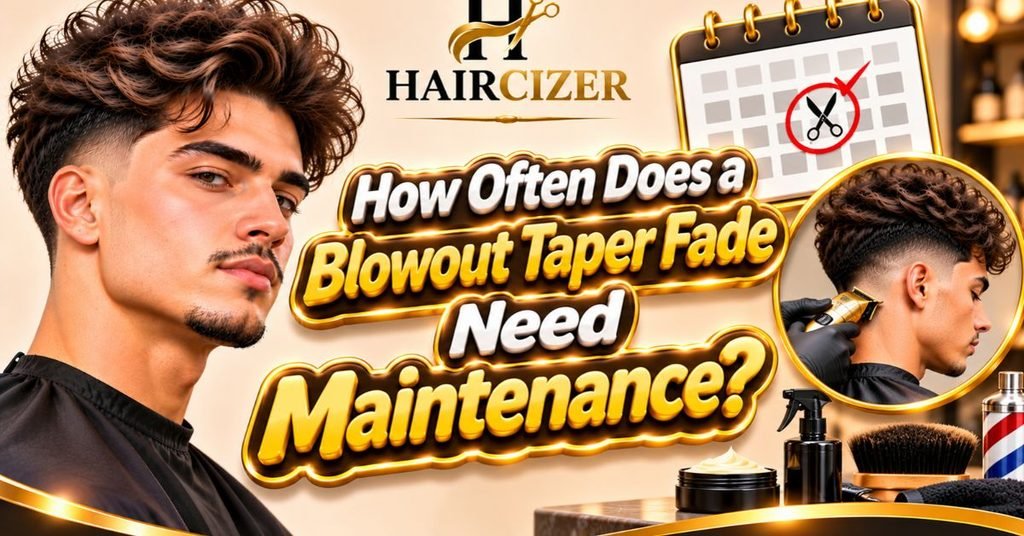
Plan a barber visit every three to four weeks. The sides and neckline lose their shape first, while the top can wait a little longer. A high taper may need a trim closer to every two to three weeks.
If you only want a quick tidy, ask for a neckline and ear clean-up between full cuts. Many shops charge less for it.
What Changes as a Blowout Taper Grows Out?
In the first two weeks, the taper blur softens. By week three, the sides begin to fill in and the contrast fades. After four weeks, the top gets heavier and may lose its lift.
A low taper grows out most gracefully. A high taper shows regrowth fastest because the contrast was higher to begin with.
| Taper height | Looks fresh for | Ideal trim gap |
| Low | About 3 to 4 weeks | Every 4 weeks |
| Mid | About 2 to 3 weeks | Every 3 to 4 weeks |
| High | About 2 weeks | Every 2 to 3 weeks |
How Can You Keep It Neat Between Barber Visits?
Also Read:15 Best Mid Taper Fade With Beard Styles for a Sharp Look
- Trim stray neck hair with a small trimmer, carefully and only below the line.
- Wash with a gentle shampoo, and condition curls often.
- Use a light product so buildup does not make the top heavy.
- Brush or pick the hair daily to keep the shape even.
- Do not try to fade the sides yourself. A mistake there takes weeks to fix.
What Mistakes Should You Avoid With a Blowout Taper Fade?
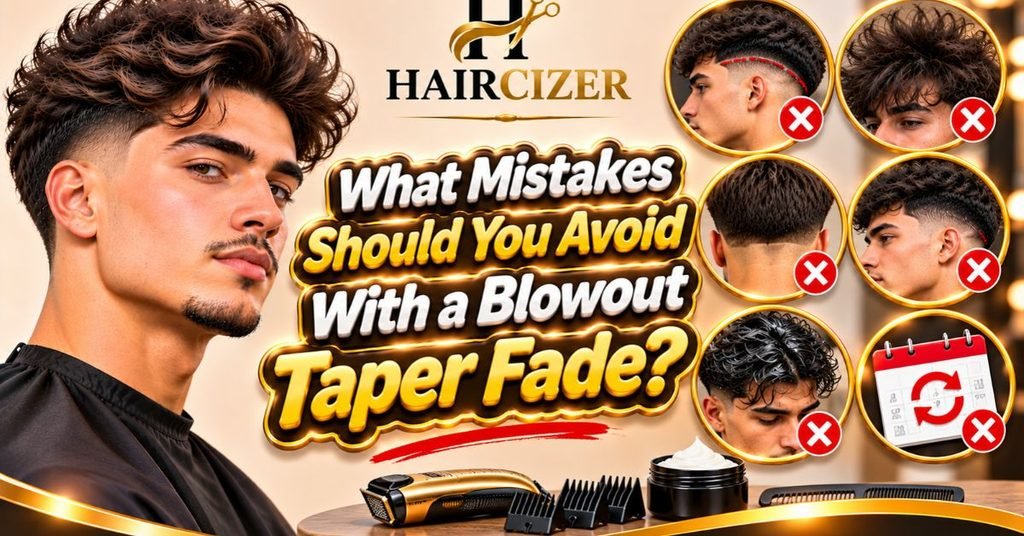
Most bad results come from a few preventable errors. Some happen in the chair, others at the bathroom mirror.
Cutting and Barber-Communication Mistakes
- Not specifying the height. “Taper” alone can mean low, mid or high.
- Cutting the top too short. The blowout needs length to work.
- Using a photo that does not match your hair. Fine hair will not copy a thick-hair photo.
- Rushing the decision. Take a moment to explain what you want.
- Ignoring your hairline. A receding line changes which height works.
Styling and Hair-Care Mistakes
- Using too much product. It weighs the top down.
- Blasting hair with high heat. It dries and damages strands.
- Skipping moisture for curly hair. Dry curls lose shape.
- Over-brushing waves. It creates frizz.
- Washing too often. Strip the scalp and hair feels dry and flat.
Is a Blowout Taper Fade the Right Haircut for You?
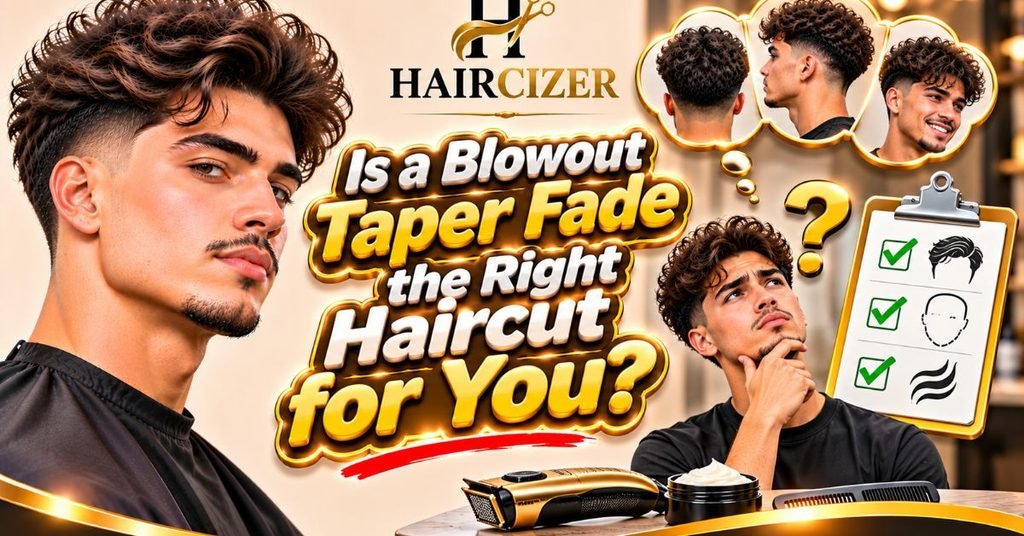
It is a good fit if you have enough top length, enjoy a bit of styling and want a cut that looks sharp and natural. Men with oval, square or heart-shaped faces usually wear it easily, and round faces benefit from the height on top. It also works well if you want lift and shape without the starkness of a skin fade.
It may not suit you if you wash and go, have very thin hair or cannot visit a barber regularly. In that case, a simpler cut will serve you better.
Which Haircuts Are Better If You Want Less Daily Styling?
If you want something easier, a few cuts take far less effort:
- Classic taper with a short top: neat with almost no styling.
- Crew cut: a short, low-effort classic.
- Buzz cut with a fade: clean, quick and simple.
- Short textured crop: a messy finish with a dab of paste.
You can still enjoy a taper on the sides and simply keep the top short. That gives you the clean look without the daily routine. If you change your mind later, you can let the top grow and build toward a full blowout over a few months.
Blowout Taper Fade FAQs
What is a blowout taper fade?
A haircut with a voluminous top and tapered sides blended toward the hairline.
How long should hair be on top?
About three to five inches works best for lift and shape.
Which height is best for beginners?
A low or mid taper is the safest choice.
How often should I get it trimmed?
Every three to four weeks keeps the shape sharp.
Does it work on curly hair?
Yes, curly and coily hair gives the fullest result with good moisture.
Is a blowout taper the same as a fade?
No, a taper keeps some length at the bottom while a fade can reach skin.
Can I style it without a blow dryer?
Yes, but a dryer gives much better lift and hold.
Does it work with thinning hair?
Yes, a low or mid taper can make the top look fuller.
Conclusion
The blowout taper fade works because it balances volume on top with clean, softly blended sides. Low gives you a safe and subtle finish, mid fits almost everyone, and high adds a sharper, bolder edge. Choose the height that suits your face, job and styling patience.
Success comes from clear barber communication and a simple home routine. Tell your barber the height, the length and the shape, then use a light product and the right tool for your hair. Keep up with regular trims, and your blowout will look fresh from the first day to the last.
Leave a Reply