
A mid taper fade is one of those haircuts that looks sharp on almost everyone. It keeps the sides neat, leaves room for length on top, and grows out without looking messy. That mix is why so many guys walk into a barbershop and ask for it by name.
But a lot of men with fine, straight, wavy, or curly hair still wonder if it will work for them. They also worry about asking for the wrong thing and leaving with a cut that is too short or too stark.
This guide clears that up. You will learn what a mid taper fade really is, which hair types suit it, and the best styles to try. You will also get a simple script for your barber, home styling steps, and a maintenance plan so the cut stays fresh.
What is a mid taper fade?
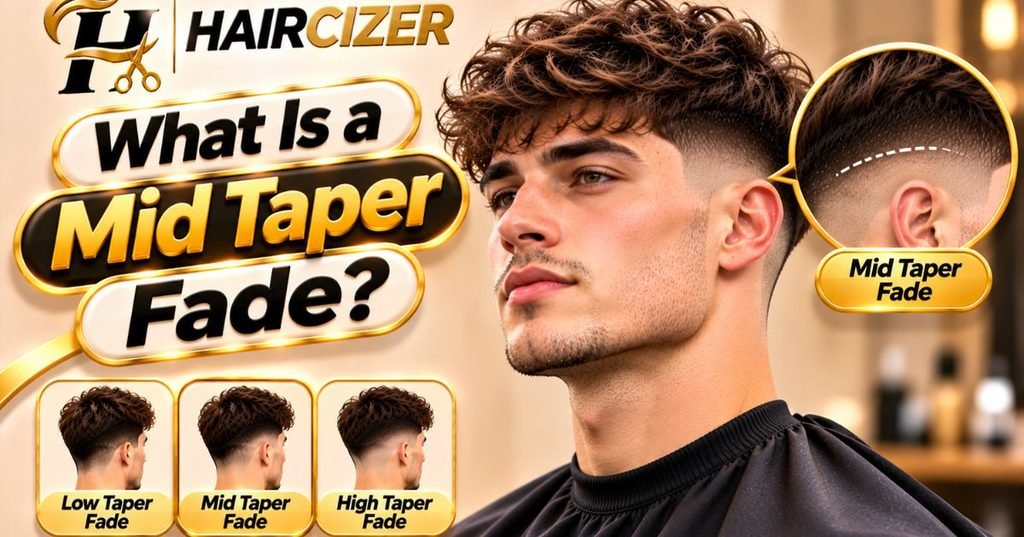
A mid taper fade is a haircut where the sides and back gradually get shorter, starting around the middle of the head. The hair blends from longer at the top of the sides down to very short near the ears and neckline.
The word “taper” matters here. A taper is a gentle, gradual shortening. It does not strip the sides down to bare skin unless you ask for that. Most mid tapers finish at a short length, like a #1 or #2 guard, and the neckline stays soft and natural.
Think of it as the balanced option. It is cleaner than a low taper but less dramatic than a high one. You get a visible fade without making a loud statement.
Mid taper vs mid fade
These two names get mixed up all the time, and many barbers use them loosely. Still, there is a real difference.
A mid taper is subtler. The hair stays longer at the bottom and fades only slightly, usually around the sideburns and neckline. A mid fade is more pronounced. The hair is cut much shorter, often down to the skin, and the blend is easier to see.
| Feature | Mid taper | Mid fade |
| Starting point | Around the temple | Around the temple |
| Shortest length | Short but not bald (about #1 to #2) | Very short or skin (bald fade) |
| Contrast | Soft and gradual | Sharp and noticeable |
| Neckline | Natural or lightly tapered | Fully faded |
| Best for | Office, school, classic looks | Bold, modern, high-contrast styles |
| Grow-out | Slow, forgiving | Faster to look overgrown |
If you are unsure, start with the taper. You can always go shorter next visit, but you cannot add hair back.
Where a mid taper sits on your head
The starting line of a mid taper sits roughly in line with the temple, a little above the ear. From there, the hair gets shorter as it moves down toward the ear, the sideburn, and the back of the neck.
Here is a simple way to picture it:
- Top of the fade: around the temple, where the sides begin to shorten
- Middle: the area just above the ear, where most of the blending happens
- Bottom: the sideburns and nape, where the hair is shortest
Because it starts at the midpoint, it frames the face without exposing too much scalp. That is a big reason it works for guys with a bigger forehead or thinning temples too.
Does a mid taper fade work for white guys?
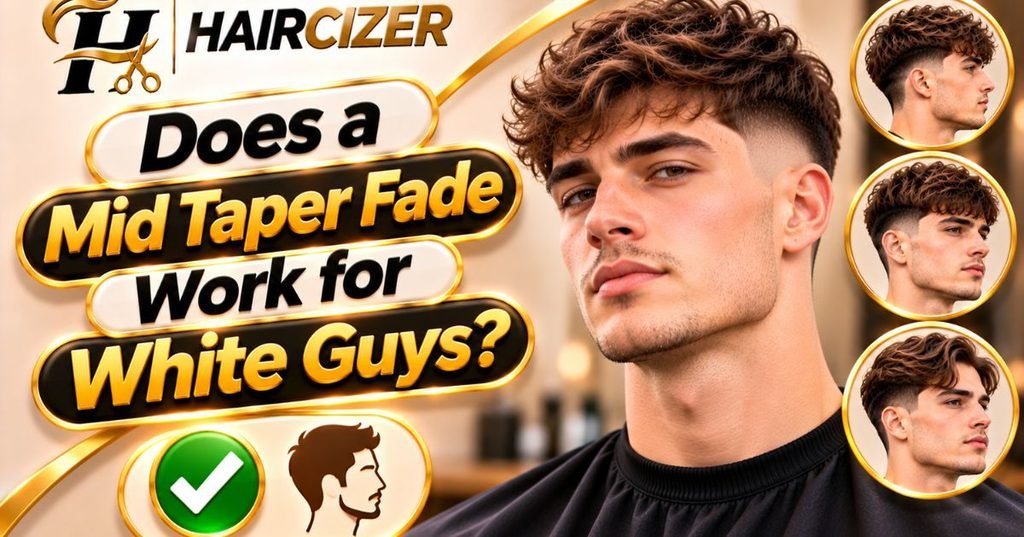
Yes, it works well. A mid taper fade is a technique, not a style tied to one ethnicity. It depends on how a barber blends hair from short to long, and that can be done on any hair type.
White men tend to have a wide range of hair. Some have fine, straight strands. Others have thick waves, tight curls, or a mix. The mid taper handles all of these, as long as the top is cut and styled to match.
The mid taper became popular with white guys for a few practical reasons. It looks tidy without being harsh. It pairs with short and medium tops. And it fits both casual and professional settings.
Why texture and thickness matter more than ethnicity
When barbers plan a cut, they do not start with a label. They look at your hair itself. Two things matter most:
- Texture. Is the hair straight, wavy, curly, or coily? Texture decides how the top sits and how the blend looks as it grows.
- Thickness. Are the strands fine, medium, or coarse, and how dense is your hair overall? This affects volume, hold, and how much the fade shows.
Fine, thin hair needs more care with the top so it does not look flat. Thick hair can hold longer shapes and heavier texture. Curly hair gives you natural volume but needs moisture and the right length to avoid frizz.
So instead of asking “will this suit my ethnicity,” ask “what does my hair do on its own?” That one question will guide you to a better haircut every time.
Which hair types work best with a mid taper?
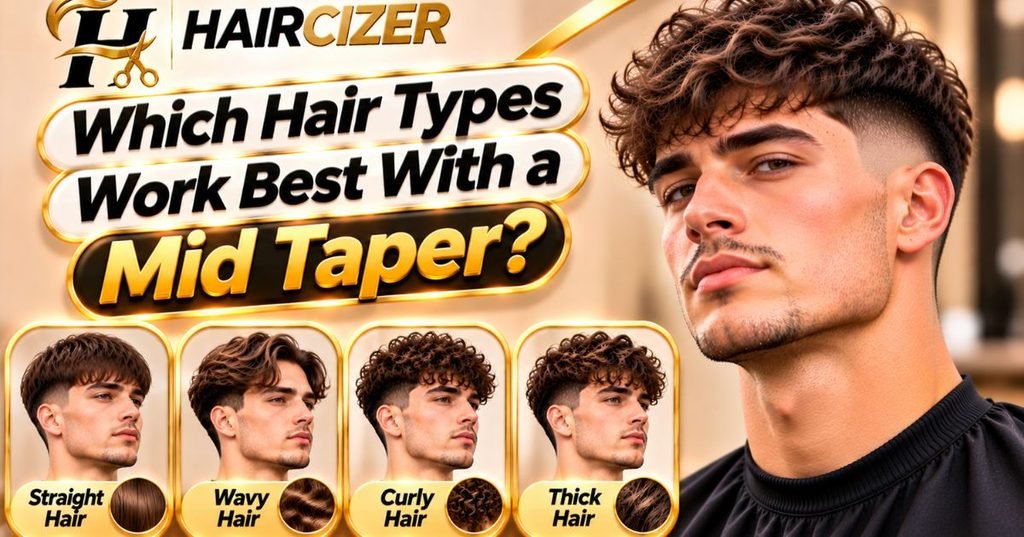
Almost every hair type can pull this off. The difference is in how you style the top and how your barber blends the sides. Here is a quick guide.
| Hair type | How it works with a mid taper | Best top styles |
| Straight, fine | Clean look; needs texture and volume to avoid looking flat | Textured fringe, side part, short quiff |
| Straight, thick | Holds shape well; easy to style | Quiff, pompadour, comb over |
| Wavy | Natural movement; great for texture | Messy fringe, textured crop, slick back |
| Curly | Bold shape and volume on top | Curly top, blowout, short curls |
| Thinning or receding | Taper draws attention away from the hairline | Short crop, forward fringe, textured top |
| Cowlicks or crown swirls | Needs a top length that works with the swirl | Short crop, brush up, messy texture |
A few extra notes can save you trouble:
- Fine hair looks fuller when the sides are tapered because the contrast makes the top seem thicker.
- Thick hair may need a bit of thinning on top so it does not puff out above a close fade.
- Curly hair looks best when you leave enough length for the curls to form. Too short, and they flatten.
- Receding hairlines do well with a soft taper and a top that moves forward.
Best mid taper fade styles for white guys
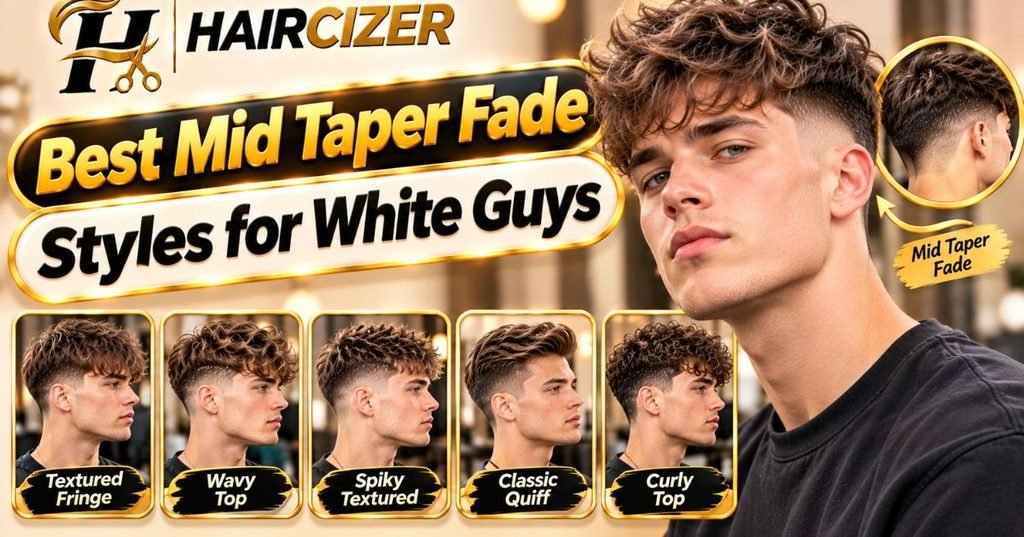
The sides stay clean and the top changes everything. Below are the styles that work best, grouped by hair type. Pick the one that matches your hair and the amount of time you want to spend each morning.
Mid taper styles for straight or fine hair
Straight and fine hair can look flat if you leave it alone. The trick is to add texture and direction. Each of these styles does that without a lot of product.
Mid taper with textured fringe
This is a favorite for good reason. The top is cut a few inches long and styled forward with a choppy, broken-up finish. The fringe sits across the forehead, and the tapered sides keep it from looking sloppy.
It works well for fine hair because texture hides thinness. A bit of matte clay or sea salt spray gives it grip and a lived-in look. If your hair is very straight, ask your barber to point-cut the ends. This removes weight and builds movement.
Best for: oval, square, and longer faces. It is also forgiving for guys with a high forehead.
Mid taper with side part
The side part is the classic pairing, and it looks sharp in an office, at a wedding, or on a first date. Hair on top is kept around two to four inches and combed to one side. The mid taper keeps the sides slim so the part stands out.
You can go with a soft part for a gentler look or a shaved or “hard” part for a crisp, defined line. A light pomade gives a clean finish with some shine. A paste gives a more natural, matte result.
Best for: straight hair, medium thickness, and guys who want a polished daily look.
Mid taper with short quiff
A quiff lifts the front of your hair up and back, adding height at the hairline. In a short version, the top is about two to three inches, so it is easy to manage. It looks neat with a mid taper because the tapered sides push attention to the lifted front.
To style it, blow-dry the front up and back, then add a bit of clay or paste. A good quiff gives fine hair volume it does not have naturally.
Best for: round or square faces, since the height adds length. It is also great if you want something between a classic cut and a trendy one.
Mid taper styles for wavy or curly hair
Wavy and curly hair already has body. The goal here is to shape it and keep it from getting too wide or frizzy. A mid taper helps by slimming the sides so the top looks intentional.
Messy or textured fringe
If you have waves, a messy fringe is almost effortless. The top is left medium length, and the front falls across the forehead in a loose, tousled way. Your natural wave pattern does most of the work.
A small amount of curl cream or texture spray is all you need. Scrunch it in, let it air dry, and go. The taper on the sides keeps the whole look clean, so the messiness reads as style, not neglect.
Best for: wavy hair, relaxed or creative workplaces, and guys who hate fussing with their hair.
Blowout mid taper
The blowout has become one of the most requested looks in recent years. It is a voluminous, fluffy top, usually brushed forward or up, paired with tapered sides. Barbers often describe it as big hair on top and tight on the sides.
You can get this on straight, wavy, or curly hair, though the setup differs. Use a blow dryer and a round or paddle brush to push the hair up and out. Finish with a light-hold spray or a texture powder. It gives a lot of presence and works well for medium-length hair.
Best for: thick or medium hair, guys who like a bolder look, and anyone willing to spend a few minutes with a hair dryer.
Curly top mid taper
For natural curls, this is the cut. The top stays long enough to curl, often three to four inches, and the sides are tapered at mid height. The contrast shows off the curl pattern and keeps the shape tidy.
Moisture is your friend. Use a leave-in conditioner and a curl cream while the hair is damp. Skip brushing it dry, which makes it frizz. A diffuser on low heat can help set the curls if you want more definition.
Best for: tight curls, loose curls, and anyone who wants to wear their natural texture.
Short, low-styling mid taper options
Some days you just want to walk out the door. These short styles take almost no time and still look finished.
- Short crop with a mid taper. The top is cut one to two inches and left slightly textured. Towel dry, add a touch of paste, and you are done.
- Buzz top with a mid taper. The top is clipped short, around a #4 or #5 guard, and the sides fade from there. It is about as low effort as it gets.
- Brush-up. Hair is about two inches and brushed upward with your fingers. A little clay gives it hold.
- Natural comb over. A short, neat comb over with no heavy product. Comb it while damp and let it dry.
These cuts are great for athletes, busy parents, and anyone who dislikes a long routine. They also grow out gracefully, so you can stretch the time between haircuts.
How do you choose the right mid taper?

Choosing is mostly about two decisions: how short the sides get, and what happens on top. Get these right and the rest is easy.
Set the height and the shortest length
The height is where the fade starts. For a mid taper, this is around the temple. Your barber can nudge it a little higher or lower based on your head shape and hairline.
The shortest length is how close the hair is cut at the bottom of the fade. This sets how bold the cut looks.
| Shortest length | Guard size | Look |
| Skin or bald | No guard (foil shaver or razor) | Sharp, high contrast |
| Very short | #0.5 to #1 | Clean and modern |
| Short | #2 | Classic, softer |
| Medium-short | #3 | Subtle, easy grow-out |
If you are new to fades, a #1 or #2 is a safe place to start. Go skin only if you like a sharper contrast and are happy to visit the barber often.
Your hairline and head shape matter too. If you have a flatter back of the head, a slightly higher fade can add shape. If your ears stick out, a softer taper around them can help.
Match the top to your hair, hairline, and routine
The top is where your personality shows, so match it to three things.
- Your hair type. Fine hair loves texture. Thick hair can handle weight. Curly hair needs length to curl.
- Your hairline. A receding hairline looks best with a forward-moving top or a short crop. A strong, low hairline can carry a quiff or pompadour.
- Your routine. Be honest. If you only want two minutes in the morning, pick a crop or a messy fringe. If you enjoy styling, a quiff or blowout is worth the effort.
Face shape can guide you too. Longer faces suit a fringe or a shorter top. Round faces benefit from height. Square faces handle most styles, especially textured ones.
How do you ask your barber for a mid taper fade?

Barbers are good at their job, but they cannot read your mind. Clear words and a photo make a big difference. Bring a picture of a haircut you like, ideally on someone with hair similar to yours.
What to tell your barber
Also Read:Low Taper Fade With Fluffy Hair: Best Styles & Pro Tips
Here is a simple checklist to follow:
- Name the cut. Say “mid taper fade.”
- Give the shortest length. For example, “down to a #1 at the bottom” or “skin at the neckline.”
- Describe the neckline. Ask for a natural, tapered, or squared-off finish.
- Explain the top. Say how long you want it and how you plan to style it.
- Mention the sideburns and ears. Ask if you want them cleaned up or left a bit fuller.
- Say what you do not want. If you hate a harsh line, say so.
A sample script you can use:
“I’d like a mid taper fade. Start the taper around my temple and go down to a number 1 at the bottom. Keep the neckline natural. On top, leave about three inches and add some texture so I can push it forward.”
Photos help, but remember that your hair is not identical to the model’s. Ask the barber if the style will work with your hair type, and listen to the advice. A good one will tell you what to adjust.
How do you style a mid taper fade at home?
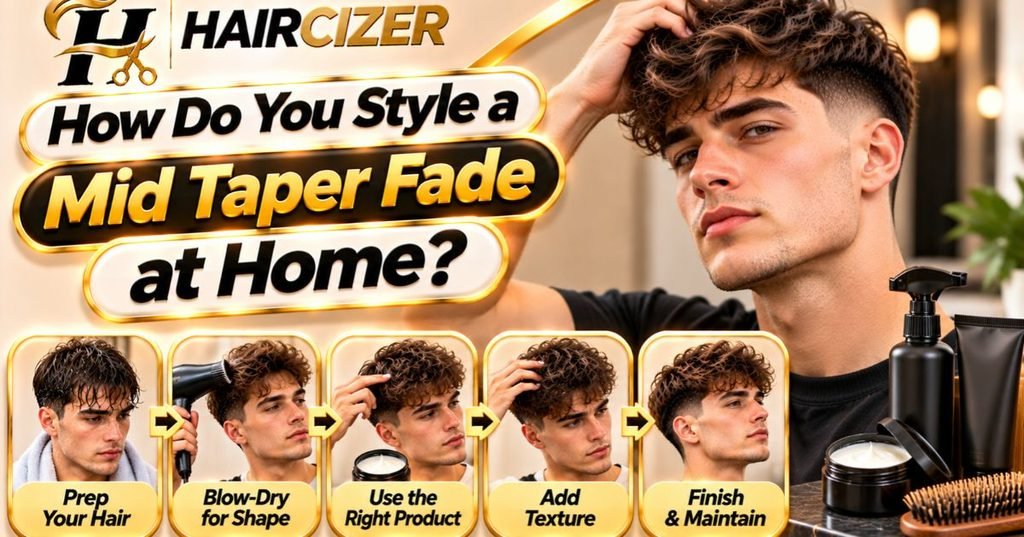
The best part of a mid taper is that the sides need almost no work. All your styling happens on top. A few basic products and a little technique are enough.
Basic tools:
- A towel and a comb or brush
- A blow dryer (optional but useful)
- Matte clay, paste, or pomade, depending on your finish
- Sea salt spray or curl cream for extra texture
Styling straight or fine hair
- Start with damp hair. Towel dry until it is not dripping.
- Add a pre-styler. A little sea salt spray or volumizing mousse gives fine hair grip and lift.
- Blow dry for direction. Dry the front up and back for a quiff, or forward for a fringe.
- Use a small amount of product. Rub a pea-sized dab of clay between your palms and work it through the roots first, then the ends.
- Shape and set. Use your fingers to build texture. For a side part, comb it into place.
- Finish with light spray. Only if you need extra hold.
Less is more. Fine hair gets weighed down fast, so start small and add if needed.
Styling wavy or curly hair
- Wash gently. Use a moisturizing shampoo and conditioner. Do not overwash, as it can dry out curls.
- Apply leave-in or curl cream. Work it through damp hair, scrunching upward.
- Skip the brush. Use your fingers or a wide-tooth comb to separate curls.
- Dry smart. Air dry, or use a diffuser on low heat. Avoid rough towel rubbing, which causes frizz.
- Add a light touch of texture product. A bit of paste or cream defines the shape.
- Do not touch it too much. Let it set before fixing anything.
For a blowout, flip the approach: use a brush and dryer to push the hair up and out, then finish with a light spray.
How do you maintain a mid taper fade?

A fade looks best fresh. Over time, the blend grows in and the lines soften. A few habits keep it sharp between visits.
- Wash regularly, but not daily if your hair is dry or curly.
- Use a good conditioner to keep the top healthy and easy to style.
- Keep the neckline clean with a quick tidy at home, or leave it to your barber.
- Trim split ends on the top if you are growing it longer.
- Protect your scalp. Short sides expose more skin, so use sunscreen outdoors.
How often should you refresh it?
Most guys need a touch-up every two to four weeks. The right timing depends on how short you go and how fast your hair grows.
| Fade style | Suggested refresh |
| Skin fade | Every 2 weeks |
| Short guard (#1) | Every 2 to 3 weeks |
| Medium guard (#2 to #3) | Every 3 to 4 weeks |
| Longer top, soft taper | Every 4 to 6 weeks |
You do not always need a full haircut. Many barbers offer a quick “clean up” that tidies the sides and neckline without changing the top. This is cheaper and keeps the cut looking sharp.
Can a very close fade irritate the skin?
Yes, it can. Cutting close to the skin may cause redness, razor bumps, or ingrown hairs, especially around the neckline. People with sensitive skin or curly hair are more likely to notice this.
A few tips can help:
- Ask for a slightly longer finish, like a #0.5 or #1, instead of a skin shave.
- Moisturize the area after your haircut with a gentle, fragrance-free lotion.
- Avoid scratching or picking at the skin.
- Use a soothing aftershave balm if your barber uses a razor or shaver.
- Go to a licensed barber who uses clean tools.
If you get frequent bumps or pain, talk to a dermatologist. A tapered finish rather than skin is also a smart switch.
Mid taper vs low taper, mid fade, and high taper
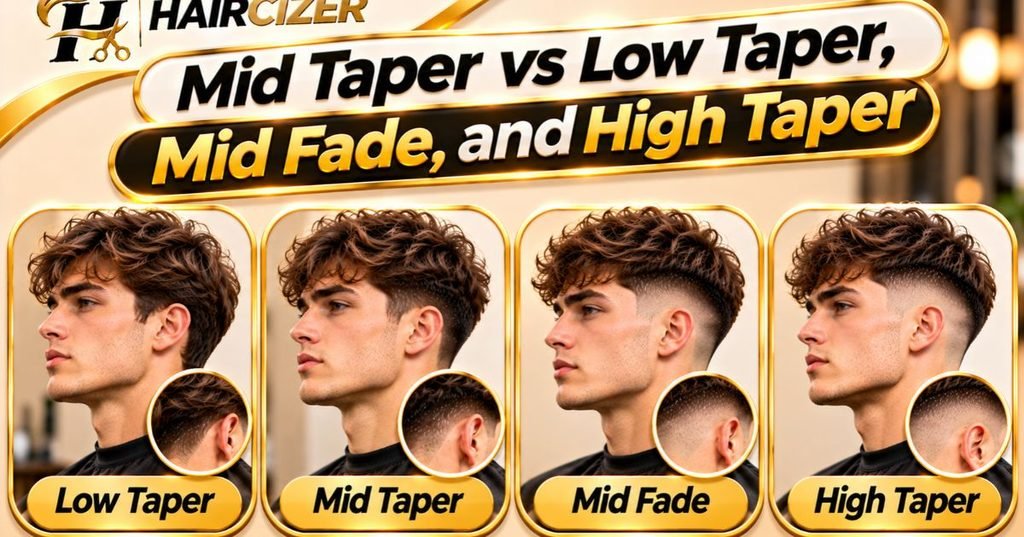
These cuts look similar at first glance, but each has a different starting point and vibe. Here is a side-by-side view.
| Cut | Starting point | Contrast | Best for |
| Low taper | Near the ears and neckline | Very subtle | Classic, conservative looks |
| Mid taper | Around the temple | Soft to moderate | Everyday, versatile style |
| Mid fade | Around the temple | Moderate to strong | Modern, high-contrast looks |
| High taper | Above the temple, higher up | Strong, dramatic | Bold, sharp styles |
A low taper keeps almost all the hair on the sides and only touches the edges. A high taper removes much more and creates a stark difference with the top. The mid option sits right between them.
Which should you choose?
Use this quick rule:
- Pick a low taper if you want the safest, most conservative option or work in a strict office.
- Pick a mid taper if you want a balance of clean and flexible, with plenty of top styles to choose from.
- Pick a mid fade if you like a sharper, bolder contrast and do not mind more frequent barber visits.
- Pick a high taper if you want a dramatic look and are comfortable showing more skin.
When in doubt, the mid taper is the best all-rounder. It suits most faces, hair types, and lifestyles, which is why it keeps showing up in barbershops.
Frequently asked questions
Is a mid taper fade good for thin hair?
Yes, the contrast makes the top look fuller, especially with a textured style.
Can I get a mid taper fade with long hair on top?
Yes, it works well with a medium or long top like a quiff, pompadour, or fringe.
What guard number is best for a mid taper?
A #1 or #2 at the bottom is the most common and safest choice.
How long should my hair be before getting a mid taper?
About two to three inches on top gives your barber enough to shape.
Does a mid taper work with curly hair?
Yes, the tapered sides slim the shape and let the curls on top stand out.
How much does a mid taper fade cost?
Prices vary by city and barber, so check with your local shop.
Is a mid taper professional enough for work?
Yes, especially with a side part or short crop on top.
What is the difference between a taper and a fade?
A taper shortens gradually and stays longer, while a fade goes much shorter, often to skin.
Can I do a mid taper fade at home?
It is possible with good clippers, but a barber will give a cleaner blend.
What products should I use with a mid taper?
Matte clay or paste for texture, pomade for shine, and curl cream for waves and curls.
Conclusion
A mid taper fade is a smart, flexible haircut that works on straight, wavy, and curly hair. It keeps the sides neat, leaves you plenty of options on top, and grows out without much drama. Whether you pick a textured fringe, a quiff, or a curly top, the key is matching the cut to your hair and routine.
Tell your barber the height, the shortest length, and the top style you want, and bring a photo to avoid surprises. Keep up with a touch-up every few weeks and style with light products. With these simple steps, a mid taper fade can become the easiest, sharpest haircut you ever wear.
Leave a Reply