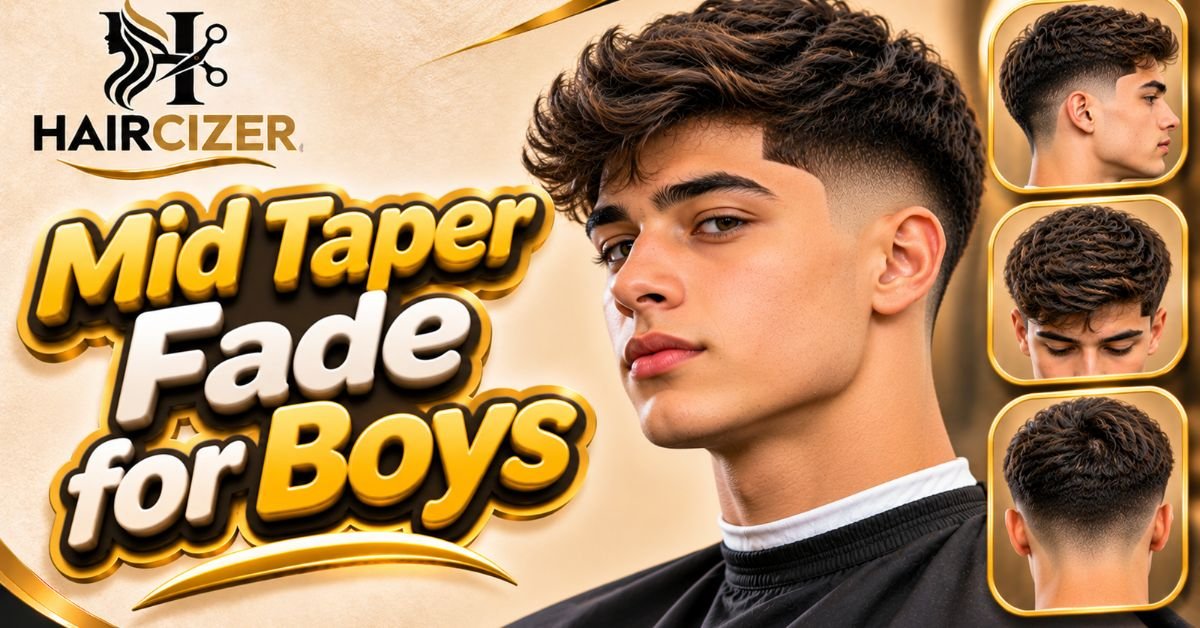
A mid taper fade is one of the easiest ways to make a boy’s haircut look sharp without making it hard to live with. The sides and back get shorter in a smooth, gradual way, and the top keeps enough length to style however he likes. It works for the classroom, the football pitch, birthday parties, and family weddings.
This guide explains what a mid taper fade really is, how it differs from other fades, which styles work for each hair type, and exactly what to say to the barber. You will also find home styling steps, a maintenance schedule, school-policy checks, and scalp and hygiene advice for parents.
What is a mid taper fade for boys?
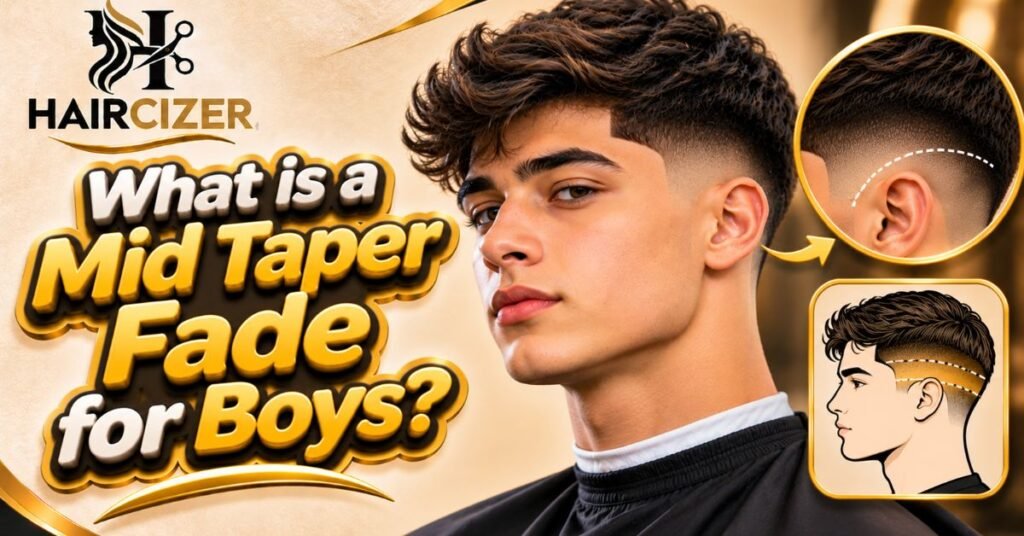
A mid taper fade is a haircut where the hair on the sides and back gets gradually shorter as it moves down toward the ears and neckline. The blending begins around the middle of the head, roughly at the temple or just above the ear. The hair on top stays longer, so it can be combed, textured, or left natural.
Think of it as a clean, soft transition instead of a hard line. That is why parents like it for younger kids and why teens like it for school.
What does “mid taper fade” actually mean?
Each word in the name describes part of the cut:
- Mid: the blend starts at a medium height on the head, not near the ears and not up by the crown.
- Taper: the hair gets shorter gradually, with most of the shortening around the sideburns and the nape of the neck.
- Fade: the length blends smoothly from longer to shorter, with no visible steps.
A classic taper usually leaves some hair at the very bottom. A fade can go down to bare skin. A mid taper fade sits in between, so a barber can keep the bottom soft or take it shorter, depending on the boy and the parent.
Is a mid taper fade the same as a mid fade?
No, though many people use the two names as if they were the same. A mid fade usually drops closer to the skin and creates a stronger contrast between the sides and the top. A mid taper fade starts at the same height but stays a little longer at the bottom, so it looks softer and more conservative.
If you want a neat look with less drama, ask for the taper version. If your son wants a bolder, sharper finish, the mid fade may suit him better.
Mid taper vs low taper vs high taper vs mid fade
Here is a quick comparison to help you choose.
| Haircut | Where the blend starts | How it looks | Best for |
| Low taper | Just above the ears and neckline | Very subtle and classic | Boys who want a mild change |
| Mid taper | Around the temples, mid-height | Balanced and clean | Most boys, school, everyday wear |
| High taper | High up near the crown | Strong and eye-catching | Boys who like a sharper look |
| Mid fade | Mid-height, blends toward skin | Bolder contrast | Teens who want a modern edge |
The mid taper sits in the middle of the range, which is exactly why barbers recommend it so often as a first fade for a child.
Why do so many parents choose it? The cut gives a tidy outline without feeling harsh. It frames the face, keeps hair away from the eyes and ears, and grows out gently. It also gives the barber a clean base to work from, so the top can change from a side part this month to a textured crop the next, without needing a brand-new haircut each time.
Is a mid taper fade a good choice for a boy?
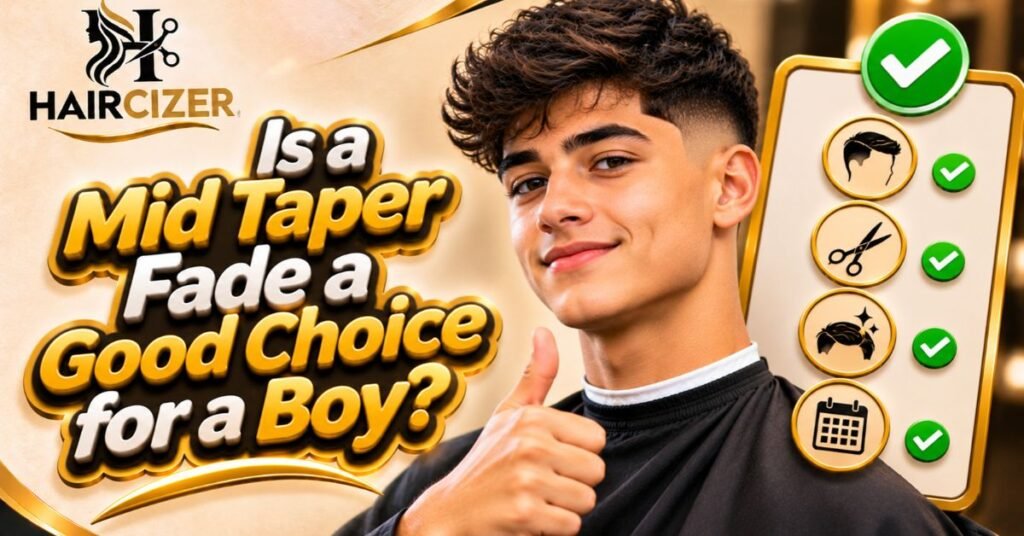
Usually, yes. It is neat, flexible, and forgiving. If the hair grows out unevenly, the soft blend hides it better than a high-contrast skin fade would. It also helps thick hair feel lighter, since the barber removes bulk from the sides and keeps the weight on top.
Who does a mid taper fade suit best?
This cut tends to work well for:
- Boys who play sports and want hair that stays out of the way.
- Kids with thick hair who find the sides puffy or hard to manage.
- Boys with fine hair, because the contrast makes the top look fuller.
- Pre-teens trying their first “grown-up” haircut.
- Boys with wavy or curly hair who want to keep their natural texture on top.
- Families who want a style that dresses up for events and dresses down for play.
It also suits most face shapes. Rounder faces benefit from a little height on top, while longer faces look good with a flatter, more textured top.
When is another haircut a better choice?
A mid taper fade is not always the right answer. Consider something else if:
- Your son prefers all-over short hair that needs almost no styling. A simple buzz cut or a uniform clipper cut will be easier.
- He has a sensitive scalp or active skin irritation. A longer, softer cut keeps clippers away from the skin.
- He hates sitting still. A fade takes longer than a basic trim, and wriggling makes mistakes more likely.
- His hair is very sparse on the sides. A fade may emphasize thin areas.
- The school’s rules ban visibly graduated cuts (rare, but worth checking).
If you are unsure, ask the barber for a longer taper first. You can always go shorter next time, but you cannot add hair back.
Best mid taper fade styles for boys by hair type
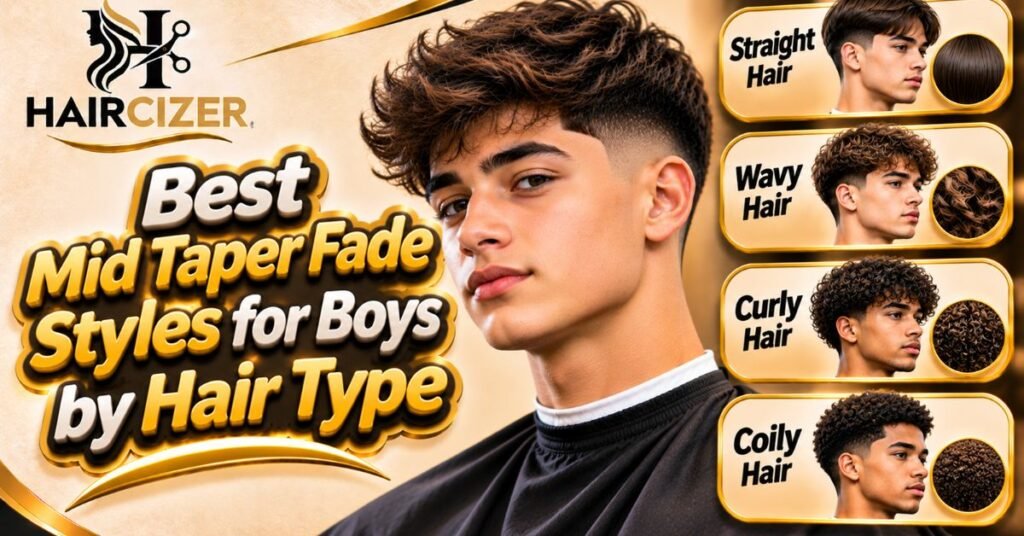
The taper stays the same. The top changes with hair texture. Pick a style that works with the hair he has instead of fighting it.
Mid taper fade for straight hair
Straight hair shows clean lines well, so it looks sharp but can fall flat. Good options include:
- Side part: tidy and polished. Great for school photos and formal events.
- Textured crop: short, choppy top with a light fringe. Easy to style and hard to get wrong.
- Brush up: hair swept up and slightly back for height. Looks lively and modern.
- Classic comb over: a defined part with a smooth top. Best for church, weddings, and interviews for older boys.
Fine, straight hair benefits from a lightweight texture spray or a little sea-salt spray to add grip. Heavy gel can make it look greasy.
Mid taper fade for wavy hair
Wavy hair is the easiest to work with because it already has movement. Try:
- Messy textured top: leave 3 to 4 inches and let the waves fall naturally.
- Quiff: push the front up and back for volume.
- Side-swept fringe: soft and boyish, with the waves doing the styling.
- Longer flow: keep more length for a relaxed, surfer-style look with clean sides.
For wavy hair, avoid cutting the top too short, because waves can spring up into odd shapes when they are only an inch long.
Mid taper fade for curly or coily hair
A mid taper fade can look excellent with curls and coils because it frames the texture instead of hiding it. Popular styles include:
- Curly top: let curls sit on top with a clean taper around them. This is the classic combination.
- Twist sponge or coil top: defined coils with a sharp edge-up.
- Short afro: rounded shape with a crisp taper on the sides.
- Two-strand twists or small braids on top: a protective look with a tidy base.
- High-top shape: extra height with a gradual taper below.
Curly and coily hair is drier by nature, so moisture matters more than hold. Barbers who work with textured hair daily usually understand the right line-up and blending for these styles, so it is worth asking around if you are not sure.
Cool mid taper fade ideas by age
The same cut can look different at five, ten, and fifteen. Here is how barbers usually adjust it:
| Age group | Suggested look | Why it works |
| 3 to 6 years | Soft taper, longer sides, short neat top | Gentle on the scalp and easy to maintain |
| 7 to 11 years | Textured crop, side part, or short brush up | Looks sporty and fits school rules |
| 12 to 15 years | Quiff, curly top, or messy fringe with a cleaner taper | Matches the teen urge to experiment |
Younger boys do best with a longer taper at the bottom. Older boys can go a little shorter once they are used to the clippers and care about a sharper outline. Let him pick the top style, because a boy who likes his hair will actually look after it.
How should you ask the barber for a mid taper fade?
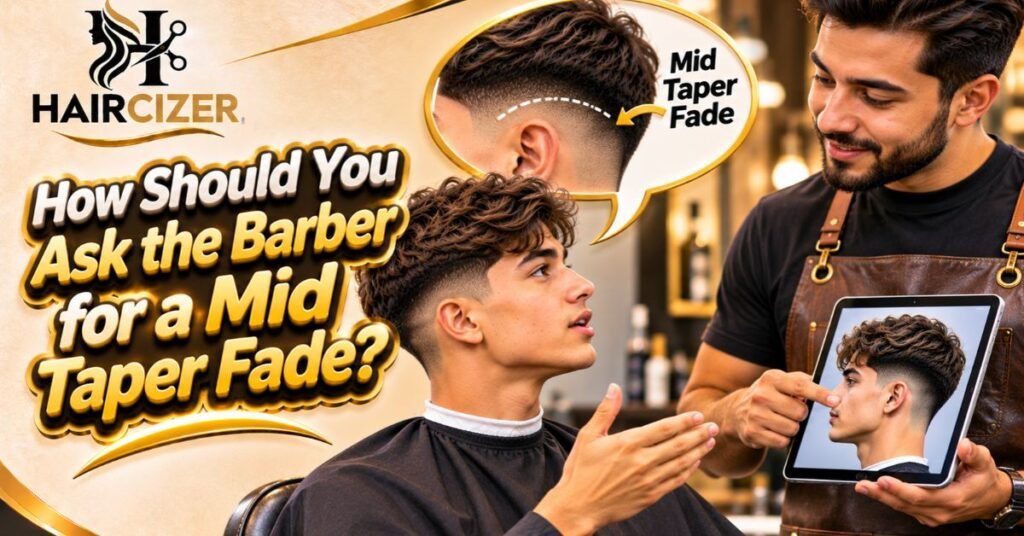
Barbers cannot read minds, and “a little off the sides” can mean ten different things. Clear instructions save time and avoid awkward grow-out weeks.
What should you tell the barber before the clippers start?
Say these things before the cut begins:
- The name of the cut: “A mid taper fade, please.”
- How short you want the bottom: “Leave some hair at the bottom, not down to the skin,” or “Take it close at the neckline.”
- How much length to keep on top: show with your fingers, for example “about two inches.”
- How the hair is usually styled: side part, forward, or messy.
- The neckline shape: rounded, squared, or natural.
- Whether to use clippers, scissors, or both on top.
- Any sensitivities: itchy scalp, cowlicks, or a tender spot behind the ears.
A useful sentence to memorize: “Mid taper fade, a number two at the bottom blending up, about two inches on top, natural neckline, side part.”
Guard numbers differ by shop, so describe the look as well as the number. A guard “2” at one barber might not match a guard “2” at another.
What makes a good reference photo?
A photo is the fastest way to align expectations. Pick one that:
- Shows the front, side, and back of the head.
- Has the same hair type as your son’s.
- Is taken in decent light, so the blend is visible.
- Shows the length on top clearly.
- Looks realistic for his age.
Avoid photos with heavy filters or dramatic shadows. They make the fade look sharper than it will be in real life. Bring two photos if you can: one of the style you want, and one showing what you do not want.
How do you style a mid taper fade at home?
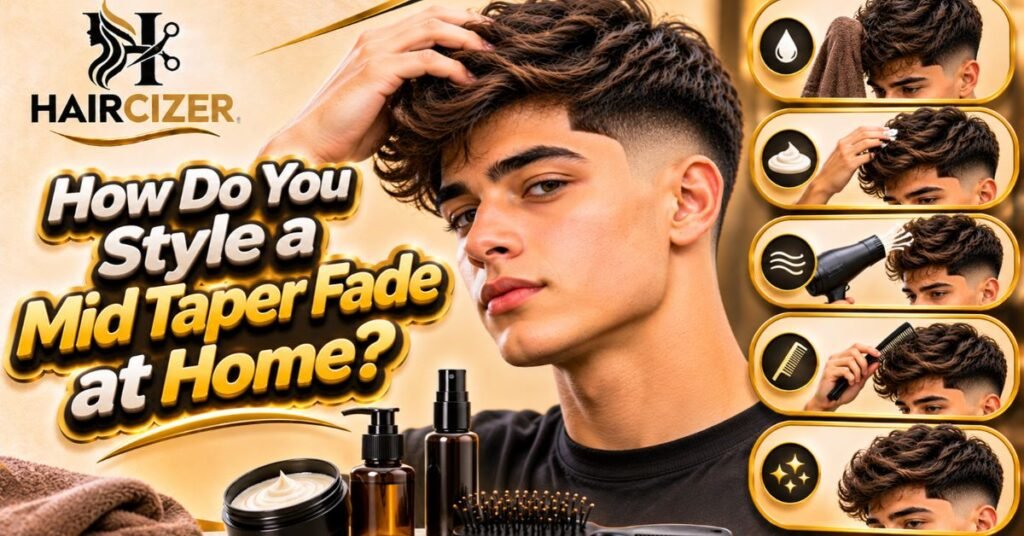
Good styling takes about two to five minutes. The cut does most of the work. Here is what you need:
- A towel and a comb or brush.
- A small amount of product, about the size of a pea for short hair.
- A hair dryer for volume, if wanted.
- A soft-bristle brush for neat parts.
How to style straight or wavy hair
- Start with damp hair. Towel-dry until it is damp, not dripping.
- Add a light product. Use a texture cream, paste, or light clay. Rub it between your palms first.
- Shape the top. Push the hair where you want it with your fingers, or comb it into a part.
- Dry for lift. A quick blast from the dryer on a low heat setting builds volume at the front.
- Finish the look. Add a touch of product to the ends for definition. Keep the sides clean with a soft brush.
For a school-friendly finish, use a matte product. Shiny products look wet and can be itchy later.
How to style curly or coily hair
Also Read:Mid Taper Fade Dreads: Best Styles & Hairline Care
- Wash and condition regularly. Curly hair needs moisture to look defined.
- Apply a leave-in conditioner or curl cream to damp hair.
- Scrunch or finger-coil. Gently scrunch curls upward, or twirl sections around a finger.
- Air-dry or diffuse. Avoid rubbing with a towel, which creates frizz.
- Use a soft-bristle brush or wave brush if wanted, always in the direction of the hair’s growth.
- Protect the hair at night. A satin pillowcase or soft durag reduces breakage and keeps the shape.
If his hair feels dry or tight, add a little more moisture instead of more hold.
Which products work best for boys?
Less is more. Most kids need one product, not five. Use this simple guide:
| Product | Best for | Finish |
| Light matte paste | Straight and wavy hair | Natural, no shine |
| Texture spray | Fine hair that needs grip | Soft and airy |
| Curl cream or leave-in conditioner | Curly and coily hair | Defined and moisturized |
| Water-based pomade | Neat parts and comb overs | Polished, easy to wash out |
Choose gentle, fragrance-free options when possible, and wash product out at night so it does not build up on the scalp. Test a small amount on the inside of the wrist first if your son has sensitive skin.
How much maintenance does a mid taper fade need?
Moderate, and a little more than a plain all-over cut. The sides grow out faster than the top, which makes the fade look fuzzy after a couple of weeks.
When should the taper be refreshed?
Most boys need a touch-up every two to four weeks, depending on how fast the hair grows and how sharp they like the look. A rough guide:
| Hair type | Typical refresh | Notes |
| Fast-growing, thick hair | Every 2 to 3 weeks | Sides look fuzzy quickly |
| Average growth | Every 3 to 4 weeks | The usual schedule |
| Slow-growing or soft taper | Every 4 to 5 weeks | A longer taper hides growth |
| Curly or coily with a sharp line-up | Every 2 to 3 weeks | Line-ups blur fast |
If budget matters, ask the barber for a “taper clean-up” between full cuts. Many shops charge less for just the sides and neckline.
How can you keep it neat between cuts?
- Brush daily. It keeps hair flat on the sides and shaped on top.
- Wash on a sensible schedule. Most kids do well with two to three washes a week; very curly hair may need less.
- Moisturize curly and coily hair. Dry hair looks messy faster.
- Skip home clipper fixes unless you know what you are doing. Uneven edges can usually be repaired by a barber, but harder to rescue if too short.
- Use a satin cover or pillowcase at night.
- Keep the neckline tidy. A quick trim around the ears and nape makes a big difference.
How can you make the first barber visit easier?
A first fade can feel strange for a young child, because clippers are loud and the cape feels odd. A few small steps help:
- Book a quiet time of day, not a busy Saturday rush.
- Let him hold the clippers (switched off) so the tool feels familiar.
- Bring a tablet or book to keep him calm and still.
- Ask the barber to use the lowest-noise clippers or a slower pace.
- Praise him afterward, so the next visit feels easier.
What common mistakes should parents avoid?
A few simple slips can spoil a good cut:
- Asking for “short” without details. Short means different things to different barbers.
- Skipping the reference photo. Words alone often lead to surprises.
- Over-washing. Daily shampooing dries out curly hair and irritates sensitive scalps.
- Using too much product. It weighs hair down and looks greasy.
- Waiting too long between trims. The blend turns fuzzy and the shape is lost.
- Ignoring how the boy feels. If he dislikes the result, talk to him and the barber before the next visit.
Fixing these takes very little effort and makes the cut look better for longer.
Is a mid taper fade school-appropriate?
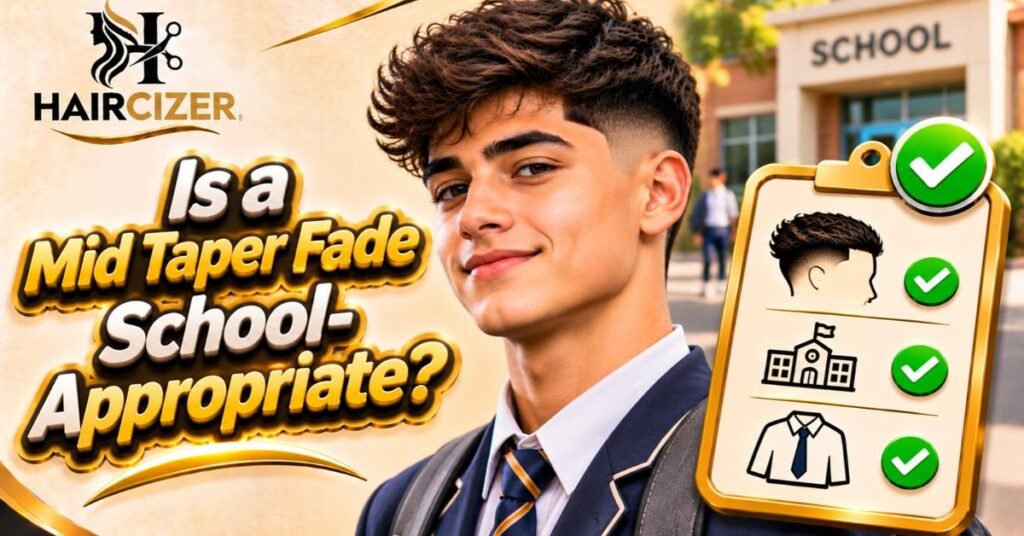
In most cases, yes. A mid taper fade is considered conservative and professional compared with a skin fade or a heavily shaved design. It looks tidy, keeps hair off the face, and works in photos and presentations.
What should you check in the school grooming policy?
School rules differ, so read the policy before the appointment. Look for:
- Length rules: some schools limit how long the hair can be, or how short it can be.
- Banned styles: a few schools restrict “extreme” cuts, shaved lines, or designs.
- Hair color rules: natural colors only, in many cases.
- Uniform and sports rules: longer hair may need to be tied back for PE or swimming.
- Religious or cultural allowances: most schools have clear exceptions, so ask the office if you are unsure.
If the rules are vague, email the school or ask a teacher. It takes a minute and avoids a bad Monday morning.
Does the season change the best cut?
Yes, a little. In summer, a slightly shorter taper keeps the neck cool and makes sweaty sports days more comfortable, but newly exposed skin needs sunscreen or a cap. In winter, a longer taper keeps the ears and neck warmer, and the extra length on top helps under a beanie without flattening the style. Ask the barber to adjust the bottom length with the weather instead of changing the whole haircut.
Can a boy grow out a mid taper fade?
Absolutely. The taper grows out more gracefully than most short cuts. After four to six weeks, the sides soften into a longer, scruffy look that works with a casual top. If your son wants longer hair later, ask the barber for a gentle clean-up of the neckline only. This avoids awkward steps and lets the length even out naturally over a few months.
What should parents know about scalp comfort and barbershop hygiene?

A good haircut should feel comfortable. The barber’s job is to keep the skin safe as well as shape the hair. Parents are right to ask questions here.
Can a very close taper irritate the skin?
Yes, it can. Clippers used very close to the skin, especially around the ears and neckline, can cause:
- Redness or “clipper rash.”
- Small bumps or ingrown hairs, more common in curly and coily hair.
- Dryness or flaking if the skin is already sensitive.
- Sunburn on newly exposed areas in summer.
To lower the risk, keep the taper slightly longer at the bottom, avoid shaving the skin with a razor on young children, and apply a gentle, fragrance-free moisturizer afterward. In summer, use sunscreen or a hat on newly exposed skin.
If a rash lasts more than a few days, looks infected, or is painful, speak to a doctor or pediatrician.
What hygiene signs should parents look for?
A clean shop is a safe shop. Look for:
- Clean capes and fresh neck strips for each client.
- Clippers and combs cleaned or disinfected between customers.
- Brushes free of loose hair after each cut.
- A tidy workstation, with surfaces wiped down.
- Hand washing or sanitizer use between clients.
- A barber who checks the scalp and speaks up if something looks unusual.
Some skin and scalp conditions, such as head lice and ringworm of the scalp, can spread. If a barber notices anything that looks like scaling, bald patches, or active irritation, they may politely decline to do a close cut. Treat this as a good sign, not an insult. If you spot patchy hair loss, flaking, or scabbing on your child’s scalp, a doctor can advise on the right treatment before the next haircut.
Frequently asked questions about mid taper fades for boys
What is a mid taper fade for boys?
A haircut where the sides and back blend gradually shorter from mid-head down.
Is a mid taper fade good for kids?
Yes, it is neat, flexible, and easy to wear.
How much does a mid taper fade cost?
Prices vary by shop and location, so check with your barber.
How often should a boy get a mid taper fade?
Every two to four weeks for a sharp look.
What age can a boy get a mid taper fade?
Any age, as long as he can sit still and his scalp is comfortable.
Does a mid taper fade work on curly hair?
Yes, it frames curls well and keeps the sides tidy.
Is a mid taper fade the same as a skin fade?
No, a taper leaves more hair at the bottom.
What guard number is used for a mid taper fade?
Often a 1 to 3 at the bottom, but it depends on the barber.
Is a mid taper fade allowed in school?
Usually, but always check the school’s grooming policy.
How long should the top be?
Anywhere from one inch to four inches, depending on the style.
What products are best for styling?
Light matte paste, texture cream, or leave-in conditioner for curls.
Can a mid taper fade hide a cowlick?
Often yes, if the barber leaves enough length on top.
Conclusion
A mid taper fade gives boys a clean, modern look without the high upkeep of a skin fade. It works with straight, wavy, curly, and coily hair, and the top can be styled in dozens of ways. Pick the length and shape that match his routine and personality.
Talk to the barber clearly, bring a reference photo, and check the school policy first. Keep up with trims every few weeks, look after his scalp, and watch for hygiene basics at the shop. A little planning means he walks out confident and you walk out happy.
Leave a Reply