A taper haircut is one of the cleanest, most flexible cuts you can ask for. It looks sharp at the office, relaxed on the weekend, and it grows out without a messy phase. That is why barbers keep recommending it year after year.
This guide explains what a taper is, how it differs from a fade, and which version fits your hair and lifestyle. You will also get styling ideas, clipper guard numbers, a simple script for your barber, and a maintenance plan you can actually follow.
What is a taper haircut?

A taper haircut gradually shortens the hair on the sides and back. The hair is longest at the top and gets shorter as it moves down toward the neckline and around the ears. The change in length is smooth, so you never see a hard line.
The key point is that a taper stops at short hair, not bare skin. The shortest area usually sits at a number 1 or 2 guard length. That keeps the look neat and natural.
Most tapers share these features:
- Longer hair on top that you can style in many ways
- Gradual blending along the sideburns, temples, and nape
- A clean, defined neckline
- A softer finish than a skin fade
Because the contrast is gentle, a taper suits people who want a polished look without looking too edgy. It works for classic barbershop styles and for modern textured cuts alike.
How is a taper haircut different from a fade?

People mix these two up all the time, and many barbers use the words loosely. Still, there is a real difference in how short the hair gets and how much of the head is affected.
A taper shortens mainly the edges: the sideburns, the area behind the ears, and the neckline. A fade covers more of the sides and back, and it usually drops down to skin or very close to it. A fade is a bolder, higher-contrast cut. A taper is the quieter cousin.
Here is a quick side-by-side comparison.
| Feature | Taper haircut | Fade haircut |
| Shortest point | Short hair, usually a #1 or #2 | Skin or near-skin (#0 or bare) |
| Area affected | Mostly edges and neckline | Large part of the sides and back |
| Contrast | Soft and gradual | Sharp and dramatic |
| Best for | Professional, classic, low-key looks | Bold, modern, high-contrast looks |
| Typical upkeep | Every 3 to 5 weeks | Every 2 to 3 weeks |
You will also hear the term taper fade. That usually means a taper with a slightly deeper blend near the bottom. If your barber uses that phrase, ask what the shortest guard will be so there are no surprises.
What are the main types of taper haircuts?
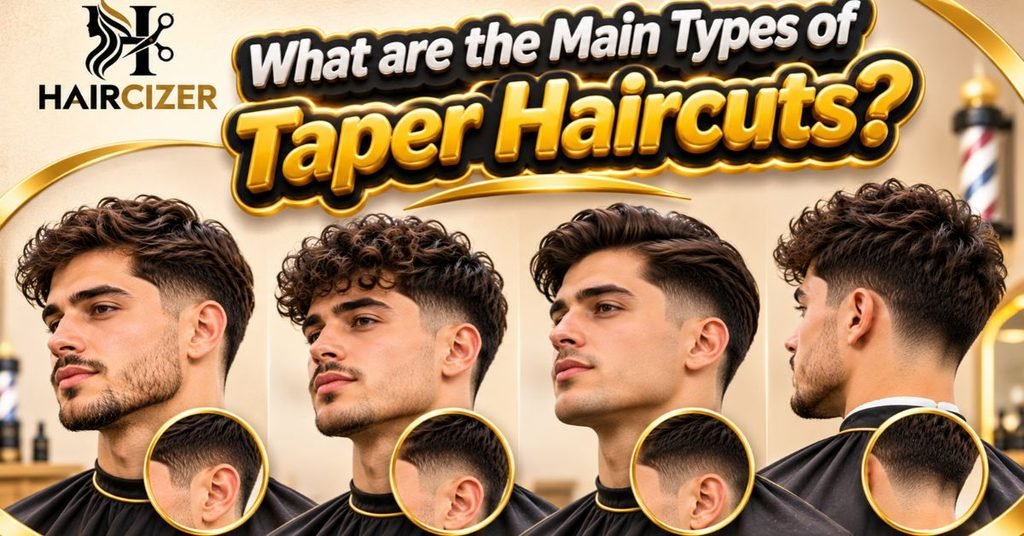
The type of taper depends on where the shortening starts. Higher starting points make the cut look more noticeable. Lower starting points keep it subtle. Each one gives your hair a different shape and attitude.
Classic taper haircut
The classic taper is the traditional version. The sides and back stay fairly full, and only the sideburns and neckline get shorter. It looks like a natural, well-kept trim.
This is the safest option if you are trying a taper for the first time. It also grows out gracefully, so you can stretch the time between visits.
- Best for: office settings, first-timers, and anyone who likes longer sides
- Looks like: a clean version of a regular haircut
- Upkeep: low
Low taper haircut
A low taper starts the shortening just above the ears and follows the natural hairline down to the nape. Only a small section is trimmed short. The rest of the side stays at a comfortable length.
It is the most popular choice for men who want to look sharp without a big change. It also frames the face nicely and suits almost every hair type.
- Best for: subtle style, formal workplaces, longer tops
- Looks like: a gentle, barely-there edge
- Upkeep: low to medium
Mid taper haircut
A mid taper begins around the temple, roughly halfway up the side of the head. It sits between the low and high versions, so it gives a clear shape without being extreme.
Mid tapers work well when you want your haircut to look intentional. They add structure to the head and pair well with textured tops and short crops.
- Best for: everyday versatility, oval and square faces
- Looks like: a defined but balanced cut
- Upkeep: medium
High taper haircut
A high taper starts near the upper part of the head, close to the crown line. The sides and back are trimmed short over a large area, which makes the top stand out.
This is the boldest taper. It gives a crisp, athletic look and works well with short, textured hair. It does need regular visits because the shape fades quickly as hair grows.
- Best for: bold style, military-inspired looks, short textured tops
- Looks like: a sharp, high-contrast outline
- Upkeep: high
Taper types at a glance
| Type | Where it starts | Maintenance | Best for |
| Classic taper | Sideburns and neckline only | Low | Traditional, easy looks |
| Low taper | Just above the ears | Low to medium | Subtle, professional styles |
| Mid taper | Around the temple | Medium | Versatile everyday cuts |
| High taper | Near the crown line | High | Bold, modern statements |
Which taper haircut should you choose?
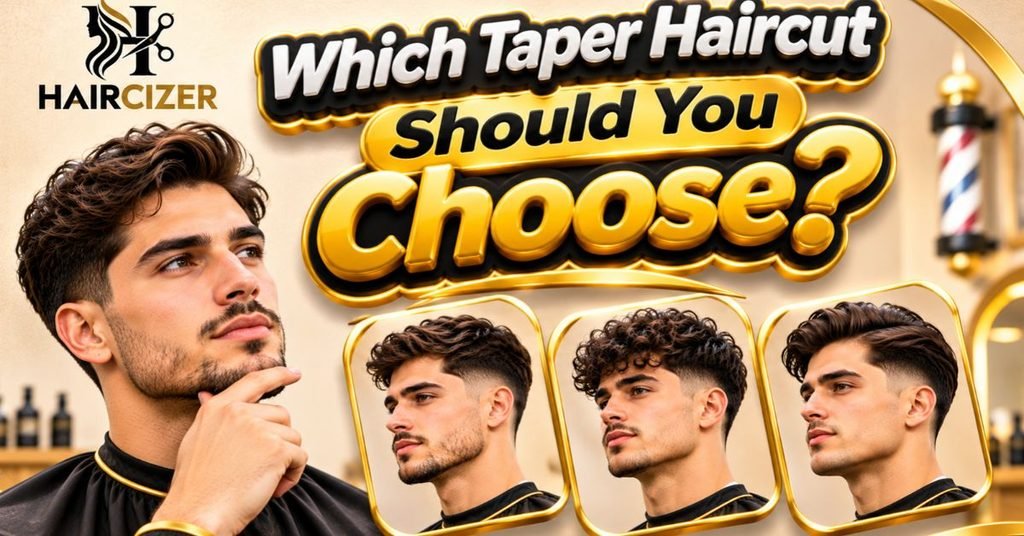
The right taper comes down to three things: your face shape, your hair, and how much time you want to spend on upkeep. A short checklist makes the decision easier.
- Think about your lifestyle. If you work in a conservative setting, a classic or low taper is the safer pick. If your style is more creative, a mid or high taper will stand out.
- Consider your face shape. Round faces look longer with a mid or high taper plus height on top. Square faces suit a low or mid taper that softens the jawline. Oval faces can wear almost any version.
- Look at your hairline. A receding hairline looks tidy with a low taper. A strong, even hairline can carry a higher cut.
- Be honest about upkeep. High tapers lose their shape fast. If you only visit the barber once a month, go lower.
- Match it to the top. Long, voluminous hair pairs well with a mid or high taper. Short tops look balanced with a low taper.
If you are unsure, start with a low taper. You can always go higher next time, but you cannot add hair back.
How does a taper haircut work with different hair textures?

Texture changes how a taper looks and how your barber builds it. The same guard numbers can produce very different results on straight hair and on tight curls. A good barber adjusts the technique to your texture.
Straight and wavy hair
Straight and wavy hair show every line, so the blend needs to be smooth. Barbers often use scissor-over-comb work in the transition area to avoid visible guard marks.
Straight hair tends to lie flat, so a bit of length on top helps add shape. Wavy hair has natural movement, which makes a taper look relaxed and textured. A low or mid taper keeps waves from looking bulky on the sides.
Tips for straight and wavy hair:
- Keep the top at least 2 to 3 inches for easy styling
- Ask for a soft blend rather than a hard line
- Use a light cream or paste to control flyaways
- Avoid heavy gel if your hair is fine, since it can weigh it down
Curly and coily hair
Curly and coily hair loves a taper. The contrast between defined curls on top and a neat edge below looks striking. It also keeps the sides from puffing out as the hair grows.
Barbers usually cut curly hair when it is dry so they can see the true shape. Cutting wet can leave the sides shorter than expected once the curls spring back.
Tips for curly and coily hair:
- Ask for a low or mid taper to keep a rounded shape
- Keep moisture high with a leave-in conditioner or curl cream
- Use a pick or wide-tooth comb to add volume on top
- Sleep with a satin cap or pillowcase to protect the curl pattern
- Book a line-up between cuts to keep the edges crisp
Which hairstyles work with a taper haircut?
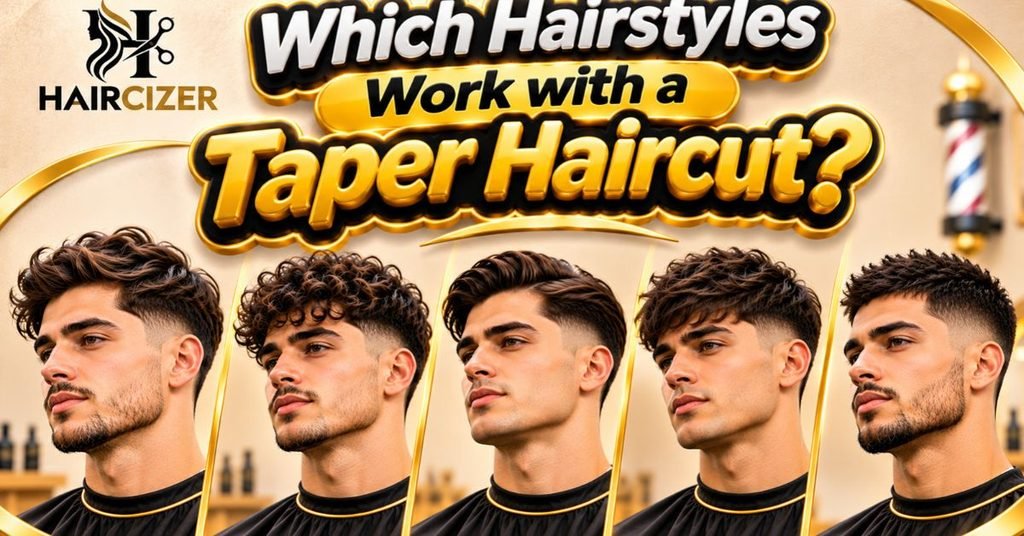
The taper is the foundation. What you do with the top is where your personality shows. Here are the most popular pairings, grouped by length.
Short styles: buzz cut and crew cut
Short styles keep things simple and practical.
Buzz cut with a taper. The whole head is cut short with clippers, and the edges are tapered a bit tighter. It is clean, quick, and nearly zero effort in the morning.
Crew cut with a taper. The top is slightly longer, often about an inch or so at the front, then blended into the sides. It is a timeless, athletic look that works for almost every face shape.
These styles suit busy people and hot climates. They also show off head shape, so a high-quality blend matters.
Medium styles: side part, textured fringe, and quiff
Also Read:High Burst Fade Haircut: Fresh Styles & Expert Tips
Medium lengths give you the most room to play.
Side part. A neat part with a tapered side gives a classic, business-ready look. Use a light pomade for a polished finish.
Textured fringe. The front is cut with choppy layers and brushed forward. Paired with a low or mid taper, it feels youthful and modern. A matte clay keeps the texture visible.
Quiff. The front is lifted up and slightly back, adding height and presence. A mid or high taper makes the volume look even bigger. Blow-dry upward and finish with a strong-hold product.
Longer styles: swept-back hair, curls, and protective styles
Longer tops look great with a taper because the cut keeps the sides tidy and stops the style from looking shaggy.
Swept-back hair. Hair is combed back from the forehead and sits neatly over a tapered nape. A little cream gives control without stiffness.
Curls. Long curls on top with a tight taper on the sides create a bold contrast. Keep the curls hydrated, and define them with a curl cream.
Protective styles. Braids, twists, and locs all pair well with a tapered edge. The clean sides and neckline make the style look fresh for longer and help the whole look appear intentional.
How do you ask your barber for a taper haircut?
Most bad haircuts come from unclear communication, not bad barbers. A little preparation fixes that. Walk in with a plan, and you will get the cut you imagined.
Try this simple approach:
- Bring photos. Pictures from the front, side, and back are best. Choose photos of hair that looks like yours in texture and thickness.
- Name the type. Say low, mid, or high taper, and mention if you want it classic or deeper.
- Give guard numbers. Numbers are clearer than words like short or medium.
- Describe the top separately. Say how much length you want to keep and how you plan to style it.
- Mention the neckline. Tell your barber if you prefer a rounded, squared, or natural finish.
Here is a sample script you can use:
“I’d like a low taper, going down to a #2 at the neckline. Keep about two inches on top, textured, with a natural neckline.”
If you do not know what you want, ask for advice. A good barber will look at your head shape, hairline, and hair growth patterns before suggesting something.
What do clipper guard numbers actually mean?
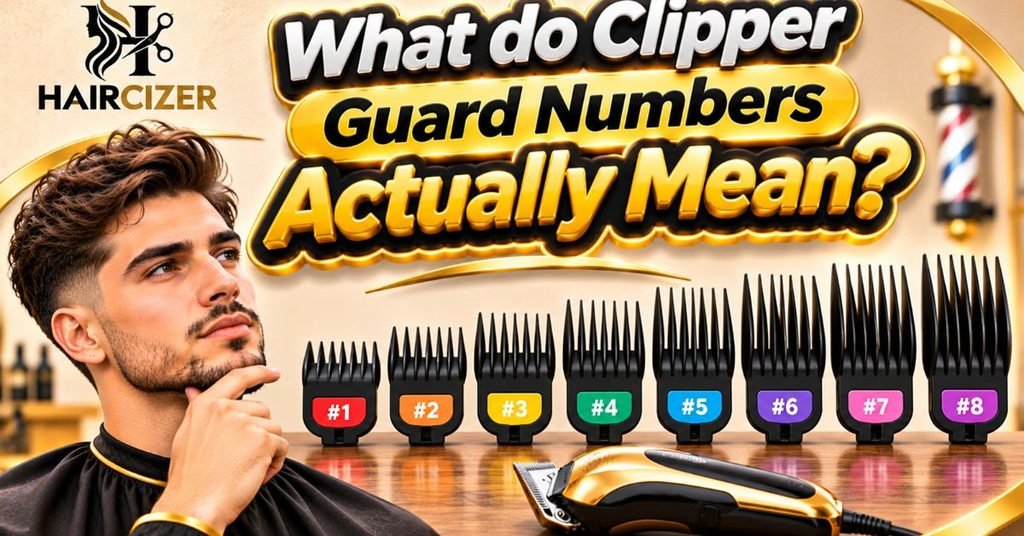
Clipper guards are plastic attachments that fit over the blade and control how much hair is left. Each number matches a fixed length. A higher number means longer hair. The numbers are not proportional, so a #4 is not twice as long as a #2.
Most brands use the same basic system, though exact measurements can vary slightly. Here is a quick reference.
| Guard number | Length (mm) | Length (inches) | Typical use |
| #0.5 | 1.5 mm | 1/16 | Near-skin edges |
| #1 | 3 mm | 1/8 | Tight taper bottom |
| #2 | 6 mm | 1/4 | Common taper finish |
| #3 | 10 mm | 3/8 | Soft, longer taper |
| #4 | 13 mm | 1/2 | Short sides, classic cuts |
| #5 | 16 mm | 5/8 | Longer sides or crew cut tops |
| #6 | 19 mm | 3/4 | Mid-length transition |
| #8 | 25 mm | 1 | Longest standard guard |
For a taper, barbers usually start with a longer guard at the top of the blend and step down toward a #1 or #2 at the neckline. They also use the clipper lever to create in-between lengths, which is how the blend looks seamless.
If you are not sure, ask for a #2 at the bottom. It is short enough to look sharp and long enough to avoid a harsh contrast.
What happens during a taper haircut appointment?

Knowing the process helps you relax and spot a good barber. Most taper appointments follow the same flow.
- Consultation. The barber looks at your hair, asks what you want, and confirms guard numbers and length.
- Wash or dampen. Some barbers start with a wash. Others lightly spray the hair. Curly hair is often cut dry.
- Cutting the top. Scissors or clippers set the top length and overall shape.
- Building the taper. The barber works from longer to shorter guards, moving up the side and blending each step.
- Detail work. Scissors and a comb smooth out any visible lines. The barber checks both sides for balance.
- Edging. Trimmers or a razor clean up the hairline, sideburns, and neckline.
- Finishing. A hot towel, a little product, and a quick style complete the cut.
A full taper usually takes 25 to 45 minutes. If your barber rushes the blend, speak up politely. Good tapers take patience.
How do you style a taper haircut?

Styling a taper is simple because the cut already does half the work. A few small habits make a big difference.
Step by step:
- Start with clean, towel-dried hair.
- Apply a small amount of product, about the size of a coin. You can always add more.
- Rub the product between your palms and work it through from the roots to the tips.
- Shape the top with your fingers, a comb, or a brush.
- Blow-dry for volume if you want height, then add a final touch of product.
Choose the right product:
| Product | Finish | Best for |
| Matte clay | Natural, textured | Fringes, short crops |
| Pomade | Shiny, sleek | Side parts, slick-back looks |
| Sea salt spray | Light, beachy | Wavy hair, relaxed styles |
| Curl cream | Soft, defined | Curly and coily hair |
| Texture powder | Lift, volume | Fine or flat hair |
A few extra tips:
- Use less product on short tops, since too much looks greasy
- Comb in the direction of your hair growth for a smoother result
- Wash your hair two or three times a week rather than daily if it feels dry
- Keep a small comb or brush handy for touch-ups
How often does a taper haircut need maintenance?
Most tapers look best for about three to five weeks. After that, the blend starts to grow out and the neckline gets fuzzy. Higher tapers need more frequent visits than lower ones.
| Taper type | Suggested schedule |
| Classic taper | Every 4 to 6 weeks |
| Low taper | Every 3 to 5 weeks |
| Mid taper | Every 3 to 4 weeks |
| High taper | Every 2 to 3 weeks |
Between visits, you can keep things neat with a few easy steps:
- Book a quick edge-up or neckline cleanup halfway through your cycle
- Brush or comb daily to keep the hair lying in one direction
- Moisturize the scalp if you notice dryness or flaking
- Avoid cutting the sides yourself, since small mistakes show up fast
If you want to stretch the time between cuts, choose a lower taper and a slightly longer guard at the bottom. Both make growth less obvious.
What taper haircut mistakes should you avoid?

Even a great cut can look off if a few common errors creep in. Watch out for these.
- Going too high too soon. A high taper on a first visit can feel too bold. Start low and adjust.
- Skipping the reference photo. Words like short on the sides mean different things to different people.
- Ignoring your hair texture. A cut that looks great on straight hair may behave differently on curls.
- Choosing the wrong guard length. Too short can look harsh, and too long may hide the taper.
- Overusing product. Heavy gel or wax can make the blend look messy and flat.
- Waiting too long between cuts. A taper that grows out loses its shape and looks untidy.
- Forgetting the neckline. A sharp taper with a messy nape ruins the whole look.
- Rushing the barber. Quality blending needs time. Do not hurry the process.
- Not speaking up. If something feels wrong during the cut, say it early. Small corrections are easy, but big ones are not.
Taper haircut FAQs
What is a taper haircut?
It is a cut where the sides and back gradually get shorter toward the neckline.
Is a taper the same as a fade?
No, a taper ends in short hair, while a fade usually ends in skin.
Which taper is best for beginners?
A low taper is the easiest and safest choice.
How long does a taper haircut last?
Usually three to five weeks before the blend grows out.
Does a taper work on curly hair?
Yes, it keeps curls neat and the sides from puffing out.
What guard number should I ask for?
A #2 at the neckline is a safe starting point.
Can I get a taper with long hair?
Yes, tapered sides keep long tops looking tidy.
How much does a taper haircut cost?
Prices vary by city and barber, so check with your shop first.
Is a taper good for thinning hair?
Yes, a low taper with a short top can make thinning less noticeable.
Can women get a taper haircut?
Yes, tapers work well on pixie cuts and short styles.
Conclusion
A taper haircut gives you a clean, flexible look that fits almost any style, hair texture, or workplace. Choosing the right type and guard number makes the cut feel made for you. A little preparation before you sit in the chair goes a long way.
Keep your barber visits regular, style with the right product, and avoid the common mistakes covered above. Start low if you are unsure and adjust over time. With the right cut and simple care, your taper will look sharp every day.
Leave a Reply