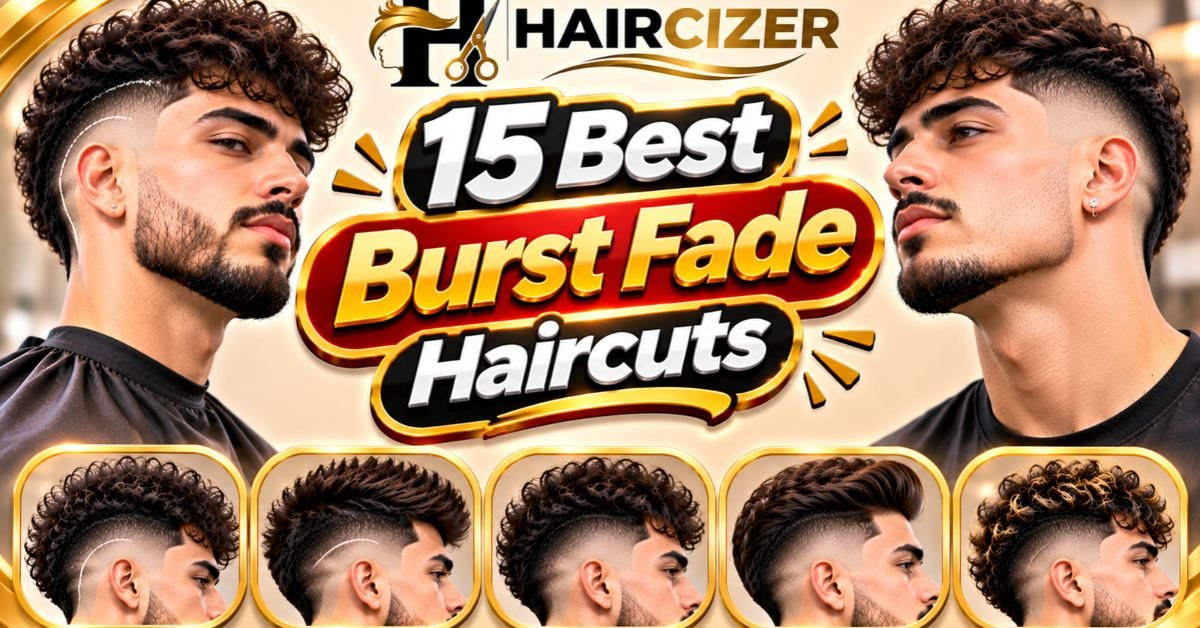
Few haircuts grab attention like a burst fade. The sides drop almost to skin around the ear, the fade sweeps back in a clean half-circle, and the hair on top keeps its full shape. On coily and curly hair, that contrast looks sharp from the front, the side, and the back.
This guide explains what a burst fade is, how it differs from other fade haircuts, and whether it fits your hair type. You will find 15 burst fade styles for Black men, from quiet low-contrast cuts to bold mohawks and hair designs. We also cover skin and scalp risks, a script you can hand to your barber, and a simple routine that keeps the cut fresh between visits.
Quick answer: A burst fade curves around the ear in a semicircle and leaves longer hair behind and above that curve. It works on nearly every curl pattern. Low and mid versions suit most men, while high and skin-close versions need more upkeep and more skin care.
What is a burst fade?

A burst fade is a fade haircut where the shortest section wraps around the ear in an arc instead of running straight across the head. Hair is shortest at the edge of the arc and grows longer as it moves away from the ear. The hair behind the arc is usually left long, which is why the cut pairs so well with afros, mohawks, mullets, and twists.
Think of it as a fade with a focal point. A classic fade blends evenly all the way around the head. A burst fade pulls the eye to the ear, then lets the top and back carry the style. That is why it photographs so well and why barbers love showing it off.
What makes the fade “burst”?
Three details separate a burst fade from other fades:
- The arc. The fade follows a half-circle that starts near the temple, loops around the ear, and ends near the nape. It looks like a sunburst spreading out from the ear.
- The contrast. The sides are short or skin-close, while the back and top keep real length. That jump in length is what makes the shape pop.
- The height. A low burst starts just above the ear. A mid burst starts around the temple. A high burst starts higher on the head and shows more skin.
The bottom of the fade can be a skin fade, a shadow fade, or a short guard length. That choice changes how bold the cut looks, how fast it grows out, and how kind it is to sensitive skin.
Why it suits coily, curly, and Afro-textured hair
Hair types are often grouped by curl pattern. Type 3 is curly, and type 4 is coily, with tight curls or zig-zag strands. Tighter patterns have natural volume and spring, and that is exactly what a burst fade is built to show off.
Here is why the cut works so well on Afro-textured hair:
- Shape control. Removing bulk at the sides makes the top look neater and more defined.
- Natural contrast. Dense coils sit against clean skin, so the edges look crisp.
- Length options. Coily hair can stay short, grow into an afro, be twisted, braided, or locked, and the fade still frames it.
- Clean lines. A sharp line-up holds its edge well against thick, tightly curled hair.
- Easy growth stages. As your hair grows, the burst keeps the outline tidy, so awkward in-between weeks look planned.
The same quality that makes coily hair look so good faded also makes it prone to ingrown hairs when cut very close. We cover that in the skin section below.
Is a burst fade right for you?
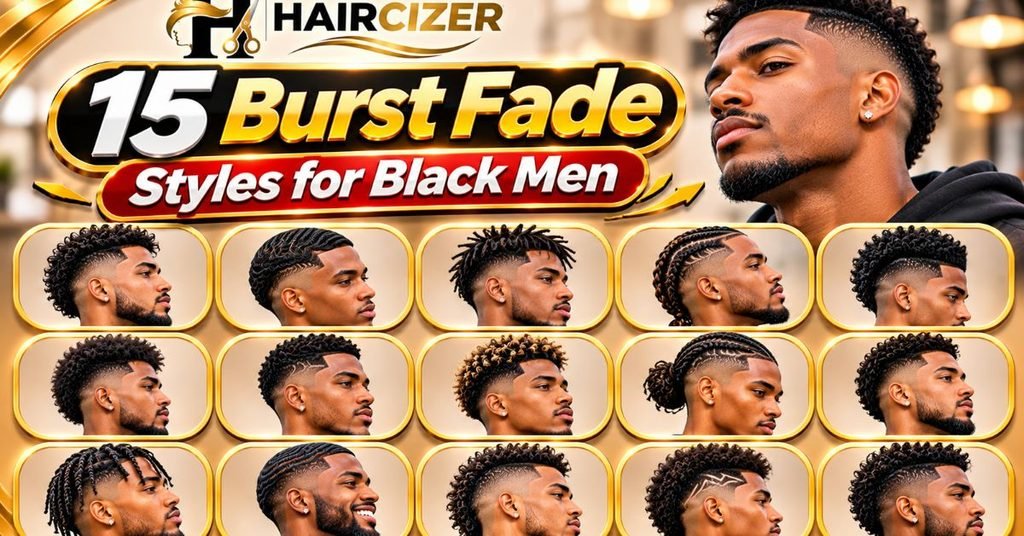
Most men can wear a burst fade. The better question is which version fits your hair, your schedule, and your skin. A few minutes of honest thinking now will save you from a cut you regret.
Which hair lengths and textures work?
You need enough hair on top and at the back to create contrast. Even half an inch of coils on top can work, though longer hair gives the cut more drama. Use this table as a starting point.
| Hair type or length | Best burst fade options | Why it works |
| Short coils (type 4A to 4C), under 1 inch | Low burst, burst taper, buzz cut | Easy to style, clean look |
| Short waves (type 3 or wavy 4) | Burst taper with 360 waves | Waves show clearly against short sides |
| Medium curls, 2 to 4 inches | Curly top, sponge twists, short Afro | Enough length for definition |
| Longer coils, 4+ inches | Two-strand twists, frohawk, high top | Length gives height and shape |
| Locs or braids | Burst fade with locs or braids | The fade frames the protective style |
| Thinning or receding hairline | Mid burst with a soft line-up | Draws attention away from the temples |
If your hair is very straight or fine, a burst fade still works. The effect is just softer, because there is less volume to contrast with the clean sides. If your hairline is uneven, tell your barber early so the line-up can be planned around it.
Five questions to ask yourself first
Take a minute with these before you book:
- How much time do I have each morning? A buzz cut takes seconds. Twists and high tops take longer.
- How often can I visit a barber? Most burst fades look best when refreshed every two to three weeks.
- Does my skin get bumps after close cuts? If yes, skip skin-close levels and ask for a longer guard.
- What are my work or school rules? Some places prefer neat, natural looks over bold designs or mohawks.
- How long do I want my hair to get? Your answer decides whether to go with a short coil style or a length-preserving cut.
If you answered “not much time” and “bumps are a problem,” start with a low burst and a guard instead of skin. You can always go bolder later.
Burst fade vs. drop fade, taper fade, and temple fade
These cuts get mixed up all the time. Here is the difference at a glance.
| Fade type | Shape | Best for | Upkeep |
| Burst fade | Semicircle around the ear, longer hair behind | Men who want contrast and a bold silhouette | Medium to high |
| Drop fade | Curves down behind the ear, following the skull | A smooth, flowing line | Medium |
| Taper fade | Gradual shortening at the sideburns and neckline | A subtle, professional look | Low |
| Temple fade (temp fade) | Short blend at the temples and nape only | A quick, clean edge | Low to medium |
In short, a burst fade is the loudest of the four. A drop fade is smoother, a taper is quieter, and a temple fade is the lightest touch. Many barbers also combine them. A burst taper, for example, keeps the arc but softens the contrast, which makes it a smart choice for work.
15 burst fade styles for Black men
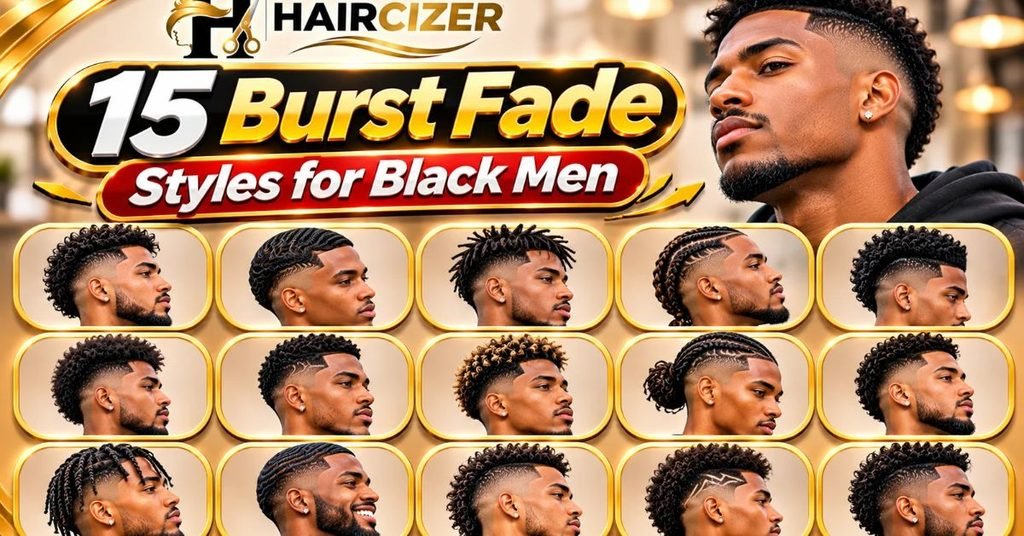
These styles are grouped by mood. Pick the group that matches your lifestyle, then narrow it down to one or two favorites. Screenshot them and show your barber.
Clean, short, and low-contrast options
These cuts keep the top neat and the maintenance light. They are the safest place to start.
1. Low burst fade with short coils
The arc starts just above the ear, so the contrast stays gentle. Short coils on top are brushed or left natural for a soft texture. Ask for a smooth blend at the temple so the cut does not look harsh. Because the fade stays low, it grows out gracefully, and you can stretch visits a little longer. It is an easy first burst fade and looks polished in almost any setting, from classrooms to boardrooms.
Best for: first-timers, office-friendly looks, and type 4A to 4C hair.
2. Mid burst fade with a natural line-up
The arc begins near the temple, giving a more noticeable shape. A natural line-up cleans the hairline without pushing it back, so you keep your own forehead shape. Ask your barber to follow your hairline instead of drawing a new one. If you want a sharper frame later, an edge-up can be added once you know how your skin reacts. Brush the top lightly each morning and keep the edges moisturized so they stay crisp.
Best for: men who want a sharp frame and a balanced, everyday look.
3. Burst taper with 360 waves
A burst taper keeps the sides softer than a skin fade, which protects the wave pattern. The arc around the ear adds an edge to a classic waves cut. Regular brushing, a light moisturizer, and a durag at night keep the pattern tight and the shine natural. Waves need patience, so expect a few weeks before the pattern shows clearly. The burst gives the whole look a modern twist without losing its classic roots.
Best for: wave lovers who want a fresh take on a familiar style.
4. Burst fade buzz cut
The whole top is clipped short, so the burst arc becomes the star. It takes almost no styling and works well in hot weather or during workouts. Moisturize the scalp often, because close cuts show dryness quickly. A longer guard on top keeps the look soft and lowers the risk of irritation. Add a simple line-up if you want extra polish. This is the lowest-effort burst fade, and still one of the sharpest.
Best for: low-maintenance routines and active lifestyles.
Texture-forward styles
These cuts put your natural curl pattern in the spotlight. They need a little more product and patience, but the payoff is big.
5. Burst fade with a short Afro
Two to three inches of Afro sit on top, shaped round with a pick. The tight fade at the sides keeps the outline clean, so the Afro looks intentional and not overgrown. Lift the hair from the roots, then have your barber trim stray strands to keep the circle even. A light mist of water and leave-in conditioner keeps the coils soft. It is a classic look with a fresh edge, and it grows out evenly between visits.
Best for: men with full, dense coils who want volume.
6. Burst fade with sponge twists
Sponge twists create small, defined coils across the top. The fade keeps the sides clean so the texture reads clearly. Use a twisting sponge or comb on damp hair with a light curl cream. Work in small circles, then let the coils set without touching them, because touching leads to frizz. Reapply a little product every few days and refresh the twists weekly. The result is a playful, textured crown above a razor-sharp burst.
Best for: short to medium hair that needs extra definition.
7. Burst fade with two-strand twists
Twisted hair on top looks neat and lasts several days with care. The fade frames the twists and keeps the cut tidy between retwists. Your hair needs a few inches of length for this one. Twists can also be taken out later for a soft twist-out with extra volume, which gives you two looks from one growth. Moisturize the scalp, sleep in a satin scarf, and retwist when new growth shows at the roots.
Best for: men growing out their hair who still want a crisp shape.
8. Burst fade with a curly top
Soft, defined curls sit on top, usually two to four inches long. A leave-in conditioner and a curl cream keep frizz down and curls springy. The fade adds structure so the curls look intentional, not messy. A light trim every few weeks stops the shape from getting heavy. Finger-comb the curls while damp, then let them air dry or use a diffuser on low heat. This style looks relaxed, but it shows off excellent grooming.
Best for: looser coils and curly textures (type 3 to 4A).
9. Burst fade with a high top
Height is the point here. The top is shaped into a flat or rounded block, and the burst fade pushes the sides in. It nods to classic barbershop style while staying current. Your barber will need steady hands and good clippers to keep the lines level. Use a pick to lift the hair evenly and a light spray to hold the shape. A high top draws attention, so keep the fade and line-up fresh to match.
Best for: men with longer coils and a confident, retro-modern taste.
Bold and length-preserving styles
These looks keep real length on top or at the back and make the biggest statement. They also need the most care, so plan your routine before you commit.
10. Burst fade frohawk
A frohawk leaves a wide strip of Afro through the center, while the burst fade cleans up both sides. It feels bolder than a regular Afro without being extreme. Shape the strip often so it stays tidy, and pick the hair upward for extra height. Because the sides are faded, the frohawk reads clearly even in a crowd. Keep the hair hydrated, since the center strip takes most of the wear.
Best for: men who want an Afro with attitude.
11. Burst fade mohawk (“South of France”)
A narrower ridge of hair runs from front to back, and the fade curves around each ear. It is often called the “South of France” style. The vertical line adds height and draws the eye upward, which flatters many face shapes. Keep the sides faded cleanly so the ridge looks sharp, and ask your barber to keep the ridge width even from front to back. Style it with a curl cream or a light pomade for definition.
Best for: oval, round, or square face shapes that benefit from added height.
12. Burst fade mullet
The top and sides stay short while the back grows long. The burst arc keeps the sides neat, so the length at the back looks deliberate and not forgotten. Trim the neckline lightly to avoid irritation, and keep the ends healthy with a good conditioner. The back can be left natural, twisted, or lightly curled. It is an edgy silhouette that works best on men who enjoy being noticed.
Best for: men who like an edgy look and want to grow length.
13. Burst fade with locs
The sides are faded while the locs stay long on top. You can wear them loose, tied up, or in a half-up style. A burst fade keeps older locs looking fresh between maintenance visits and gives new locs a tidy base. Schedule retwists and fade refreshes together to save time. Keep the scalp clean with a light shampoo and avoid heavy waxes that cause buildup around the roots.
Best for: men with locs who want a cleaner outline.
14. Burst fade with braids
Cornrows or box braids on top look sharp against a clean fade. The arc around the ear frames the braid pattern and keeps the look neat as the braids settle. Your hair should be long enough to hold the braids securely. Wrap or cover the braids at night to protect the style, and keep the fade area clean so the lines stay crisp. Refresh the fade before the braids start to lose their shape.
Best for: men who want a protective style with a neat finish.
15. Burst fade with a hair design
A hair design is a shape or pattern cut into the faded area, such as lines, a part, or a small symbol. Skin-close sides show designs best, but they also grow out fastest. Ask your barber for a simple design first, then go bolder once you trust the result. Designs should be placed where they highlight the cut, not fight it. Bring a clear photo and expect the appointment to take a little longer.
Best for: men who treat their haircut as a creative outlet.
Which burst fade should you choose?
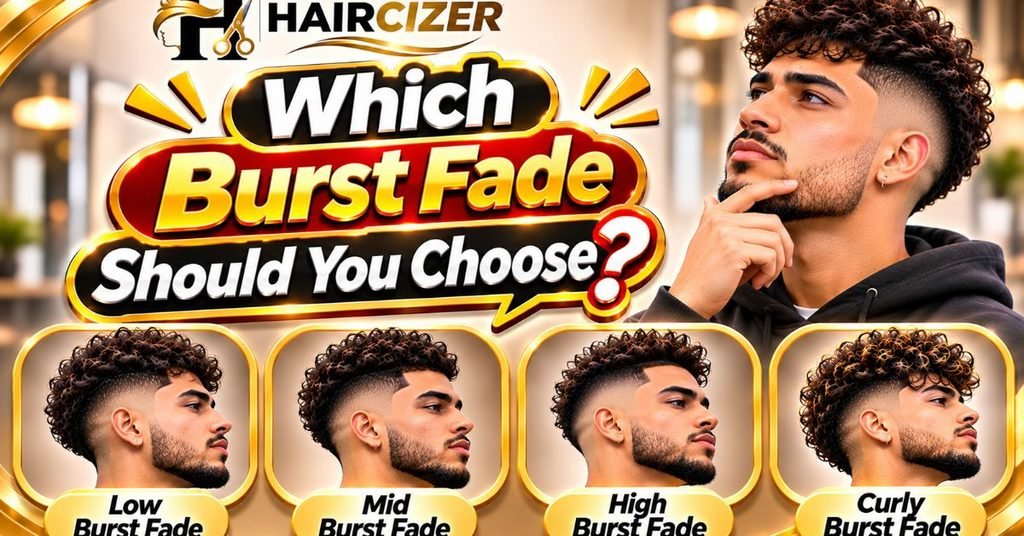
Use this table to match a cut to your goals.
| Your goal | Try this style | Upkeep level |
| Look sharp at work | Low burst with short coils (1) or burst taper (3) | Low |
| Save time every day | Burst fade buzz cut (4) | Low |
| Show off curls | Curly top (8) or sponge twists (6) | Medium |
| Grow your hair | Two-strand twists (7) or mullet (12) | Medium |
| Make a statement | Frohawk (10) or mohawk (11) | High |
| Express your style | Hair design (15) | High |
| Keep protective styles tidy | Locs (13) or braids (14) | Medium |
Still unsure? Start with a low or mid burst. You can always go higher and shorter next visit, but you cannot add hair back. If you love two styles, ask your barber how to blend them. A good barber will suggest a version that suits your head shape.
Skin and scalp risks to know before a close cut

A sharp fade looks great, but cutting tightly curled hair very close can irritate the skin. Knowing the risks helps you protect your skin while keeping the style. Here is a quick comparison of the two main problems.
| Condition | Where it shows up | What it looks like | First step |
| Razor bumps (pseudofolliculitis barbae) | Beard, jawline, sides, and neck | Red, sore bumps around trapped hairs | Use a guard and stop shaving close |
| Acne keloidalis nuchae (AKN) | Back of the scalp and nape | Firm, keloid-like bumps, sometimes itchy | Avoid close clipper work and see a dermatologist |
Razor bumps (pseudofolliculitis barbae)
Razor bumps happen when a short, sharp hair curls back into the skin after being cut or shaved close. The skin reacts as if the hair were a splinter, which leads to red, sore bumps. The medical name is pseudofolliculitis barbae. Studies often cite figures between 45% and 83% for Black men affected at some point, so you are far from alone.
To lower your risk:
- Ask for a guard instead of a bare razor on the neck and sides.
- Avoid stretching the skin tight while cutting.
- Never pick or squeeze bumps.
- Cleanse the area gently and moisturize after each cut.
- Let the area rest between close cuts if you see irritation.
Bumps on the back of the neck: AKN
Also Read:Mid Taper Fade Blowout: Style, Cut & Barber Guide
Acne keloidalis nuchae (AKN) is a chronic inflammation of the hair follicles at the back of the scalp and the nape. It causes firm, keloid-like bumps and can lead to hair loss in the area. Research notes it is most common in men of African descent. Repeated close clipper work on the nape is a known trigger.
If you notice hard, itchy bumps at the neckline, tell your barber to stay away from that area. Early treatment is usually easier, and a dermatologist can recommend the right options. Tight collars and helmets can also rub the area, so give your neck some breathing room. Barbers should clean tools between clients, because active bumps can bleed.
When to stop going closer
Pause the close cuts and ask for a longer guard if you notice any of these:
- Bumps that last more than a couple of weeks
- Pus, crusting, or increasing pain
- Firm, scar-like lumps at the nape
- Thinning or hair loss along the neckline
See a dermatologist if symptoms persist. This article is general information, not medical advice.
What should you tell your barber?
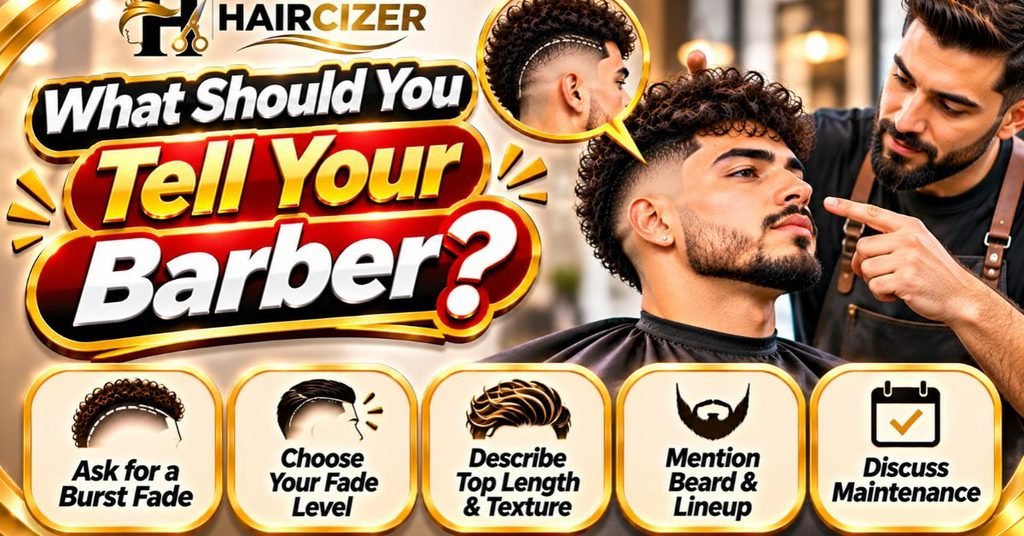
Clear instructions save you from a cut you did not want. Barbers work from pictures and numbers, so give them both. A short, specific request also helps a new barber understand you faster.
A fill-in-the-blank script
Copy this and fill in the gaps:
“I’d like a [low / mid / high] burst fade. Start the arc at [temple / just above the ear] and take the shortest part down to [skin / shadow / guard number]. Leave [length] on top and [length] at the back. For the line-up, I want it [natural / crisp / none]. Please keep the neckline [rounded / natural / squared]. I get bumps around [area], so please don’t go closer than [guard].”
If you are unsure about a number, ask the barber to start longer and go shorter after you see it. A good barber will happily check with you halfway through the cut.
Bring front, side, and back photos
A single front photo hides most of what makes a burst fade work. Bring three:
- Front view to show the hairline and top shape.
- Side view to show where the arc starts and ends.
- Back view to show the neckline and length.
If you can, bring a photo of someone with a similar hair texture. Results vary a lot between tight coils and looser curls. Also tell your barber how you usually style your hair, so the cut works with your routine.
How do you style and maintain a burst fade?
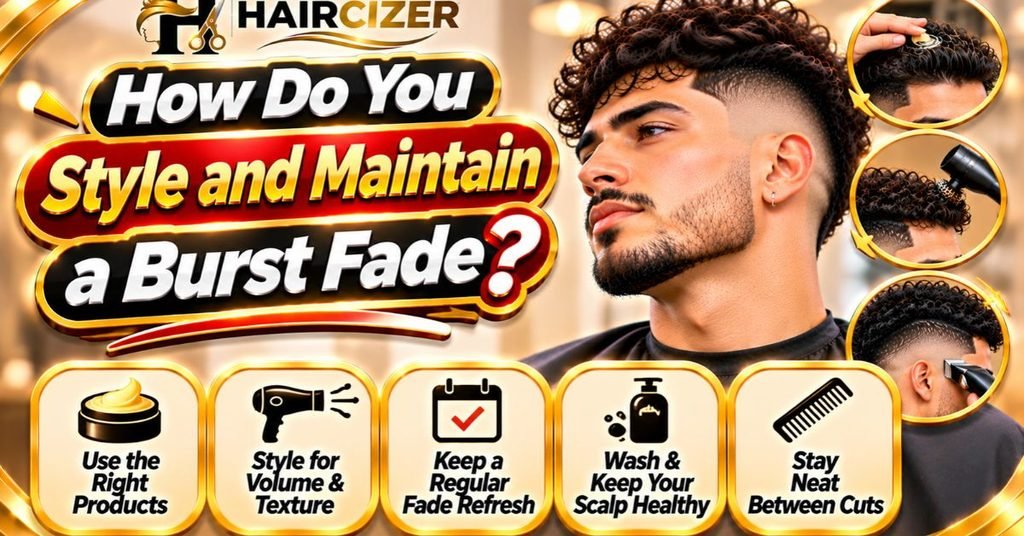
A great cut still needs a little daily care. The good news is that the routine is simple, and most of it takes a couple of minutes.
Style the top for its texture
| Top style | How to style it | Helpful products |
| Short coils | Brush gently, moisturize | Leave-in conditioner, light oil |
| 360 waves | Brush often, wear a durag at night | Wave pomade, satin durag |
| Short Afro | Pick upward, shape the outline | Moisturizing spray, wide pick |
| Sponge or curl top | Twist or comb on damp hair | Curl cream, sponge |
| Twists | Moisturize, retwist as needed | Twisting butter, satin scarf |
| Locs or braids | Keep scalp clean and hydrated | Light scalp oil, clarifying shampoo |
A few habits help every texture:
- Sleep in a satin bonnet or on a satin pillowcase.
- Moisturize the scalp, especially on faded sides.
- Wash weekly and avoid heavy buildup.
- Use a soft brush on the faded areas to keep them smooth.
- Avoid heavy oils right before a haircut, since they make the fade harder to blend.
When to refresh the fade and line-up
Fades lose their shape as hair grows back. Skin-close sides show growth faster than longer guards.
| Part of the cut | Refresh timing |
| Skin or high fade | Every 1 to 2 weeks |
| Low or mid fade with a guard | Every 2 to 3 weeks |
| Line-up and neckline | Every 1 to 2 weeks |
| Twists or braids | Every 2 to 4 weeks |
| Full reshape | Every 3 to 4 weeks |
If bumps are an issue, stretch the time between visits slightly and let the barber use a longer guard around the nape. Keep a mirror handy and check the sides weekly so you can book before the cut loses its edge.
Frequently asked questions
What is a burst fade haircut?
It is a fade that curves around the ear in a semicircle, with longer hair behind and above it.
Is a burst fade good for Black men?
Yes, it flatters coily and curly hair by adding contrast and a clean outline.
How long should hair be for a burst fade?
Half an inch on top works, but two to four inches gives more shape.
What is the difference between a burst fade and a drop fade?
A burst fade circles the ear, while a drop fade curves down behind it.
How often should I get a burst fade touched up?
Every two to three weeks keeps most burst fades looking sharp.
Can a burst fade cause razor bumps?
Very close cuts can, so choose a longer guard if your skin is sensitive.
Conclusion
A burst fade is one of the most flexible cuts for Black men, because it works with short coils, waves, twists, locs, and braids. Pick a style that fits your hair length and lifestyle, then start with a low or mid arc if you are new to the look.
Protect your skin by avoiding cuts that are too close, especially at the neckline. Bring clear photos to your barber, follow a simple care routine, and book regular refreshes. With the right cut and the right care, your burst fade will keep standing out.
Leave a Reply