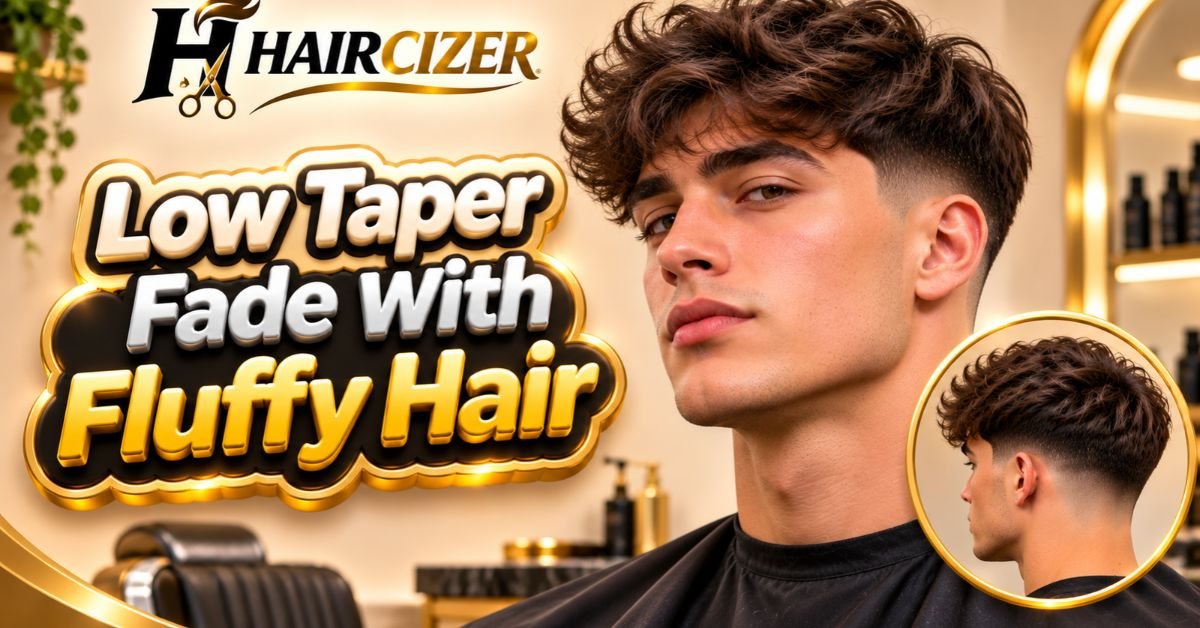
A low taper fade with fluffy hair is one of the easiest ways to look sharp without looking stiff. The sides stay short and clean around the ears and neck, while the top keeps its natural volume and soft, airy texture. It is neat enough for work and relaxed enough for weekends.
This guide walks you through everything you need before booking your next cut. You will learn how the low taper differs from other fades, which styles work best, what to tell your barber, and how to style fluffy hair at home. You will also get product picks, hair-type advice, face shape tips and a simple upkeep plan.
What Is a Low Taper Fade With Fluffy Hair?

A low taper fade with fluffy hair is a short-sided haircut paired with a full, textured top. The taper begins very low, just above the ears and along the natural neckline. From there, the hair gradually grows longer as it moves up toward the crown and fringe.
The top is where the personality lives. Instead of being slicked down or cut into a hard line, the hair is left with body, lift and movement. Barbers usually leave around two to four inches on top so there is enough length to create that soft, cloud-like shape.
Think of it as two ideas working together. The taper gives you clean edges and a tidy outline. The fluffy top gives you volume and a lived-in finish.
Quick Snapshot of the Cut
| Feature | What to Expect |
| Taper start point | Low, near the ears and nape |
| Side length | Short, blending gradually |
| Top length | About 2 to 4 inches |
| Finish | Soft, airy and textured |
| Styling time | 3 to 5 minutes |
| Upkeep | Trim every 3 to 4 weeks |
How a Low Taper Differs From Mid and High Fades
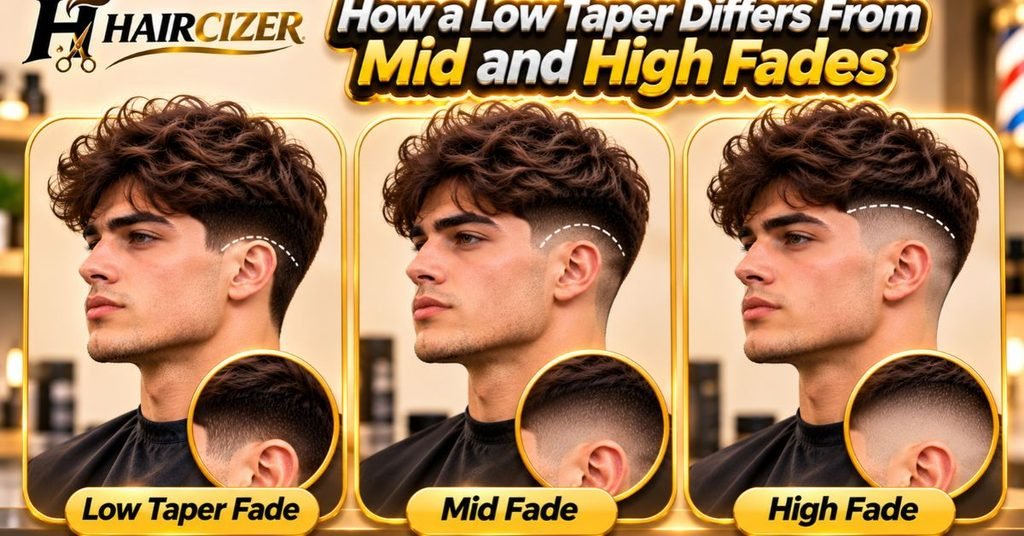
Barbers talk about taper height all the time, because it changes the whole feel of the haircut. A low taper is subtle, a mid taper is balanced, and a high taper is bold. Knowing the difference helps you pick the right level of contrast.
| Feature | Low Taper | Mid Taper | High Taper |
| Starts at | Just above the ears and nape | Around the temple | High on the head, near the crown |
| Contrast with top | Soft and gentle | Moderate | Strong and dramatic |
| Best for | Offices, everyday wear | Most settings | Bold, modern looks |
| Works with fluffy hair | Excellent | Good | Good, but less natural |
| Grow-out | Smooth | Moderate | Quick to look uneven |
The low taper is the safest option for fluffy hair. It leaves more hair on the sides, so the top looks like a natural part of the whole shape. A high taper creates a stark gap, which can make the fluff look oversized.
Taper vs Fade: A Short Clarification
Many people use the words interchangeably, but they are not identical. A taper shortens the hair gradually and usually leaves some length at the edge. A fade goes shorter and can reach the skin.
If you want soft edges, ask for a taper. If you want crisp, skin-level edges, ask for a taper fade or a low skin fade. A good barber will mix both when you describe the result you want.
What Actually Makes Hair “Fluffy”

Fluffy hair is not a hair type. It is a result. It comes from a mix of density, texture, length and how the hair is cut and dried. Understanding these parts helps you get better results at home.
Several factors create that airy look:
- Texture: Wavy, curly and coarse hair naturally lifts away from the scalp.
- Layering: Light layers remove weight so strands stand up instead of lying flat.
- Length: Two to four inches on top gives enough height without flopping.
- Dryness: Hair that is slightly dry, or blow-dried, holds more volume.
- Product: Light powders, sprays and creams add body without stiffness.
Straight and fine hair can look fluffy too, but it needs more help. A blow-dryer, a texture spray and a bit of backcombing at the roots can create the same effect.
Fluffy does not mean frizzy. Frizz is dry, uneven hair that has lost its shape. Fluffy hair looks soft and controlled, with the volume landing where you want it.
Why the Low Taper Fade With Fluffy Hair Is So Popular

Short sides with a full top fit the way many men like to look today. People want a clean cut that does not demand an hour of effort. This style delivers that balance.
Here is why barbers keep getting requests for it:
- It looks tidy but relaxed. The taper gives structure without a harsh edge.
- It works in most workplaces. The sides stay conservative, so it passes easily at the office.
- It suits many hair types. Straight, wavy and curly hair all take the fluffy finish.
- It is quick to style. A little product and a blow-dry are enough.
- It grows out well. The low taper softens gradually instead of looking patchy.
- It is easy to personalize. You can pick a fringe, a quiff or a messy top.
Social media has pushed it too, with creators showing quick routines and easy upkeep. But the real reason it lasts is simple. It makes most men look fresher with very little work.
Best Low Taper Fade Fluffy Hair Styles for Men
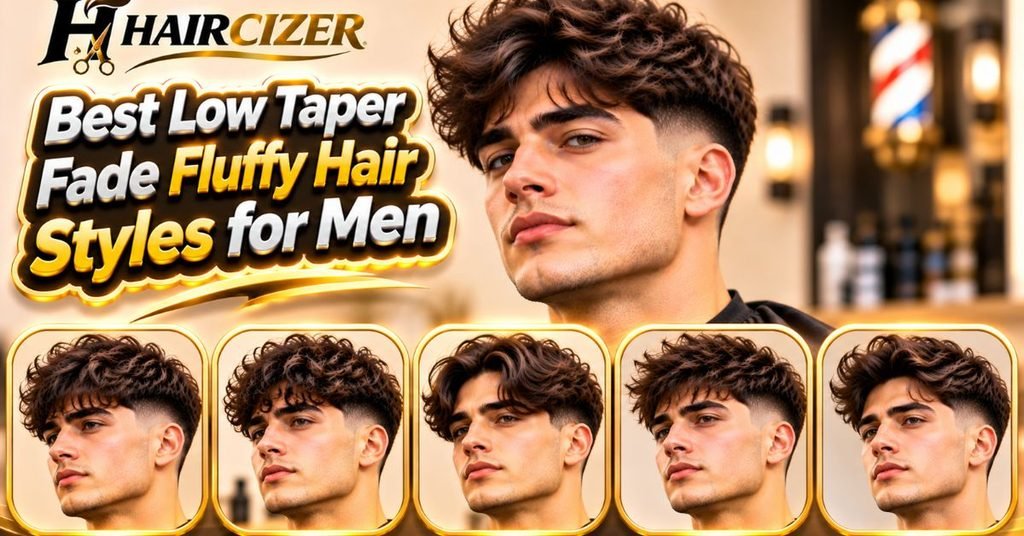
The basic cut has many variations. Below are five of the most popular, with notes on who they suit and how to get the best out of each.
Fluffy Fringe
The fluffy fringe is the classic version. The hair on top is brushed forward and sits softly across the forehead. It is not cut in a blunt line. Instead, the ends are textured so they look light and natural.
This style is great for men with a high or wide forehead, because the fringe fills the space. It suits round, oval and diamond faces especially well.
To style it, blow-dry the hair forward with a round brush, then add a pinch of matte paste. Use your fingers to separate the fringe so it looks airy, not heavy.
Best for: Straight and wavy hair, medium thickness, smart-casual looks.
Fluffy Quiff
The fluffy quiff lifts the front upward and back, instead of letting it fall forward. It adds height and a confident silhouette. The low taper keeps the sides neat, which helps the quiff stand out.
This version suits men who want a bit more drama. It works well on oval, square and heart-shaped faces. If your face is already long, keep the lift moderate so you do not add too much height.
For styling, blow-dry upward and back using a vent brush. Finish with a light-hold clay or a texture powder at the roots for extra lift.
Best for: Thick or wavy hair, men who like a polished but voluminous look.
Textured Crop
The textured crop is a shorter option. The top is cut to around one to two inches, with choppy layers that create movement. A short, broken-up fringe sits forward.
It is the lowest-maintenance of the five, and it is ideal if you hate styling. It also hides thinning near the crown quite well. Any face shape can wear it, but it is especially good for round and square faces.
A little sea salt spray and a dab of fiber paste are all it needs. Scrunch the top, then let it dry with a quick blast of air.
Best for: Fine to medium hair, busy mornings, short and tidy looks.
Natural Curls
Curly hair and a low taper are a natural match. The taper trims the sides, while the curls on top keep their full, springy shape. It is a look that works with your hair instead of fighting it.
This style is excellent for curly and coily hair. It highlights the pattern and keeps the sides from looking bulky. It also suits most face shapes, especially oval and square.
Apply a curl cream to damp hair and scrunch upward. Let it air dry or use a diffuser on low heat. Avoid brushing dry curls, because it breaks the pattern and causes frizz.
Best for: Curly, coily and tightly waved hair, men who like a natural finish.
Messy Fluffy Top
The messy fluffy top is the most relaxed version. The hair is tousled in all directions, with no clear part or fringe line. It looks effortless, almost like you just rolled out of bed, in a good way.
It suits casual, creative and weekend settings. It works best on wavy and slightly thick hair, because the natural movement does most of the work.
For styling, rough-dry the hair with your fingers, then add a pea-sized amount of texture paste. Do not comb it. The goal is controlled mess.
Best for: Wavy and thick hair, laid-back looks, creative workplaces.
Style Comparison at a Glance
| Style | Top Length | Effort | Face Shape Match | Hair Type |
| Fluffy fringe | 2 to 3 in | Medium | Round, oval, diamond | Straight, wavy |
| Fluffy quiff | 3 to 4 in | Medium to high | Oval, square, heart | Thick, wavy |
| Textured crop | 1 to 2 in | Low | Round, square | Fine, medium |
| Natural curls | 2 to 4 in | Low | Oval, square | Curly, coily |
| Messy fluffy top | 2 to 4 in | Low | Most shapes | Wavy, thick |
How to Ask Your Barber for a Low Taper Fade With Fluffy Hair

Barbers cannot read minds. A clear request saves you from a cut that is too short on top or too sharp on the sides. A few simple phrases do the job.
What to Say
- “I’d like a low taper fade with fluffy hair on top.”
- “Please start the taper low, just above my ears and nape.”
- “Leave about two to three inches on top, with texture.”
- “I want the sides soft, not skin-tight.”
- “Please blend it so there are no visible lines.”
What to Add
- Mention whether you want a skin finish at the very bottom
- Say how you plan to style it, such as forward or lifted
- Point out cowlicks, crown swirls or thinning spots
- Share how much time you spend styling in the morning
- Tell them how often you can visit for trims
A reference photo helps a lot. Choose one with hair similar to yours, because a photo of straight hair will not guide a cut for curly hair.
Ask your barber to use scissors or point cutting on top. This creates soft, uneven ends that give the fluffy finish. Avoid heavy thinning with razors unless your hair is very thick, because it can leave the top looking frayed.
Red Flags in the Chair
- Clippers on the top at a very short guard
- Harsh lines instead of smooth blending
- No consultation before the cut starts
- A neckline that looks uneven or too high
If you see these signs, speak up early. A good barber will adjust without any fuss.
How to Style Fluffy Hair With a Low Taper Fade, Step by Step

Fluffy hair responds best to a simple routine. You do not need many products, but you do need the right order. Follow these steps for a reliable result.
Step-by-Step Routine
- Start with clean hair. Wash with a light shampoo. Heavy, oily hair will not lift.
- Towel dry gently. Pat the hair instead of rubbing it. Leave it slightly damp.
- Add a pre-styler. Spray sea salt spray or a light volumizer from roots to tips.
- Blow-dry for volume. Use medium heat. Lift the roots with your fingers or a round brush.
- Choose your direction. Brush forward for a fringe or upward for a quiff.
- Warm the product. Rub a pea-sized amount of paste, clay or powder between your palms.
- Work it through. Use your fingertips. Start at the back and move forward.
- Shape and tweak. Pinch the ends for texture and fix any flat spots.
- Finish lightly. A mist of flexible spray holds the shape without stiffness.
Pro Styling Tips
- Use less product than you think you need. You can always add more.
- Blow-dry before applying product, not after. It sets the base.
- Keep the blow-dryer moving to avoid heat damage.
- Finish with a quick cool-air blast to lock the shape in.
- Avoid gels. They flatten volume and make the hair look wet.
If your hair is very fine, try a root-lift spray before drying. If your hair is very thick, use a lightweight cream so the top does not turn into a puff.
Best Hair Products for a Fluffy Low Taper Fade
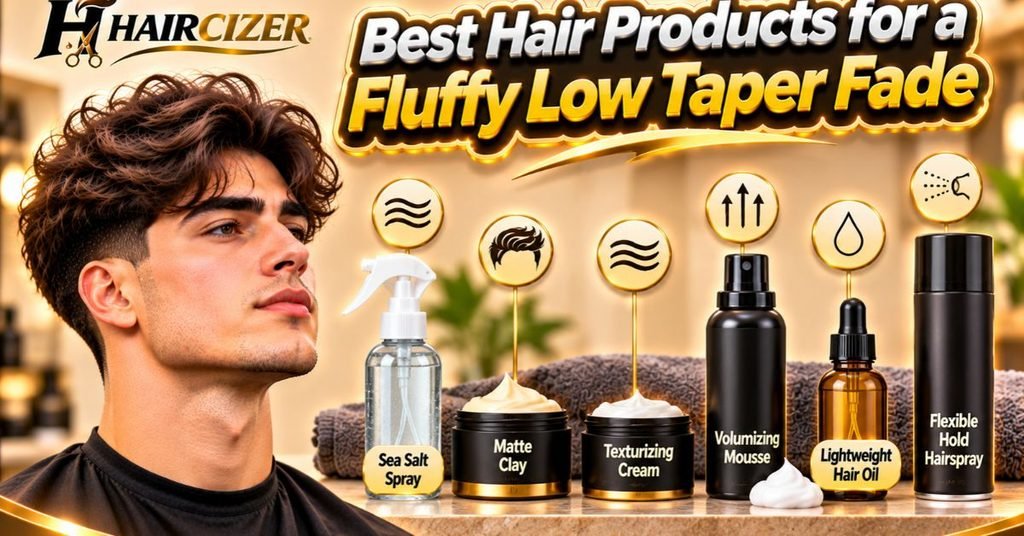
The right product is the difference between fluffy and flat. You want light hold, a matte finish and no heavy residue. Here is a breakdown of what works.
| Product Type | Hold | Finish | Best For |
| Sea salt spray | Light | Textured, matte | Fine and wavy hair |
| Texture powder | Light to medium | Matte, airy | Adding root lift |
| Matte clay | Medium to strong | Matte | Thick hair, quiffs |
| Styling paste | Medium | Natural | Most hair types |
| Curl cream | Light | Soft, defined | Curly and coily hair |
| Light hairspray | Flexible | Invisible | Windy days |
Product Tips
- Match the product to your density. Fine hair needs light products. Thick hair can take more hold.
- Avoid heavy waxes. They weigh the hair down and kill volume.
- Choose water-based formulas. They wash out easily and leave less buildup.
- Do not layer too many products. Two is usually enough.
- Use shampoo regularly. Product buildup makes hair look flat and dull.
A good starter kit is simple. Pick one pre-styler, one texture product and one light spray. You can add a blow-dryer and a round brush if you want better lift.
Styling by Hair Type: Straight, Wavy and Curly

Fluffy hair looks different on every texture. The key is working with your natural pattern instead of fighting it. Here is how to adjust the cut and the routine for each type.
Straight Hair
Straight hair has less natural lift, so it needs help to look fluffy. Ask your barber for light layering on top, which breaks up the weight.
At home, a blow-dryer is your best friend. Dry the roots upward, then add a texture powder or a light paste. Backcombing the roots slightly gives extra body. A sea salt spray adds grip so the hair does not fall flat by noon.
Avoid very heavy products. They make straight hair look greasy and limp.
Wavy Hair
Wavy hair is the easiest to make fluffy. The natural bends create volume with almost no work. This is why wavy-haired men often get the best results from this cut.
Scrunch the hair with a bit of sea salt spray, then let it dry or use a diffuser. Add a small amount of matte paste to define the waves. Do not brush the hair once it is dry, because it can turn waves into frizz.
If your waves are loose, keep the top a little longer. If they are tight, a shorter top keeps the shape neat.
Curly Hair
Curly hair brings natural volume, so the focus is on shape and moisture. Ask for a low taper that follows the curve of your head, and keep the curls long enough to bounce. Two to four inches usually works well.
Use a curl cream or leave-in conditioner on damp hair. Scrunch upward and let the curls dry without touching them. A diffuser on low heat can speed things up.
Skip heavy gels and avoid combing dry curls. Both create frizz and break up the pattern.
Hair Type Cheat Sheet
| Hair Type | Key Challenge | Best Product | Styling Method |
| Straight | Lacks lift | Texture powder, sea salt spray | Blow-dry upward |
| Wavy | Can get frizzy | Matte paste, light cream | Scrunch and air dry |
| Curly | Dryness, frizz | Curl cream, leave-in | Scrunch, diffuse |
| Fine | Goes flat quickly | Volumizing spray | Light products only |
| Thick | Can look bulky | Light cream, clay | Ask for layering |
Which Face Shapes Suit a Low Taper Fade With Fluffy Hair?

Most face shapes can pull this look off. The trick is adjusting the height and fringe so the cut balances your features.
| Face Shape | What Works | What to Avoid |
| Oval | Almost any version | Nothing major |
| Round | A lifted quiff or tall top | Too much width on the sides |
| Square | A softer, textured top | A very hard, blunt fringe |
| Oblong | A fringe with moderate height | Too much vertical lift |
| Heart | A forward fringe with some length | Very short, tight tops |
| Diamond | A fluffy fringe to balance the cheeks | Excessive volume at the sides |
For a round face, add height on top so the face looks longer. For a long face, keep the volume lower and lean toward a fringe. For a square jaw, a soft, textured top takes the edge off angular lines.
If you are not sure, ask your barber to look at your face shape before cutting. A few small changes to length and fringe can make a big difference.
How to Maintain the Fade and Keep Your Hair Fluffy
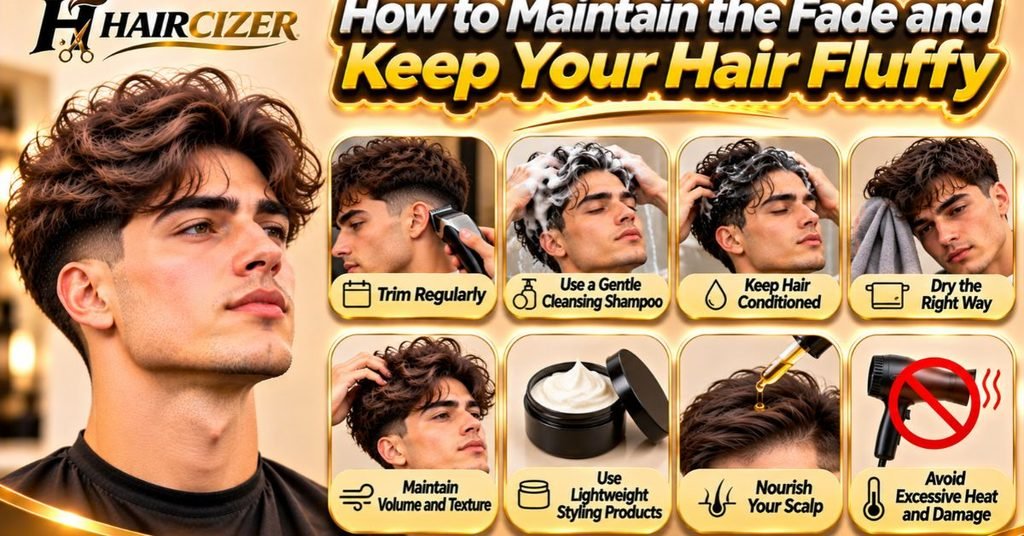
A low taper looks best when it is fresh. Because the sides are short, the shape softens quickly. Fluffy hair also needs care to stay light instead of dry or flat.
Trim Schedule
| Version | Recommended Visit |
| Low taper, soft finish | Every 3 to 4 weeks |
| Low taper, skin finish | Every 2 to 3 weeks |
| Longer fluffy top | Every 4 to 5 weeks |
| Curly low taper | Every 4 to 5 weeks |
If you cannot visit that often, ask for a quick clean-up of the neckline and sides. Many barbers offer a shorter appointment that costs less.
Daily and Weekly Care
Also Read:High Taper Fade With Waves: Best Styles & Barber Tips
- Shampoo two to three times a week. Washing every day can dry out the scalp.
- Condition the top. Fluffy hair still needs moisture, especially if you use heat.
- Use a heat protectant. It reduces damage from the blow-dryer.
- Rinse out product fully. Leftover clay can weigh hair down and cause flaking.
- Massage your scalp. It helps circulation and loosens buildup.
- Sleep on a smooth pillowcase. Silk or satin reduces frizz and flattening.
Fixing Common Problems
- Hair looks flat by midday: Add a little texture powder at the roots.
- Hair looks puffy and wide: Use a light cream and ask for more layering next time.
- Frizz appears: Switch to a moisturizing shampoo and use less heat.
- Fade grows out uneven: Book a quick edge-up before it gets worse.
- Scalp feels dry or itchy: Use a gentle shampoo and avoid hot water.
Common Mistakes to Avoid
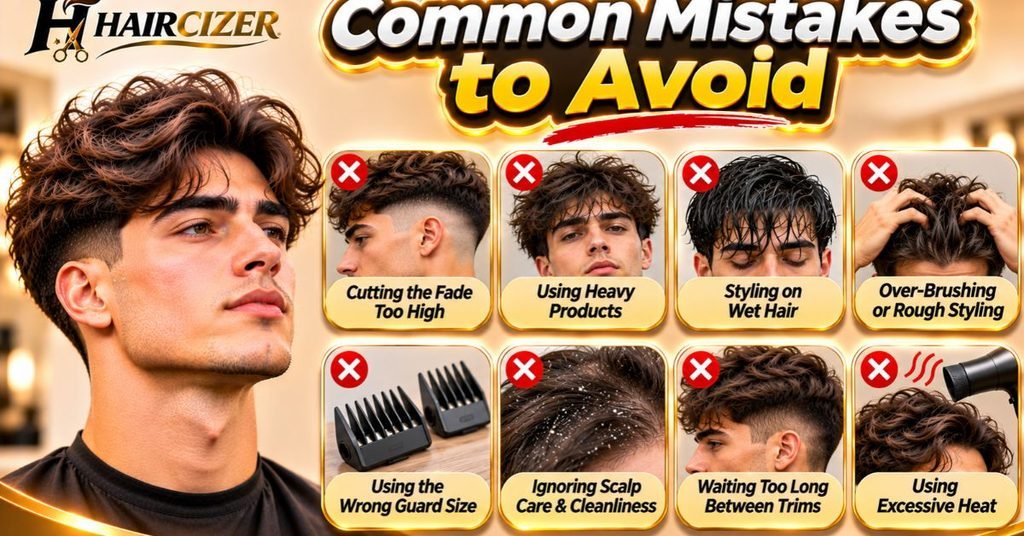
Even a great cut can go wrong when the details slip. Barbers see the same errors again and again.
- Using too much product. It weighs the hair down and ruins the airy look.
- Skipping the blow-dry. Air drying flat hair rarely gives volume.
- Cutting the top too short. Fluffy hair needs length to show texture.
- Choosing the wrong taper height. A high taper can look too stark with a big top.
- Waiting too long between trims. The taper loses its shape in a few weeks.
- Over-washing. Daily shampooing dries out the hair and makes it frizz.
- Ignoring your hair type. What works on straight hair may not work on curls.
Pros and Cons of the Cut
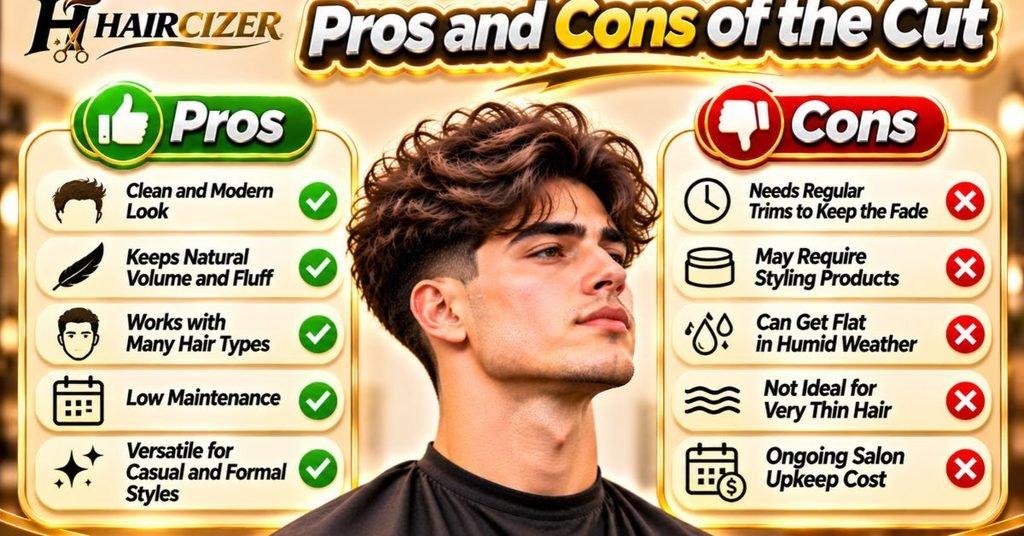
| Pros | Cons |
| Quick to style | Needs regular trims |
| Works for many hair types | Fine hair may need extra product |
| Looks neat at work and casual | Poor blending shows quickly |
| Easy to personalize | Thick hair can look bulky |
| Grows out smoothly | Humidity can cause frizz |
For most men, the advantages outweigh the drawbacks. The biggest factor is finding a barber who understands blending and texture.
Pairing the Cut With a Beard and Outfits

A haircut is only part of the picture. A few small choices can pull the whole look together.
Beard Pairings
- Clean shave: Highlights the sharp edges of the taper.
- Light stubble: Adds depth without hiding the jawline.
- Short boxed beard: Gives a polished, professional feel.
- Full beard: Works well if the sideburns blend smoothly into the taper.
Style Pairings
- Smart casual: Oxford shirts, chinos and clean sneakers
- Business: A tailored jacket with a softly styled fringe
- Streetwear: Oversized tees, bomber jackets and a messy top
- Athletic: Short, simple styling and quick-dry fabrics
Pro Tips From Barbers
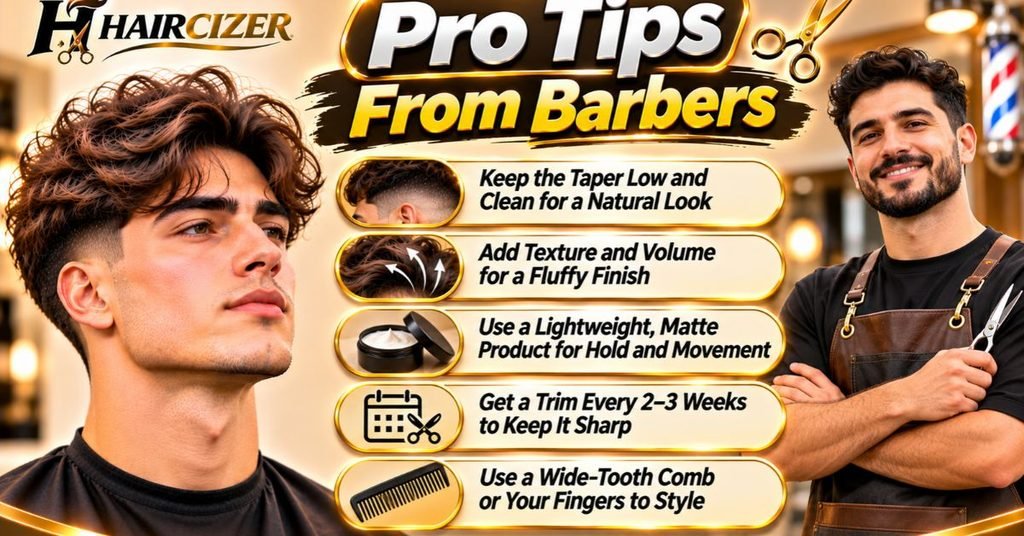
These insider pointers come up often in barbershop conversations. They can improve your cut with very little effort.
- Bring a photo. It removes guesswork and builds trust.
- Ask for a consultation. A quick chat helps match the cut to your head shape.
- Style before you leave. Watching your barber style it teaches you the routine.
- Check the cut in good light. Look at the taper from all angles before you pay.
- Buy one good product. A reliable texture product beats a drawer full of options.
- Book your next visit early. Regular appointments keep the shape consistent.
- Be patient with the first week. Fresh fades often look sharper after a few days.
Quick Checklist Before You Book
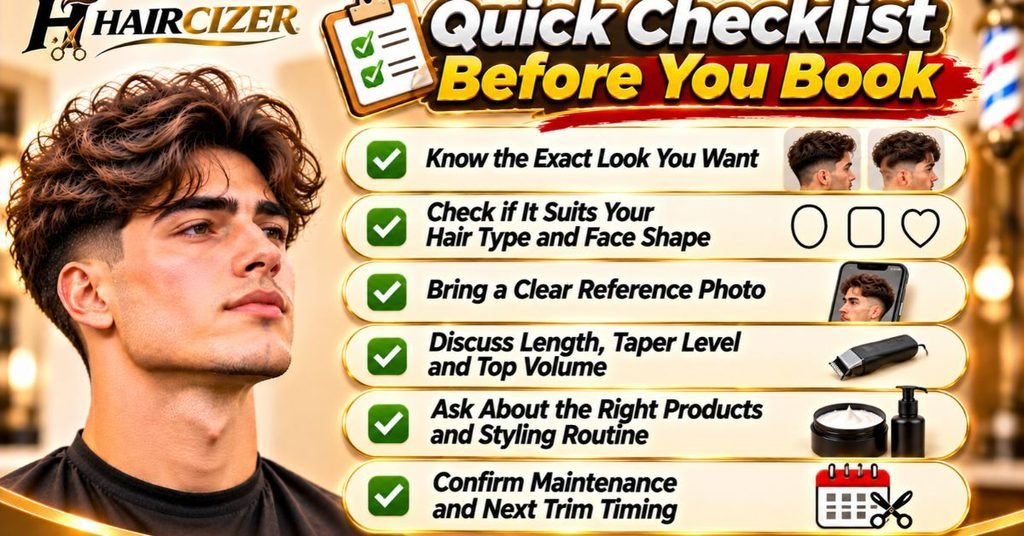
- Pick a reference photo that matches your hair type
- Decide how short you want the sides
- Choose between a fringe, a quiff or a messy top
- Think about how much time you spend styling
- Check your barber’s reviews and portfolio
- Plan your next appointment in advance
Frequently Asked Questions
What is a low taper fade with fluffy hair?
It is a cut with short, gently tapered sides and a full, textured top.
Is a low taper fade good for fluffy hair?
Yes, it keeps the sides neat while the top keeps its natural volume.
How long should fluffy hair be on top?
Most barbers leave two to four inches for a soft, airy finish.
Can straight hair look fluffy?
Yes, with light layers, a blow-dry and a texture product.
Does this cut work for curly hair?
Yes, curls add natural volume and the taper keeps the sides tidy.
How often should I get a trim?
Every three to four weeks keeps the taper looking fresh.
What product is best for fluffy hair?
A sea salt spray or matte paste gives texture without weight.
Can I wear this cut to work?
Yes, the low taper keeps the sides subtle and professional.
What is the difference between a low taper and a low fade?
A taper leaves some length at the edges, while a fade can reach skin.
Does it suit a round face?
Yes, adding height on top helps balance the face.
Conclusion
The low taper fade with fluffy hair gives you a cut that is neat, modern and easy to live with. The soft taper keeps the sides clean, while the full top adds texture and personality. It works on most hair types and fits almost any setting.
Bring a clear photo, use the phrases from this guide and keep your styling simple. Stick to regular trims and a light product routine, and the cut will stay sharp for months. Book your appointment and enjoy a look that takes minutes but turns heads all day.
Leave a Reply