
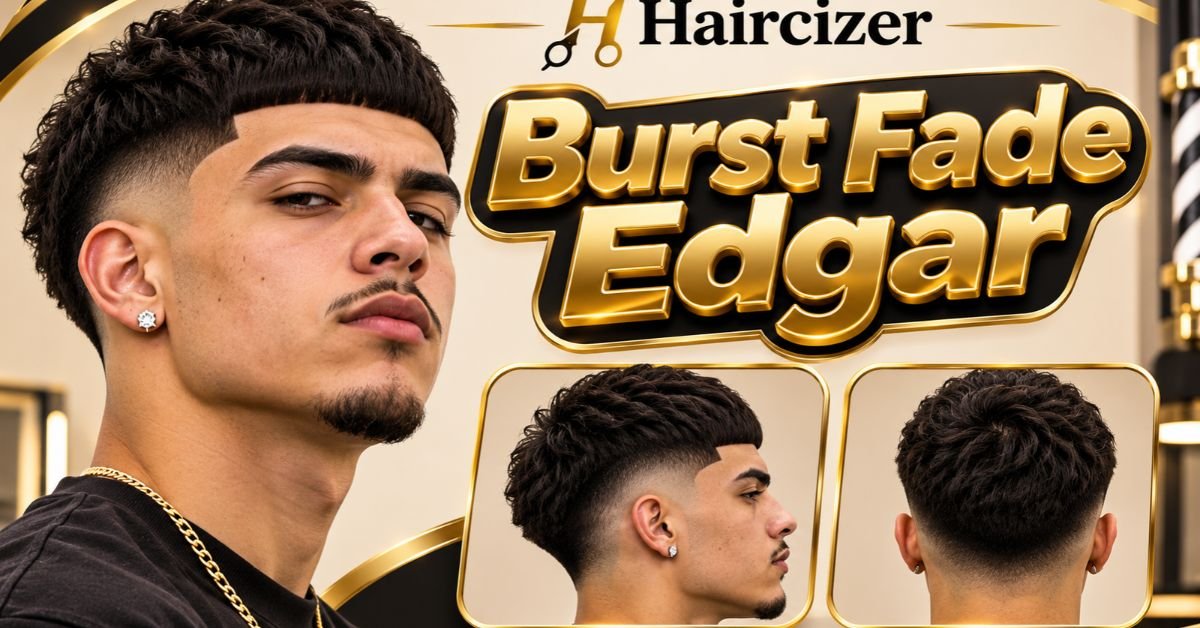
The burst fade Edgar is one of the most recognizable haircuts in the barbershop right now. A blunt, straight-across fringe sits on top, and a fade curves around the ear like a small half circle. It is bold, clean, and impossible to mistake for anything else.
The catch is that this cut depends on precision. A fringe that is half an inch too long or a burst that sits too high can change the whole look. That is why knowing the vocabulary matters before you sit in the chair.
This guide explains what a burst fade Edgar is, shows five styles worth saving, compares it with similar cuts, and helps you decide whether it suits your hair. You will also get a barber script, a simple styling routine, and a maintenance schedule.
What is a burst fade Edgar?
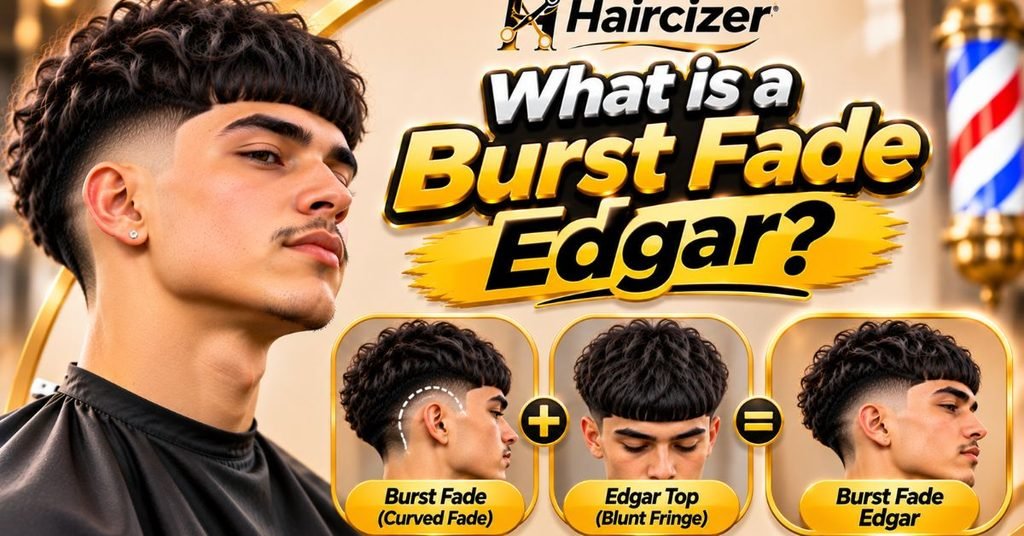
A burst fade Edgar combines two things: the Edgar cut and the burst fade. Put them together and you get a short, structured look with a sharp fringe and a curved fade behind the ear.
The Edgar cut is known for its straight, blunt fringe cut across the forehead. You may also hear it called a takuache cut, a name that comes from Latino, and especially Mexican American, barbershop culture. The top is kept short and neat, the lineup is crisp, and the sides are cut tight.
The burst fade is a fade that wraps around the ear instead of running straight around the head. Picture a semicircle starting above the ear and curving down behind it. The hair around the ear is cut very short, while the hair at the nape stays longer.
Here are the main features that define the cut:
- A blunt fringe. The front is cut straight across, usually sitting just above the brows.
- A curved burst around the ear. The fade follows the ear’s shape rather than a flat line.
- Length left at the neckline. The back keeps more hair, which is what separates a burst from a standard fade.
- A sharp lineup. Clean edges at the forehead and temples frame the whole look.
- Short, even top length. Most versions keep the top around one to two inches.
Because the fade curves, the cut also works well with a mullet shape or longer back. That is why the burst fade has become so popular with people who want a bit of length behind the sharp front.
Why the burst fade pairs so well with the Edgar fringe
The Edgar fringe is a very graphic shape. It is a straight line with no softness, so it needs a frame. A flat, high fade can feel stiff next to it, while a burst adds a curve that balances the hard line on the forehead.
There is also a practical reason. Because the burst keeps length at the nape, the cut looks full from the back and the side, not only from the front. That makes it easier to wear with hats, headphones, and beards, since there is no harsh line at the neck.
Barbers also like it because it leaves room for design. A part, a razor line, or a small shape can sit inside the burst without crowding the fringe. Most people skip the extra details, but it is good to know the option exists.
Common mistakes people make with this cut
Many bad burst fade Edgar cuts come from the same few problems:
- Asking for a burst without saying how high. Without a height, the barber has to guess, and the burst can end up too high or too low.
- Choosing a fringe that is too short. A very short fringe leaves no room for error and exposes the hairline.
- Ignoring the nape. If the barber cuts the back too short, the burst loses its shape and starts to look like an ordinary fade.
- Skipping reference photos. Words like “Edgar” are used loosely, so a photo removes confusion.
Five burst fade Edgar styles to show your barber
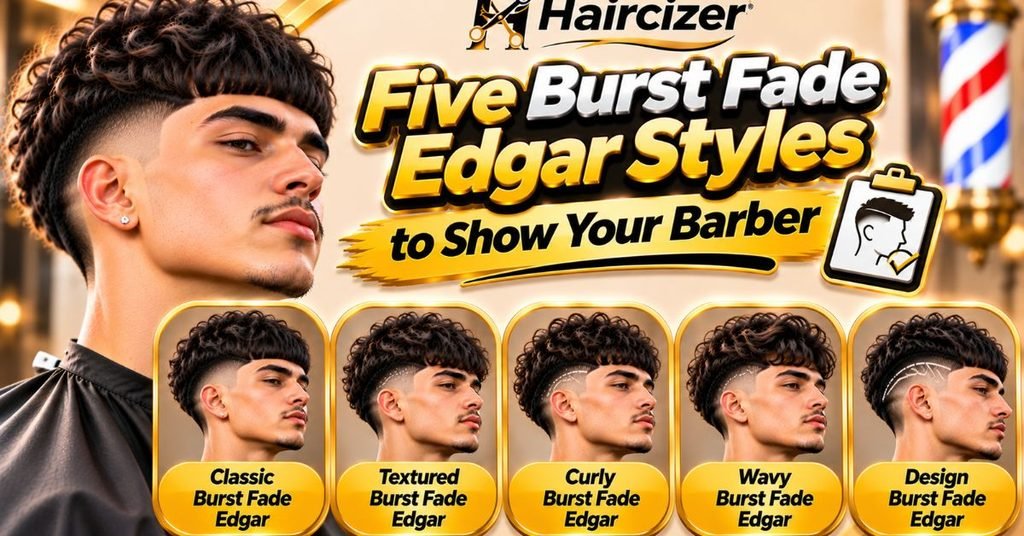
Every version below starts with the same idea but changes the length, texture, or back. Pick the one closest to your hair and lifestyle.
Low burst fade Edgar
The low burst starts just above the ear and curves down. It leaves the sides fuller, so the fade feels soft and subtle. The fringe stays blunt and short.
This is a good first try if you have never had a burst fade before. It is also the easiest to grow out, since the sides do not look drastically different once they fill in. It suits office settings and school, where a softer look helps.
Short textured burst fade Edgar
This version keeps the top very short and adds light texture with point cutting. The fringe is still straight across, but the edge is slightly broken up so it does not look like a helmet.
It works well on straight and wavy hair, and styling takes less than two minutes. A small amount of matte paste is all you need. Expect a casual, low-fuss finish with a crisp lineup.
Fluffy burst fade Edgar
Here the top is left longer and dried with lift. The fringe is still the focus, but it has volume and softness instead of a flat edge. The sides are cut tight so the fluffiness looks deliberate.
The look suits people with thick or wavy hair. Dry the top forward and up, then finish with a light spray. If your hair is fine, ask your barber to leave extra length so the volume holds.
Curly burst fade Edgar
The curly version leaves the curls longer on top and lets them fall forward. The burst fade frames the curls neatly, and the fringe can be either defined with a clean cut or left natural and rounded.
Curl cream is the key product here. Apply it to damp hair, scrunch, and let the curls dry with minimal handling. Ask your barber to cut the curls dry so they can see the real length.
Edgar burst fade mullet
This is the boldest of the five. The front keeps the blunt Edgar fringe, the burst fade wraps around the ear, and the back is left long enough to form a mullet.
The contrast is what makes it stand out: sharp at the front, flowing at the back. It needs a barber who is comfortable with both fades and longer shaping. Expect to book a longer appointment for the first cut.
| Style | Top length | Fade height | Maintenance level |
| Low burst fade Edgar | Short | Low | Low |
| Short textured burst fade Edgar | Very short | Low to mid | Low |
| Fluffy burst fade Edgar | Medium | Mid | Medium |
| Curly burst fade Edgar | Medium to long | Low to mid | Medium |
| Edgar burst fade mullet | Long at the back | Mid | Higher |
Burst fade Edgar vs. taper Edgar vs. drop fade Edgar: what changes?
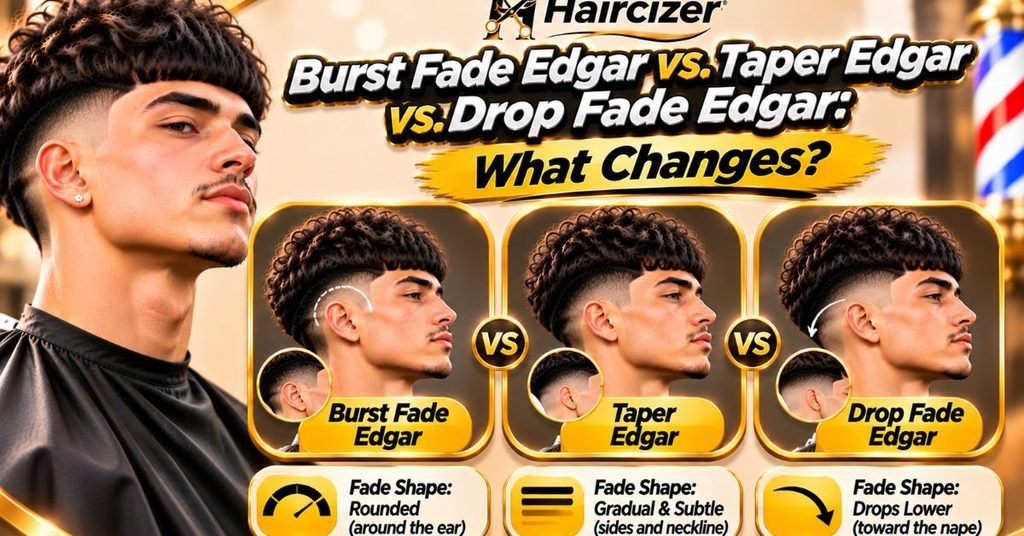
Barbers often pair the Edgar fringe with different sides. The fringe stays the same, but the fade changes the entire shape. Here is how the three compare.
| Cut | How the sides work | Look | Best for |
| Burst fade Edgar | Curved fade around the ear, length kept at the nape | Rounded, stylish, a little edgy | People who want shape and a mullet option |
| Taper Edgar | Gradual shortening, usually leaving some length at the edges | Clean, soft, classic | Anyone who wants a conservative finish |
| Drop fade Edgar | Fade line drops lower behind the ear in an arc | Smooth, sculpted, sporty | Those who like a dramatic curve without leaving length at the nape |
Burst fade. The fade circles the ear and leaves hair at the back. This gives a distinct shape and works well with a mullet or longer neckline.
Taper. A taper is the most subtle option. It trims the sides and neckline gently, which keeps the cut tidy and easy to grow out.
Drop fade. The drop fade follows the skull, dipping behind the ear. It cuts the nape short and creates a smooth, flowing line.
If you want a cut that makes people look twice, choose the burst. If you want a safe, polished option, choose the taper. If you like the arc but want a shorter back, choose the drop.
Will a burst fade Edgar work with your hair?
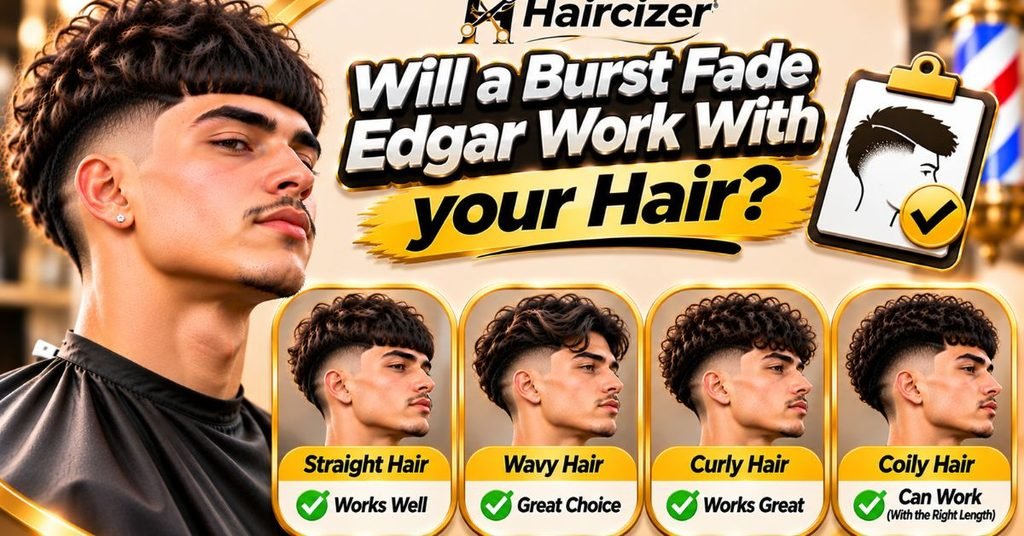
Most hair types can pull off the cut, but the details change with texture, density, and growth patterns. The fringe is the part that needs the most planning.
Straight and wavy hair
Straight hair is the classic canvas for the Edgar cut. It holds a blunt line well and gives a clean, sharp fringe. The one risk is a flat, heavy look, so ask your barber to point cut the ends a little.
Wavy hair gives you body and natural movement. The fringe may curl slightly at the ends, which many people like. If you want it perfectly straight, you will need a dryer and a bit of product. Otherwise, let the wave show and ask for a slightly longer fringe so it does not spring up too short.
Curly and coily hair
Curly hair shrinks when it dries, so a fringe cut wet will look shorter later. Ask your barber to check the length when the hair is dry or to leave it a little long. The burst fade frames curls beautifully and keeps the sides neat.
Coily hair works well with the burst too. The fade creates a clean contrast against the rounded top. The fringe can be shaped and edged for a sharp look, or left soft and natural. Keep your hair moisturized, since dry coils break easily.
Fine hair, low density, and growth patterns
Fine hair. Fine hair struggles to hold a blunt fringe. Choose a slightly longer top and use a light pre-styler for body. Avoid heavy waxes, which can flatten it.
Low density. If your hair is sparse, a very short fringe may expose the scalp. A textured cut with a little extra length hides gaps and looks fuller.
Cowlicks. A cowlick at the front can push the fringe sideways. Barbers handle this by leaving more weight over the area or cutting the fringe slightly longer. Point it out before the cut starts.
Receding hairline. An Edgar fringe can actually help here, since the straight line draws attention to the front. Keep it short and neat, and avoid very high burst fades that expose more of the temple.
How should you adapt it to your face and head shape?
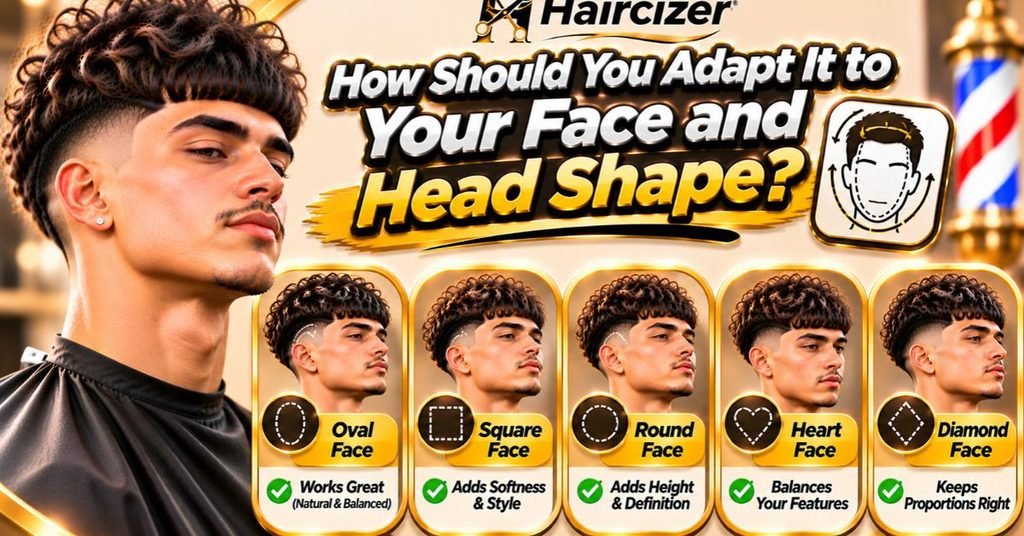
Cuts work best when they match your features. A few simple adjustments can make a big difference.
- Round face. Keep the fringe slightly shorter and add a bit of height on top. The burst fade adds contrast that slims the sides.
- Square face. A softer fringe or textured edge balances strong angles. A low burst works well here.
- Oval face. Almost anything works. This face shape is the easiest to style.
- Long face. Keep the fringe a little longer to shorten the forehead, and avoid too much height on top.
- Heart-shaped face. A fuller fringe balances a wider forehead. A mid burst keeps the sides clean without making the chin look narrower.
Head shape matters just as much. If you have a flat spot at the back, leaving length at the nape can add roundness. If you have a prominent back of the head, a higher burst can make the shape look more even. A skilled barber will feel your head shape and adjust accordingly.
How do you ask your barber for a burst fade Edgar?
Clear words save time and prevent mistakes. Words like “Edgar” and “burst” mean different things to different barbers, so be specific.
The six details to agree before cutting
Agree on these six things before the clippers come out.
Front and top
- Fringe length. Say where you want it to sit, for example just above the eyebrows or halfway down the forehead.
- Fringe shape. Decide whether you want a perfectly straight line or a slightly broken, textured edge.
- Top length. Give a number in inches, or pinch the length with your fingers. One to two inches is typical.
Sides and back
- Burst height. Say low, mid, or high. Mid is the safest starting point.
- Fade finish. Choose between a skin-level finish and a slightly longer, softer one.
- Neckline. Decide how much length stays at the nape, and whether you want it rounded, tapered, or squared.
A saveable barber request
Copy this into your phone and adjust the details:
“I’d like an Edgar cut with a straight fringe that sits just above my eyebrows. Leave about one and a half inches on top with a little texture. On the sides, I want a mid burst fade curving around the ear, skin at the bottom, and leave some length at the nape. Please give me a sharp lineup and a natural neckline.”
Bring two or three photos as well. One should show the front, one the side, and one the back. Pick pictures of people with hair similar to yours, and explain what you like and dislike about each one.
How do you style a burst fade Edgar at home?
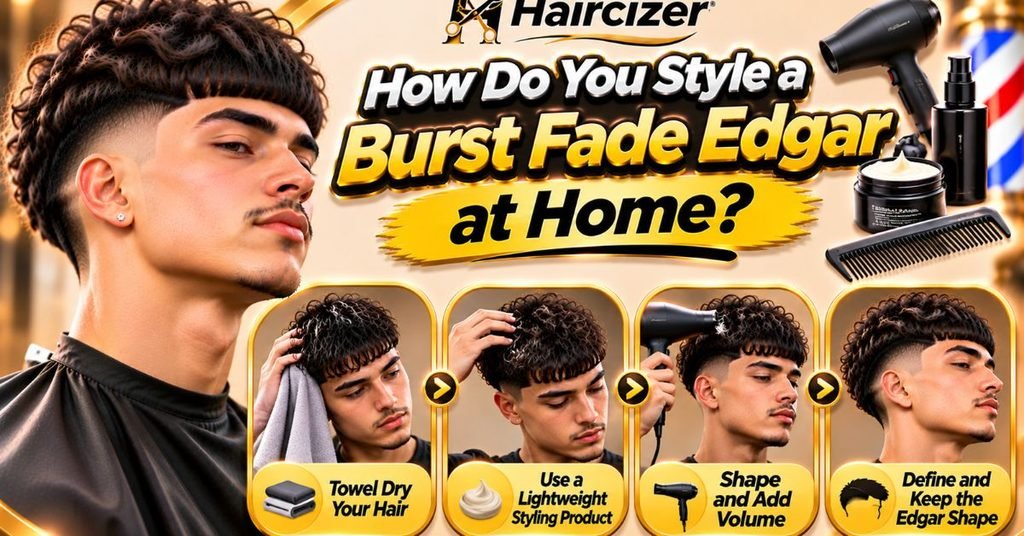
The routine is simple, but the fringe needs care. Here is a basic method.
- Wash and towel-dry. Start with clean hair, damp but not dripping.
- Apply a pre-styler if needed. Fine hair benefits from a little mousse or sea salt spray. Curly hair needs curl cream.
- Dry the fringe forward. Use a dryer on medium heat and point the airflow down and forward. Keep the fringe flat against the forehead.
- Shape the top. Lift the roots gently if you want volume, or keep it flat for a sharp finish.
- Add a finishing product. Rub a pea-sized amount of matte paste or clay between your palms and work it through the top. Keep it away from the faded sides.
- Check the line. Use a small comb to set the fringe straight, then step back and look in the mirror.
For curly hair, skip the brush and scrunch gently. For coily hair, use a pick to lift the top, and moisturize to keep it healthy. For fluffy versions, use a light spray instead of heavy paste.
Sleep matters too. A satin pillowcase or a loose durag can keep the fringe in place overnight and reduce frizz.
The small kit that makes styling easier
Also Read:Low Taper Fade Dreads: 10 Fresh Styles & Styling Tips
You do not need many products. A short, well-chosen kit is enough.
- Matte paste or clay. This gives hold without shine, which suits the clean, graphic look of the Edgar fringe.
- Light pre-styler. Mousse or sea salt spray adds body to fine or straight hair.
- Curl cream or leave-in conditioner. These keep curls and coils soft and defined.
- A fine-tooth comb. It sets the fringe line neatly.
- A small hand mirror. It helps you check the back and the burst without asking anyone for help.
- A dryer with a nozzle. The nozzle directs air and keeps the fringe smooth.
Use less product than you think you need. Heavy products weigh down the fringe and can leave residue on the faded sides. If the sides start to look dull or greasy, wash them with a gentle shampoo.
Skin and scalp care for a faded cut
A fade shows more scalp, which means your skin gets more attention. Keep these habits in mind:
- Moisturize the scalp if it feels dry or tight.
- Use sunscreen on exposed areas when you are outside for long periods.
- Wash after sweating to prevent buildup and irritation.
- Avoid scratching freshly cut areas, since the skin can be sensitive after clippers or a razor.
If you notice persistent redness, bumps, or irritation after cuts, tell your barber and consider seeing a doctor or dermatologist.
Questions worth asking your barber
A good consultation goes both ways. After you describe the cut, ask a few questions of your own:
- “Will my hair type hold a straight fringe, or should I adjust the length?”
- “Where would you start the burst for my head shape?”
- “How long will it take to grow out if I change my mind?”
- “Can you show me how to set the fringe at home?”
- “How often should I come back to keep the lines sharp?”
These questions show that you care about the result. They also give the barber space to share advice based on years of cutting similar hair.
Is the burst fade Edgar a good fit for your lifestyle?
Think about your daily routine before committing. This cut looks best when the lines are sharp, so it suits people who do not mind regular trims.
- Students and office workers. A low burst with a neat, slightly textured fringe fits most dress codes.
- Athletes. Short sides and a short top stay comfortable under helmets and caps. Rinse after training to avoid buildup.
- Creative or social settings. A fluffy, curly, or mullet version gives you room to stand out.
- Busy schedules. If you cannot visit a barber every few weeks, choose a low burst and a slightly longer fringe, which hide growth better.
Budget matters too. A sharp fade often needs a visit every two to three weeks, so factor that into your plans.
How often does a burst fade Edgar need maintenance?

The sides and fringe lose their crispness quickly. Because the cut depends on clean lines, small amounts of growth are very visible.
| Goal | Refresh timing |
| Razor-sharp look | Every 1 to 2 weeks |
| Clean and polished | Every 2 to 3 weeks |
| Softer, relaxed look | Every 3 to 4 weeks |
Many people book a quick lineup and fringe trim between full cuts. This usually takes only a few minutes and keeps the shape fresh. The burst itself fades out more slowly, so a full cut every three weeks is fine for most people.
If you are growing out a mullet version, tell your barber so they trim the front and sides but leave the back alone.
What happens as the cut grows out
Knowing what to expect helps you plan your visits. Here is a rough timeline for an average growth rate.
| Time since the cut | What you will notice |
| Week 1 | The cut looks sharp, and the fade is clean |
| Week 2 | The lineup softens and the burst starts to blur |
| Week 3 | The fringe grows past the brows and the sides fill in |
| Week 4 and beyond | The shape loses definition, and the fringe needs a trim |
Hair grows at different speeds, so your timeline may be faster or slower. People with thick or curly hair often notice changes sooner, because volume makes growth more visible.
How to extend the life of your cut
A few small habits stretch the time between visits:
- Trim the neckline lightly. A small trimmer can tidy loose hairs, but leave the blending to your barber.
- Keep the fringe tidy. Comb it forward each morning so it stays straight.
- Wash gently. Harsh shampoo dries the scalp and hair, which makes growth look messier.
- Moisturize. Healthy hair holds its shape better and looks fuller between cuts.
- Sleep on satin. It reduces friction and keeps the top neat.
These habits will not replace a barber, but they keep the cut presentable for longer.
What should you do if the cut doesn’t look right?
Even good barbers miss sometimes. The key is to respond calmly and clearly.
If the fringe is too short. Do not try to fix it yourself. Style it forward with a little product and wait. Fringes grow quickly, and most people notice the difference within two weeks.
If the fringe is too long. This is easy to fix. Ask your barber for a trim, and mention exactly how much shorter you want it.
If the burst sits too high. This is harder to correct, since hair does not grow back overnight. Ask your barber to blend it softly or consider a longer top to balance the shape.
If the fade looks patchy. Return to your barber and ask them to blend the transition. Most will fix it for free or for a small charge.
If the neckline is too short or uneven. A soft taper can hide small mistakes. Waiting a week or two will also make it less noticeable.
How to choose a barber who does this cut well
Not every barber has the same strengths. For a burst fade Edgar, look for someone who shows clean fades and crisp fringes in their recent work. Check their portfolio or social media for close-up photos from the front, side, and back.
Pay attention to how they talk during the consultation. A good barber asks questions about your hair, your routine, and your style. They may also feel your head shape and point out possible issues like cowlicks or thin areas. If a barber starts cutting without asking anything, that can be a warning sign.
It also helps to ask friends or coworkers with similar cuts where they go. Word of mouth is often the most reliable guide.
Next time, bring clearer photos and use specific measurements. Saying “a little shorter” can mean very different things, so numbers help. If a barber repeatedly misses the mark, it may be worth trying a new shop.
Burst fade Edgar FAQs
What is a burst fade Edgar?
It is a blunt-fringe Edgar cut with a fade that curves around the ear.
Is an Edgar cut the same as a takuache cut?
Yes, both names describe the same straight-fringe style.
What is the difference between a burst fade and a drop fade?
A burst circles the ear and keeps nape length, while a drop dips lower behind it.
How long should my hair be for an Edgar cut?
One to two inches on top is typical.
Does a burst fade Edgar work on curly hair?
Yes, and the fade frames the curls well.
Can I get it with a mullet?
Yes, the burst fade pairs well with a longer back.
Will it suit a receding hairline?
Yes, if you keep the fringe short and avoid a very high burst.
How often should I get a trim?
Every two to three weeks keeps it sharp.
What product should I use?
Matte paste or clay works for most hair types.
Is it a low-maintenance cut?
The styling is quick, but the lines need regular trims.
Conclusion
The burst fade Edgar works because it mixes two strong ideas into one clean shape. The blunt fringe gives a sharp front, while the curved fade around the ear adds style and movement. It can be short, fluffy, curly, or paired with a mullet, so it fits many hair types.
Great results start with clear words in the barber chair. Bring photos, agree on the six key details, and keep a simple styling routine at home. Trim the lineup every couple of weeks, and the cut will stay fresh, sharp, and easy to wear.
Leave a Reply