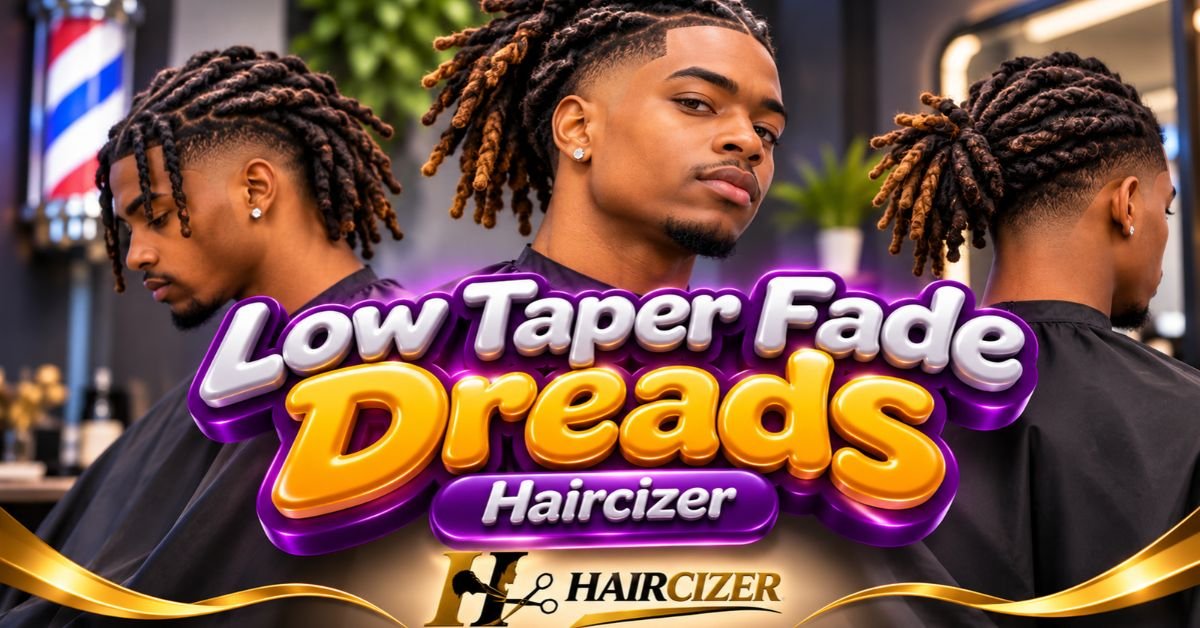
Locs look best when the frame around them is clean. That is why low taper fade dreads have become one of the most requested looks in barbershops and loc studios. The sides and back stay short and neat, while the locs on top keep their texture, length, and personality.
The style is popular for a simple reason. It looks polished without asking you to cut your locs. You can wear it to the office, a wedding, the gym, or a night out, and it still looks like you.
This guide explains what the cut is, who it suits, and how it differs from a low fade. You will also find 10 style ideas, a plain-English script for your barber, a realistic upkeep schedule, and a care routine that protects both your scalp and your locs.
What are low taper fade dreads?
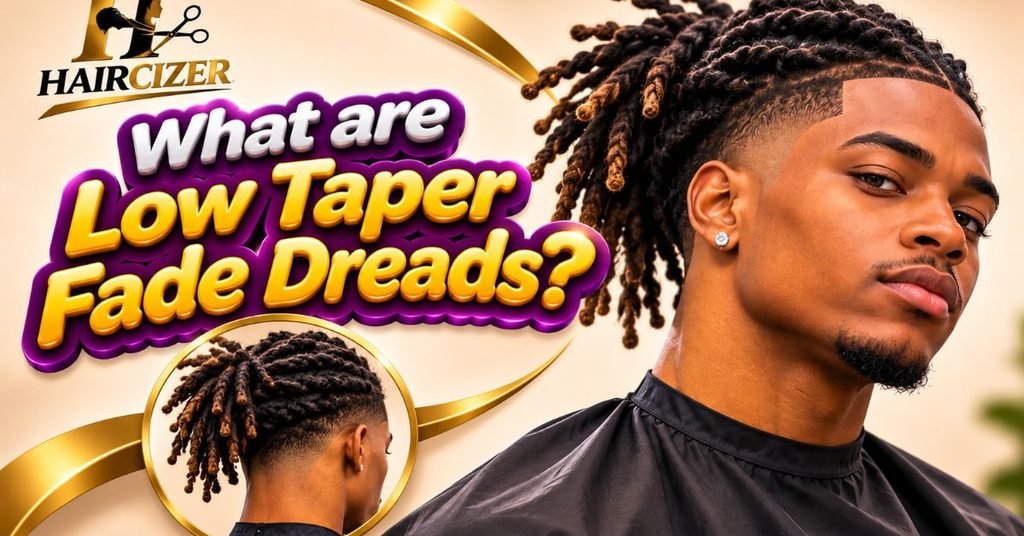
Low taper fade dreads are locs on top paired with a short, gradual haircut on the sides and back. The taper begins low, around the sideburns, temples, and the nape of the neck. The hair gets shorter as it moves toward the hairline, and the locs above it stay untouched.
Think of it as a picture frame. The locs are the picture, and the taper is the clean border that makes the picture stand out.
The word “dreads” and the word “locs” describe the same hairstyle. Many people prefer “locs” because the term feels more respectful of the style’s cultural roots. Both words are used in this article, and both are common in barbershops.
How the taper and the locs fit together
A good taper works with your locs instead of fighting them. The barber uses clippers on the perimeter of your head and leaves a defined section of locs on top. The point where the clipped hair meets the locs is called the transition line. It is the part of the haircut that needs the most care.
Three zones shape the final look:
- The loc zone: the area on top that stays locked, usually from the crown forward
- The taper zone: the short area around the ears, temples, and nape
- The blend: the soft shift in length that joins the two zones
When these three zones are planned together, the cut looks natural. When they are planned separately, you get a hard edge that looks like a hat sitting on a shaved head.
Who the style is best suited to
This cut suits many people, but it fits some situations especially well:
- You want locs that look professional at work, school, or formal events
- You like a clean neckline but do not want to lose length on top
- You have a beard and want a smooth blend from sideburn to jaw
- You are growing out a fade and starting locs at the same time
- You prefer a style that needs only a quick barber visit between loc maintenance appointments
It is less ideal if your locs are brand new and fragile, or if you love a fully natural, untouched perimeter. It also asks for some commitment, because a taper needs regular cleanups to stay crisp.
Low taper vs low fade with dreads: what is the difference?
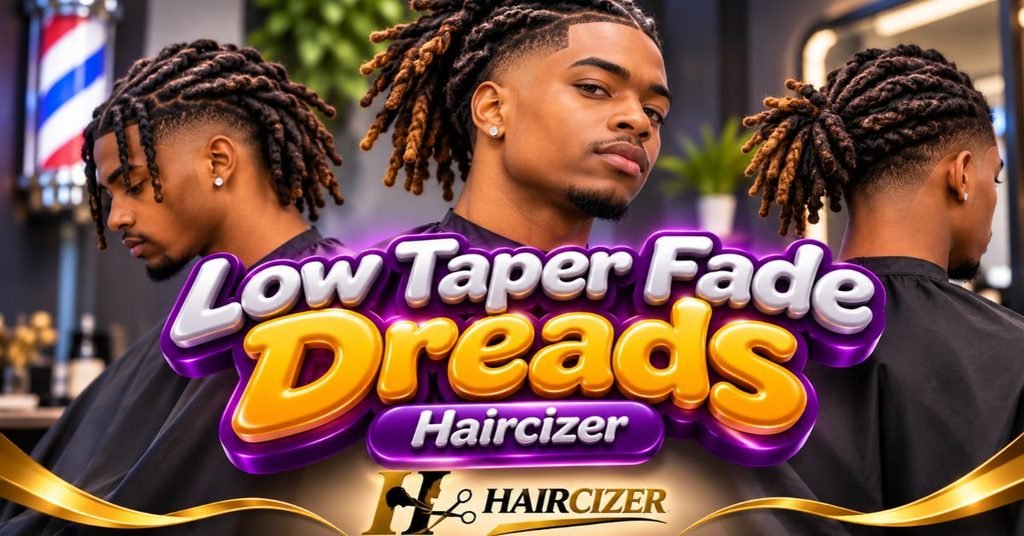
People often use these two terms as if they mean the same thing. They do not. A taper is a subtle shortening of hair at the edges. A fade goes further and often reaches bare skin.
The professionals at one well-known men’s grooming brand put it simply: you can have a taper without a fade, but you cannot really have a fade without a taper. A fade is essentially a more dramatic taper.
| Feature | Low taper | Low fade |
| Starting point | Low, at the sideburns and nape | Low, just above the ears |
| Shortness at the bottom | Short but visible hair | Often down to skin (a skin or bald fade) |
| Visual effect | Soft, natural, and conservative | Sharp and high-contrast |
| Barber skill needed | Moderate | Higher, especially around locs |
| Grow-out look | Gentle and slow | Fuzzy within a couple of weeks |
| Best for | Everyday and professional looks | Bold, defined looks |
Which one should you choose?
Choose a low taper if you want a conservative finish that grows out gracefully. It is also the safer choice for your first cut around locs, because the barber does not need to take the hair as short.
Choose a low fade if you enjoy crisp contrast and are happy to visit the barber every two to three weeks. A fade shows every bit of regrowth, so it needs more upkeep.
A simple rule works well. If you are unsure, start with a taper. You can always go shorter next time, but you cannot add hair back.
10 low taper fade dreads styles to consider
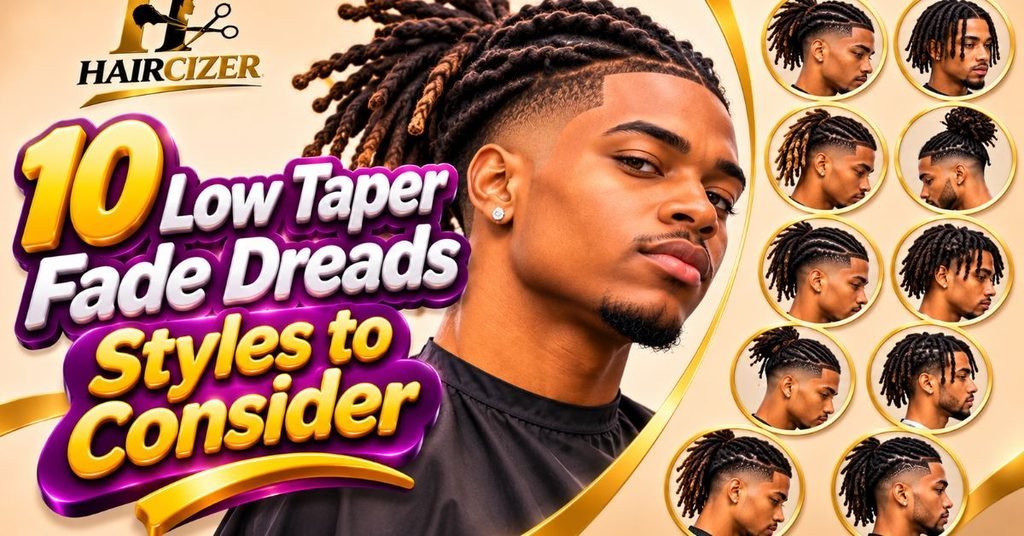
These ten styles are grouped by loc length, loc pattern, and taper finish. Pick one idea from each group and mix them until the result feels right for you.
Styles by loc length
1. Short starter locs with a temple taper
If your locs are about 2 to 4 inches long, a temple taper keeps your head looking tidy while the locs mature. Keep the sides light and avoid cutting too close to the edge of the loc zone. Short locs show their parts clearly, so neat partings matter a lot here.
This style is a good fit for students, new loc wearers, and anyone who wants a clean look with very little styling time. You can wash and go, and the taper does the rest.
2. Medium locs with a temple-and-nape taper
Medium locs, roughly chin to shoulder length, suit a taper at both the temples and the neckline. The two tapers balance each other and make the head look even from every angle.
This is the easiest everyday version. It works with the locs down, half-up, or in a small bun, and it adapts easily as your locs grow longer.
3. Long locs tied back over a low taper
Long locs can look heavy or busy. A low taper cleans up the sides, so the locs look deliberate when you tie them in a low ponytail or knot.
This look pairs well with suits, button-down shirts, and formal wear, because the taper adds structure to all that length.
Styles by loc pattern
4. Freeform or semi-freeform locs with a low taper
Freeform locs have an organic, uneven shape. A low taper adds contrast, so the style feels relaxed but still groomed. Keep the taper soft, because a very sharp skin fade can look disconnected from natural-looking locs.
This is a great option if you like an artistic, laid-back vibe but still want a clean neckline.
5. Two-strand twist locs with a clean low taper
Two-strand twist locs have a defined spiral pattern, and a clean taper makes that pattern easier to see. The pairing is popular with people who want a neat, structured finish without rolling each loc every week.
Make sure the twists are fully set before your haircut. Loose twists can unravel when clippers brush against them.
6. Barrel-twist or braided loc style with a low taper
Barrel twists or braided patterns on top create a sculpted shape. The low taper acts as a quiet border, so the pattern gets all the attention.
Ask your loctician to keep the parting lines straight, because the barber will follow those lines when shaping the taper. Clean partings and a clean taper make each other look better.
Styles by taper finish
7. Temple-only taper with a natural hairline
This is the lightest option. Only the temples and sideburns are tapered, and the rest of the perimeter stays natural. It is a safe starting point if you feel nervous about cutting hair near your locs.
It also grows out beautifully. After a month, it still looks intentional, which makes it ideal for people with a busy schedule.
8. Low taper with a defined line-up and beard blend
A crisp line-up gives the hairline a sharp edge, and a beard that fades into the sideburn ties everything together. Ask for a natural-looking line rather than an extreme one. A very straight, low line-up can make the forehead look smaller or leave you looking like you have a receding hairline as the hair grows.
If you have a full beard, ask your barber to blend it into the taper so there is no visible gap between the two.
9. Drop-shaped or nape-focused low taper
A drop taper curves down behind the ear and follows the shape of your skull. It suits people who want extra detail at the back, especially when the locs are tied up or worn in a bun.
Because this cut needs smooth curves, choose a barber who is confident with clippers and detail work. Ask to see photos of their previous drop tapers before you sit in the chair.
10. Dyed-tip locs with a natural-color taper
Colored tips, such as honey blonde, copper, or burgundy, look striking against a dark, natural-color taper. The contrast draws attention to the ends of the locs and adds personality without changing your whole look.
Bleach can weaken hair, so lighten only the tips and keep your scalp hair untouched. Ask a trained colorist who has worked with locs, not a general salon.
Are your locs ready for a low taper?
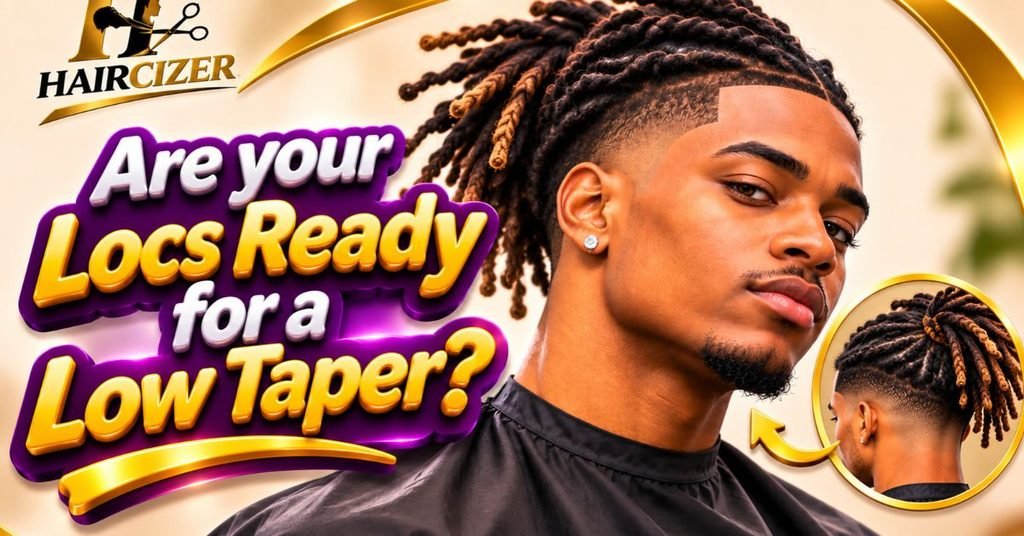
Not every set of locs is ready for a haircut around the edges. Check these points before you book.
Can starter locs get a low taper?
Yes, but be gentle. Starter locs are still forming and can unravel if clippers pull on them. If your locs are less than three months old, ask the barber to taper only the nape and sideburns and avoid the area near the loc zone. Waiting until the locs reach the budding stage gives you a safer and more stable result.
Full-head locs or high-top locs?
Both work well. Full-head locs look natural with a low taper that stays below the ear. High-top locs, where the sides are cut short and the top is left long, need a taper that sits slightly higher so the shape looks smooth. The low taper version is more subtle and easier to grow out.
What to check around your scalp and hairline
Look at your scalp in good light before the appointment. Ask yourself:
- Are there flaky patches, redness, or sore spots?
- Is your hairline thinning from tight styles or tension?
- Are the locs near the perimeter thin, weak, or breaking?
- Do you have bumps or ingrown hairs from previous shaving?
If you spot irritation or thinning, delay the cut and let the area calm down first. Clippers and razors can make an irritated scalp worse.
Which version of the cut suits you?

A good taper is not copied from a photo. It is adjusted to your head shape, your hair, and your habits.
Match the taper to hair density and loc thickness
Dense, thick locs can handle a slightly higher taper, because the bulk on top balances the short sides. Thin or sparse locs look better with a very light taper that does not expose too much scalp. If your locs are slim, avoid a skin fade, which will make the top look even lighter by contrast.
Head proportions, hairline, and beard
Use this quick guide as a starting point:
| Feature | What usually works |
| Round face | A slightly higher taper to add length and angles |
| Long or narrow face | A softer, lower taper with some volume at the sides |
| Strong forehead or receding hairline | A natural hairline, not a hard line-up |
| Full beard | A taper blended into the beard with no gap |
| Light stubble | A clean taper with a tidy neckline |
| Flat back of the head | A taper that follows the curve rather than a straight line |
Match the cut to your maintenance tolerance
Be honest with yourself. If you will not visit a barber every three weeks, choose a soft temple taper. If you enjoy regular grooming and like a sharp look, a defined taper or a drop shape is a great option.
What should you tell your barber?
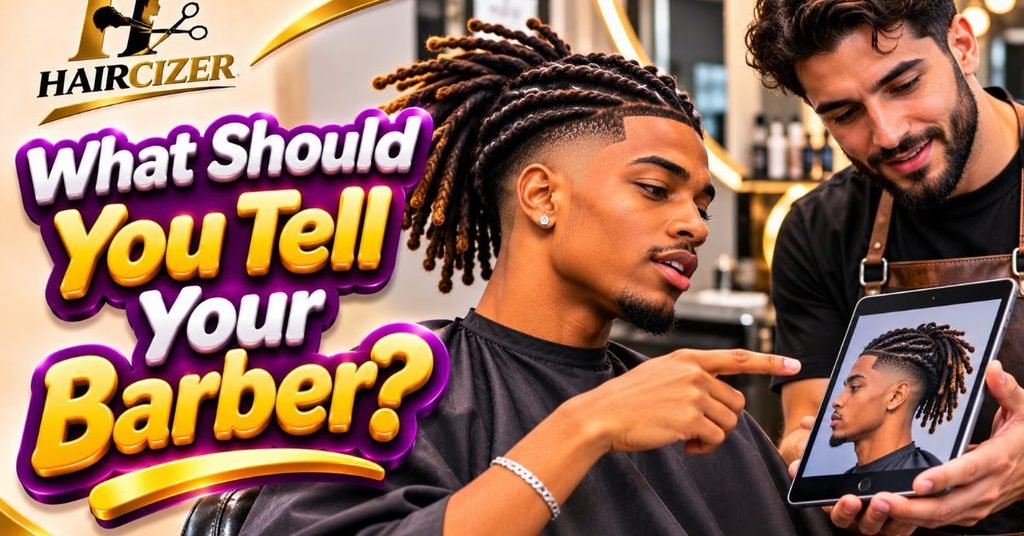
Clear communication prevents most bad haircuts. A barber who has never worked with locs may not know how to treat the transition line, so the more detail you give, the better.
Specify these six details
- Taper height: say “low taper” and point to the spot, usually just above the ear
- Shortness at the bottom: ask for a clipper guard number, or say whether you want skin showing
- Where the locs stop: show the barber the edge of the loc zone so no locs get cut
- Neckline shape: natural, squared, or rounded
- Line-up: natural hairline, light cleanup, or sharp edge
- Beard blend: if you have a beard, ask to blend it into the sideburn
How to use reference photos
Bring two or three photos, not ten. Choose photos of people with a similar hair color and loc length. Point out what you like, such as the neckline, the temples, or the blend, so the barber knows which detail matters most to you.
It also helps to bring one photo of what you do not want. This saves time and prevents misunderstandings.
Should your barber and loctician coordinate?
If possible, yes. A loctician knows how your locs are built, and a barber knows how to shape clippers around them. A quick conversation or a shared photo can save you from a cut that ruins your partings or leaves a loc exposed.
What happens during the appointment?

A typical visit takes about 45 to 90 minutes, depending on whether you also get a retwist or a wash.
Retwist first or haircut first?
Most professionals recommend the haircut first, then the retwist. That way the barber sees the natural shape of the head, and the loctician can clean up the roots without disturbing a fresh taper. If you get a retwist first, the barber may have to work around tight, newly set locs and could accidentally pull on them.
If you must do both on the same day, book the haircut slot first.
What to check before you leave
- Look at both sides in the mirror and compare the height of the taper
- Check that no loc was clipped or pulled
- Run your fingers along the neckline to find any uneven patches
- Make sure the transition between taper and locs looks smooth, not abrupt
- Ask for aftercare tips specific to your scalp and hair type
How often should you refresh a low taper fade with dreads?

For most people, every 2 to 4 weeks is the sweet spot. A low taper grows out more softly than a skin fade, so you can stretch the interval if you are not chasing a razor-sharp look.
What determines your touch-up schedule
| Factor | Effect on your schedule |
| Hair growth speed | Fast growers need visits every 2 to 3 weeks |
| Taper style | Skin fades need more frequent cleanups |
| Beard blend | Beards need regular trimming to keep the blend sharp |
| Occasion | Weddings and interviews may call for a fresh cut a few days before |
| Loc retwist schedule | Often every 4 to 8 weeks, separate from barber visits |
| Hair texture | Tightly coiled hair may show regrowth faster |
How to keep it neat between visits
Also Read:Mid Taper Fade for Boys: Cool Styles & Barber Tips
- Brush the short sides with a soft bristle brush to keep them flat and smooth
- Trim stray hairs on the neckline only if you are confident, and use a small trimmer, not a razor
- Wear a satin scarf or bonnet at night to prevent frizz
- Avoid picking at regrowth, which can cause irritation and uneven patches
- Keep your scalp clean so the tapered area does not look dull or flaky
How do you care for low taper fade dreads?
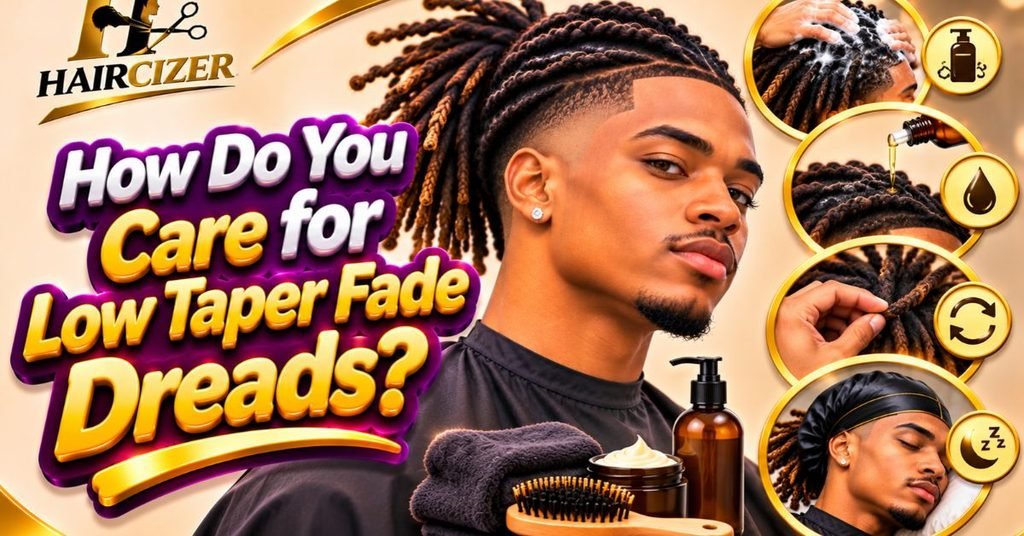
A great cut will not look good if the scalp and the locs are neglected. Good care is simple, and consistent habits matter more than expensive products.
How should you wash and dry your locs?
- Wash every one to two weeks with a residue-free shampoo
- Focus on the scalp, and let the suds run down the length of the locs
- Rinse until the water runs clear, because leftover soap causes buildup
- Squeeze out extra water and dry fully, since damp locs can develop odor or mildew
Use a clean towel or a microfiber towel, which sheds fewer fibers than a regular terry cloth towel. Avoid rubbing hard, because friction can cause lint to get trapped in the locs.
If you work out often or sweat a lot, rinse your locs with water between wash days. Do not let sweat sit on the scalp, because it can lead to itching and flaking.
How do you moisturize without creating buildup?
Use lightweight products. A few drops of a natural oil, such as jojoba or grapeseed, or a light water-based spray are usually enough. Heavy waxes and thick creams can sit on the hair, attract lint, and clog the scalp.
Apply products sparingly to the tapered area as well. Short hair absorbs oil quickly and can look greasy. A small amount on the scalp is enough to keep the skin comfortable.
Keep these simple rules in mind:
- Less is more
- Apply to damp hair, not dry hair
- Avoid petroleum-based products that leave residue
- Clarify your hair with a proper loc-friendly rinse if you feel buildup
Retwists and night protection
Retwisting every 4 to 8 weeks keeps new growth tidy, but do not overdo it. Too much tension can damage the roots and weaken the hairline over time. Ask your loctician to use a gentle hand, especially around the temples where the taper begins.
At night, cover your locs with a satin bonnet or sleep on a satin pillowcase. This reduces friction, which means fewer flyaways and less lint in the locs. It also protects the freshly cut taper from rubbing against rough fabric.
What risks and mistakes should you avoid?
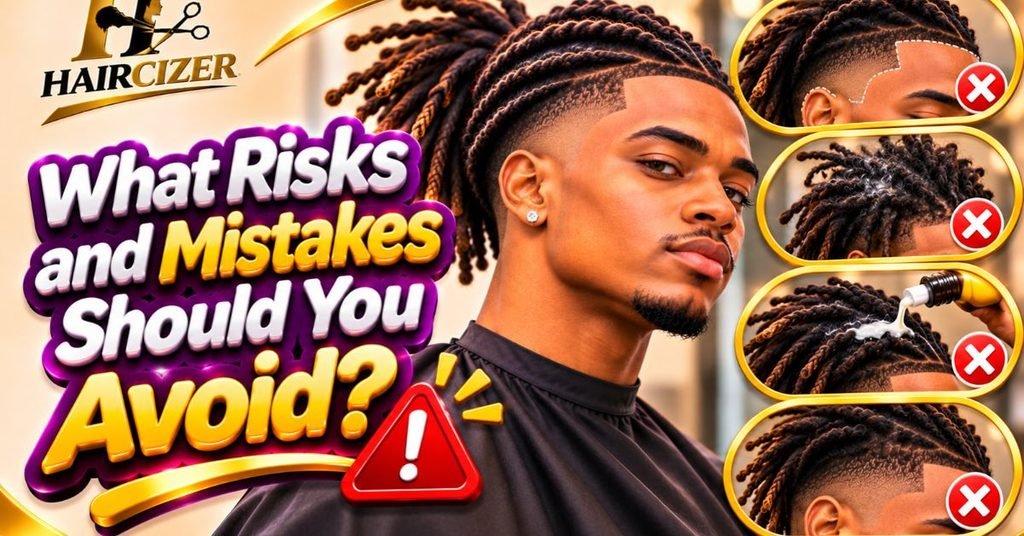
Most problems come from rushing, going too short, or pulling too hard. Knowing the risks ahead of time helps you avoid them.
How does over-tapering affect the locs?
If a barber cuts too high or too close to the loc zone, the locs near the edge can become thin, exposed, or loose. You may also lose the structure that holds your parting pattern together. In the worst case, a few locs may be cut or damaged by clippers.
Ask for a conservative first cut and adjust on the next visit. It is far easier to take more off than to repair an overcut edge.
Can tight loc styling cause hair loss?
Yes. Constant tension on the hairline can lead to traction alopecia, a type of hair loss caused by repeated pulling. Warning signs include tenderness, small bumps, and thinning near the edges.
To lower your risk:
- Choose looser retwists and gentle tension
- Give your hairline a break from tight ponytails and buns
- Rotate how you wear your locs, instead of keeping the same style daily
- Stop styling any area that feels sore or looks thinner
When to see a barber, a loctician, or a dermatologist
| Problem | Who to see |
| Uneven taper or messy line-up | Barber |
| Loose, thin, or unraveling locs | Loctician |
| Itching, flaking, or sores on the scalp | Dermatologist |
| Hair thinning or bald patches | Dermatologist |
| Questions about style and shape | Barber and loctician together |
If you notice persistent pain, redness, or hair loss, do not wait. A dermatologist can diagnose scalp conditions that products cannot fix, and early treatment gives the best chance of keeping your hair.
Are low taper fade dreads right for you?
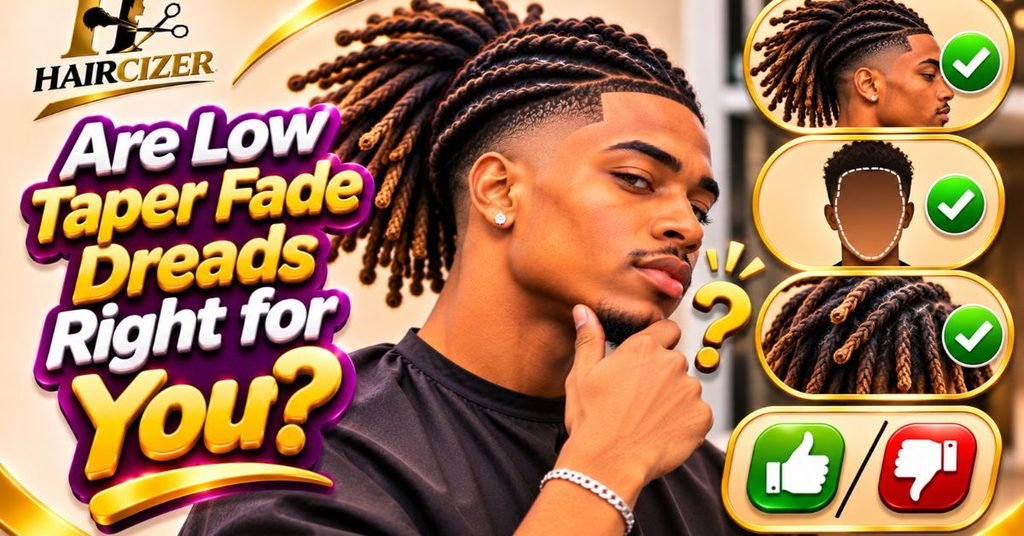
They are a good match if you want a clean, modern look without cutting your locs. The style adapts to short, medium, and long hair, and it works for casual days, office settings, and formal events.
Ask yourself three quick questions:
- Are my locs strong enough for a clean edge around the sides?
- Can I commit to a barber visit every few weeks?
- Does my scalp feel healthy and comfortable?
If you answered yes to all three, this style is worth trying. If one answer is no, start with a lighter taper and build from there.
Frequently asked questions
Can you get a taper fade with dreads?
Yes, the taper is cut on the sides and back while your locs on top stay intact.
How long should dreads be for a low taper?
There is no fixed length, as starter locs of 2 to 4 inches and long locs can both work.
How much does a low taper fade with dreads cost?
Expect a standard haircut price, sometimes with a small extra charge for the care needed around locs.
Is a low taper fade professional?
Yes, it is one of the most conservative fade options and looks neat in most workplaces.
How do I keep a taper looking fresh?
Visit your barber every 2 to 4 weeks, brush the short hair, and protect it at night.
Does a taper damage locs?
Not if it is done correctly, since damage usually comes from clipping too close to the loc zone or from tight styling.
Conclusion
Low taper fade dreads combine structure and freedom. The taper keeps the edges neat, and the locs keep their natural shape and personality. With the right barber, a clear brief, and a gentle care routine, the style can look sharp for months.
Start with the version that fits your loc length and maintenance level. Bring clear photos, protect your scalp, and let your barber and loctician work together if you can. Keep the first cut conservative, watch your hairline for signs of strain, and book your next visit before the regrowth gets messy.
Take it one step at a time, and you can enjoy a clean, confident look that grows out gracefully and still feels like you.
Leave a Reply