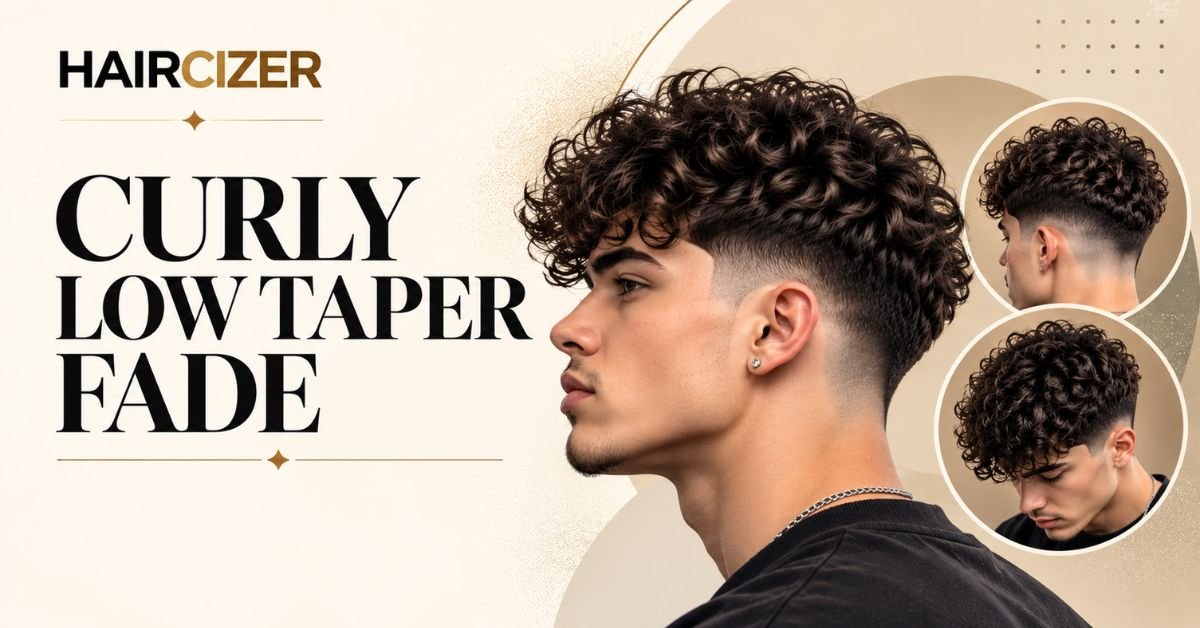
Anyone with curls knows the struggle. You grow your hair out and the sides balloon. You cut it short and the curls vanish. Somewhere between those two extremes sits the curly low taper fade, a cut that tames the bulk around your ears and neck and leaves your curls free on top.
It’s popular for a reason. The sides stay neat, the top keeps its personality, and the whole thing grows out without an awkward stage. Below, you’ll find the trendiest ways to wear it, how to talk to your barber so you don’t get a surprise, and the styling habits that make curls look better between cuts.
Quick answer: A curly low taper fade is a haircut where the hair around the sideburns and nape is cut gradually shorter, starting low on the head, while the curls on top stay long enough to style. It looks tidy, suits most curl types, and needs a trim about every three to four weeks.
What a Curly Low Taper Fade Is
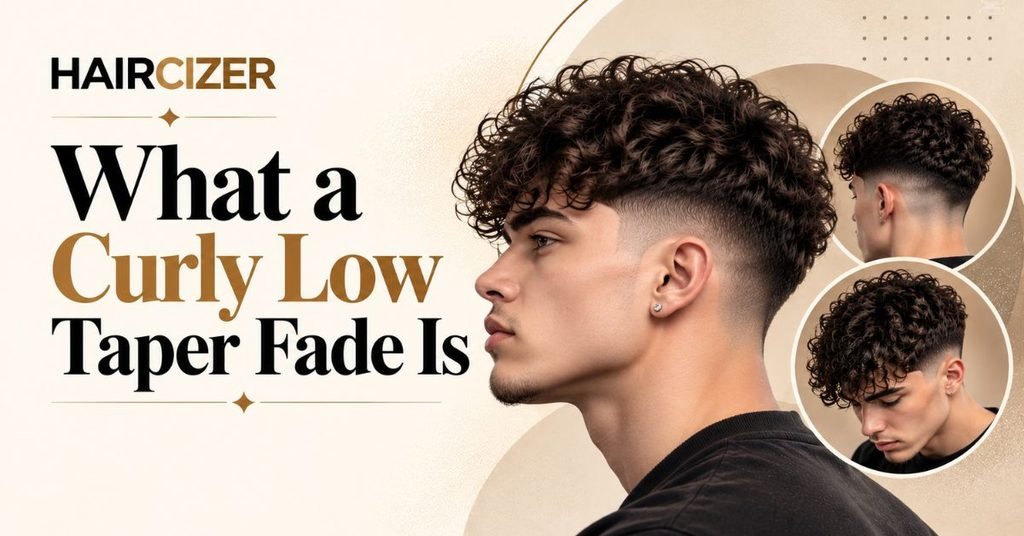
Think of it as a frame and a picture. The frame is the taper: a thin band of short hair around the ear and along the back of the neck. The picture is your curly top, which keeps its natural shape.
The “low” part tells the barber where the change in length begins. It starts near the sideburn, curves behind the ear, and finishes at the nape. Everything above that stays fuller and blends smoothly into the top.
You’ll usually see these three features:
- Short edges that run around the ears and the back of the neck
- A gradual blend from short to long, with no harsh line
- A curly top that keeps its natural spring and volume
Because the short area is small, the cut leaves plenty of texture visible from the side. That’s a big reason curly-haired clients love it. It adds order without taking over.
Low Taper Fade vs Low Fade vs Mid Taper
Barbershop words overlap, and that’s where mix-ups happen. Here’s a simple way to tell them apart.
| Cut | Starting point | How short it goes | What it feels like |
| Low taper fade | Just above the ear and nape | Short, often leaving some hair | Soft and understated |
| Low fade | Just above the ear, curving behind | Often to bare skin | Crisper, more contrast |
| Mid taper | Around temple height | Short, with a visible change | Bolder, more noticeable |
A taper shortens the hair slowly and usually keeps a little length at the bottom. A fade tends to go all the way down, sometimes to skin. If you’re nervous, start with the taper. Barbers can go shorter next time, but hair doesn’t grow back overnight.
Is This Cut Right for You?
For most curly heads, yes. It helps to ask yourself a few questions first.
You’ll probably enjoy it if:
- You want neat sides but don’t want to give up your curls
- Your hair gets wide and puffy as it grows
- You don’t mind a barber visit every three to four weeks
- You like a cut that works with a quick morning routine
It might frustrate you if you love a fully natural, no-edges shape, or if barber visits feel like a chore. In that case, a longer layered cut with softer sides may fit better.
There’s a bonus worth knowing about. A low taper can make an uneven hairline or a stubborn cowlick at the nape look deliberate. A good barber works with those quirks instead of fighting them.
Is a Curly Low Taper Fade Professional?
Yes. Of all the fade options, the low taper is the quietest. It doesn’t shout, so it works in offices, interviews, weddings, and school pickups.
A few tweaks keep it formal:
- Choose a soft blend instead of a skin-tight fade
- Keep the top around two to four inches
- Finish with a light cream or gel, not a heavy, shiny one
- Keep the neckline fresh with regular trims
Plenty of workplaces and sports teams with grooming rules accept this cut without a second look. If you need the safest version, ask for a classic taper with a side part or a rounded curly top.
For Kids and Teens
Kids with curls often have trouble with bulky sides, especially when hair turns into a triangle shape. A low taper solves that and still lets the curls do their thing.
Some tips for younger clients:
- Go gentle. A taper looks softer than a skin fade and is easier to maintain.
- Leave length on top. Two to three inches gives curls room to form.
- Pick a patient barber. Someone who cuts kids’ hair regularly makes the visit smoother.
- Check the school dress code. Some schools limit designs or very short fades.
- Keep home care easy. Gentle shampoo, leave-in conditioner, and a soft towel are enough.
Teens often want to push things further with sharper edges or a part. That’s fine. The low taper is a friendly starting point and still looks neat if they change their mind.
Best Curly Low Taper Fade Styles
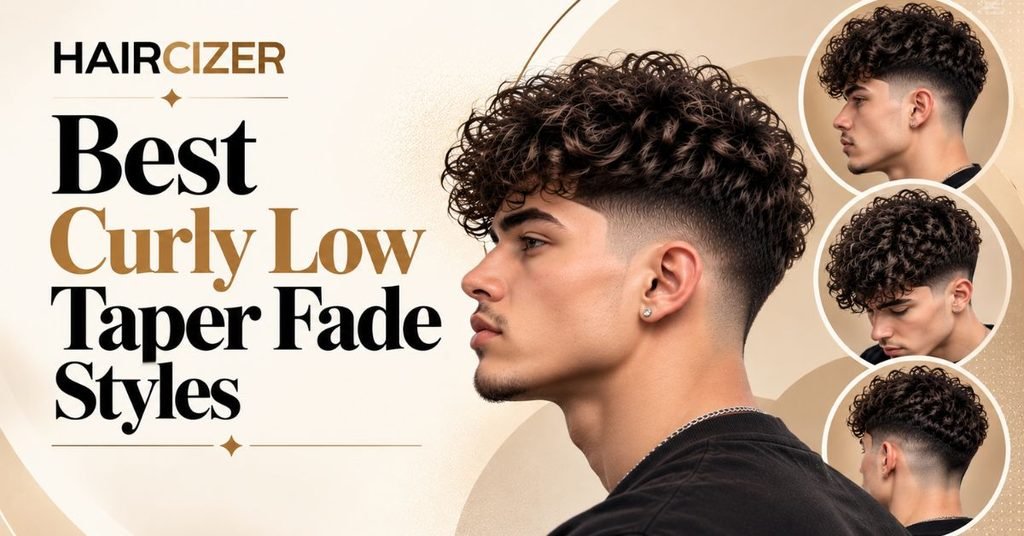
Here are the looks that show up most often, from the easy ones to the bold ones.
1. The classic. Medium curls on top, a soft taper on the sides, nothing extra. It’s the easiest to explain and the easiest to live with.
2. The skin taper. The shortest part drops to bare skin, so the outline is sharper. It’s striking, but it needs more frequent touch-ups.
3. The curly fringe. Curls fall forward over the forehead, which softens strong features and adds a relaxed feel.
4. The volume top. Longer curls with extra lift on top, balanced by tight sides. It’s a confident, high-impact choice.
5. The short crop. About one to two inches of textured curls with a clean taper. It’s perfect for busy mornings and hot weather.
6. The part. A thin line shaved or trimmed into the side adds a neat accent. Keep it subtle for formal settings.
7. The twist or coil top. Defined twists or coils on top with a taper below. The contrast between crisp edges and detailed texture looks sharp.
8. The color accent. Subtle highlights or a lighter shade on the curls can make the texture stand out. Ask a colorist before bleaching, since lightening can dry out curls.
If you like one look but want it softer or bolder, tell your barber. Most of these styles can be dialed up or down.
Here’s a quick reference you can screenshot before your appointment:
| Look | What to say | Maintenance |
| Classic | “Low taper, three inches on top, natural curls” | Every 3 to 4 weeks |
| Skin taper | “Low taper down to skin at the bottom” | Every 2 to 3 weeks |
| Curly fringe | “Keep length at the front, taper the sides” | Every 4 weeks |
| Volume top | “Leave the top long and lifted, tight sides” | Every 3 to 4 weeks |
| Short crop | “Low taper, one to two inches of curls” | Every 3 weeks |
| Twist or coil top | “Low taper with a clean line-up, leave the coils” | Every 3 to 4 weeks |
Notice that the skin taper and short crop need the most frequent visits. The shorter the edges, the faster regrowth shows.
Choosing Your Length: Short, Medium, or Long

Top length changes the whole mood of the cut. Here’s how the options compare.
| Length | Typical size | Works best for | Effort |
| Short | 1 to 2 inches | Active people, quick routines | Low |
| Medium | 3 to 4 inches | Most curl types, flexible styling | Medium |
| Long | 5 inches or more | Bold, high-volume looks | Higher |
Short is practical. It dries quickly and needs little product, but it shows less of the pattern. Loose curls can turn into waves at this length.
Medium is the safe middle ground. You can see the curl shape, hold definition, and change your style without starting over.
Long takes more work. It needs more moisture, more shaping, and some patience. Keep in mind that curls shrink as they dry. A curl that hangs at five inches when wet might sit closer to three when dry, so plan for that when you tell your barber a length.
If you can’t decide, go medium. You can always cut shorter at your next visit.
How Each Curl Type Wears It
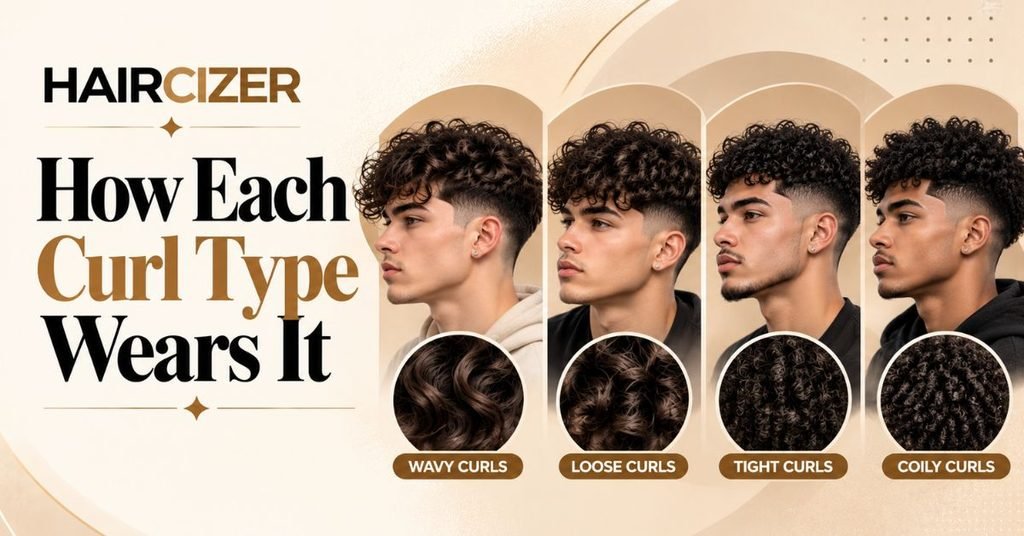
Curl patterns are often grouped by number: type 2 is wavy, type 3 is curly, and type 4 is coily. The same cut behaves differently on each.
| Curl type | What it looks like | Top length that works | Main goal |
| Wavy (2A to 2C) | Loose S-shaped waves | Medium to long | Build texture and shape |
| Curly (3A to 3C) | Bouncy ringlets | Medium | Keep curls moist and defined |
| Coily (4A to 4C) | Tight coils or zigzags | Short to medium | Hold moisture and shape |
Wavy Hair
Waves collapse when they’re too short, so leave at least three inches. A light mousse or sea salt spray gives body and keeps the sides from looking too slick next to loose texture.
Curly Hair
This is the pattern most guides have in mind. Ringlets bounce nicely above a low taper, and the contrast looks natural. Go for medium length, apply curl cream on damp hair, and avoid brushing dry curls.
Coily Hair
Coils shrink a lot and look best with crisp edges. A low taper plus a clean line-up around the forehead and temples frames the face well. Short to medium coils or twists on top look polished. Moisture matters most here, because tightly coiled hair dries out faster than other types.
Best Styles for Your Face Shape
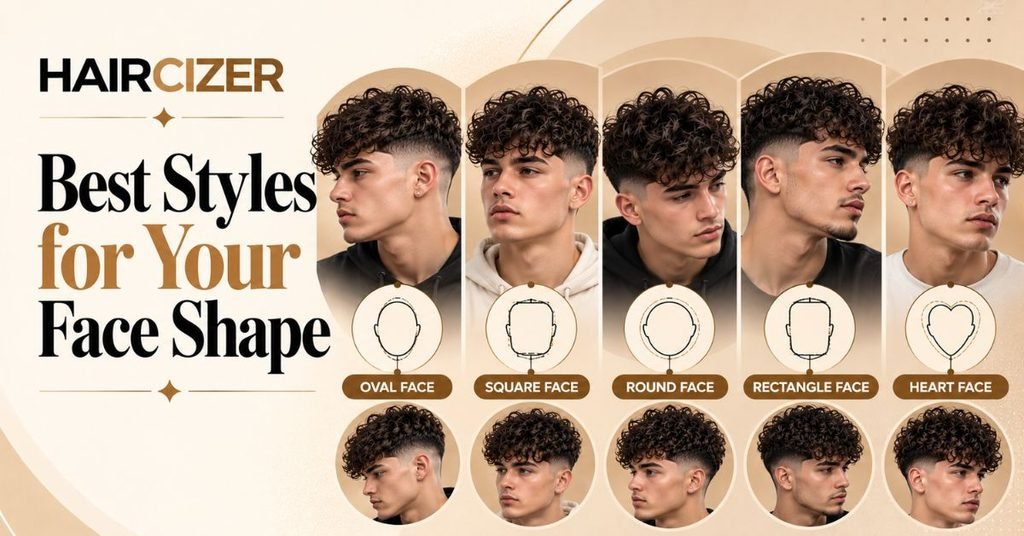
A cut should work for your face, not just your hair. Use this as a starting point and adjust with your barber.
- Oval: Nearly anything works. A medium curly top with a soft taper is a safe bet.
- Round: Add height on top and keep the sides tight to make the face look longer.
- Square: Rounded, softer curls on top ease a strong jaw. Choose a gentle taper over a harsh skin fade.
- Oblong: Don’t add too much height. A curly fringe or more width at the sides balances length.
- Heart-shaped: Medium curls with some fullness at the sides help balance a wide forehead and narrow chin.
- Diamond: Keep the top fuller, and consider a fringe to soften wide cheekbones.
None of this is a strict rule. If a look feels right and your barber agrees, go for it.
How to Ask Your Barber for a Curly Low Taper Fade
Clear words lead to a better cut. Barbers are skilled, but they aren’t mind readers.
Here’s a script you can borrow:
“I’d like a low taper on the sides and back, with about three inches left on top. Keep the curls natural, and blend the taper softly around my ears.”
It also helps to choose a barber who regularly cuts curls. Look at their portfolio or social media for clients with texture like yours. Cutting curls takes different skills than cutting straight hair, and not every shop has them.
Bring Reference Photos
Pictures beat explanations every time. Save two or three photos of cuts you like, ideally on someone with similar curls and a similar head shape.
When you show them:
- Say what you like, such as the length, the blend, or the neckline
- Mention what you want to avoid, like “not too short” or “not too sharp”
- Stay realistic, since your hair won’t behave exactly like the photo
Settle the Details First
Before the clippers start, confirm these points so nothing surprises you:
- Where the taper starts. Say “low” and point to the spot near your ear.
- How short it goes. Decide between skin and just short.
- Top length. Use inches or show with your fingers.
- Neckline shape. Pick a natural, rounded, or squared nape.
- Line-up. Choose a sharp front edge or a natural hairline.
- Cutting method. Some barbers prefer cutting curls dry to see the true shape. Ask what they recommend.
A good barber will repeat the plan back to you. If yours doesn’t, ask them to.
Pairing Your Fade with a Beard
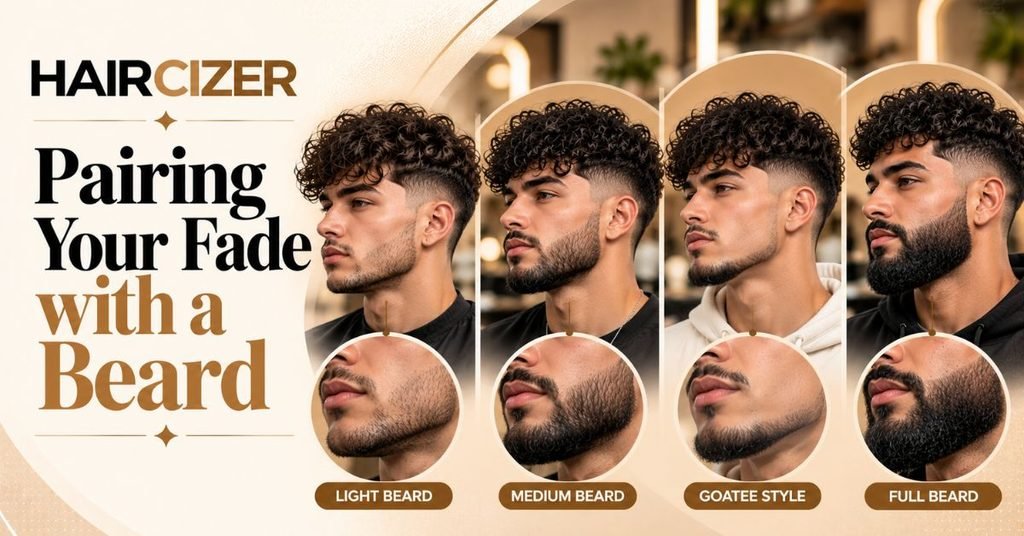
Beards and tapers work well together as long as they blend. The goal is to let the sideburns flow into the beard with no gap.
To get it right:
- Blend the sideburns. Ask for the taper to run into the beard line.
- Match the lengths. A short beard suits a short top, and a fuller beard balances longer curls.
- Define the cheek line. A clean edge makes everything look intentional.
- Sync your visits. Book the beard shaping along with the haircut.
- Soften with oil. Beard oil keeps coarse hair comfortable and cuts down on itch.
A full beard gives the look a rugged edge. A light stubble keeps it relaxed and modern.
Styling, Products, and Upkeep at Home
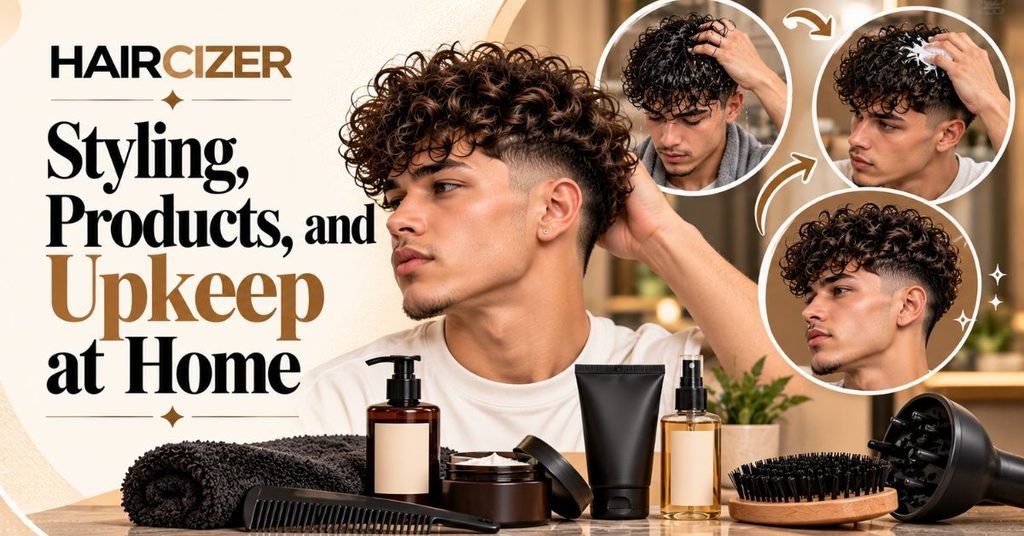
The cut gets you most of the way there. The rest comes from what you do at home.
How to Style Your Curls at Home
Here’s a simple wash-day routine that works for most curl types:
- Start damp. Style curls while they’re wet, not bone dry.
- Add leave-in conditioner. Work it from roots to ends.
- Apply curl cream or gel. Scrunch it upward toward the scalp.
- Shape with your fingers. Skip the comb once product is in.
- Dry gently. Use a diffuser on low heat or let the air do the work.
- Release the crunch. Once dry, scrunch gently to soften any gel cast.
On quick mornings, mist your curls with water, add a small dab of cream, and reshape them. It takes about two minutes.
A few small secrets make a big difference:
- Apply product in sections. Split your hair into two or four parts so every curl gets coated evenly.
- Use the “praying hands” move. Smooth gel between your palms over each section to cut frizz and lock in shape.
- Keep your hands off while drying. Touching curls as they dry breaks up the clumps and invites frizz.
- Fluff at the roots. Once dry, lift the crown with your fingertips to add volume without disturbing the sides.
- Match product weight to the season. Lighter gel and spray work better in humid months, richer cream in dry ones.
- Refresh the edges, not the whole head. A damp comb and a dab of cream tidy the area where the taper meets the curls.
Best Products for Curly Hair
You don’t need a crowded shelf. A few good products cover most needs.
| Product | Job | Good for |
| Sulfate-free shampoo | Cleans without stripping oils | Every curl type |
| Deep conditioner | Restores moisture and strength | Dry or coily hair |
| Leave-in conditioner | Daily hydration and softness | Every curl type |
| Curl cream | Defines curls, controls frizz | Wavy to curly hair |
| Light gel | Holds shape without weight | Humidity, longer curls |
| Sea salt spray | Adds texture and body | Wavy hair |
| Hair oil | Seals moisture and adds shine | Coily hair, dry ends |
Add products one at a time and give each a week or two. That way you know what your hair likes. Heavy creams can weigh down fine curls, while lightweight sprays may not be enough for coarse hair.
Washing and Maintenance
Curls tend to be drier than straight hair, because natural oils slide slowly down the curl. Washing too often makes it worse.
- Wash two to three times a week. Rinse with water in between if needed.
- Condition every time. Focus on the mid-lengths and ends.
- Deep condition weekly or every other week. Follow the time on the label.
- Protect at night. A satin pillowcase or silk scarf reduces friction.
- Trim every three to four weeks. The short areas grow in fast and soften the shape.
- Care for your scalp. Shorter sides show dry skin more, so keep it moisturized.
- Use sunscreen. The tapered areas expose more skin outdoors.
Between cuts, you can tidy stray neck hairs with a small trimmer. Leave the taper itself to your barber.
Common Mistakes to Avoid
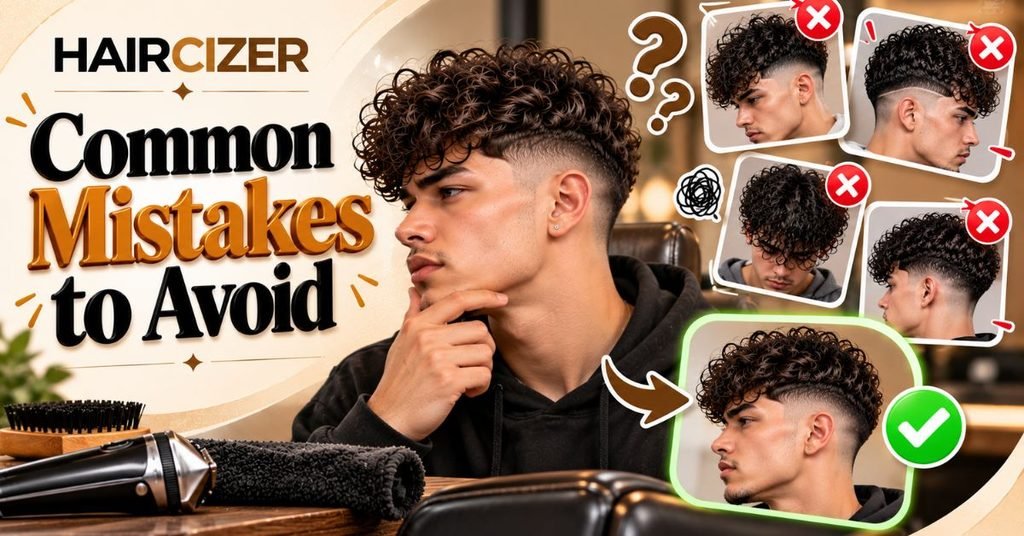
Even a great cut can go sideways. Watch out for these.
- Asking for “just a fade.” The word means different things to different barbers. Say “low taper” and give details.
- Showing up without photos. Words get lost in translation.
- Cutting the top too short. Curls shrink, so go slightly longer than you think.
- Picking a barber without curl experience. The wrong technique can leave curls uneven.
- Brushing dry curls. It causes frizz and breaks the pattern.
- Over-washing. Too much shampoo leaves hair rough.
- Piling on product. Too much gel or cream leads to buildup and stiffness.
- Waiting too long between trims. After five or six weeks, the taper is mostly gone.
- Ignoring the scalp. Healthy curls start with a healthy scalp.
- Rough toweling. Pat with a soft cotton shirt or microfiber towel instead.
Frequently Asked Questions
What is a curly low taper fade?
It’s a cut with gradually shortened sides low near the ears and neck, plus natural curls on top.
How often should I get it trimmed?
Every three to four weeks keeps the taper sharp.
How long should the top be?
Two to four inches suits most curl types.
Is a low taper better than a mid taper for curls?
For most people, yes, because it keeps more curl visible on the sides.
Does it work on wavy and coily hair?
Yes, with small length changes for each texture.
What should I tell my barber?
Say “low taper,” give your top length in inches, and show a photo.
How do I control frizz?
Use leave-in conditioner, curl cream, and a gentle diffuser or air dry.
Is it suitable for kids and teens?
Yes, a soft taper looks neat and grows out well.
Conclusion
A curly low taper fade keeps your sides neat and your curls free. It suits most curl types, face shapes, and settings, from the office to the weekend. With the right top length and a soft blend, it looks sharp without trying too hard.
The best results come from clear words at the barber and a simple routine at home. Bring photos, confirm the details, and keep your curls moisturized. Book a trim every three to four weeks and the shape stays fresh.
Leave a Reply