

A high taper fade with waves gives you a clean, tight frame around a rolling pattern of deep, brushed-in waves. The sides disappear toward the skin, the top stays short and disciplined, and the waves become the star of the whole haircut. Done well, it looks sharp in a suit and just as sharp at the gym.
The cut also has a catch. A high taper can climb into the area where your waves live, and a careless blend can cost you coverage you spent months building. This guide explains what the cut is, who it suits, how it compares with other fades, and how to ask for it clearly. You will also get a daily wave routine, timing tips and a practical section on razor bumps, so you can protect both your pattern and your skin.
What Is a High Taper Fade With Waves?

A high taper fade with waves is a short haircut where the sides and back taper up high on the head, while the top is kept close and brushed into wave patterns. The taper begins near the temple and upper sides, and it shrinks gradually toward the neckline. The top has enough hair to hold a pattern, usually a quarter to half an inch for a fresh wave cut.
Think of it as a frame and a picture. The taper is the frame, and the waves are the picture. A good barber makes sure the frame is clean without cutting into the picture.
The look is popular because it reads as polished without feeling stiff. Barbers also like it because it showcases their blending skill, and the result photographs well from every angle. For many men it is the first step into serious wave work.
Two features separate it from other short cuts:
- A high starting point. The blend begins well above the ear, so more of the sides are tapered.
- A wave-ready top. The hair is cut short and even, so brushing and compression can form ripples across the crown.
Waves themselves come from hair that is cut short, kept moist and brushed in a consistent direction until the strands train into a pattern. The haircut matters because uneven length breaks the ripples. That is why men who wear waves often choose one trusted barber and stay with him.
Is a High Taper Fade Good for 360 Waves?
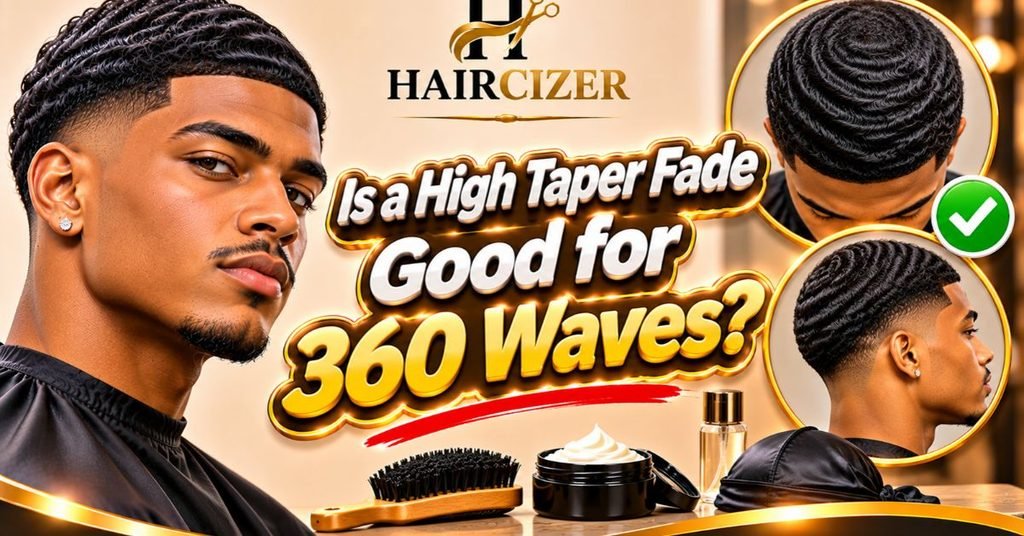
Yes, it is one of the best matches, as long as the taper is placed with care. A high taper makes the waves stand out, because the short, faded sides give the pattern a crisp border. The contrast helps the ripples look deeper and more defined.
The risk is simple: the higher the taper climbs, the less hair you have around the sides. Since 360 waves need hair that can be brushed in all directions, losing side coverage can break the circular flow.
The fix is communication. A skilled barber can place the taper high enough to look sharp while stopping short of the wave zone. If your pattern is still young, ask for a slightly lower starting point and raise it later.
Who It Suits Best
This cut works best for men who:
- Have coarse, tightly coiled or curly hair that holds a wave pattern
- Want a bold, modern look with a clean, structured outline
- Are ready for a daily brushing routine
- Have a defined jawline or a face that benefits from added height
- Can see a barber every two to three weeks
Face shape plays a part too. Oval, square and heart-shaped faces usually carry a high taper easily, because the added height balances the jaw. Round faces gain length from the contrast, while very narrow faces should avoid placing the taper too high. A short chat with your barber about proportions can save you from a cut that looks top-heavy.
It is less suited to very straight or very fine hair, which rarely holds deep waves. It also needs commitment. If you only want a quick wash-and-go cut, a simpler taper may serve you better.
When a High Taper Can Cut Into Your Wave Pattern
A high taper becomes a problem when it starts above the point where your waves end. Here are the common warning signs:
- The fade begins too high on the sides. Your 360 pattern loses its lower rings.
- The temple line is cut back too far. The waves look shortened at the front.
- The top is clipped too close to the taper. There is no hair left to blend into the pattern.
- The barber ignores your natural hair direction. Waves flow in a specific direction, and cutting against it ruins the ripples.
Ask your barber to leave a small buffer of wave-ready hair above the taper line. That buffer keeps the pattern intact and makes the transition look natural.
It also helps to know your own pattern before you sit down. Run a brush over your head in the mirror and notice where the ripples start and stop. Share that with the barber, and he can place the blend line below it instead of guessing.
High Taper Fade Waves vs. Low Taper, Mid Taper, and High Fade
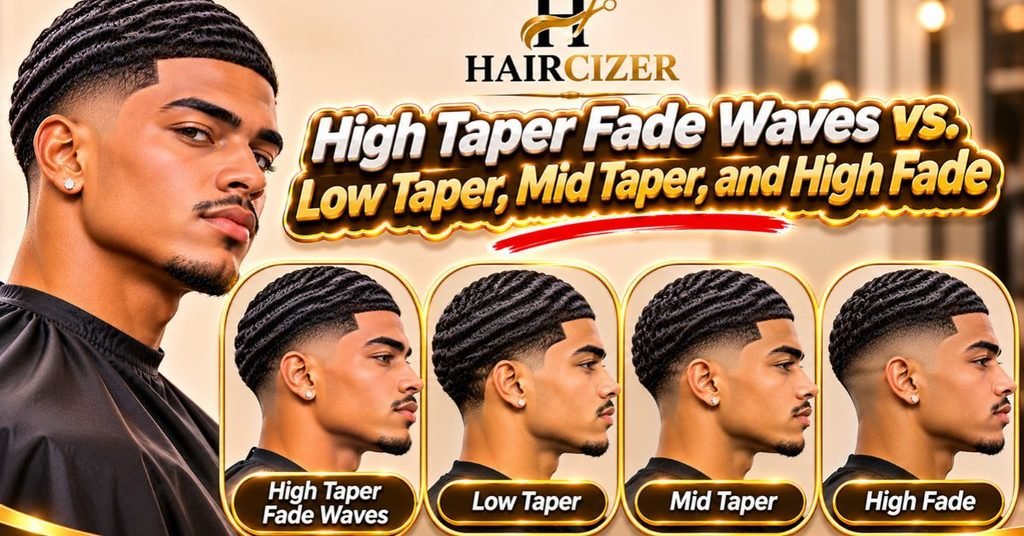
Several fades look similar from a distance, but the details change how your waves look. Compare them before you choose.
High vs. Mid vs. Low Taper for Waves
| Taper height | Where it starts | Effect on waves | Best for |
| Low taper | Just above the ear and nape | Keeps the most wave coverage | Beginners, conservative settings |
| Mid taper | Around the temple | Balanced contrast and coverage | Most men and face shapes |
| High taper | Higher on the sides | Strongest contrast, least side coverage | Bold looks, short wave patterns |
A low taper protects the most hair, so it is safest if your waves are still growing in. A mid taper is a good middle path. A high taper gives the sharpest look but asks for more careful planning.
Many men start low, then move up one level as their pattern matures. That approach lets you test how much contrast you like without risking your progress. If you ever feel the sides look too short, going lower at the next visit is easy, while growing hair back is slow.
High Taper vs. High Fade vs. Temp Fade
These three terms get mixed up often. They are not the same.
| Cut | What it does | Wave impact |
| High taper | Gradual blend that leaves some hair at the bottom | Softer, keeps more length |
| High fade | Blends all the way to skin, high on the head | Sharper, more exposed scalp |
| Temp fade | Fades only the temples and nape area | Keeps side hair, ideal for protecting waves |
A temp fade, sometimes called a temple fade, is a smart option when you want to keep as much side coverage as possible. A high taper sits between the temp fade and a full high skin fade in terms of drama.
The word “fade” is also used loosely in many shops, so confirm the exact height and finish before the cut begins. Saying “high taper, guarded, starting at the temple” is far clearer than saying “a fade with waves.”
Which High Taper Fade Waves Style Should You Choose?
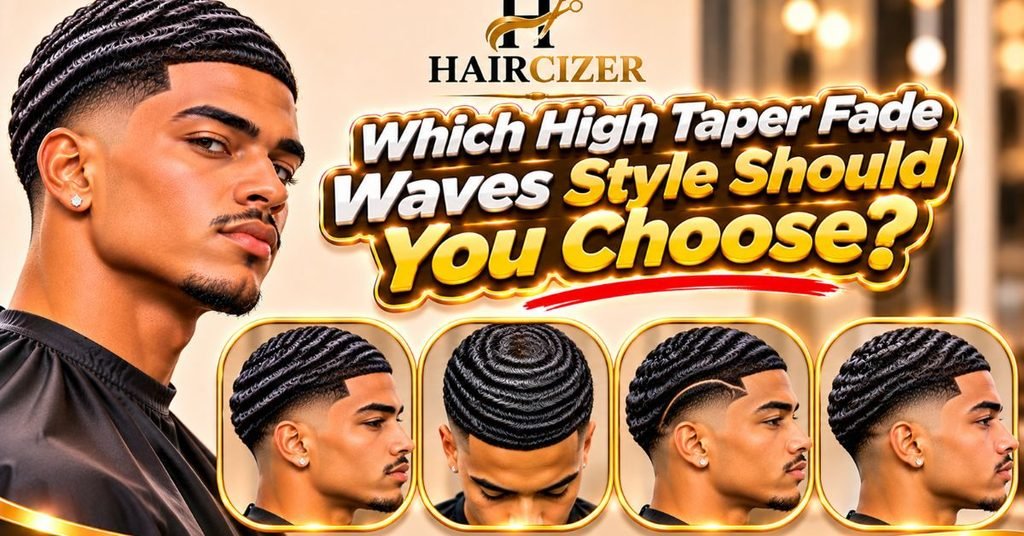
Once you know the height, you can decide on the finish. The choices below change both the look and the upkeep.
Skin vs. Guarded High Taper With Waves
A skin finish takes the shortest part to bare skin. A guarded finish leaves a small amount of stubble, usually with a number zero or number half guard.
| Feature | Skin finish | Guarded finish |
| Look | Very sharp, high contrast | Softer, more natural |
| Regrowth | Visible within days | Hides longer |
| Skin irritation | Higher risk of razor bumps | Lower risk |
| Visit gap | Two to three weeks | Three to four weeks |
If you are new to waves or you get razor bumps often, a guarded finish is a smart choice. You still get a clean taper, and your skin gets a break. A skin finish looks stunning for photos and events, but it asks for more care and more frequent visits.
Line-Up, C-Cup, and Beard-Blend Options
Small details change the whole mood of the haircut.
- Line-up: A crisp edge along the forehead and temples. It frames the waves and makes the cut look fresh.
- C-cup: A curved shape cut around the ears, often with a clean line. It adds definition and a stylish touch.
- Beard blend: The taper flows into the beard, so there is no sharp gap between hair and facial hair.
Keep the design simple. Heavy designs on the sides can compete with the waves, so choose one accent and let the pattern lead. A clean line-up is the safest starting point, and you can add a C-cup later once you trust your barber.
180, 360, 540, and 720 Wave Patterns With a High Taper
Wave names describe how many degrees of rotation the pattern covers. Each one reacts differently to a high taper.
- 180 waves: Ripples run in one direction, from front to back. A high taper suits them well, since less side coverage is needed.
- 360 waves: Ripples circle the whole head. They need healthy hair on the sides, so the taper must be placed carefully.
- 540 waves: The pattern spirals one and a half times, creating extra rings. They require more length and patience.
- 720 waves: Two full rotations. This is the most demanding pattern and is best with a lower taper that preserves coverage.
If you are starting out, build 180 or 360 waves first. Move to more complex patterns once your routine and your barber relationship are solid. Rushing into 540 or 720 waves without a strong base often leads to patchy results and frustration.
| Pattern | Typical build time | Difficulty |
| 180 waves | 4 to 8 weeks | Easy |
| 360 waves | 8 to 12 weeks | Moderate |
| 540 waves | 3 to 4 months | Hard |
| 720 waves | 4 months or more | Very hard |
These ranges vary with hair texture, growth speed and how closely you follow your routine. Treat them as guides, not promises.
How Do You Ask a Barber for a High Taper Fade With Waves?
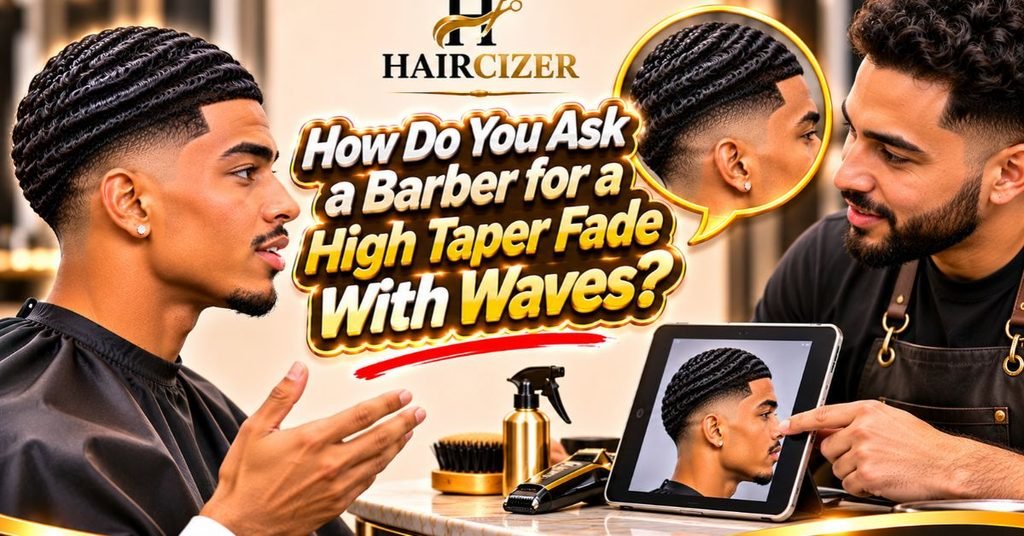
Clear words prevent expensive mistakes. A barber who works with waves will respect a detailed request, and one who does not may need extra guidance. Always explain how your waves should be protected.
Barber Consultation Checklist
Cover these points before the clippers come out:
- Taper height: Say high taper, and point to where it should start.
- Finish: Choose skin or guarded, and name the guard number.
- Wave goal: Mention 180, 360 or a longer-term target.
- Top length: Ask for a short, even length that holds the pattern.
- Side coverage: Ask the barber to leave a buffer above the taper.
- Edges: Choose a natural line-up, a sharp line or a C-cup.
- Beard: Say whether you want a blend or a clean face.
Ask to see the shape in the mirror halfway through, and speak up politely if the taper looks higher than you wanted. Small corrections are easy early, but impossible after the cut is finished.
Choosing the right barber matters as much as the script. Look for these signs:
- A portfolio with clean wave work, not only fades
- Willingness to ask about your routine and goals
- Clippers and tools that are clean and sanitized
- A calm, unhurried approach around the temples and nape
If the barber dismisses your concerns, find someone else. Your waves are worth the search.
Copy-and-Show Barber Script
You can read this out loud or show it on your phone:
“I would like a high taper fade with a guarded finish, starting at the temple. Please keep a small buffer of hair above the taper so my 360 waves stay connected. Keep the top short and even, with a natural line-up. I do not want the sides cut so high that they break the wave pattern.”
Add a photo of the exact look you want. A reference helps, but the words matter more than the picture. Pick an image from a model whose hair texture and head shape resemble yours, and point out what you like about it, such as the taper height or the line-up.
How Do You Maintain High Taper Fade Waves?
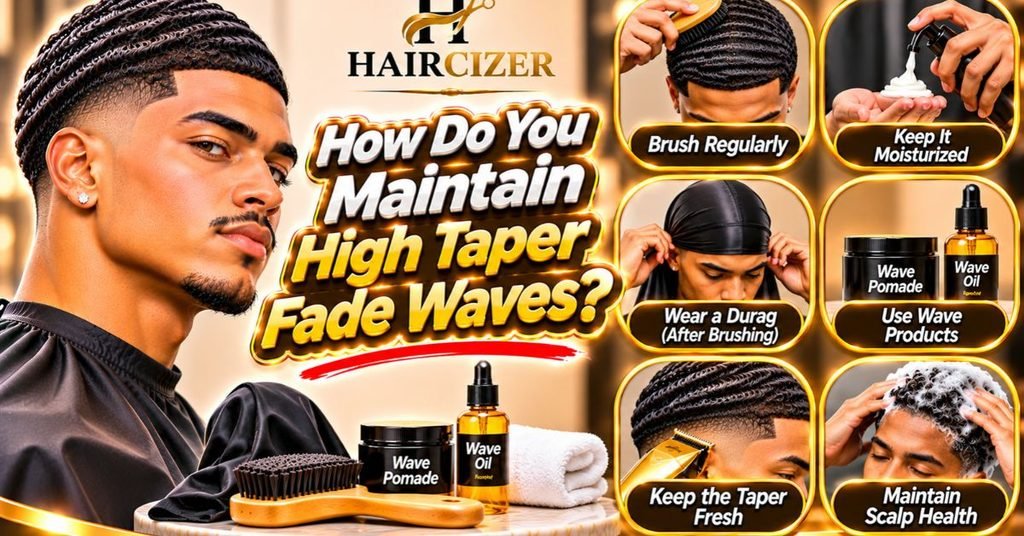
Waves are built by routine, not by one haircut. The haircut gives you the canvas, but daily care trains the hair to ripple. Consistency matters more than any product.
Daily Wave Routine: Brush, Moisturize, Compress
Also Read:15 Best Burst Fade Haircuts for Black Men That Stand Out
Follow this simple three-step habit:
- Brush: Use a soft or medium wave brush in the direction of your pattern. Brush in long, smooth strokes from the front to the back and around the crown. Do this for five to ten minutes.
- Moisturize: Apply a light leave-in conditioner or a water-based pomade. Dry hair does not wave well, so keep it hydrated. Avoid heavy grease that clogs pores.
- Compress: Cover your hair with a durag or wave cap for at least thirty minutes, or overnight. The compression sets the pattern and trains the hair to lie flat.
Wash your hair two to three times a week, and condition it to prevent dryness. Use a satin pillowcase if you do not wear a durag, because cotton can pull moisture and disturb your pattern.
Brush choice also matters. A soft brush suits fine or new waves, a medium brush works for most men, and a hard brush is better for coarse, established patterns. Many men use two brushes, one for shaping and one for finishing. Keep the brush clean, because oil and dirt on the bristles transfer back onto your hair. Rinse it weekly with warm water and a drop of mild soap, then let it air dry.
When products are involved, less is more. A pea-sized amount of light pomade or leave-in is plenty. If hair looks shiny and sticky, you have used too much, and it will attract dust and weaken the pattern.
Haircut, Wolfing, and Touch-Up Timing
Wolfing means sleeping in your durag so hair stays pressed. It is the heart of the process, and many men see better definition within weeks of doing it consistently. Choose a durag that is snug but not tight, since a band that digs into the forehead can cause headaches and leave marks along the hairline.
Timing matters for the cut as well:
| Task | Typical timing |
| Full haircut and taper | Every 2 to 3 weeks |
| Edge or line-up touch-up | Every 7 to 10 days |
| Deep wash and condition | Weekly |
| Wolfing | Every night |
Do not cut your own sides. A one-minute mistake can take weeks to grow back, and it may leave a gap that breaks your pattern.
A weekly deep-clean routine also helps. Shampoo thoroughly, rinse well and follow with a conditioner or a light leave-in. Product buildup is one of the quiet reasons waves lose definition, and a clean scalp supports healthier growth.
What Can Go Wrong With a High Taper and Waves?
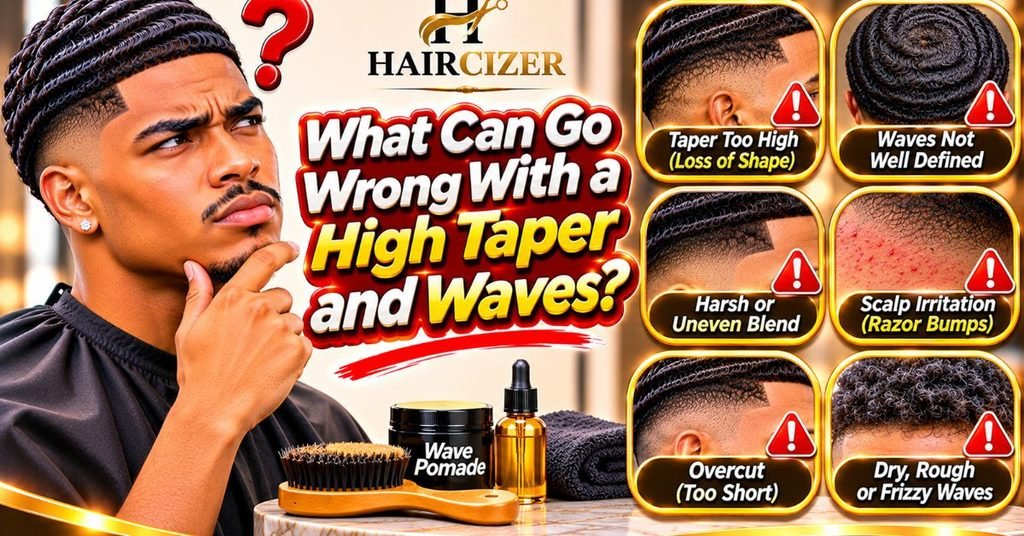
Most problems come from rushed cuts or impatient grooming. Learn the mistakes now, and you can avoid them later.
Wave-Pattern Mistakes That Cost Side Coverage
- Starting the taper too high. It removes the hair your 360 pattern needs on the sides.
- Cutting the top too short. There is not enough length to form ripples.
- Brushing against the grain. It frizzes hair and disrupts the pattern.
- Skipping compression. Without it, waves fall flat quickly.
- Using too much product. Heavy grease causes buildup and dull waves.
Cut and Grow-Out Mistakes
- Letting a fresh cut grow too long without a touch-up. The taper blurs and the shape loses definition.
- Switching barbers often. Each barber cuts differently, and your pattern needs consistency.
- Over-trimming the temples. It pushes the hairline back and shortens the waves.
- Ignoring the grow-out stage. As hair lengthens, brush more often and moisturize more, or waves turn fuzzy.
- Waiting too long between visits. The taper softens, the edges blur and the wave pattern loses its frame.
- Washing too aggressively. Harsh shampoo strips oils and leaves the pattern dry and rough.
A good rule is to treat the first month as practice. Expect the pattern to improve slowly, and do not judge it too early.
Patience is the missing ingredient for most men who give up. Waves rarely look perfect in week one, and some men see only faint ripples for a month. Keep brushing, keep your routine steady, and the pattern will deepen. Take a photo every two weeks, because small gains are hard to notice in the mirror but easy to see side by side. Progress photos also help your barber understand how your hair is responding.
How Can You Reduce Razor Bumps and Scalp Irritation?

Close cuts and tight skin fades can irritate the skin. Razor bumps, medically called pseudofolliculitis barbae, happen when short, coarse hairs curl back and grow into the skin. They are common in men with curly or coily hair, and they can appear on the neck, sides and scalp.
Simple habits help:
- Cleanse the area gently, twice a day.
- Ask the barber to cut with the grain and avoid pulling the skin too tight.
- Apply a soothing, alcohol-free aftershave or a mild moisturizer after the cut.
- Do not pick or squeeze bumps.
- Keep your durag and pillowcase clean.
- Use a warm towel before the cut to soften the skin.
- Avoid shaving or lining up too often, since each pass can irritate the skin.
If you use a razor at home for the neckline, wash your hands, use a clean blade and shave with the grain. Never share razors or clippers.
When to Choose a Guarded Finish Instead of Skin
Pick a guarded finish if you notice bumps after most cuts, if your skin is sensitive, or if you want a longer time between visits. The taper still looks neat, but the clippers leave a tiny bit of hair, which cuts friction and irritation.
You can also alternate. Choose guarded finishes most of the time, and save a skin finish for special occasions. Tell the barber about your skin history before the first cut, so he can adjust pressure, direction and the number of passes with the clippers.
When Bumps, Pain, or Scarring Need Medical Attention
Home care works for mild cases, but some signs need a professional. Contact a doctor or dermatologist if you notice:
- Bumps that are painful, swollen or filled with pus
- Spreading redness, warmth or fever
- Dark marks or raised scars that keep forming
- Bumps that do not improve after several weeks of careful care
Do not try to treat deep or infected bumps yourself. Squeezing can push bacteria deeper and lead to scarring that lasts for years.
Some people form thick, raised scars called keloids, which are more common in darker skin. A medical professional can offer treatments that go beyond what a barber or a product can do. Do not ignore ongoing pain or scarring, and do not wait for it to get worse.
Frequently Asked Questions About High Taper Fade Waves
What is a high taper fade with waves?
A high taper blend on the sides with a short top brushed into waves.
Does a high taper work with 360 waves?
Yes, if the barber leaves enough side coverage to keep the pattern connected.
How often should I get a haircut?
Every two to three weeks keeps the taper and edges sharp.
What is the difference between a taper and a fade?
A taper leaves some hair at the bottom, while a fade can reach bare skin.
How long should my hair be for waves?
A quarter to half an inch is a good starting length.
How long do waves take to form?
Many men see early definition in four to eight weeks of daily brushing.
Do I need a durag for waves?
A durag or wave cap helps compress and set the pattern.
Can I get a high taper with razor bumps?
Yes, but choose a guarded finish and keep the skin clean.
Is a high taper better than a low taper for waves?
A low taper protects more coverage, while a high taper looks sharper.
Conclusion
A high taper fade with waves gives you a sharp outline and a deep, brushed-in pattern when the barber protects your side coverage. Choose the finish that suits your skin, and decide how bold you want the contrast. Waves reward patience, and the best results come from clear requests and steady habits.
Brush, moisturize and compress daily, and book regular touch-ups to keep the edges crisp. Watch your skin, and switch to a guarded finish if bumps keep returning. See a doctor if pain or scarring appears, and your waves will look as good as they feel.
Leave a Reply