
A mid taper fade with waves is one of the cleanest ways to show off a wave pattern. The sides and back are tapered neatly, the top stays short and brushable, and the ripples take center stage. It looks sharp at work, in the gym, and on a night out.
This guide explains what the cut is, how it compares with a full mid fade, and whether it suits 360 waves or a natural wavy top. You will also get the best style ideas, exact barber instructions, a daily and weekly care routine, refresh timing, and tips for razor bumps and sensitive skin.
What is a mid taper fade with waves?
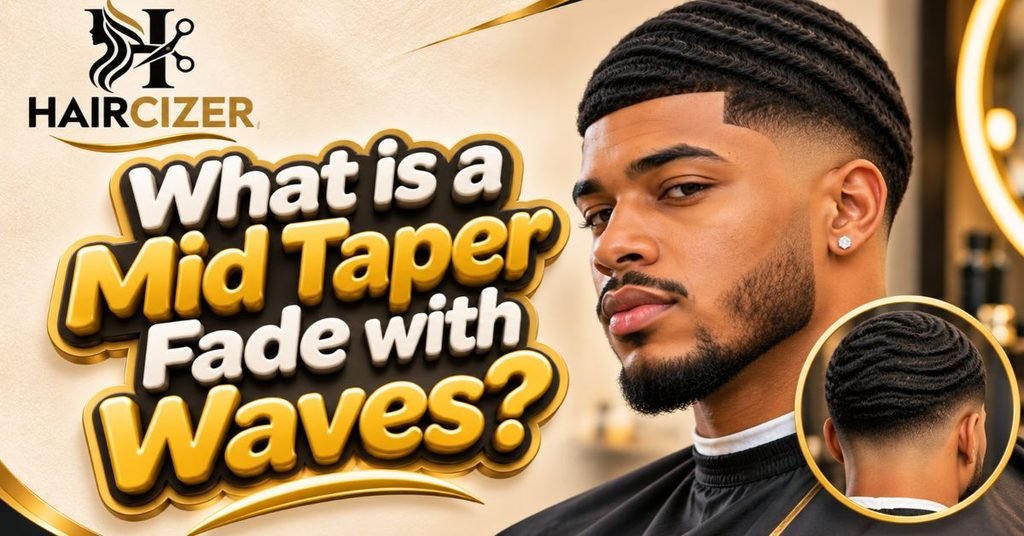
A mid taper fade with waves is a haircut where the sides and back are tapered from about the temple level down to the sideburns and neckline, while the hair on top is kept short enough to brush into a wave pattern. The taper is the frame. The waves are the picture.
Unlike a dramatic skin fade, the taper keeps a little more hair near the edges. That gives a softer, more natural outline and leaves more of the hair around the head to carry the wave pattern.
How is a mid taper different from a full mid fade?
Both cuts start at roughly the same height, but they do different jobs.
Taper: concentrated perimeter cleanup
A taper focuses on the edges of the head. The barber shortens the hair around the sideburns, the area behind the ears, and the nape of the neck. The rest of the side and back stays closer to the length of the top.
This keeps the cut tidy but gentle. It is a good choice if you want clean edges without a big contrast.
Full fade: broader side and back transition
A full mid fade works across a much larger area. The hair moves from short at the bottom to longer higher up, often reaching close to skin level at the base. The change is bigger and the contrast with the top is stronger.
| Feature | Mid taper | Full mid fade |
| Area affected | Sideburns, ears, neckline | Whole side and back |
| Contrast with the top | Soft | Strong |
| Skin showing at the base | Rarely | Often |
| Effect on wave pattern | Keeps more hair for the pattern | Cleans up the sides for a bolder frame |
| Grow-out look | Gradual | Fuzzy faster |
If you like a bold, crisp outline, ask for a mid fade. If you like a clean but natural look, the taper is the safer pick.
Does “waves” mean 360 waves or naturally wavy hair?
It can mean either, and this is where many haircut mix-ups start.
- 360 waves are a brushed pattern of ripples that circle the whole head from the crown outward. They need short, coarse or tightly curled hair, regular brushing, moisture, and time.
- Natural waves are loose S-shaped bends in hair that wave on their own, without brushing or training.
A barber will cut each one differently. If you say “waves,” add which kind you want, so the cut matches your hair.
Is a mid taper fade good for 360 waves?
Yes, with one honest caveat. A mid taper is a good frame for a wave pattern because it keeps the sides neat and draws the eye to the top. Many barbers, however, prefer a low taper for full 360s, because a lower fade leaves more hair around the head for the circle to travel across.
A mid taper can still work. It just reduces the area where the waves can flow, so some people end up with a pattern that looks more like 180 waves than a full circle. That is not a flaw. It is simply a different look, and knowing it in advance avoids disappointment.
Who is this cut best for?
A mid taper fade with waves tends to suit:
- People who already have a wave pattern and want a clean frame for it.
- Those who like a balanced, not-too-extreme fade.
- Men who need a look that works in a professional setting.
- Anyone with thick or coarse hair who wants less bulk at the sides.
- Hair that grows fast and needs a neat shape between visits.
- Beginners who want waves without committing to a full 360 routine.
It is less suitable if you want the biggest possible circle of waves, or if your scalp is very sensitive to close clipper work.
How do hair texture and head shape change the result?
Not every head gives the same result, and a good barber reads both before cutting.
- Coarse or tightly coiled hair holds a wave pattern well and usually needs a shorter top.
- Looser curl patterns may need a longer top and more brushing to set the ripples.
- A rounder head shows the circular pattern clearly, so a mid taper looks balanced.
- A flatter or narrower back of the head may suit 180 waves better than a full circle.
- Cowlicks and crown swirls can break up the pattern, so a barber may adjust the top length around them.
If you are unsure, ask the barber to look at your growth pattern before choosing the guard.
What should you know before booking your first appointment?
A little preparation saves a lot of regret. Before you sit in the chair, think about these points:
- Check the barber’s portfolio. Look for clear photos of waves, tapers, and sharp edge-ups on hair like yours.
- Ask about wave experience. Some barbers cut waves daily, while others rarely do.
- Book a longer slot if the shop offers it, so nobody rushes the blend.
- Arrive with clean, product-free hair. It is easier to cut and shows the real growth pattern.
- Decide your budget for regular touch-ups, because waves look best with steady upkeep.
A good barber will ask questions about your routine, your work, and how much brushing you really want to do. That conversation is a good sign.
Mid taper vs low taper vs skin fade for waves
Here is a simple comparison to help you decide.
| Cut | Starts | Wave pattern | Best for |
| Low taper | Just above the ears and neckline | Full 360 circle has the most room | Classic 360 waves, workplaces |
| Mid taper | Around the temples | 360 with a slightly smaller canvas, or 180 | Balanced look, everyday wear |
| Skin fade | Fades to bare skin | Strong contrast, pattern pops | Bold, high-contrast style |
If you are new to waves, a low or mid taper is a forgiving way to start. A skin fade shows every flaw in the pattern, so it suits those with well-developed waves.
Best mid taper fade waves styles

Different wave patterns call for different cuts. These four styles cover most heads.
Classic 360 waves with a mid taper
This is the traditional look: ripples circling the head from the crown, framed by a neat taper. It works best when the top is cut short, usually with a guard 1 or 2, so the pattern is clear.
- Needs consistent brushing, moisture, and a wave cap at night.
- A sharp edge-up around the hairline makes the pattern stand out.
- Ask the barber to leave enough hair at the back so the circle can complete.
Deep waves with a mid taper
Deep waves have clear, high-contrast ridges. They take time to build, usually several weeks to months of brushing, and they look striking under a tapered sides. The taper keeps attention on the ridges rather than on the sides.
- Use a medium-firm brush and brush in short sessions, not hours at a time.
- Keep the hair moisturized so the ridges stay smooth.
- Avoid heavy products that sit on the hair and dull the pattern.
180 waves with a mid taper
In 180 waves, the pattern sits on the top and sides, with the back faded shorter. It pairs well with a mid taper because the taper naturally cuts into the back area. It is a good option if you want waves but like a cleaner nape.
- Works for hair types that struggle to build a full circle.
- Easier to keep up than a full 360.
- A rounded or square neckline both look good.
Natural wavy top with a mid taper
For loose, natural waves, a mid taper adds structure and keeps the top from looking messy. Leave a bit more length, about 1 to 3 inches, and style with a light cream or paste.
- No heavy brushing needed.
- Pair with a side part, a textured crop, or a swept-back finish.
- Add a lightweight leave-in conditioner if the hair feels dry.
Which wave styles pair well with a part or a design?
A mid taper also works with extras that add personality. Popular options include:
- A hard part: a thin shaved line on one side that adds sharp contrast with the soft ripples.
- A curved or angular edge-up: shapes the hairline into a bold frame.
- A temple fade blend: softens the front corners while keeping the pattern intact.
- A subtle fade into the beard: links the head and face for a clean, balanced finish.
Keep designs simple at first. Fine lines and patterns need frequent touch-ups, and they can grow out unevenly if you wait too long.
Which products suit each wave type?
Also Read:Mid Taper Fade With Long Hair: Styles & Barber Tips
Product choice matters as much as the cut. Use less than you think you need.
| Product | Best for | What it does |
| Leave-in conditioner | All wave types | Adds moisture so the hair stays soft |
| Wave pomade or light grease | 360 and deep waves | Lays the hair flat and holds the ripples |
| Light styling cream | Natural wavy top | Defines waves without weight |
| Satin durag or wave cap | 360 and deep waves | Presses the pattern while you sleep |
Pick water-based or lighter products if your scalp gets oily or breaks out. Heavy build-up can dull the pattern and clog pores.
How do you ask a barber for a mid taper fade with waves?
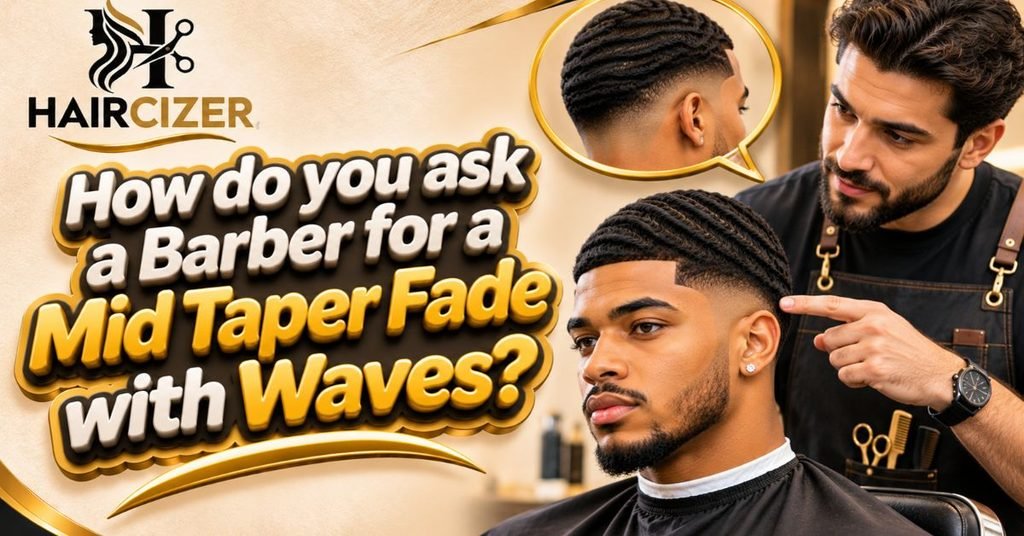
Clear communication is the difference between a good cut and a stressful one. Walk in with a plan, and the barber has far less to guess.
What reference photo should you bring?
Choose a photo that matches your hair type, because a pattern on someone with different texture will not look the same on you. A strong reference photo has:
- A clear view of the front, side, and back.
- Visible wave pattern, in good light.
- The same type of hair as yours, or very close.
- A hairline shape you like.
- A fade height that matches what you want (mid, not low or high).
Show your barber one photo of what you want and, if helpful, one of what you do not want. That second photo can prevent a misunderstanding.
What should you do while the barber is cutting?
You can help the barber get the best result without saying much:
- Sit still, and keep your chin level when asked.
- Check the mirror at the mid-point and speak up early if something feels off.
- Ask to see the back with a hand mirror before the neckline is finished.
- Say if the clippers feel hot or the guard tugs at your skin.
- Confirm the final shape before the barber applies any product.
Small checks during the cut are far easier than a fix afterward.
How should the edge-up and neckline be shaped?
The edge-up is the sharp line around the forehead and temples. It acts like a picture frame for the waves. A few simple choices help:
- Natural hairline: soft and forgiving, good for everyday wear.
- Sharp, squared line: bold and clean, but needs frequent touch-ups.
- Rounded neckline: softens the back and grows out gracefully.
- Squared neckline: crisp, but looks untidy faster.
Tell the barber how much you want shaved, since a deep edge-up is hard to undo.
What guard and top length work best for waves?
Guard numbers differ from shop to shop, so use these as starting points and ask your barber to adjust.
| Wave type | Typical top guard | Sides at the base |
| 360 waves | 1 to 2 | Guard 0.5 to 1 blended up |
| Deep waves | 1 to 2 | Guard 1 blended up |
| 180 waves | 1 to 2 on top, shorter at the back | Guard 0.5 to 1 |
| Natural wavy top | 3 or longer, or scissor-cut | Guard 1 to 2 blended up |
Say something like: “Mid taper fade, guard 1 on top for my waves, blended into a guard 0.5 at the bottom, clean edge-up, natural neckline.”
Also ask the barber not to cut against the grain on top. Cutting with the direction of growth helps the waves lie flat, and it lowers the risk of irritation.
How do you maintain waves after a mid taper fade?

A good cut sets the stage. Daily care builds the pattern and keeps it clear.
What daily and weekly routine keeps the pattern defined?
Daily routine
- Moisturize. Apply a light leave-in conditioner or moisturizer to the hair.
- Seal. Use a small amount of wave pomade or grease, not a big scoop.
- Brush. Use a medium or soft brush, brushing in the direction of the pattern for a few minutes.
- Cover. Put on a durag or wave cap and leave it on for at least 30 minutes, or overnight.
- Protect at night. Use a satin pillowcase if you do not wear a cap.
Weekly routine
- Wash once or twice a week with a gentle shampoo, depending on your scalp.
- Deep condition to keep the hair soft and avoid breakage.
- Check the pattern in the mirror and adjust your brushing direction.
- Clean your brush so product and oil do not build up.
- Rest the scalp if you notice soreness from brushing.
A few extra tips help the pattern develop:
- Do not over-brush. Too much pressure can cause irritation and thinning at the edges.
- Avoid heavy petroleum products if your scalp gets clogged easily.
- Keep your cap clean and not too tight.
- Be patient. Waves usually need weeks to start showing and months to deepen.
How long before the waves start to show?
Patience matters. Here is a rough timeline for someone starting with short hair and brushing daily:
| Time | What to expect |
| Week 1 to 2 | Hair feels softer and starts to lie flat |
| Week 3 to 4 | Faint ripples appear under good light |
| Month 2 to 3 | Pattern becomes clear and consistent |
| Month 4 and beyond | Deeper, sharper ridges form |
These are general guides. Hair type, brushing habits, and growth speed all change the pace, so do not compare your waves with someone else’s.
How often should you refresh a mid taper fade?
The taper looks best when it is fresh, but the schedule depends on your growth rate and how sharp you like the edges.
| Goal | Refresh timing | Notes |
| Sharp, crisp edges | Every 1 to 2 weeks | Best for deep, high-contrast waves |
| Neat but practical | Every 2 to 3 weeks | The usual schedule for most people |
| Low maintenance | Every 3 to 4 weeks | Pattern looks softer between cuts |
If the budget is tight, ask for an edge-up and neckline clean-up between full cuts. Many shops charge less for it, and it keeps the shape tidy.
Can you wear a mid taper fade with waves and a beard?
Yes, and it is a popular combination. A tapered beard can blend into the sideburns so the whole look feels connected. Ask the barber to match the fade height to the beard line, and keep the cheek line tidy. If the beard is thick, a little beard oil keeps it soft and prevents itching, which also helps your skin stay calm around the taper.
How do wave and fade trends fit different ages and lifestyles?
Waves are not just for one group. Teens often enjoy bolder lines and deeper patterns, while working professionals usually prefer a softer taper and a lower-key edge-up. Athletes may choose a shorter cut that sweats out easily, then rinse and brush afterward. Older clients often like a gentle, natural wave with minimal brushing. A mid taper adapts to all of these lifestyles, which is why many barbers recommend it as a flexible, everyday cut.
Does weather or sweat affect your waves?
Yes. Heat and humidity can make the hair puff up and blur the ripples, while very dry air can leave hair brittle. After a workout or a hot day, rinse or wipe the scalp, then brush gently and put your cap back on. In cold weather, a soft, clean cap or beanie keeps the head warm without crushing the pattern. If you wear helmets or hats often, wash them regularly to prevent build-up and itchy bumps.
Common mistakes and risks
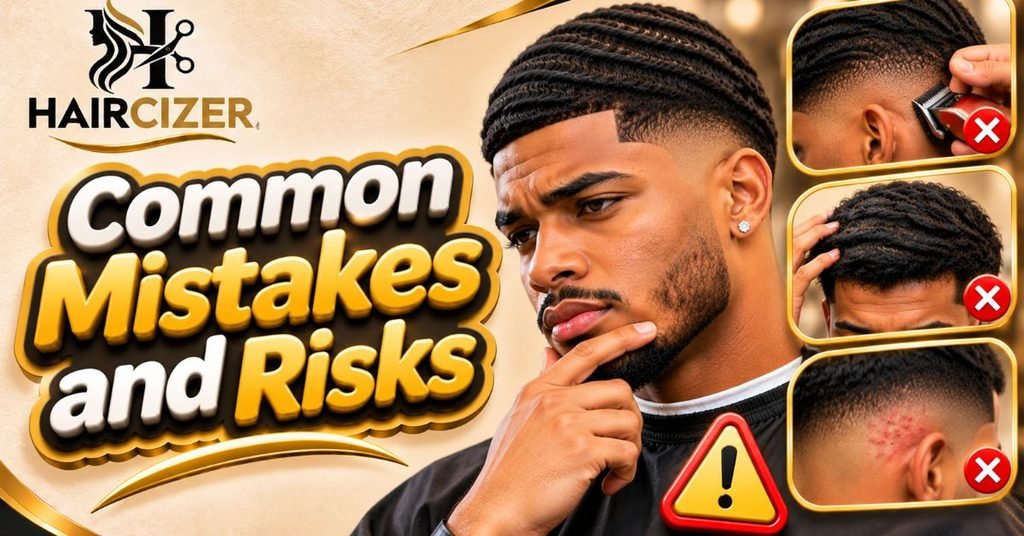
Even a good cut can look off if a few simple things go wrong. Watch out for these:
- Asking only for “a fade.” Say mid taper, give the top length, and show a photo.
- Cutting the top too long. Long hair hides the pattern. Short, even length helps waves show.
- Starting too high. A high taper on a 360 can shrink the circle.
- Brushing too hard. It can irritate the skin and weaken the hairline.
- Skipping moisture. Dry hair looks dull, and waves lose definition.
- Using too much grease. It can clog pores and cause bumps.
- Sleeping without a cap. Pillows scrub the pattern flat overnight.
- Waiting too long for a touch-up. The taper blurs and the waves lose their frame.
- Trying to fix the cut at home with clippers you do not control. Small mistakes are hard to hide on short hair.
What if you get razor bumps or have sensitive skin?
Close tapers, especially around the neckline and temples, can trigger razor bumps, also called ingrown hairs. They show up as small red bumps, sometimes with a tiny hair trapped underneath. They are common in people with coarse, curly, or tightly coiled hair.
To reduce the risk:
- Ask for a slightly longer finish at the bottom of the taper.
- Request cutting with the grain around the neck and sideburns.
- Avoid shaving the skin with a razor if it tends to bump, or use a clean, sharp razor with plenty of lubricant.
- Wash gently after the cut and apply a soothing, fragrance-free moisturizer.
- Use a mild exfoliant a couple of times a week, only if your skin tolerates it.
- Keep brushes, caps, and pillowcases clean.
- Avoid picking or scratching the bumps, which can lead to scarring.
If you have sensitive skin, tell the barber before the clippers start. They can use a guard in place of a close shave and a lighter touch around tender areas.
See a doctor or dermatologist if bumps are painful, spread, leave dark marks, or do not improve after a few weeks. They can suggest treatments that fit your skin type.
Mid taper fade waves FAQs
What is a mid taper fade with waves?
A mid taper cut around a short, brushed wave pattern on top.
Is a mid taper good for 360 waves?
Yes, though a low taper leaves a bigger canvas.
What is the difference between a taper and a fade?
A taper cleans the edges; a fade blends over a wider area.
Can I get 360 waves with a mid taper?
Yes, but the circle may look smaller or turn into 180 waves.
What guard is best for waves?
Usually a 1 or 2 on top, but ask your barber.
How long does it take to grow waves?
Usually a few weeks to start, and months to deepen.
How often should I brush my waves?
Daily, in short sessions, with moisture applied first.
Do I need a durag for waves?
It is not required, but it helps hold the pattern.
How often should I get a touch-up?
Every two to three weeks for most people.
Can natural waves work with a mid taper?
Yes, leave a bit more length on top.
What causes razor bumps after a fade?
Close cutting can make curly hairs grow back into the skin.
Is a mid taper professional?
Yes, it is neat and suits most workplaces.
Conclusion
A mid taper fade waves cut gives you a clean frame and a pattern that stands out. It works for 360 waves, deep waves, 180 waves, and natural wavy tops. Pick the style that matches your hair type and your daily routine.
Bring a clear photo, tell your barber the guard and top length, and keep up with moisture, brushing, and a cap. Refresh the taper every couple of weeks and watch your skin for bumps. With a little patience, your waves will look sharper with every cut.
Leave a Reply