
Picture a haircut that looks sharp on a Monday morning meeting and still feels relaxed on a Saturday night out. That is the low taper fade. The sides and back stay short and neat, the hair around the ears and neckline fades down softly, and the top keeps enough length to style however you like.
So, what does a low taper fade look like in real life? It looks clean without being harsh. There is no dramatic bald patch and no sudden jump from long to short. The change in length is gentle and starts low on the head, which is why so many barbers call it the safest fade you can ask for.
In this guide, you will learn what the cut is, which features define it, how it compares with other fades, and which top styles work best. We will also cover hair types, face shapes, barber-chair language, and home care, so you can decide with confidence.
What does a low taper fade look like?

A low taper fade looks like a short, tidy outline around the ears and the nape, with hair that slowly gets shorter as it moves down toward the skin. Above that low line, the sides stay at a medium-short length and blend into the longer hair on top.
Here is how to spot one quickly:
- The fade starts just above the ear and follows the natural curve of the head.
- The neckline is tight and clean, either rounded or squared.
- The sides look soft, not stark, because the contrast is low.
- The top is noticeably longer than the sides, even if only by an inch or two.
From the front, you will see tidy temples and a crisp edge around the ears. From the side, the fade looks like a thin gradient that hugs the lower third of the head. From behind, it forms a narrow, neat band at the nape.
Think of it like a pencil shading: the darkest part is at the bottom, and the shade fades away as it moves up. That slow blend is the signature of this cut.
What is a low taper fade haircut?
A low taper fade is a haircut where the hair on the sides and back gets gradually shorter toward the lower hairline. The “taper” part means the length shrinks smoothly. The “fade” part means it can go down to very short stubble or even skin at the very bottom.
Both words matter. A classic taper trims the sides and neckline with a gentle, natural shortening, usually without reaching skin. A fade goes further and blends the hair down to a much shorter length. A low taper fade mixes the two, keeping the effect small and low on the head.
Barbers usually create it with clippers and guards, then refine the blend with a trimmer or scissors-over-comb work. The result is a haircut that looks polished but still natural.
It is popular for a simple reason. It works on short hair, medium hair, and long hair. It also suits office life, school, sports, and weddings, which makes it a reliable everyday choice.
Key features that define a low taper fade

Every good low taper fade shares a few traits. If your haircut has these, you are in the right territory.
A low starting point
The fade begins near the ear and the base of the skull, usually about one inch above the natural hairline. That is what keeps the cut subtle.
A smooth gradient
The blend should have no visible lines or steps. Good barbers move the clipper in small, flicking motions to erase any hard edge.
Short, clean edges
The temple area, sideburns, and nape are lined up neatly. Many men also add a sharp edge-up at the forehead for extra definition.
Length contrast on top
Because the fade is low, the contrast between sides and top is gentle. This is why the top often needs some length to look balanced.
Easy to personalize
The same base cut can carry a quiff, a crop, a fringe, or a curly top. You change the style by changing the top, not the fade.
| Feature | Low taper fade |
| Fade starting point | Just above the ear and nape |
| Contrast level | Soft and subtle |
| Typical side length | Short, ending near skin at the bottom |
| Top length | Short to long |
| Maintenance | Trim every 2 to 4 weeks |
| Best for | Office, school, formal and casual looks |
Low taper fade vs other fade types
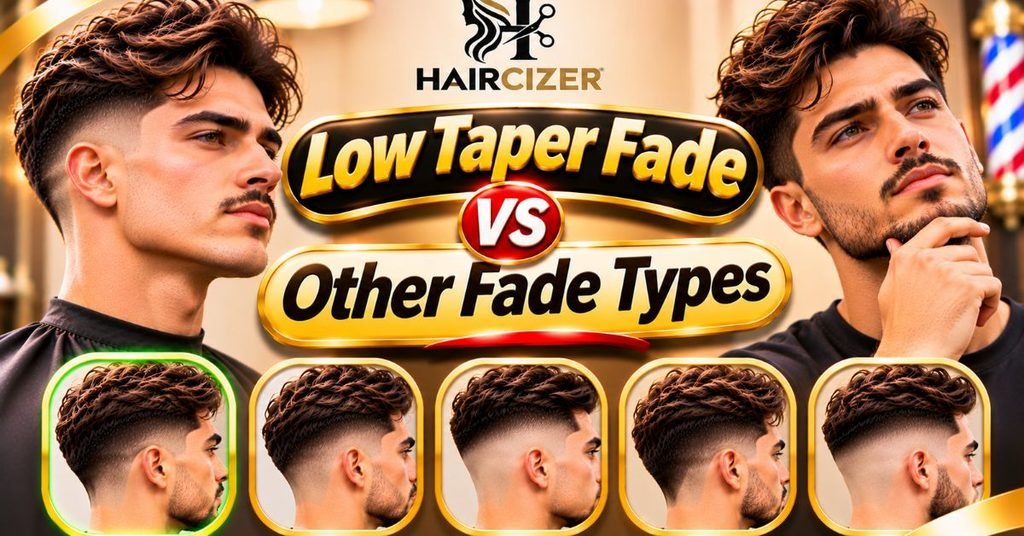
Fades are mostly defined by where they start. The lower the start, the calmer the look. The higher the start, the bolder it gets.
| Fade type | Where it starts | Look and feel | Best for |
| Low taper fade | Near ear and nape | Subtle, classic | Work, school, first-timers |
| Mid fade | Around temple level | Balanced, modern | Everyday style |
| High fade | Upper sides of the head | Sharp, bold | Strong, high-contrast looks |
| Skin or bald fade | Any height, down to skin | Very clean, dramatic | Statement cuts |
| Drop fade | Curves behind the ear | Curved, stylish | Creative, modern looks |
| Burst fade | Around the ear only | Rounded, edgy | Mohawks and mullets |
Low taper vs low fade
These two get mixed up all the time. A low taper keeps the sides longer and blends gently. A low fade usually goes shorter, sometimes to skin, so the contrast is stronger. If you want your hair to look neat without drawing attention, the taper is the safer pick.
Low taper vs mid taper
A mid taper starts higher, around the temple. It shows more of the fade and looks a little more modern. The low version is calmer and works better for conservative workplaces.
Low taper vs high fade
A high fade is about contrast. It leaves a big gap between the skin-short sides and the longer top. The low taper is about subtlety. If you want a quiet cut, the low taper wins.
Popular ways to style the top

The beauty of this cut is that the top is a blank canvas. Once the sides are clean, you can switch between several looks without touching the fade.
Textured top
A textured top is cut with layers, then styled with a matte clay or paste. It gives the hair movement and a lived-in finish that photographs well.
How to get it:
- Ask for choppy layers on top, about 2 to 4 inches long.
- Towel-dry the hair until it is slightly damp.
- Rub a pea-sized amount of matte clay between your palms.
- Work it through the hair, pushing it up and slightly forward.
This style works well for men with straight or slightly wavy hair, and it needs only a few minutes each morning.
Buzzed top
If you want the easiest option, a buzzed top is the answer. The hair on top is clipped short, often with a #2 to #4 guard, and the low taper keeps the edges neat.
It looks sporty and confident. It also hides thinning hair well, since the short length reduces contrast. The main downside is that it needs frequent clipper touch-ups to stay sharp.
Middle part
A middle part has made a comeback, especially among younger men. The hair is split down the center and falls naturally to each side, framing the face.
For this look, you need at least 3 to 4 inches on top. A light-hold cream or sea salt spray keeps the hair soft and natural. Pair it with the low taper and you get a clean, 90s-inspired style without looking dated.
Soft fringe
A soft fringe sweeps the hair forward across the forehead. It is relaxed, youthful, and easy to wear. The low taper keeps the sides tidy so the fringe stays the star of the look.
Ask your barber to cut the fringe slightly uneven so it looks natural. If your forehead is tall, a fringe can make it look shorter and better balanced.
Comb over
The comb over is a timeless style. Hair is parted on one side and brushed neatly across. With a low taper on the sides, it becomes a polished, professional cut that works in any boardroom.
Use a medium-hold pomade for a defined finish, or a light cream if you prefer a softer look. A hard part, shaved into the hair, adds extra sharpness for formal events.
Messy top
A messy top is the opposite of the comb over. It is loose, tousled, and a bit rebellious. Think of hair that looks like you just stepped off a beach.
Use a texturizing powder or sea salt spray, then ruffle the hair with your fingers. The tidy low taper balances the messy top, so you look relaxed rather than unkempt.
Which top style takes the least effort
Not every style asks for the same amount of time in front of the mirror. If your mornings are rushed, this quick comparison helps you choose.
| Top style | Daily effort | Products needed | Best hair length |
| Buzzed top | Almost none | None | Under 1 inch |
| Messy top | Low | Texture powder or sea salt spray | 2 to 4 inches |
| Textured top | Low to medium | Matte clay or paste | 2 to 4 inches |
| Soft fringe | Medium | Light cream | 3 to 5 inches |
| Middle part | Medium | Light cream or spray | 3 to 5 inches |
| Comb over | Medium to high | Pomade and a comb | 3 to 6 inches |
A good rule of thumb: the sharper and more structured the style, the more time it needs. Relaxed styles forgive mistakes, while polished ones show every strand out of place.
Matching the top to the occasion
Your lifestyle matters as much as your hair. A comb over feels natural at a wedding or an interview, while a messy top fits a college campus or a weekend trip. If you switch between settings often, a textured top is the safest middle ground. It looks tidy with a little product and relaxed without it.
How your hair type changes the look
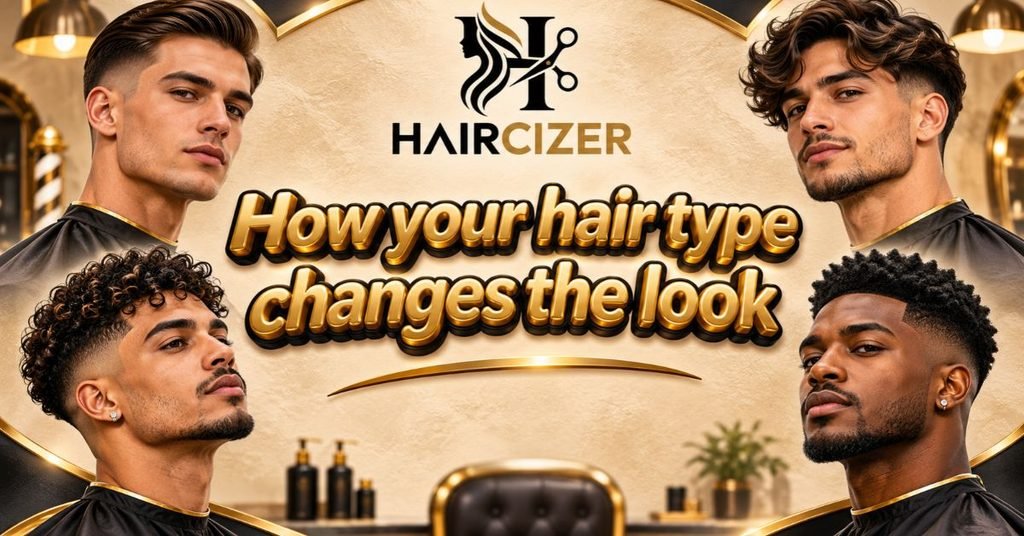
The same cut can look very different depending on your natural texture. Knowing how your hair behaves helps you pick the right top style and the right products.
Straight hair
Straight hair shows the fade very clearly because the strands lie flat and the gradient is easy to see. This makes it a great canvas for sharp styles like the comb over or a textured crop.
The only challenge is volume. Straight hair can look flat, so ask for layers on top and use a light styling powder to lift the roots. Because the fade is so visible, regular trims matter more here.
Wavy hair
Wavy hair has natural movement, which gives the top a soft, relaxed shape. The low taper keeps the sides from puffing out, so your waves look intentional rather than bulky.
Leave the top a little longer, around 3 to 5 inches, so the waves can form. A light mousse or curl cream defines the pattern without making the hair stiff.
Curly hair
Curly hair and the low taper fade are an excellent match. The fade keeps the sides narrow, while the curls on top get all the attention. It prevents the triangular shape that long curly hair can create on the sides.
To keep curls healthy, use a moisturizing shampoo, apply a leave-in conditioner, and scrunch a curl cream into damp hair. Avoid brushing dry curls, since it causes frizz.
Coily and afro-textured hair
For coily and afro-textured hair, the low taper fade is a classic. It gives the hair a sharp outline, clean edges, and a shaped silhouette. Many barbers pair it with a high-top, twist sponge style, or short afro.
Moisture is the key here. Coily hair dries out quickly, so use a water-based moisturizer, a light oil, and a satin bonnet at night. Make sure your barber has experience with your hair type, because the blend and the line-up need a precise hand.
Products that suit each hair type
The right product keeps your style in place without weighing it down. Here is a simple guide.
| Hair type | Best product | What to avoid |
| Straight | Light clay, styling powder | Heavy gels that flatten the roots |
| Wavy | Mousse, light cream | Strong-hold waxes that stiffen waves |
| Curly | Curl cream, leave-in conditioner | Alcohol-based gels that dry curls |
| Coily and afro-textured | Water-based moisturizer, light oil | Dry brushing and harsh shampoos |
If you are not sure where you fit, start with a light product and add a little at a time. It is easy to add more, but hard to fix a head full of too much product.
What face shapes suit a low taper fade
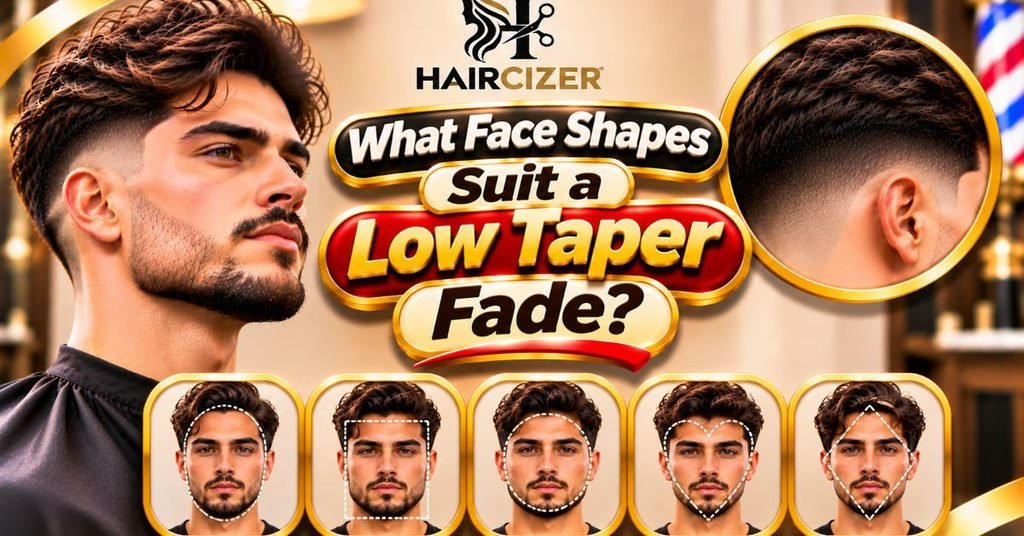
Good news: the low taper fade is flexible. Still, a few small tweaks can make it look even better on your face shape.
| Face shape | How the low taper fade works | Top style to try |
| Oval | Almost everything works | Textured top, comb over |
| Round | Add height to elongate the face | Quiff, tall textured top |
| Square | Softens strong angles | Soft fringe, messy top |
| Rectangle | Avoid too much height | Side part, fringe |
| Heart | Balances a wider forehead | Fringe, middle part |
| Diamond | Keeps cheekbones in focus | Textured crop, soft fringe |
Oval faces
If you have an oval face, you can pull off nearly any version. Try a classic comb over or a modern textured crop.
Round faces
Aim for height on top and keep the sides neat. The low taper keeps the sides narrow, which helps the face look longer.
Square faces
A square jaw already looks strong. A softer top, like a fringe or a messy style, balances the sharp lines.
Heart and diamond faces
These shapes have wider upper features. A fringe or a middle part draws attention away from the forehead and helps balance the proportions.
How to ask your barber for a low taper fade

Walking into a barbershop with a clear request makes a huge difference. Here is a simple way to explain what you want.
Step-by-step script
- Name the cut. Say, “I would like a low taper fade.”
- Describe the fade. Say, “Start it just above my ear and keep it subtle.”
- Pick the finish. Choose between a tapered or skin-finish neckline, and say whether you want it rounded or squared.
- Specify the top. Mention the length you want, such as “about 3 inches on top with texture.”
- Mention the line-up. Tell the barber if you want a sharp edge-up or a natural hairline.
- Bring a photo. A picture removes any guesswork.
Words that help
- Guard number: A #1 or #2 on the bottom of the fade is common.
- Blend: Ask for a smooth blend with no harsh lines.
- Neckline: Choose between blocked, rounded, or tapered.
- Scissors on top: Request this for natural texture.
Questions worth asking your barber
A good barber enjoys these questions, and the answers help you leave happy.
- How will this fade grow out over the next three weeks?
- Which guard length would suit my hair thickness best?
- Should I get a rounded or blocked neckline for my head shape?
- Which product would you recommend for my hair type?
- How often should I come back to keep the blend clean?
Sample requests you can copy
- For a professional look: “Low taper fade, natural neckline, about 3 inches on top, side part.”
- For a casual look: “Low taper fade with a #2 at the bottom, textured top, soft edge-up.”
- For curly hair: “Low taper fade, keep the curls full on top, tight blend around the ears.”
- For a low-effort look: “Low taper fade with a short buzzed top, no line-up.”
What to avoid
Do not just say “short on the sides.” That could mean anything from a buzz cut to a high skin fade. Be specific about where the fade starts, how short it gets, and how much length you want to keep on top.
Common mistakes to avoid
Small slip-ups can make a fresh cut look tired. Watch out for these.
- Waiting too long between trims. The low blend fades into regular hair quickly, so the sharp look disappears fast.
- Using too much product. A heavy hand leaves hair greasy and hides the fade.
- Skipping the neckline cleanup. Grown-out nape hair is the first thing people notice from behind.
- Cutting the blend yourself. One wrong pass with clippers can leave a visible gap that takes weeks to hide.
- Ignoring scalp care. Dry or flaky skin shows more when the sides are short.
- Choosing the wrong top for your hair. A style that fights your natural texture will always feel like hard work.
How to maintain a low taper fade at home

A low taper fade looks best when it is fresh, but a few habits will keep it sharp between visits.
Wash and condition properly
Also Read:Types of Fade Haircuts: Fresh Styles Made Simple
Wash your hair two to three times a week with a gentle shampoo. Over-washing strips natural oils and can dry out your scalp. If you have curly or coily hair, wash less often and always follow with a conditioner.
Use the right products
Match the product to your look:
- Matte clay: For texture and a natural finish.
- Pomade: For slicked-back or comb over styles.
- Sea salt spray: For messy, beachy volume.
- Curl cream: For curls and waves.
Keep the edges clean
Use a small trimmer to tidy your neckline and around your ears once a week. Go slowly and follow the existing line. Do not try to reshape the fade on your own, because small mistakes show quickly.
Schedule regular trims
Most men need a touch-up every two to four weeks. If you wear a very short fade, aim for the shorter end of that range. Longer tops can stretch to four or five weeks before they look messy.
Protect your scalp
A fade shows more skin, so use sunscreen when you spend time outdoors. Exfoliate your scalp gently once a week to remove dead skin and product buildup.
| Task | How often |
| Barber trim | Every 2 to 4 weeks |
| Neckline cleanup | Weekly |
| Shampoo | 2 to 3 times a week |
| Scalp exfoliation | Once a week |
| Deep conditioning (curly and coily hair) | Once a week |
Is a low taper fade right for you?
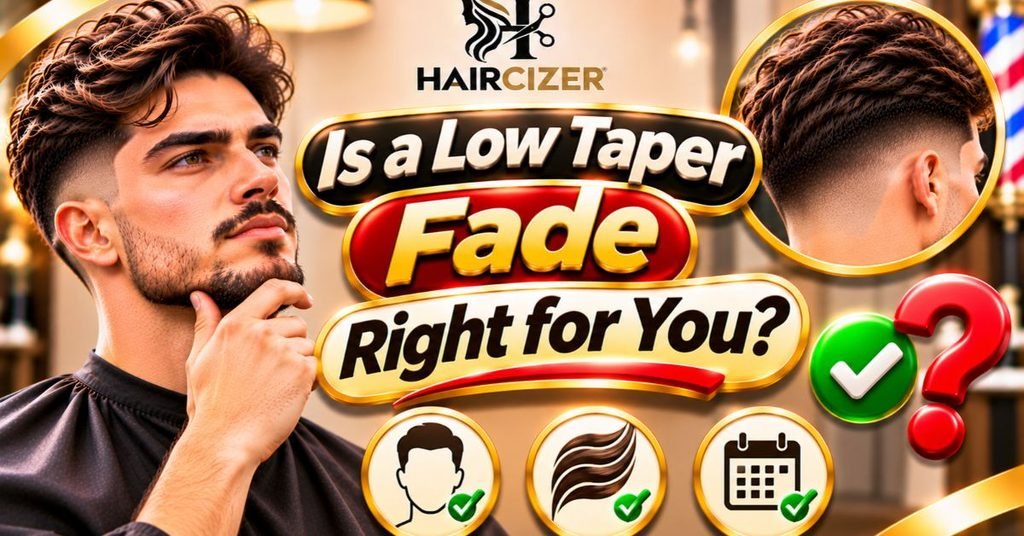
Before you commit, ask yourself a few honest questions.
Choose a low taper fade if you:
- Want a neat but understated haircut.
- Work in a conservative or professional setting.
- Are trying a fade for the first time.
- Like having style options on top.
- Prefer a cut that grows out gracefully.
Think twice if you:
- Want a bold, high-contrast look.
- Do not want to visit a barber regularly.
- Have a very small area of hair on the sides to work with.
If you are on the fence, try it once. Hair grows back, and the low taper is one of the most forgiving fades. Tell your barber you want to start conservatively, and you can always go shorter next time.
Pros and cons at a glance
| Pros | Cons |
| Subtle and professional | Needs trims every 2 to 4 weeks |
| Works with many top styles | Mistakes in the blend are easy to see |
| Suits most hair types and face shapes | Less dramatic than a high or skin fade |
| Grows out gracefully | Short sides leave the neckline exposed |
| Easy to style at home | Needs a skilled barber for a clean blend |
If the pros line up with what you want, you are very likely to enjoy this cut.
Frequently asked questions
What does a low taper fade look like?
Short, neat sides that blend down softly from just above the ear.
Is a low taper fade professional?
Yes, it is clean and subtle enough for most offices.
How long should the top be?
Anywhere from a buzz to 5 inches or more, depending on your style.
How often should I get a trim?
Every two to four weeks keeps the fade sharp.
Does a low taper fade work on curly hair?
Yes, it keeps curls neat on the sides and full on top.
Is a low taper fade good for thinning hair?
Yes, a short top with a low taper hides thinning well.
What is the difference between a taper and a fade?
A taper shortens gently, while a fade blends down to skin.
Can I get a low taper fade with a beard?
Yes, it blends nicely into a short or medium beard.
How much does a low taper fade cost?
Prices vary by city and barber, so check with your local shop.
Can I do a low taper fade at home?
It is possible, but a barber gives a much cleaner blend.
Conclusion
The low taper fade is a simple haircut that does a lot. It gives you tidy sides, a soft blend, and a top that you can style in many ways. Whether you like a textured crop, a comb over, or a soft fringe, this cut supports it without stealing the show.
Now that you know how it looks, how to describe it, and how to keep it fresh, you are ready for the barber chair. Bring a photo, be clear about the fade height, and keep up with regular trims. A little care will keep your look sharp week after week.
Leave a Reply